Garage door replacement
When Is Garage Door Replacement Smarter Than Another Repair?
A garage door does not become a replacement candidate simply because it has celebrated a few birthdays. Plenty of older doors remain serviceable after a focused repair, while some younger doors have damage, incompatibility, or recurring failures that make another patch hard to justify. The useful question is not, "Is this door old?" It is, "What condition will we have after this repair, what will still be unresolved, and how does that outcome compare with a correctly specified replacement?"
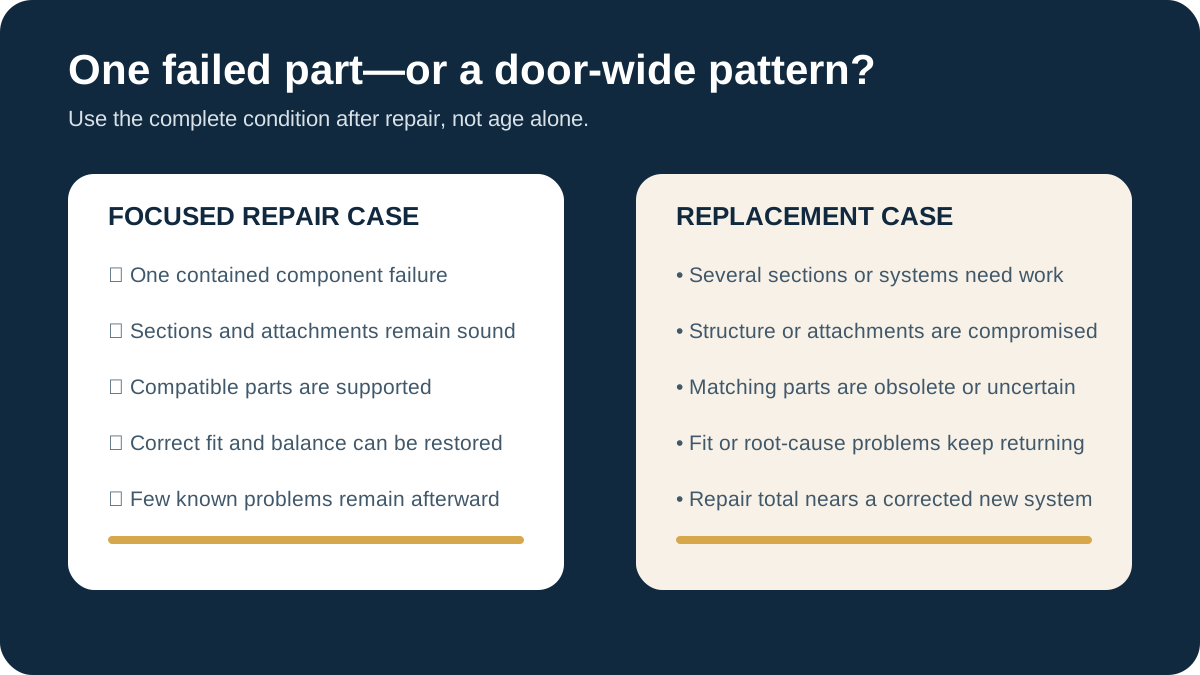
Garage-door replacement is usually the smarter path when problems are spread across the door, structural sections or critical attachment areas are compromised, compatible parts are unavailable, the opening and hardware need broad correction, or the complete cost of restoring a dependable system approaches the cost of a properly fitted new one. Repair remains reasonable when the failure is isolated, the door is structurally sound, compatible parts exist, and the completed repair restores safe, smooth, balanced operation without leaving a stack of near-term problems.
A garage door does not become a replacement candidate simply because it has celebrated a few birthdays. Plenty of older doors remain serviceable after a focused repair, while some younger doors have damage, incompatibility, or recurring failures that make another patch hard to justify. The useful question is not, "Is this door old?" It is, "What condition will we have after this repair, what will still be unresolved, and how does that outcome compare with a correctly specified replacement?" Continue with the complete library of garage door replacement guides when you want to compare related decisions.
Key takeaways
- Do not use age alone to decide; diagnose the complete door, hardware, track, counterbalance and opener connection.
- Separate one repairable component from door-wide deterioration or structural damage.
- Compare complete installed scopes and the condition left afterward—not a repair price against a door-only price.
- Treat parts compatibility, opening fit and future serviceability as decision factors.
- Stop operating a crooked, binding, unstable or visibly damaged door until a technician evaluates it.
Start with the condition you will have after the repair
The most useful repair-versus-replacement question looks forward. Imagine the proposed repair is complete: Which defects are gone, which worn components remain, how smoothly will the door travel, how well will it seal, and how likely are the remaining sections and hardware to need attention soon?
A repair can be technically possible and still be a poor value if it restores only one symptom while leaving a tired system with several known weaknesses. Conversely, replacing a sound door because one serviceable roller or hinge failed would be unnecessary scope. If this condition matches your situation, review the service scope for garage door replacement options.
Ask the technician to divide the findings into three groups: the immediate failure, connected conditions that affect safe operation, and optional improvements. A broken spring, for example, is an immediate failure. Damaged bearing plates, incorrect spring sizing, frayed cables, distorted tracks, or a door that was already badly out of balance may be connected conditions.
Quieter rollers, new decorative hardware, windows, insulation, or a color change may be optional. That separation keeps a safety repair from quietly turning into a shopping list, but it also prevents a low estimate from ignoring work the system genuinely requires.
There is an important stop line before any cost discussion. If the door is crooked, jammed, off track, partly suspended, cracking around hardware, or moving unpredictably, do not cycle it to collect more evidence. Keep people, pets, and vehicles clear and arrange an assessment.
DASMA's garage-door safety guidance notes that springs, cables and bottom brackets involve high force and should be handled by trained technicians. A replacement decision can wait until the door is stable; an improvised test should not create the emergency that makes the decision for you.
One contained failure
The rest of the door is structurally sound, compatible parts exist, and completed work restores normal operation.
Problems are distributed
Several sections, attachments or systems need work and the remaining condition is still compromised.
The door is unstable
Crooked travel, loose cables, off-track rollers or damaged high-force hardware require stabilization before comparison.
Know the signs that point beyond one component repair
One failed component does not automatically condemn a garage door. Springs, rollers, hinges, cables, seals, opener components and sections all have different jobs and service lives. A qualified diagnosis should identify why the component failed and whether the surrounding system remains suitable.
If a worn roller is replaced and the correctly balanced door then travels quietly in sound tracks, that can be an excellent focused repair. If rollers keep failing because the track geometry is wrong and multiple hinges are pulling away from weakened sections, the visible roller is only the latest messenger. If this condition matches your situation, review the service scope for garage door panel repair.
Door-wide deterioration shows up as patterns. Look for rust or rot across several sections, widespread delamination, multiple cracked hinge points, repeated fastener pullout, bowed sections, damaged tongue-and-groove joints, persistent daylight at irregular gaps, or an opening the door never fit correctly.
None of those observations should be diagnosed from a photograph alone, but together they change the economics. Correcting five connected problems one invoice at a time can cost more and produce a less coherent system than replacing the door and specifying its tracks, counterbalance, reinforcement and seals together.
Recurring service history matters too. Gather invoices and write down what was repaired, when, and why. Three unrelated events over fifteen years are not the same as three callbacks for binding and hardware failure in eighteen months.
Look for an unresolved cause: incorrect balance, door weight changed by prior alterations, poor backing, impact damage, water exposure, track movement, incompatible replacement parts, or opener force masking mechanical resistance. Replacement is most defensible when it removes the underlying problem, not when it merely resets the age of the biggest visible part.
| Observed pattern | Repair case | Replacement case |
|---|---|---|
| One worn component | Strong when the cause is understood and the remaining system is sound | Weak unless broader defects are also documented |
| Several damaged sections | May leave structural, fit or appearance compromises | Stronger when compatible sections are costly or unavailable |
| Repeated binding or callbacks | Reasonable only if a correctable root cause is identified | Stronger when opening fit or door-wide condition drives recurrence |
| Widespread rust, rot or delamination | Spot work may not restore reliable attachments | Often stronger after the extent and source are confirmed |
| Stable door with cosmetic wear | Maintenance or finish work may be sufficient | Primarily an elective appearance or performance choice |
Treat structural damage and attachment points differently from cosmetic wear
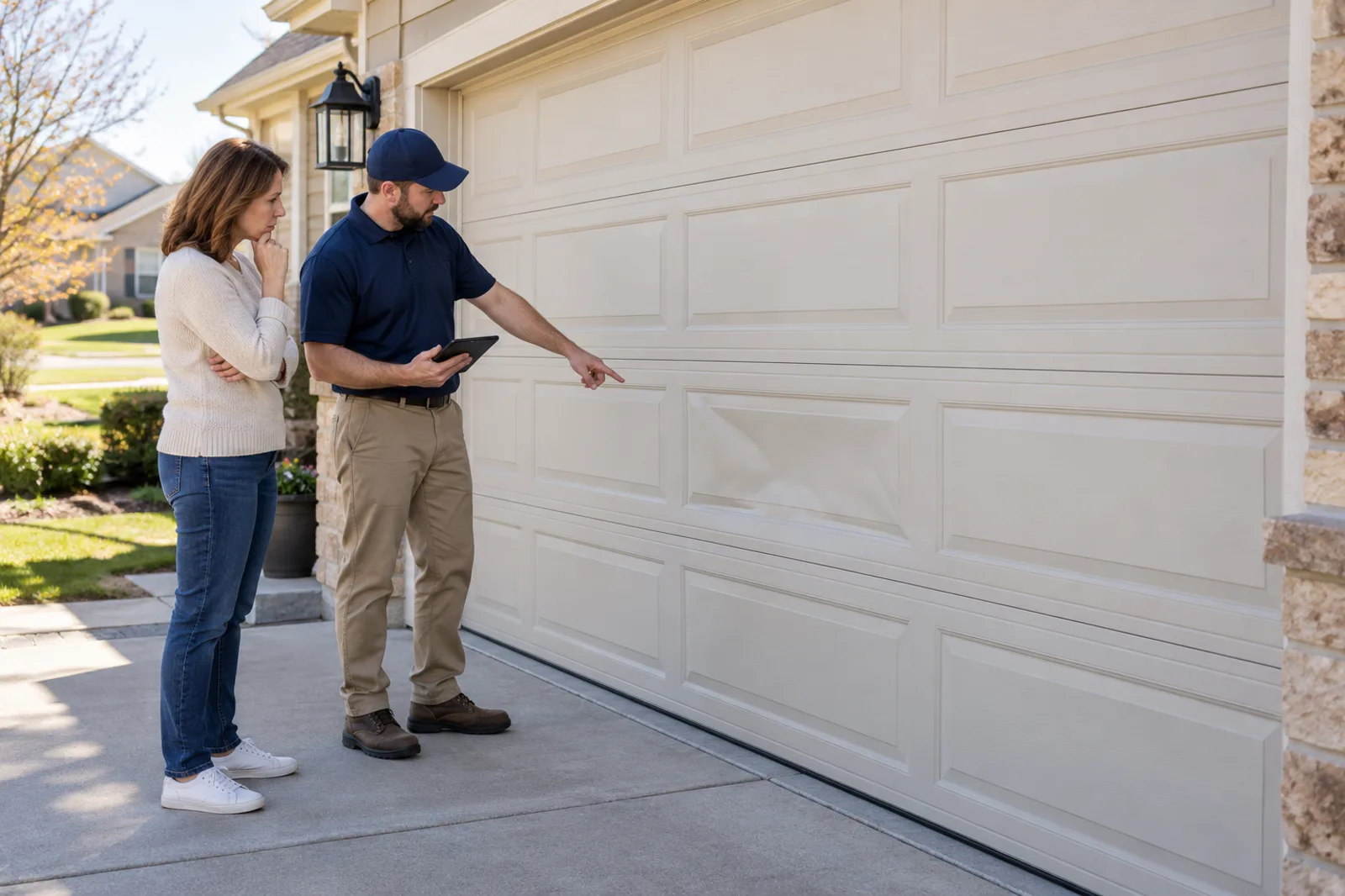
A faded finish, surface scuff, or shallow center dent is not equivalent to a torn stile or cracked bottom section. Sections help the door stay rigid while changing direction through the track, and hinges, rollers, struts, lifting fixtures and the opener arm transfer forces through specific attachment areas.
A repair that makes the driveway view prettier may not restore that load path. Damage near section ends, joints, hinges, struts, top fixtures, bottom brackets or the opener attachment deserves a structural explanation before anyone promises a cosmetic fix. If this condition matches your situation, review the service scope for residential garage door replacement.
The bottom section is especially sensitive because lifting cables commonly connect near its lower corners. Do not loosen a bottom bracket or attempt to hammer that area straight. Likewise, do not remove a hinge from a raised or unsupported door, pull a cable back onto a drum, or adjust springs in hopes of testing whether the door is worth saving.
High-force hardware can move suddenly. A technician should first stabilize the door, document the damage, and decide whether a compatible section and attachment configuration can safely restore it.
Replacement becomes more attractive when damage crosses several structural areas or when the remaining material can no longer hold specified fasteners and reinforcement. It can also make sense after a vehicle impact has changed section geometry throughout the stack, even if only one dent attracts attention.
The estimate should connect every replacement recommendation to an observable condition: which section is distorted, which joint no longer mates, which attachment is compromised, or which compatible repair part cannot be obtained. "It is old" is not a structural diagnosis.
Check compatibility and serviceability before approving another patch
Garage-door parts are not universally interchangeable. A replacement section must match width, height, thickness, joint profile, construction, reinforcement, hinge positions and the door family's hardware requirements. Tracks relate to section thickness, roller geometry, door weight, headroom and installation layout.
Springs must be selected for the actual assembled door. An opener must connect to properly reinforced sections and move a mechanically sound, balanced door. A part that looks close on a workbench may produce poor travel or unsafe loads when installed.
Older or private-label doors can make identification difficult. Useful evidence includes the manufacturer label, model or serial information, original paperwork, section dimensions, track radius, hardware markings and clear photographs. Ask the provider to state whether the proposed part is an exact match, a manufacturer-approved current replacement, or an adaptation.
If adaptation is proposed, the estimate should explain the engineering and related changes. Guessing first and discovering an incompatible joint or weight difference after delivery is expensive theater, and the homeowner bought a ticket without asking for one.
Future serviceability deserves attention as well. A focused repair can be sensible even on an older door when parts remain supported and the rest of the assembly is sound. Replacement may be wiser when every future failure will trigger a parts hunt, custom fabrication, mismatched sections, or compromises that cannot be warranted.
That does not mean chasing the newest model. It means choosing a documented, supported system whose sections, hardware, seals and instructions are reasonably available for normal service in the years ahead.
- Identify the manufacturer, model or product family before pricing section work.
- Match dimensions, joint profile, material, insulation and reinforcement—not appearance alone.
- Verify track, roller, spring, strut, opener and attachment requirements as one system.
- Ask whether replacement parts are current, supported and reasonably obtainable.
- Put any proposed adaptation, limitation or appearance mismatch in writing.
Compare complete installed costs on the same time horizon
A fair comparison is not the cheapest repair number versus the advertised price of a new door. The repair scope may include parts, labor, stabilization, track correction, spring work, finish work and follow-up testing. The replacement scope may include the door sections, tracks, springs, hardware, reinforcement, perimeter seal, removal, disposal, opener reconnection, permits when applicable, tax and warranty.
Put both scopes on paper. If one price excludes work that the other includes, the difference is not savings; it is an unfinished comparison.
Next, compare the condition remaining after each scope. A $900 repair that leaves widespread corrosion, obsolete sections and another documented $700 need is not equivalent to a $900 repair on an otherwise excellent door. At the same time, do not bundle optional windows, decorative hardware, premium finishes or opener replacement into the supposedly unavoidable replacement total.
Separate required restoration from elective upgrades. This keeps the decision honest and lets the household see whether replacement wins on fundamentals or only because the proposal quietly changed the wish list.
Use a realistic time horizon rather than a promised lifespan. There is no universal expiration date for garage doors, and no technician can guarantee which component will fail next.
Ask what is known now, what maintenance is expected, what warranties cover, who provides those warranties, and which limitations apply to labor, finish, hardware and impact damage. The best value is the scope that produces a safe, dependable, supportable system at a defensible total cost—not automatically the lowest invoice today or the most elaborate door in the brochure.
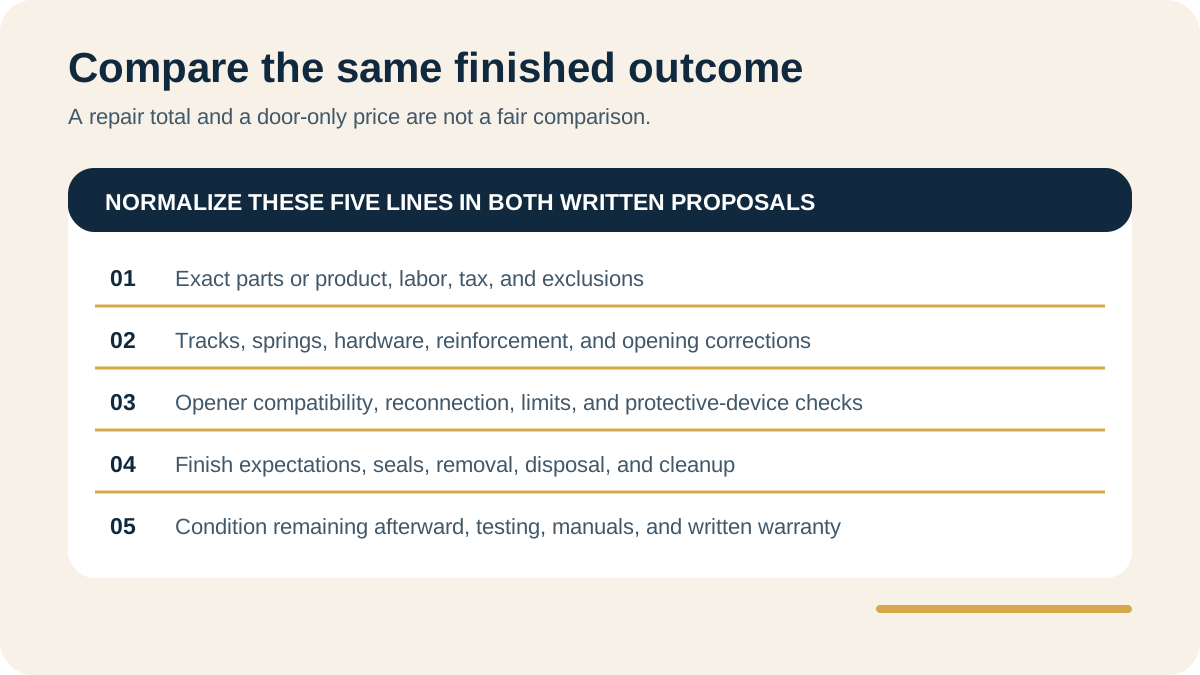
| Scope item | Repair proposal | Replacement proposal |
|---|---|---|
| Door and section work | Exact components and remaining defects | Exact model, construction, size and finish |
| Tracks and counterbalance | Adjustments or parts included | New or reused items and why |
| Opener connection | Reinforcement and force settings checked | Compatibility, reconnection and testing included |
| Removal and finish | Debris, paint and appearance limitations | Old-door disposal, trim, seals and touch-up |
| Closeout | Balance, travel, safety checks and warranty | The same checks plus manuals and product records |
Decide which performance upgrades matter in your Wichita home
Replacement creates options that a repair does not: different construction, insulation, glazing, finish, section design, perimeter seals and hardware packages. Those options are useful only when they solve a real household need. An attached garage below a bedroom may benefit from quieter operation and better air sealing.
A workshop may place more value on thermal performance and daylight. A detached storage garage may prioritize durable, simple construction.
A street-facing door may carry more visual weight. Write down the reasons before comparing models so showroom choices do not replace the original problem.
For insulation claims, compare like with like. Section R-value describes resistance through material, while whole-door U-factor addresses heat transfer through the assembled door; they are not interchangeable marketing numbers. Windows, section joints, perimeter seals and installation quality also affect practical performance.
Ask which value is being quoted, how it was determined, and whether it applies to the section or complete assembly. Insulation can improve comfort near an attached garage, but a garage door should not be sold as a magic substitute for correcting gaps or insulating the walls and ceiling that separate the garage from conditioned space.
Wichita weather adds wind, temperature swings, hail and driven rain to the conversation, but do not assume a particular product rating from geography alone. The provider should identify applicable manufacturer specifications and local requirements for the actual opening.
Discuss wind-related reinforcement, track and jamb attachment, finish durability, bottom and perimeter seals, drainage around the opening, and replacement availability after impact. Choose documented performance that fits the site; vague phrases such as "storm ready" or "heavy duty" are not specifications.
Insulation and sealing
Compare whole-door information, section construction, glazing and installed perimeter details.
Noise and cycle demand
Match hardware and operating expectations to how frequently the household uses the garage.
Weather and finish
Discuss documented reinforcement, corrosion resistance, seals and serviceability for the actual opening.
Require a complete installation and safety handoff
A good replacement outcome depends on more than the panels selected. Before installation, the provider should confirm opening width and height, headroom, sideroom, backroom, jamb condition, track layout, spring location, opener position, electrical clearances and any unusual framing. Rotten backing, loose masonry attachment, an uneven floor or poor drainage may need separate correction.
Document who owns that work. A beautiful new door fitted to weak backing or the wrong track geometry is simply a fresh-looking version of an old problem.
During closeout, the door should travel smoothly, remain properly aligned and be balanced according to the manufacturer's procedure before automatic operation is finalized. The opener connection requires suitable reinforcement, travel limits and force settings, and relevant protective devices must be tested.
CPSC guidance for automatic garage-door openers (opens in a new tab) explains federal entrapment-protection requirements for residential operators. The technician should demonstrate ordinary operation, safe manual release, photo-eye behavior and any model-specific checks without inviting the homeowner to touch springs, cables or bottom fixtures.
Collect the exact product information, manuals, warranty documents, installer contact details, paint or finish guidance, and a written record of the completed scope. Ask which routine observations and cleaning tasks are homeowner-safe, when professional inspection is recommended, and what symptoms should stop operation.
Photograph labels before they fade or disappear behind stored boxes. The paperwork may feel less exciting than the new door—admittedly, almost everything does—but it makes future service faster, warranty conversations clearer and compatible parts easier to identify.
Prepare for a useful repair-versus-replacement estimate
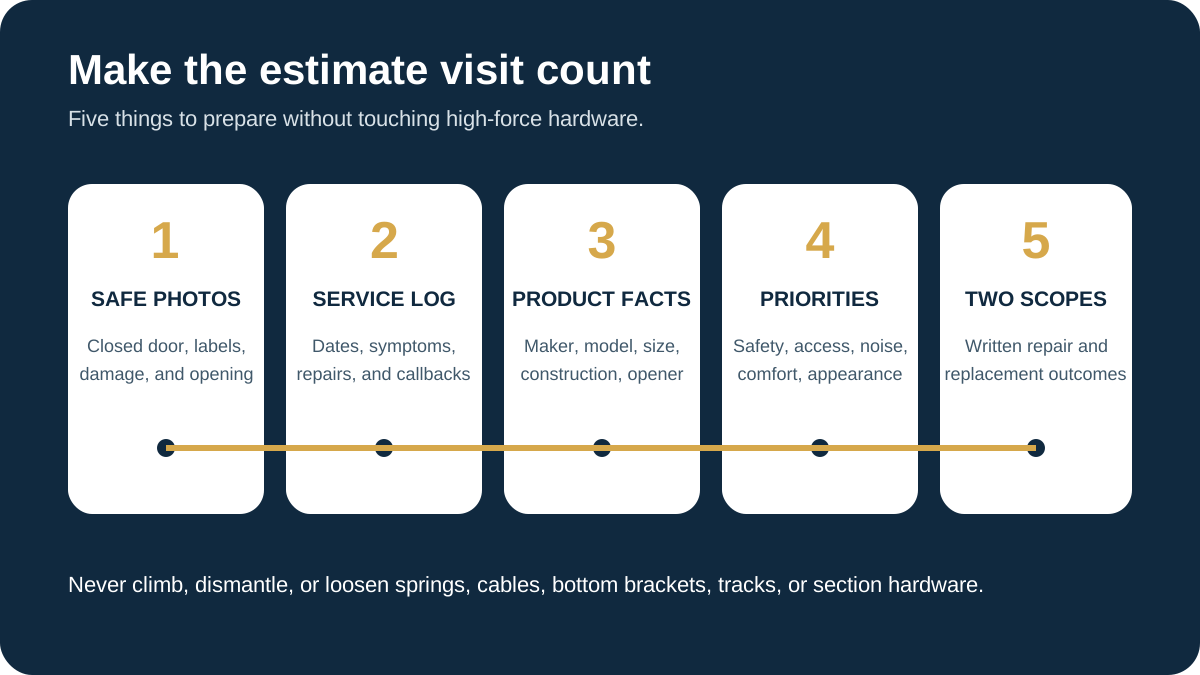
Before calling, take safe photographs of the closed door from outside and inside, each section, the tracks from floor level, visible hardware, the opener attachment and any manufacturer labels you can reach normally. Do not climb, stand under a raised door, touch cables, remove covers or loosen fasteners. Record the opening size if it can be measured safely, the approximate installation year if known, the event that triggered the problem, and whether the door is currently closed, stuck, crooked, noisy, reversing, or trapping a vehicle.
Gather recent service invoices and list your priorities in order. You might care most about restoring safe access quickly, reducing repeated repairs, improving appearance, controlling drafts, lowering noise, adding windows, or matching exterior renovations. Include budget constraints, but ask for required and optional work separately.
If the household expects to replace the opener, paint the exterior, or repair framing soon, mention it so the scopes coordinate. Surprises are expensive; relevant facts are usually free.
Request at least one written repair path when a safe, supportable repair exists and one replacement path when replacement is being recommended. Each should explain the observed condition, included parts and labor, reused components, exclusions, timeline, testing, warranty and the condition expected afterward. Heartland can evaluate the complete door and help Wichita-area homeowners compare a focused repair with correctly specified garage door replacement options.
The goal is not to sell the biggest scope. It is to make the next decision the one least likely to need an apology.
Frequently asked questions
Questions readers ask
How old should a garage door be before it is replaced?
There is no universal replacement age. Condition, construction, damage, parts availability, opening fit, service history and the cost of restoring dependable operation matter more than the calendar alone.
Is it worth repairing an old garage door?
It can be when the failure is isolated, the door remains structurally sound, compatible parts exist and the completed repair restores smooth, balanced operation without leaving several known near-term problems.
What problems make replacement more reasonable?
Several damaged sections, widespread rust or delamination, compromised structural attachment areas, repeated failures with an unresolved cause, poor opening fit, obsolete parts and repair costs approaching a complete corrected system can strengthen the replacement case.
Do I need a new opener when replacing the garage door?
Not automatically. The existing opener should be evaluated for compatibility, condition, required reinforcement, controls and protective functions. Replace it only when the documented scope supports that need.
Can the old tracks or springs be reused with a new garage door?
Only when the new door manufacturer and installer confirm that the components are compatible with the new door's dimensions, weight, construction and installation requirements. Similar appearance is not enough.
What should a garage-door replacement estimate include?
Look for the exact door and construction, tracks, springs, hardware, reinforcement, seals, finish, glazing, labor, removal, disposal, opener work, opening corrections, testing, timeline, tax, warranty and clear exclusions.
The right solution depends on the specific lock, door, vehicle or garage door system. Check the Wichita-area service pages, then call or send the details for an evaluation.