Garage door replacement
Dented Garage Door Panel: Repair One Section or Replace the Door?
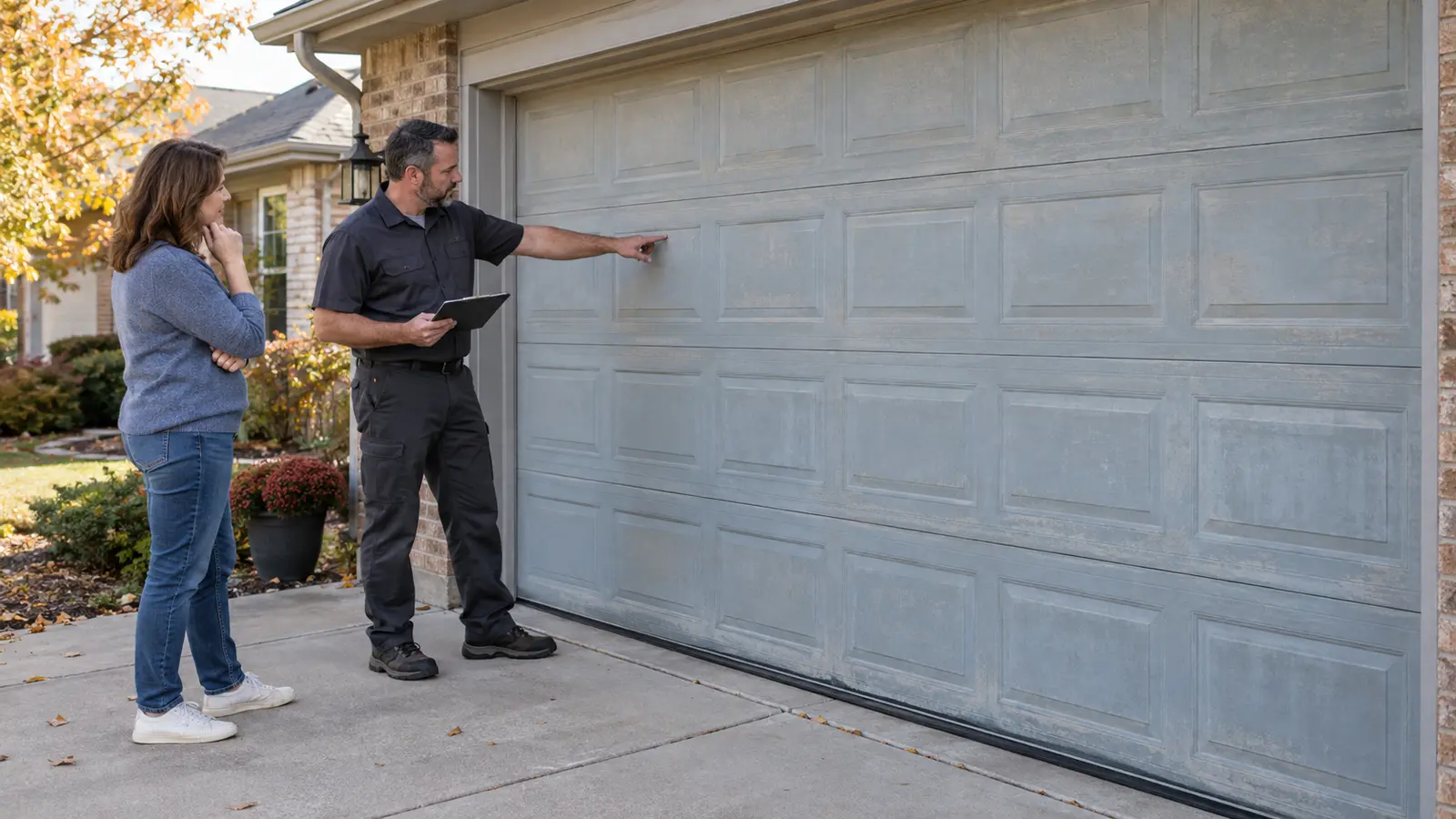
A dent in a garage door can look like a one-panel problem, but the useful question is not simply whether the mark can be hidden. The technician needs to determine whether the damaged section still carries load correctly, fits the tracks and neighboring sections, seals the opening, and can be matched with a safe compatible replacement. Sometimes one section is the sensible fix. Sometimes the damage, age, parts situation, or door-wide condition makes full replacement the cleaner decision.
One garage-door section may be repairable or replaceable when the damage is localized, the section is still available and compatible, the remaining door and hardware are sound, and the repair restores normal structure and travel. Full-door replacement becomes more reasonable when several sections are damaged, a load-bearing stile or bottom fixture is compromised, the door is badly distorted, matching parts are unavailable, or the combined repair cost approaches the value of a complete compatible system.
A dent in a garage door can look like a one-panel problem, but the useful question is not simply whether the mark can be hidden. The technician needs to determine whether the damaged section still carries load correctly, fits the tracks and neighboring sections, seals the opening, and can be matched with a safe compatible replacement. Sometimes one section is the sensible fix. Sometimes the damage, age, parts situation, or door-wide condition makes full replacement the cleaner decision. Continue with the complete library of garage door replacement guides when you want to compare related decisions.
Key takeaways
- A cosmetic dent and a structural crease are not the same repair decision.
- Damage near hinges, stiles, section joints, or bottom fixtures deserves extra caution.
- A replacement section must match the door system—not merely the color and panel pattern.
- Compare complete installed scopes, including hardware, finish, disposal, testing, and warranty.
- Stop operating a crooked, binding, cracked, or unstable door until it is professionally assessed.
First decide whether the damage is cosmetic or structural
A shallow dent in the broad center of a steel section may be mostly cosmetic when the panel still sits flat, the edges line up, the hinges remain secure, and the door travels normally. Even then, the finish can be cracked and the metal can begin to corrode, so appearance is not the only thing to inspect.
The technician should look across the section in natural light, compare gaps at both ends, and watch how the section changes shape as it moves through the curved track. What looks harmless while closed can flex sharply during travel. If this condition matches your situation, review the service scope for garage door replacement options.
A deep crease is different because it can reduce the section's stiffness. Sectional doors depend on formed faces, internal reinforcement, end stiles, center stiles, hinges, and struts to behave as a coordinated moving surface.
When a vehicle impact folds the metal, pulls a stile away, tears a hinge attachment, or distorts the tongue-and-groove joint, flattening the visible dent may not restore the original load path. Paint and filler can improve the view from the driveway while leaving a weakened section behind.
Location often matters more than diameter. Damage near an end stile can affect roller alignment; damage around a hinge can interfere with the way sections articulate; and damage at the bottom section can involve cable fixtures, the bottom seal, or the lowest track path.
Do not loosen or straighten hardware near a bottom bracket, cable, spring, or track. Those connected components may remain under significant force even when the door is fully closed.
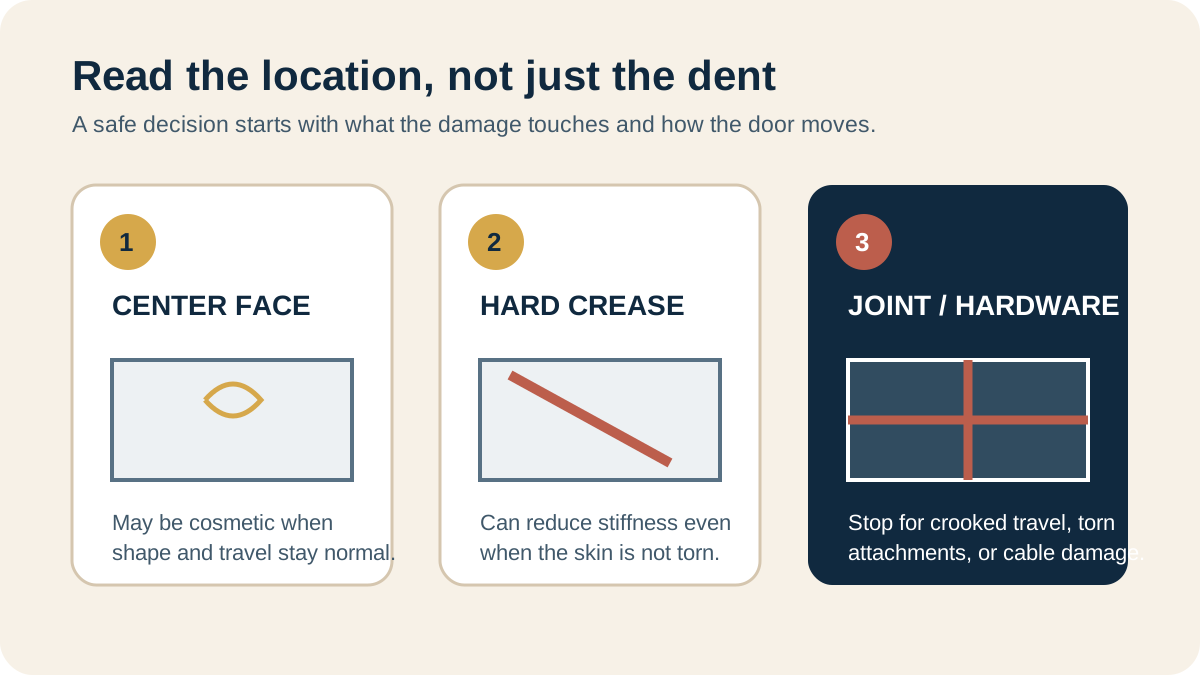
Shallow center dent
The face is marked, but joints, stiles, hinges, rollers, and normal travel remain sound.
Hard crease
A fold can reduce stiffness even when the section has not split.
Joint or hardware damage
Cracked attachments, shifted rollers, loose cables, or a crooked door can become unstable.
Use the door's movement as evidence, not as a stress test
If the door is already crooked, jammed, off track, or partly open, do not operate it again for diagnostic purposes. Keep people, pets, and vehicles away from the opening and use another entrance.
A technician can stabilize the door before checking the damaged section, rollers, tracks, cables, springs, opener attachment, and supporting hardware. The goal is to learn from the condition that exists without turning one damaged section into a falling or folded door. If this condition matches your situation, review the service scope for garage door panel repair.
When the door is closed and appears stable, describe what happened before the damage and what changed afterward. Did a car roll into the door, did wind push an object against it, or did the section begin bowing without a known impact?
Note any new scraping, popping, daylight, hesitation, reversal, or uneven gap. The DASMA garage-door safety guidance (opens in a new tab) is a useful boundary: regular observation and owner maintenance are not permission to adjust springs, cables, bottom fixtures, or other high-force components.
Avoid repeatedly cycling the opener to prove that the door still works. The opener can mask a growing bind by applying force until a roller, hinge, top section, rail, or gear finally gives way.
It can also make a structurally weak section bow more severely at the attachment point. One ordinary observation from a safe location may be useful when the door is clearly stable, but visible distortion or changed movement is enough reason to stop and arrange an assessment.
| What you observe | Why it matters | Safe response |
|---|---|---|
| Shallow center dent; normal gaps | May be cosmetic, but finish and stiffness still need review | Photograph it and arrange a normal assessment. |
| Hard horizontal or diagonal crease | The section may have lost stiffness | Stop if movement changed or the panel bows. |
| Damage near hinge or end stile | Attachments and roller path may be affected | Do not loosen hardware; request diagnosis. |
| Bottom section or cable area damaged | High-force fixtures may be involved | Keep clear and do not touch the bracket or cable. |
| Door crooked, jammed, or off track | The complete system may be unstable | Stop operation and keep the opening clear. |
When repairing the existing section can make sense
Repair is most defensible when damage is limited, the section retains its shape and attachment strength, and the corrective method is appropriate for that construction. A minor steel-skin dent might be improved without disturbing the insulated core or reinforcement.
Loose decorative trim, a weather seal, or a nonstructural finish issue may have a focused remedy. The proposal should state what is being corrected, what condition will remain visible, and how the repaired section will be checked during a complete door cycle. If this condition matches your situation, review the service scope for residential garage door replacement.
The word repair should not become a polite label for forcing metal back until the door closes once. A sound repair preserves or restores the section's intended stiffness, keeps joints aligned, maintains hinge and strut attachment, and does not create sharp edges or trapped moisture.
Insulated sandwich sections can delaminate internally after an impact even when the exterior face looks manageable. Wood, aluminum, fiberglass, and steel sections also respond differently to moisture, fasteners, straightening, patch materials, and finish work.
Ask whether the proposed result is cosmetic improvement, functional stabilization, or full structural restoration. Those outcomes are not interchangeable. If a visible wave or paint mismatch will remain, it should be disclosed before work begins.
If the repair is temporary while a matching section is ordered, the limitations and follow-up should be written down. A lower initial price is not a bargain if the door continues to bind, leaks badly, or needs the same area revisited in a few months.
When replacing one section is the better focused solution
A single-section replacement can be a clean solution when one section is structurally damaged but the rest of the door remains in good condition. The replacement must match the manufacturer, model or section family, width, height, thickness, joint profile, insulation construction, reinforcement requirements, hinge locations, and hardware layout.
A similar-looking panel is not automatically compatible. The technician may need door labels, serial information, original paperwork, precise measurements, and clear photographs before confirming availability.
Color and texture deserve an honest conversation. Sun, weather, cleaning, and manufacturing changes can make a new factory-finished section look different beside older sections, even when the listed color name matches. Painted doors may require refinishing beyond one section to produce an acceptable appearance.
Windows or decorative inserts can add another compatibility layer. Decide in advance whether a visible mismatch is acceptable or whether appearance is important enough to influence a full-door option.
The installation scope should extend beyond sliding in a new panel. The technician should inspect the connected hinges, rollers, struts, tracks, cables, springs, opener attachment, and balance because the impact may have traveled beyond the visible damage.
A heavier replacement section or added reinforcement can change door weight and counterbalance requirements. After assembly, mechanical travel and balance should be verified before automatic operation and protective functions are tested.
- Record the door manufacturer, model, serial number, size, and section height when available.
- Confirm joint profile, thickness, insulation, reinforcement, hinge, and roller compatibility.
- Discuss color, texture, windows, decorative hardware, and expected finish variation.
- Include connected-hardware inspection and any needed counterbalance adjustment in the scope.
- Require final travel, balance, opener, and safety-function verification.
When full-door replacement is the more responsible choice
Full replacement becomes stronger when two or more sections are creased, the door has widespread rust or delamination, the design is obsolete, or a compatible section is no longer available. It may also be appropriate when the damaged door has recurring track, roller, hinge, or balance problems that a panel-only repair would not resolve. The decision should follow observable conditions and a complete scope comparison, not an automatic rule based on the door's age.
Severe damage at a bottom section, multiple stiles, section joints, or the opener attachment can push the decision toward a complete assembly. So can an opening that was poorly fitted from the beginning.
Replacement gives an opportunity to correct sizing, track geometry, reinforcement, perimeter seal, opener compatibility, and backing, but only when those items are actually included. A new door installed into an unresolved opening problem can inherit the same rubbing, leakage, or support trouble.
There are also practical limits to mixing old and new components. Some hardware may be reusable after inspection, while other parts should be replaced to suit the new door's weight and design. Springs must be selected for the actual assembled door, not transferred simply because they still move.
Tracks, brackets, struts, rollers, and the opener connection should follow the new system's requirements. Ask the provider to separate required components from optional upgrades so the estimate can be compared fairly.
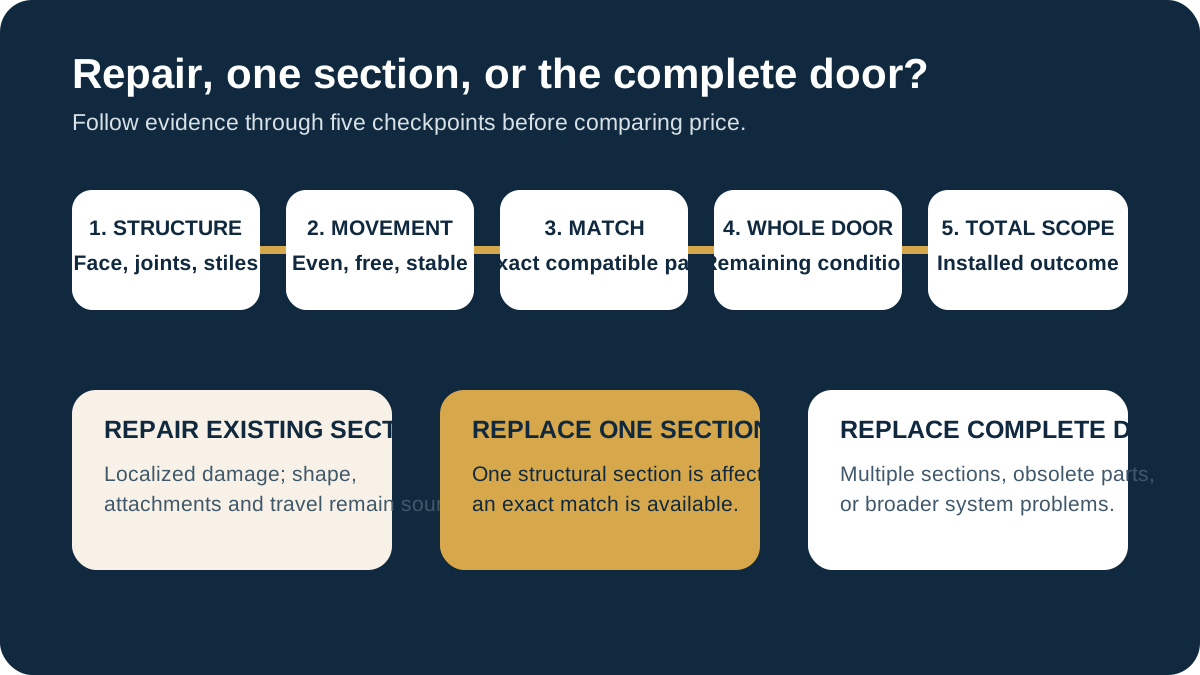
| Decision factor | One-section path is stronger when | Full replacement path is stronger when |
|---|---|---|
| Damage | One localized section is affected | Several sections or key structural areas are affected |
| Compatibility | An exact compatible section is available | Matching parts are obsolete or uncertain |
| Remaining condition | Other sections and hardware are sound | Rust, delamination, wear, or repeated failures are widespread |
| Appearance | A finish variation is acceptable | A mismatch would be unacceptable or broad refinishing is needed |
| Total scope | Installed section work remains clearly economical | Combined repair cost approaches a complete corrected system |
Compare estimates by complete scope, not the headline number
Two estimates can look far apart because they are pricing different outcomes. One may include only a section, while another includes hinges, rollers, reinforcement, finish work, disposal, spring changes, track correction, opener reconnection, and final testing.
Ask for the door identification used, the exact section or product proposed, labor, materials, tax, disposal, expected lead time, warranty provider, and exclusions. A clear scope makes a low number useful—or exposes why it is incomplete.
For full replacement, compare construction and performance details that affect the Wichita home: section material, insulation method and stated value, steel thickness or product construction, wind or impact requirements when applicable, glazing, perimeter seals, hardware, spring cycle option, track configuration, and opener compatibility. Do not buy from an image alone. The selected door has to fit the opening, daily use, maintenance expectations, and the people who operate it.
Check the final safety and handoff steps too. Automatic operation should be evaluated only after the door is mechanically sound and balanced.
CPSC guidance for automatic garage-door openers (opens in a new tab) explains the importance of compliant entrapment protection and proper operation. The service provider should demonstrate normal travel and relevant protective functions, identify maintenance tasks the owner may safely perform, provide written warranty information, and leave manuals or product details for future service.
Exact product
Manufacturer, model, construction, size, finish, insulation, glazing, and compatible hardware.
Complete installed scope
Labor, parts, finish, removal, disposal, adjustments, testing, tax, and exclusions.
Proof of function
Smooth travel, correct balance, opener operation, protective-device checks, manuals, and written warranty.
Prepare the right information for a Wichita service request
Start with a wide exterior photo of the closed door, then photograph the damaged section, both ends of that section, and any manufacturer label you can reach without climbing or touching moving hardware. Include the full opening so the provider can see section count, window layout, driveway access, and surrounding construction.
Do not stand under a raised door, remove a hinge, pull a cable, or climb on a vehicle to improve a picture. Safe, ordinary views are enough for initial planning.
Describe the event and timing in plain language. Say whether a vehicle struck the door, an object hit it during a storm, the damage appeared gradually, or a prior repair came loose. Report the current position and whether the door is crooked, stuck, rubbing, noisy, leaking light, reversing, or moving normally.
Mention whether a vehicle is trapped and whether another entrance is available. These details help the technician decide what equipment and parts information may be needed before arrival.
Finally, state what matters to you: fastest safe closure, lowest defensible repair cost, appearance, insulation, quieter operation, long-term reliability, or matching other exterior work. Priorities help frame options, but they do not override structural and safety limits.
A good recommendation should connect the observed condition to a specific repair or replacement scope and explain the tradeoff. If the explanation cannot survive a few reasonable questions, the proposal is not ready for approval.
Frequently asked questions
Questions readers ask
Can just one panel of a garage door be replaced?
Often, yes—when an exact compatible section is available, the remaining door is sound, and the installation restores correct structure, balance, travel, and opener operation. Compatibility must be confirmed from more than appearance.
Can a dented garage door panel be repaired instead?
A shallow localized dent may be repairable, but a hard crease, torn attachment, delamination, joint distortion, or damage near load-bearing hardware may require section or full-door replacement.
Will a new garage door section match the old color?
Not always. Weathering, sun exposure, texture changes, and manufacturing differences can leave a visible variation even when the factory color name is the same.
Should I keep using the door after a panel is hit?
Stop operation if the door is crooked, binding, noisy, off track, cracked, partly open, or damaged near hinges, rollers, cables, springs, or bottom fixtures. Have the complete system assessed before further use.
What should a replacement estimate include?
Look for the exact product, compatible hardware, labor, finish expectations, removal and disposal, counterbalance or track work, opener reconnection, testing, tax, timeline, warranty, and clear exclusions.
The right solution depends on the specific lock, door, vehicle or garage door system. Check the Wichita-area service pages, then call or send the details for an evaluation.