Commercial locksmith
Storefront Door Locks in Wichita: Repair, Rekey, or Replace?
A storefront lock can feel like a small piece of hardware until the morning it will not unlock, the evening it will not secure, or the door has to be pulled hard just to make the latch catch. Aluminum-and-glass entrances use compact commercial components inside a narrow door stile, so a symptom at the key may actually begin with the door, pivots, closer, frame, or strike. This guide helps Wichita owners and managers sort the problem before choosing a repair, rekey, or replacement.
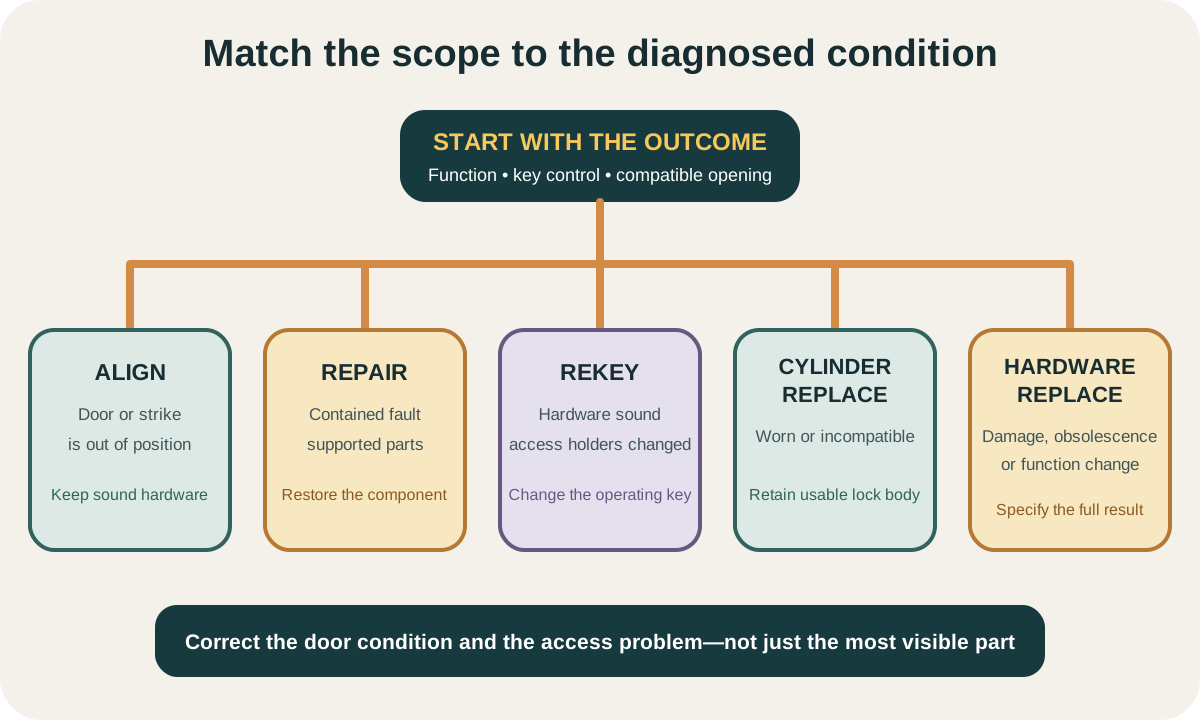
Do not choose between repair, rekeying, and replacement until the complete storefront opening is inspected. Rekeying changes which keys operate a serviceable cylinder; repair addresses a correctable hardware or alignment fault; replacement is appropriate when parts are damaged, incompatible, obsolete, or no longer support the required function. Door sag, closer problems, and a misaligned strike may need correction even when the lock itself is usable.
A storefront lock can feel like a small piece of hardware until the morning it will not unlock, the evening it will not secure, or the door has to be pulled hard just to make the latch catch. Aluminum-and-glass entrances use compact commercial components inside a narrow door stile, so a symptom at the key may actually begin with the door, pivots, closer, frame, or strike. This guide helps Wichita owners and managers sort the problem before choosing a repair, rekey, or replacement. Continue with the complete library of commercial locksmith guides when you want to compare related decisions.
Key takeaways
- A hard-turning key does not automatically mean the cylinder has failed.
- Rekeying restores key control but does not repair worn, bent, or misaligned hardware.
- Storefront doors should be assessed as complete openings: door, frame, pivots, closer, lock, strike, and exit function.
- Replacement hardware must match the narrow-stile preparation and the door's entry and egress requirements.
- A useful service handoff includes tested operation, counted keys, product information, and any remaining door work.
Why storefront lock symptoms can be misleading
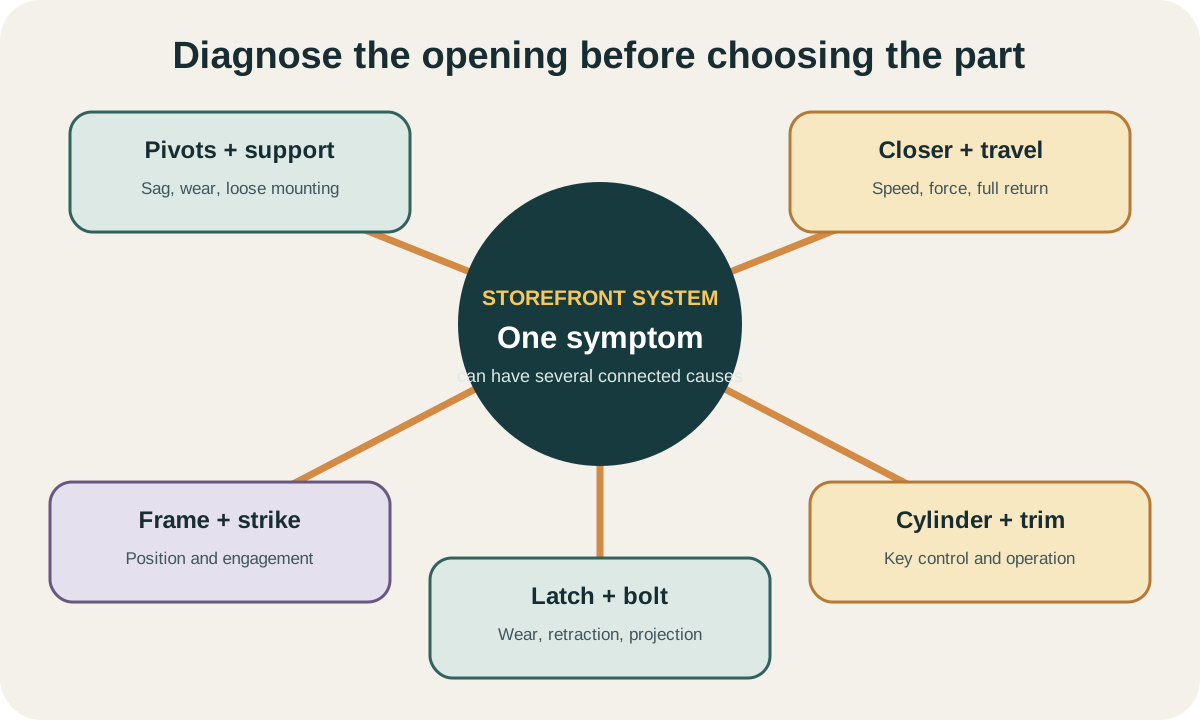
A narrow-stile storefront lock sits inside a slim aluminum frame around a large glass panel. That compact arrangement may include a mortise cylinder, hook bolt or deadbolt, deadlatch, paddle, lever, pull, strike, exit device, or electrified component.
The parts must line up within small tolerances. A few millimeters of door movement can turn a smooth lock into one that binds, misses the strike, or appears to lock without fully engaging. If this condition matches your situation, review the service scope for storefront door lock service.
The door moves for reasons that have little to do with the cylinder. Pivots or hinges wear, fasteners loosen, closers lose adjustment, thresholds shift, weather changes pressure, and repeated impact can move the frame or strike.
A business may replace a cylinder and briefly enjoy a smoother key, yet still have the same problem because the bolt is rubbing once the door closes. Diagnosis should compare operation with the door open and closed without disassembling or forcing the hardware.
Treat the symptom as a clue rather than a verdict. A key that turns freely while the door is open but binds when it is closed points toward alignment or load at the latch. A cylinder that is loose, spins, or behaves inconsistently in either position may have its own fault.
A paddle that moves without reliably retracting the latch can involve linkage, latch wear, mounting, or door position. The complete opening tells the story more reliably than the most visible part.
Key behavior
Note whether the key binds with the door open, closed, or under light ordinary pressure.
Door position
Look for rubbing, a dropped corner, uneven gaps, or a latch that lands above or below its strike.
Closing action
Watch whether the closer returns the door consistently without slamming, stalling, or leaving it unlatched.
Identify the storefront hardware before discussing scope
Storefront doors are not all built around the same lock. One opening may use a narrow-stile deadbolt operated by a mortise cylinder. Another may use a spring-loaded deadlatch with a paddle inside and key control outside.
A pair of doors may use a different latch arrangement, and an exit opening may include a rim or concealed-rod device. The correct replacement family depends on the existing preparation, door construction, handing, backset, function, and strike arrangement. If this condition matches your situation, review the service scope for commercial lock repair.
Record the door as it exists without removing covers or publishing sensitive key information. Useful photographs include the full closed opening from inside and outside, the door edge, the strike area, the closer, and the symptom from a safe distance.
Note whether the entrance is a single or paired door, whether it is aluminum, whether there is an exit device, and whether a reader, buzzer, alarm, or automatic operator is connected. Product labels that are plainly visible can help, but appearance alone is not proof of compatibility.
Avoid ordering a similar-looking part from a photo. Small differences in bolt projection, faceplate dimensions, cylinder cam, handing, electrical function, trim, or mounting can create an opening that will not secure or release as intended. A serviceable cylinder can sometimes be retained while another component is repaired.
In other cases the existing preparation or obsolete hardware limits the practical choices. Accurate identification prevents a cheap part from becoming an expensive second visit.
| Component | Typical role | Useful symptom | Do not assume |
|---|---|---|---|
| Mortise cylinder | Accepts the key and operates the lock | Loose, spinning, inconsistent, or damaged keyway | A hard turn always means a bad cylinder |
| Deadbolt or hook bolt | Provides positive locking at the frame | Rubs, will not project fully, or misses strike | Lubrication will correct door sag |
| Deadlatch | Latches automatically when the door closes | Does not retract or will not stay latched | The latch alone caused the fault |
| Paddle, lever, or pull | Provides interior or exterior operation | Loose travel or incomplete retraction | Residential trim will fit the opening |
| Closer and pivots | Control swing, support, and closing | Door drops, slams, stalls, or rebounds | They are unrelated to lock performance |
Separate key-control problems from hardware problems
Key control answers a different question from mechanical condition. If former employees, vendors, tenants, or unknown holders may still have working keys, the business needs to decide who should retain access.
Rekeying can change the operating key for a compatible, serviceable cylinder without replacing the entire lock. Cylinder replacement may be appropriate when the cylinder itself is worn, damaged, incompatible with the desired keyway, or unable to support the planned system. If this condition matches your situation, review the service scope for commercial locksmith services.
Rekeying does not straighten a door, renew a damaged deadlatch, tighten a broken paddle, or make an incompatible strike fit. It can be part of the same visit, but it should not be described as the cure for every storefront symptom.
Likewise, a full lock replacement does not automatically restore key control across the rest of the property. The new cylinder should be coordinated with the business's keyed-alike or master-key plan when one exists.
Start with a small access record. List the affected door, current authorized roles, estimated keys in circulation, keys that cannot be accounted for, and any higher-level keys that operate the opening.
Decide who may approve duplicates and who will maintain the record after service. A new key only improves control when issuance, return, and lost-key response become part of the operating process.
- Identify every affected storefront opening by a stable door name or number.
- Separate keys held by staff, managers, vendors, cleaners, and property representatives.
- Mark unknown, missing, copied, or unreturned credentials without exposing key cuts.
- Confirm whether the door belongs in a keyed-alike or master-key hierarchy.
- Name the person responsible for issuing and recovering keys after service.
Know when repair is the sensible first choice
Repair is attractive when the existing hardware is correctly specified, serviceable, and supported, and when the fault is contained. That might mean correcting loose mounting, restoring appropriate adjustment, replacing a worn compatible component, aligning the strike after the door condition is addressed, or servicing a latch that has a clear repair path. The objective is not to preserve old hardware at any cost; it is to restore dependable operation without discarding sound components.
Commercial hardware is often evaluated for cycle, strength, operational, and finish performance. The ANSI/BHMA hardware summaries (opens in a new tab) provide useful context for the standards that cover locks, cylinders, closers, exit devices, pivots, and related builders hardware.
A familiar brand name or a grade label still does not guarantee suitability for a particular door. The installed function, verified product, opening condition, traffic, and maintenance history all matter.
Ask what the repair leaves behind. Will the door close and latch through repeated normal cycles? Does the key operate without excessive force?
Are the pivots, closer, strike, and frame stable enough to keep the correction? Are parts available for future service?
A repair that only masks a worn or incompatible system can create another interruption at closing time. The written scope should identify both the repaired component and any connected condition that remains.
Contained fault
The failed or loose component is identifiable and the surrounding hardware remains compatible and sound.
Supported hardware
Correct components, instructions, and service information remain available for the installed family.
Stable opening
The door, frame, closer, pivots, and strike can hold alignment after the correction.
Recognize when replacement is the stronger long-term scope
Replacement becomes more reasonable when a component is cracked, bent, heavily worn, repeatedly failing, improperly modified, or no longer supported. It may also be necessary when the current function does not match how the business uses the entrance.
A deadbolt intended for after-hours security, for example, solves a different problem from a latch that must secure automatically during business hours. The replacement should answer the actual operating need rather than simply reproduce the visible shape.
Compatibility is more important than novelty. New hardware must fit the narrow-stile preparation, work with the door and strike, coordinate with any exit device or closer, and preserve the intended interior release.
If electronic access is being added, the mechanical lock, electric release, reader, request-to-exit function, power, wiring, and failure behavior should be designed as one system. A keypad does not fix a door that drags or a latch that cannot reach its strike.
Compare replacement proposals by the installed result. Look for the exact hardware family and function, door and frame corrections included, key or credential quantities, integration work, testing, cleanup, documentation, exclusions, and warranty.
One estimate may appear lower because it omits the closer, strike, cylinder, power transfer, or follow-up alignment that another includes. Normalize the scopes before comparing totals.
| Scope | Best-fit condition | What it changes | What it does not automatically fix |
|---|---|---|---|
| Rekey | Serviceable compatible cylinder; access holders changed | Which key operates the cylinder | Wear, alignment, latch, closer, or door damage |
| Cylinder replacement | Cylinder worn, damaged, or keyway plan changing | Key interface and possibly key-system compatibility | A damaged lock body or unstable opening |
| Targeted repair | Contained supported component or adjustment fault | Specific mechanical condition | A mismatched function or obsolete system |
| Full hardware replacement | Widespread wear, damage, incompatibility, or functional change | Locking hardware and selected operating function | Door, frame, power, or integration work unless included |
Preserve egress, accessibility, and the intended door function
A storefront entrance serves people as well as property. Interior operation, required egress, fire-door conditions, clear width, maneuvering space, closer behavior, threshold condition, and operating force can limit hardware choices.
The exact requirements depend on the building, occupancy, door location, and scope. A lock decision should not be made in isolation from the people who use the entrance or the authority responsible for the work.
The 2010 ADA Standards for Accessible Design (opens in a new tab) are a useful federal reference for accessible doors, hardware, thresholds, maneuvering clearances, and related elements. They are not a substitute for project-specific code review.
Existing conditions, local requirements, tenant obligations, and alterations can affect responsibility. When a scope touches an automatic operator, fire-rated assembly, panic hardware, or a controlled exit, coordinate the relevant professionals before ordering parts.
Do not solve a security complaint by blocking, chaining, or disabling an exit. Do not defeat a closer because the door is difficult to open, and do not add hardware that creates an unfamiliar interior release.
The service goal is predictable entry control with intuitive exit and dependable closing. If staff routinely prop the door because normal operation is difficult, investigate the opening and workflow rather than treating the prop as ordinary practice.
Use a complete diagnostic sequence
A useful assessment begins with the business complaint in the customer's own words. Ask when the problem occurs, which side of the door is affected, whether it changes with weather or traffic, and what previous work was done.
Observe the opening through repeated ordinary cycles. Check the door position, gaps, pivots or hinges, closer, threshold, frame, strike, latch, cylinder, and trim before deciding which part deserves attention.
Test connected functions without turning the visit into an experiment on an occupied exit. Mechanical key operation, interior release, automatic latching, exterior trim, alarm contacts, readers, buzzers, and schedules may interact.
Authorization matters, especially when the storefront belongs to a tenant but the frame, master key, access system, or common entrance belongs to a landlord. Clarify decision authority before changing keys or shared hardware.
The diagnosis should end in plain language. State the observed condition, the likely cause, the immediate correction, any optional upgrade, and any work assigned to another trade or property representative.
Photographs can document misalignment or damage without exposing key cuts, codes, wiring details, or credential data. A good explanation lets the business compare repair and replacement on the same facts.
- Confirm authorization and identify the exact opening.
- Record the symptom, timing, recent changes, and previous work.
- Observe door travel, support, closing, latching, and key operation.
- Identify the installed hardware and all connected systems.
- Separate required correction from optional improvement.
- Document exclusions and the person responsible for remaining work.
Plan service around business operations
A technically correct repair can still create a bad business day if access planning is ignored. Identify opening and closing times, peak customer traffic, delivery periods, employee entrances, alternate exits, alarm schedules, and who can authorize work.
If the primary entrance may be unavailable, agree on a safe temporary traffic plan with the property representative. Do not leave an exit obstructed or a storefront unsecured while waiting for an unplanned part.
Prepare key and credential handoff before service begins. Decide how many keys are needed, who receives them, whether a master or property key must continue to work, and how old keys will be collected.
If a reader or electric strike is involved, include the system administrator and any electrical, alarm, or access-control provider whose work is affected. The locksmith should not guess at protected credentials or silently alter a shared building system.
Weather and pressure can matter on Wichita storefronts. Wind loads, temperature changes, worn seals, and pressure differences may change how a light aluminum door closes.
These conditions do not justify forcing a key or disabling a closer. They are reasons to observe the opening under realistic conditions and choose hardware, adjustment, and maintenance that can tolerate normal use.
Protect customer flow
Choose a service window and alternate entrance plan that preserve safe, understandable access.
Include property ownership
Confirm landlord, tenant, alarm, master-key, and access-system responsibilities before changes.
Count the handoff
Set key quantities, custodians, old-key collection, and administrator responsibilities in advance.
Close out the job with testing and records
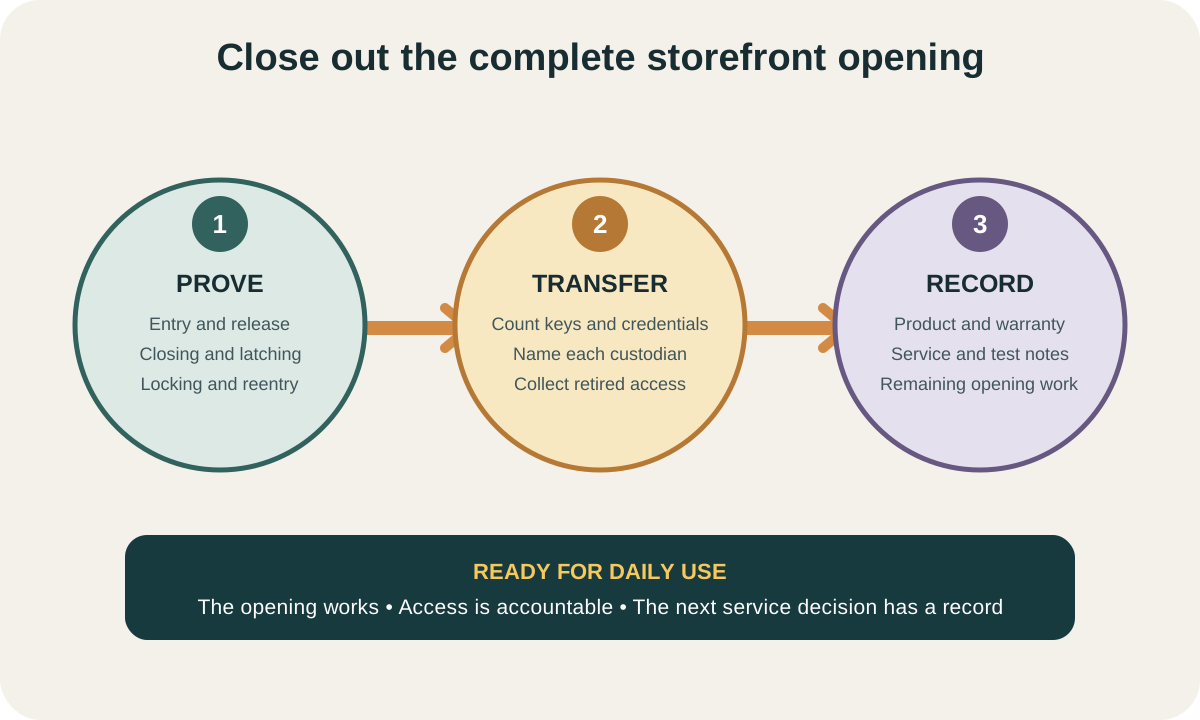
Final testing should reproduce the real operating cycle. Open the door from each authorized side, allow it to close normally, confirm the latch or bolt engages, verify the key or credential, and repeat the sequence.
Test the interior release and any connected alarm or access function included in the scope. One smooth cycle with the door held in a convenient position is not enough to prove dependable service.
Transfer control deliberately. Count new keys or credentials with the authorized recipient, identify any master or override key, and confirm which old credentials no longer work.
Demonstrate ordinary operation without teaching bypass techniques or exposing protected information. If the business uses an electronic system, document who administers users and what support contact applies to the installed components.
Keep the approved estimate, installed product information, service notes, key count, warranty, test result, and list of remaining work. Record whether a closer, pivot, frame, glass, electrical, alarm, or access-control item was outside the locksmith scope. These records make the next service request faster and reduce the chance that a later manager orders an incompatible part from memory.
When to call Heartland for storefront door lock service
Request service when a storefront key begins binding, a cylinder loosens or spins, a latch misses its strike, a paddle or lever does not retract reliably, the door will not stay secured, or staff must pull or slam the opening to make it latch. Arrange prompt assessment after impact, break-in damage, tenant turnover, missing keys, or a change in who should have access. For an active crime, fire, medical emergency, or immediate threat, contact emergency services first.
Before the visit, gather the business address and suite, an authorization contact, operating hours, door photos, a description of the symptom, visible product information, and any property, master-key, alarm, or access-control constraints. Do not send key cuts, access codes, alarm instructions, administrator passwords, or protected wiring records through ordinary messages. Tell the dispatcher if the opening is a required exit or the only practical customer entrance.
Heartland can assess the full aluminum storefront opening, explain whether alignment, repair, rekeying, cylinder work, or replacement fits the observed condition, and document a practical scope. Start with the storefront door lock service page for this specialty, or use the broader commercial locksmith hub when several business doors or access levels are involved. The goal is not simply a new part; it is a door the business can open, close, secure, and manage reliably.
Frequently asked questions
Questions readers ask
Why is my storefront key hard to turn only when the door is closed?
The bolt or latch may be under pressure or rubbing because the door and strike are misaligned. Wear at pivots, hinges, closer, frame, or threshold can contribute. Avoid forcing the key; have the complete opening assessed before replacing the cylinder by assumption.
Can an aluminum storefront lock be rekeyed?
Many serviceable mortise cylinders can be rekeyed when the hardware and keyway are compatible. Rekeying changes which key operates the cylinder, but it does not repair a damaged lock body, sagging door, worn latch, or misaligned strike.
Should I replace the lock if the cylinder is loose?
Not automatically. The cylinder, retaining hardware, cam, lock body, and door preparation should be inspected. The correction may be secure mounting, cylinder replacement, or broader hardware work depending on what is damaged or incompatible.
Can a keypad or access reader work on a storefront door?
Often, but the credential device must operate compatible locking hardware and coordinate with the door, closer, request-to-exit function, power, controls, and required egress. Electronic access should be planned as a complete opening, not added to a door that already binds.
What should a Wichita business receive after storefront lock service?
Request tested operation, counted keys or credentials, installed product information, warranty details, service notes, and a written list of any remaining door, frame, closer, electrical, alarm, or access-control work.
The right solution depends on the specific lock, door, vehicle or garage door system. Check the Wichita-area service pages, then call or send the details for an evaluation.
Continue reading