Commercial locksmith
Commercial Locksmith Services in Wichita: What Business Owners Should Know
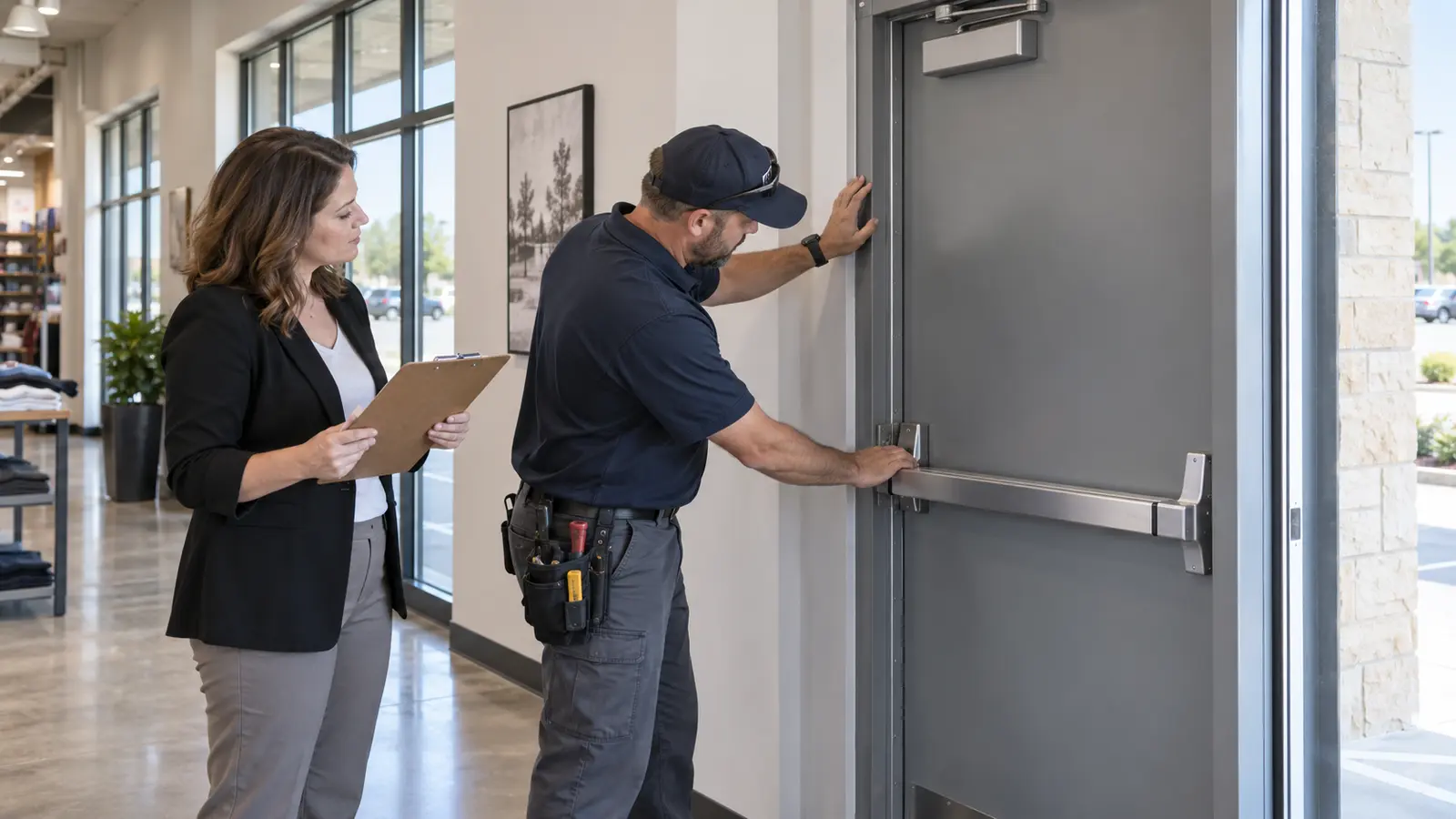
Commercial locksmith work is rarely just about one lock. A business entrance combines the door, frame, hinges, closer, latch, cylinder, exit hardware, credentials, daily operating routine, and the people responsible for opening and closing. The most useful service starts by defining the business problem and the affected openings, then turns that information into a documented scope that protects access without creating new problems for egress, accessibility, or day-to-day operations.
Before scheduling commercial locksmith service, identify every affected door, who uses it, when it must be available, what credentials exist, and which person can authorize changes. Ask the technician to diagnose the complete opening—not only the cylinder—and provide a written scope separating repair, rekeying, replacement, door or frame correction, and access-control work. Preserve required exit operation and accessibility, control all new keys or codes, test each opening under normal conditions, and keep a closeout record that future managers can understand.
Commercial locksmith work is rarely just about one lock. A business entrance combines the door, frame, hinges, closer, latch, cylinder, exit hardware, credentials, daily operating routine, and the people responsible for opening and closing. The most useful service starts by defining the business problem and the affected openings, then turns that information into a documented scope that protects access without creating new problems for egress, accessibility, or day-to-day operations. Continue with the complete library of commercial locksmith guides when you want to compare related decisions.
Key takeaways
- Start with the operational problem, the affected openings, and authorized users before selecting hardware.
- A commercial lock can only perform reliably when the door, frame, hinges, closer, latch, and strike work together.
- Rekeying, repair, replacement, master-key changes, and electronic access solve different problems and should not be treated as interchangeable.
- Exit operation and accessibility must remain part of the scope whenever hardware or door behavior changes.
- A complete handoff records keys, codes, authorization, tests, product information, warranties, and future administration responsibility.
Define the business problem before choosing the hardware
A storefront that is difficult to unlock at opening time, an office with uncontrolled duplicate keys, and a warehouse exit that does not latch consistently can all lead someone to request a new lock. They are not the same problem.
One may be a worn cylinder, another may be a key-control failure, and the third may involve the closer, hinges, frame, strike, latch, or exit device. Starting with a product name can hide the condition that actually interrupts the business. If this condition matches your situation, review the service scope for commercial locksmith services.
Describe the symptom in operational terms. Note which door is affected, whether the problem occurs from the inside or outside, what time of day it appears, whether weather changes it, which credentials fail, and whether the door closes and latches without being pulled or pushed.
Include recent events such as a staff departure, tenant turnover, lost key ring, delivery impact, break-in attempt, remodel, alarm change, or access-control outage. A short history often saves more diagnostic time than a close-up photo of a keyway.
Then name the business outcome. You may need reliable opening and closing, restored key control, limited access between departments, a repair that keeps existing hardware, or a planned upgrade across several locations. The outcome guides the scope without prejudging the diagnosis.
It also helps the technician explain what a focused repair will accomplish and what remains outside it. That clarity matters when a door is both a customer entrance and part of an employee closing routine.
What is happening?
Record the exact door behavior, credential result, timing, and recent changes without guessing at the failed part.
Who needs access?
List employees, managers, vendors, cleaners, tenants, emergency contacts, and temporary users by role.
What must improve?
Define reliable operation, restored key control, scheduled access, auditability, or another measurable business need.
Build a door and credential inventory that a technician can use
Commercial properties often accumulate door names that make sense only to the person who uses them. The north door may mean the public entrance to one employee and the loading entrance to another. Give each opening a stable label and pair it with a wide photograph, its location, normal use, and current hardware.
Note whether it is public, employee-only, tenant-specific, shared, interior, exterior, or used for deliveries. A simple floor plan marked with door IDs can prevent changes to the wrong opening. If this condition matches your situation, review the service scope for commercial lock change.
Inventory credentials separately. Count issued mechanical keys by keyway or marking where that information is known, but do not photograph key cuts or publish credential details in a shared message thread. Record fobs, cards, keypad codes, mobile credentials, override keys, gate remotes, and vendor access by responsible role.
Identify unreturned, lost, shared, or unknown credentials. The goal is not to create a perfect forensic history; it is to understand which access remains controlled and which access may need to be revoked or changed.
Ownership matters too. Name the person who can approve service, receive new keys, authorize tenant access, and administer any electronic system. Landlords, property managers, tenants, franchise operators, and corporate security teams may have overlapping responsibilities.
A locksmith should not be asked to resolve those relationships at the door. Written authorization and a named decision-maker keep the work moving while protecting the business, building owner, occupants, and technician.
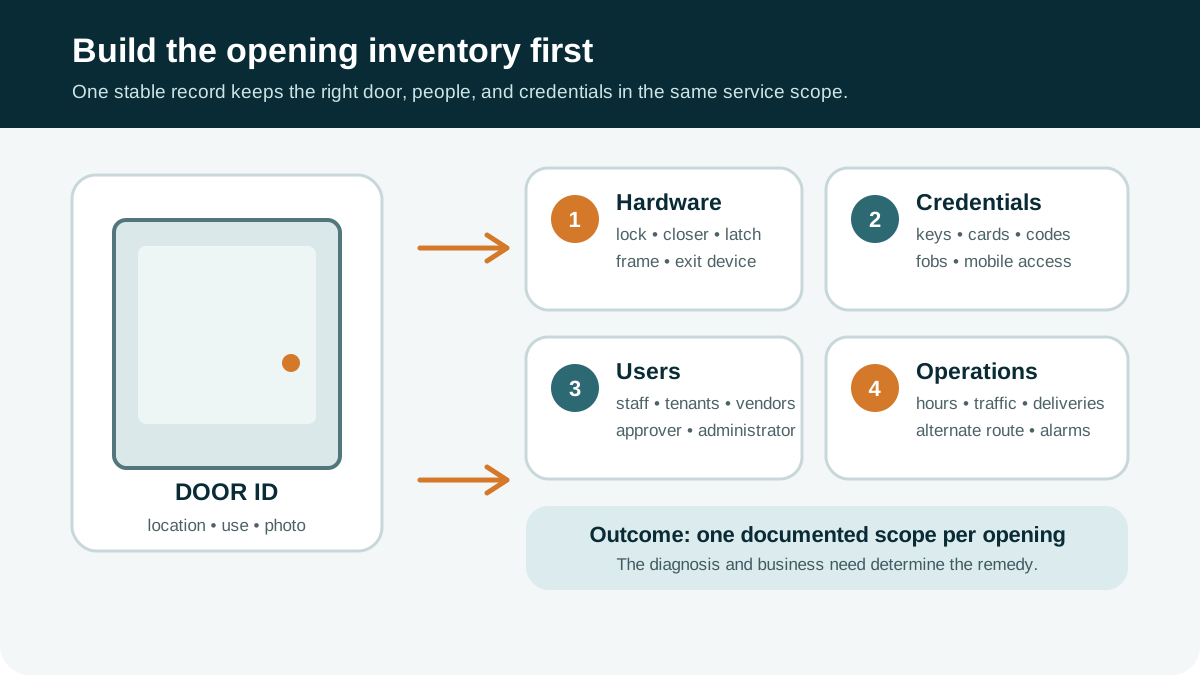
| Record | Useful details | Why it matters |
|---|---|---|
| Door ID and location | Stable name, floor, suite, exterior side, and wide photo | Prevents work on the wrong opening and supports future service records |
| Function | Public entry, employee access, delivery, interior control, or exit | Connects security decisions to actual building use |
| Hardware | Lockset, cylinder, closer, hinges, latch, strike, exit device, operator | Shows that several components may affect one symptom |
| Credentials | Keys, cards, codes, fobs, mobile access, and override methods | Reveals lost control and administration responsibilities |
| Schedule and owner | Hours, after-hours rules, authorized approver, and administrator | Reduces disruption and closes authorization gaps |
Diagnose the complete opening, not only the lock cylinder
A commercial door is a coordinated assembly. If hinges sag, the latch may meet the strike at the wrong height. If a closer is misadjusted or the frame moves, the door may not reach the latched position.
Weather seals, thresholds, floor conditions, damaged pivots, loose fasteners, bent storefront members, and pressure differences can all change how the opening feels. Replacing a cylinder may restore key operation and still leave the business with a door that needs a shoulder to close. If this condition matches your situation, review the service scope for master key systems.
Ask the technician to observe the door through a complete cycle under normal conditions. The inspection should distinguish key or credential problems from latch retraction, alignment, closing, structural support, or exit-hardware issues.
On paired doors, the active and inactive leaves, coordinator, flush bolts, astragal, and latch sequence may matter. On aluminum storefronts, narrow-stile hardware and frame conditions require compatible parts and careful fit rather than a residential lock adapted to the opening.
Diagnosis should produce a plain-language finding. It might say the cylinder is serviceable but the key control is compromised, the lock body is worn, the strike is loose, the door is dropping on its hinges, or the closer does not bring the latch fully home.
The written remedy should match that finding. When work from a door technician, glazier, carpenter, electrician, alarm provider, access-control integrator, or property owner is also needed, assign that responsibility instead of hiding it inside a vague lock replacement quote.
Choose among repair, rekeying, replacement, and access upgrades
Repair keeps serviceable hardware and corrects a defined fault. It may involve fastening, alignment, a replaceable component, cleaning appropriate to the manufacturer, or restoring a compatible part of the opening. Rekeying changes which mechanical key operates a compatible cylinder while generally keeping the existing lock body and trim.
Replacement changes hardware because the current product is damaged, unsuitable, unsupported, incompatible, or no longer meets the business requirement. Those choices affect price, downtime, future parts, and key control differently.
A master-key system can organize mechanical access by role, but it needs disciplined design and administration. Decide which users need access to which doors, how keys will be identified, who can authorize duplicates, and what happens when a high-level key is lost.
Convenience grows with broader access, and so does the impact of a missing credential. A thoughtful hierarchy limits unnecessary cross-access and leaves room for future departments or tenants without creating a puzzle that only one former manager understands.
Electronic access can make credential revocation, scheduling, and reporting easier, but it adds power, communications, software, licensing, administration, and integration questions. It does not repair a sagging door or eliminate the need for safe egress. Before upgrading, confirm the business case, door compatibility, credential workflow, outage behavior, mechanical override, privacy expectations, and the person responsible for ongoing administration.
Sometimes a well-documented mechanical solution is the better fit; sometimes electronic control solves a real recurring problem. The useful answer comes from the operation, not the gadget catalog.
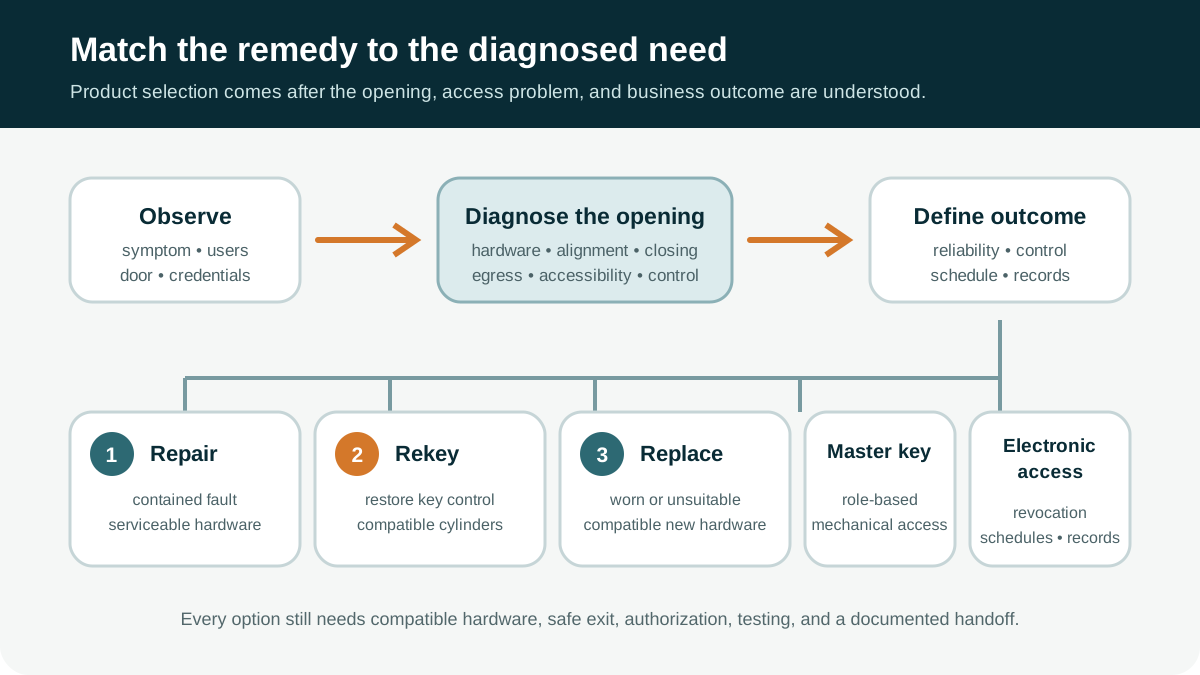
| Option | Best suited to | Questions to settle |
|---|---|---|
| Repair | A contained fault in otherwise serviceable, compatible hardware | What failed, what remains, and how will final operation be tested? |
| Rekey | Restoring mechanical key control with compatible cylinders | Which doors, key levels, issued quantities, and duplication rules? |
| Replace | Worn, damaged, unsupported, or unsuitable hardware | Product compatibility, finish, function, parts support, and warranty? |
| Master-key change | Role-based mechanical access across multiple openings | Hierarchy, expansion, records, restricted duplication, and lost-key response? |
| Electronic access | Revocable credentials, schedules, or activity records | Power, network, licensing, egress, override, privacy, and administrator ownership? |
Preserve accessibility and emergency exit operation
Security work cannot be evaluated only from the outside. Customers, employees, and visitors must be able to use required entrances and leave through required routes. The U.S.
Access Board guide to entrances, doors, and gates explains how accessible door considerations include clear width, maneuvering clearance, thresholds, hardware operation, closing speed, and opening force where applicable. A hardware change can affect several of those conditions even when the new lock looks similar to the old one.
Treat accessibility as a coordinated opening question, not a label on one lever. The handle, pull, latch, closer, threshold, door weight, approach space, and surrounding layout contribute to usability.
Exterior doors also face wind, seals, stack pressure, and positive-latching needs, which is why closer changes should be measured and balanced rather than adjusted by feel. If an automatic operator, card reader, intercom, or push plate is involved, controls and door behavior must be reviewed together.
Ask who is responsible for confirming applicable building, fire, accessibility, lease, and insurance requirements. A locksmith can identify hardware and operational conditions, but project-specific compliance may require the building owner, authority having jurisdiction, architect, fire-protection professional, accessibility consultant, or another qualified party.
That boundary is not bureaucracy for its own sake. It prevents a security improvement on one side of the door from creating a barrier or code conflict on the other.
Space and threshold
Keep required clear width, maneuvering room, thresholds, and nearby controls in the review.
Hardware and force
Evaluate usable hardware, latch operation, closer behavior, and opening effort as a coordinated system.
Project responsibility
Name the party responsible for code, fire, accessibility, lease, and approval decisions.
Do not trade exit safety for after-hours security
Closing time creates understandable pressure to make a door feel more secure. Extra surface bolts, improvised chains, incompatible locks, or alarm changes can also interfere with emergency use.
The federal exit-route requirements in 29 CFR 1910.36 state that employees must be able to open an exit-route door from the inside without keys, tools, or special knowledge. The regulation is not a complete project design manual, but it is a useful reminder that exterior resistance and interior escape are separate sides of the same decision.
Inventory the doors that serve an exit route and the hardware used from the inside. Note panic or fire-exit hardware, delayed or controlled egress features, electromagnetic locking, alarms, door position switches, and any connection to a fire-alarm or access-control system.
Do not bypass a device because it is inconvenient during service. If the opening is part of a listed fire-door assembly or another regulated system, compatible components, labels, wiring, and inspections may matter beyond the immediate lock symptom.
Operational routines deserve attention as well. Staff should know which doors are used after hours, how visitors and deliveries are handled, who responds to an alarm, and what to do when a credential fails. The closing checklist should confirm that doors are latched without adding prohibited obstructions.
The opening checklist should identify damage, tampering, or a door that no longer moves normally. Good hardware supports a clear routine; it does not replace one.
Ask for an estimate that can be checked before work begins
A useful commercial estimate identifies the site, door IDs, observed conditions, proposed remedy, product or compatible part, quantity, finish, keying plan, credentials, labor, service timing, and testing. It should separate standard work from possible door, frame, electrical, access-control, alarm, or finish corrections. If after-hours response, emergency board-up, temporary hardware, special-order parts, return trips, tax, shipping, or disposal could affect the total, those assumptions should be visible before authorization.
For multi-door work, require line items or a door schedule. A single total can hide whether every opening received the same scope or whether one problem consumed the budget intended for another. For keying work, record the approved hierarchy and issued quantities without circulating sensitive bitting or credential data broadly.
For electronic systems, clarify readers, controllers, locks, power supplies, software, licenses, cloud fees, mobile credentials, integrations, training, warranties, and ongoing support. The estimate should tell the next manager what was purchased—not merely that someone paid a locksmith.
Use a change process for hidden or newly discovered conditions. The technician should show the condition, explain why it affects the approved scope, propose a remedy, and state the price and schedule effect before proceeding.
This is especially important when decorative trim hides frame damage, an existing cylinder is not compatible with the assumed key system, or wiring and power differ from the survey. A short documented pause protects both parties and keeps urgency from turning into ambiguity.
- Site, suite, door IDs, operating symptoms, and authorization contact
- Exact repair, rekey, replacement, master-key, or access-control scope by opening
- Hardware, cylinders, keys, credentials, finish, labor, timing, tax, shipping, and disposal
- Named exclusions and responsibility for door, frame, glass, electrical, alarm, network, paint, or code coordination
- Change approval, product and labor warranties, documentation, training, and future service contact
Plan the work around business operations
Commercial locksmith work can interrupt customer entry, employee movement, deliveries, tenant access, or alarm routines even when the hands-on repair is brief. Choose a service window based on actual traffic and identify an alternate authorized route.
Notify the people who manage the building, alarm, access-control platform, reception desk, loading area, or neighboring suite. If a door will be unavailable, use clear temporary direction without exposing security details that do not belong on a public sign.
Prepare the site without dismantling hardware. Move ordinary obstructions, reserve parking or loading access, provide escorts for restricted areas, and have the authorized decision-maker reachable. Gather existing key or credential records, product documentation, and relevant service history.
Do not distribute master keys, administrator passwords, or sensitive access lists in an open group chat. Share only the information needed with the people responsible for the work.
If the job spans several doors, agree on a sequence that preserves operations. The technician may complete and test one opening before moving to the next, or stage keying changes so old and new credentials do not create confusion.
Decide when new keys or credentials will be handed out and when old access stops working. The best transition is boring: authorized users know what changes, essential entrances remain available, and the business does not discover the new system by failing to open the next morning.
| Before work | During work | Before the technician leaves |
|---|---|---|
| Confirm authorization, door IDs, scope, and alternate routes | Keep the work zone controlled and route traffic safely | Test each door from authorized sides under normal conditions |
| Notify property, alarm, access, and operations contacts | Approve documented changes through the named decision-maker | Distribute credentials through the approved custodian |
| Gather records without oversharing sensitive data | Protect master keys, codes, and administrator access | Collect product, warranty, invoice, and administration records |
| Schedule around customers, tenants, deliveries, and shifts | Complete openings in an agreed operational sequence | Confirm opening, closing, after-hours, and outage procedures |
Finish with testing, credential control, and a usable record
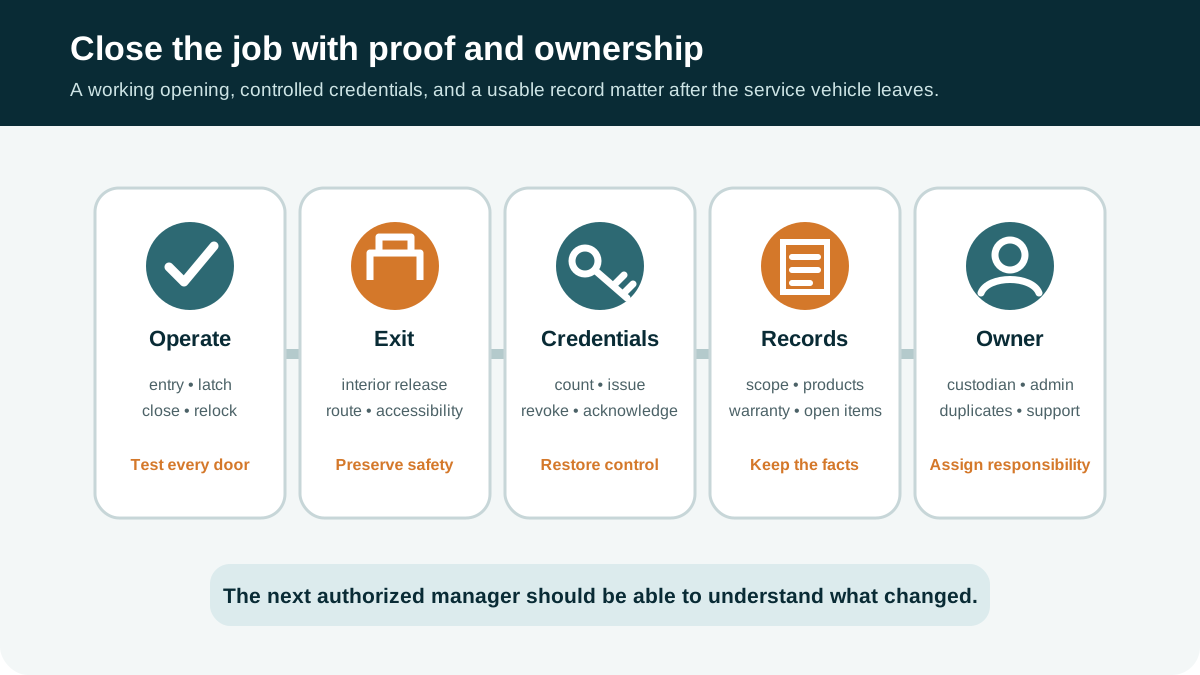
Closeout begins at the door. Test normal entry with each promised credential type, interior release, latch engagement, closing, and relocking. Check the door under the conditions employees actually use, including a representative opening and closing routine.
If automatic operators, alarms, readers, request-to-exit devices, door contacts, or schedules are involved, verify their agreed functions with the responsible system owner. A quick turn of one key while the door is propped open is not a complete acceptance test.
Then complete the credential handoff. Count mechanical keys and electronic credentials, identify their access level in an appropriate secure record, obtain acknowledgment from the custodian, and remove or disable obsolete access as approved. Change temporary installer or commissioning credentials where applicable.
Confirm who can order duplicates, enroll a new user, revoke a lost credential, retrieve access reports, approve service, and maintain any subscription or cloud account. Technology without an owner becomes tomorrow's lockout.
Retain the invoice, door schedule, approved keying or access plan, product information, warranty terms, photos appropriate for maintenance, and support contacts. Keep sensitive information in a controlled location rather than attaching it to the public-facing door list.
Schedule follow-up when the scope includes another trade, a special-order part, or a condition that could not be completed safely. A clear record makes future service faster and helps the business distinguish an old assumption from an actual installed fact.
Operate every opening
Test entry, interior release, closing, latching, relocking, credentials, and agreed connected functions.
Hand off credentials
Count keys and credentials, revoke obsolete access, and name the responsible custodian and administrator.
Preserve the scope
Keep the door schedule, products, warranties, invoice, tests, open items, and future support contacts.
When to call Heartland for commercial locksmith service in Wichita
Call when a commercial door no longer locks, latches, closes, or accepts authorized credentials consistently; when keys are lost or unreturned; when a tenant or staffing change affects access; or when the business needs a documented key-control or hardware plan. Stop using an opening when loose or damaged components, broken glass, a severely misaligned door, compromised exit hardware, or another unsafe condition could injure someone or leave the property unsecured. For immediate threats, fire, medical danger, or a suspected crime in progress, contact emergency services first.
Before you call, gather the business name and address, suite, contact and authorization details, door IDs or clear location descriptions, the exact symptoms, credential types, recent changes, normal operating hours, and whether the opening affects customers, employees, deliveries, or an exit route. Wide photographs can help with preparation when they can be taken safely, but avoid sharing key cuts, access codes, alarm details, or other sensitive security information unnecessarily.
Heartland can assess the affected commercial opening, explain practical options, and build a scope around the door, hardware, key control, and business routine. For a focused starting point, review our commercial locksmith services, commercial lock change options, and master key systems guidance, then call to discuss the site and schedule.
The goal is not simply a lock that turns during the service visit. It is dependable, authorized access that still makes sense when the next employee arrives, the last manager closes, and the business needs a clear record later.
Frequently asked questions
Questions readers ask
Should a business rekey locks after an employee leaves?
It depends on what credentials the person held, whether every key or credential was returned, whether duplicates could exist, and how much access the credential provided. Rekeying can restore control for compatible mechanical cylinders, while electronic credentials may be revoked through the access system. High-level or unreturned keys deserve prompt review across every affected opening.
Can a commercial locksmith fix a door that will not latch?
A locksmith can diagnose how the lock, latch, strike, door, frame, hinges, closer, and seals interact and may correct conditions within the approved scope. Structural frame damage, glass, major door repair, electrical work, or specialized access-control integration may require coordination with another qualified trade. The diagnosis should identify that boundary before parts are replaced.
What is the difference between rekeying and replacing a commercial lock?
Rekeying changes which mechanical key operates a compatible cylinder while generally retaining the existing lock body and trim. Replacement installs different hardware because the existing product is worn, damaged, unsupported, incompatible, or unsuitable for the business need. A technician should inspect the opening and key-control goals before recommending either option.
Does a master key system let one key open every business door?
It can be designed with a high-level key that operates many cylinders, but a useful system usually limits each role to the doors it needs. Broader access increases the consequence of a lost key, so hierarchy, duplication control, records, expansion, and lost-key response should be planned before cylinders are keyed.
What should a commercial locksmith estimate include?
The estimate should identify the site and doors, findings, proposed remedy, hardware or compatible parts, keying and credentials, labor, service timing, testing, tax, shipping, disposal, exclusions, change approval, warranty, and closeout documentation. Multi-door work should be clear enough to verify the scope and result at each opening.
The right solution depends on the specific lock, door, vehicle or garage door system. Check the Wichita-area service pages, then call or send the details for an evaluation.