Commercial locksmith
Commercial Lock Rekeying vs. Replacement: A Wichita Business Guide
When a key is lost, an employee leaves, or a commercial lock becomes unreliable, the obvious question is whether to rekey the cylinder or replace the hardware. The honest answer depends on two separate issues: who may still have access, and whether the existing opening is mechanically fit for continued service. Separating those questions helps a Wichita business restore control without paying for hardware it does not need—or preserving hardware that is already causing trouble.
Rekeying is usually the focused choice when compatible cylinders and surrounding hardware are serviceable but the business needs old keys to stop working. Replacement makes more sense when the lock is worn, damaged, unsupported, incompatible with the desired key system, or unable to provide the function the opening now needs. Inventory every affected door and credential, inspect the complete opening, account for master-key relationships, compare itemized scopes, and finish with documented key control and operational testing.
When a key is lost, an employee leaves, or a commercial lock becomes unreliable, the obvious question is whether to rekey the cylinder or replace the hardware. The honest answer depends on two separate issues: who may still have access, and whether the existing opening is mechanically fit for continued service. Separating those questions helps a Wichita business restore control without paying for hardware it does not need—or preserving hardware that is already causing trouble. Continue with the complete library of commercial locksmith guides when you want to compare related decisions.
Key takeaways
- Rekeying changes authorized keys; it does not repair worn hardware, a sagging door, or a damaged frame.
- Replacement should solve a documented condition or functional need, not simply make the invoice larger.
- One missing master or sub-master key may affect many more doors than the place where it disappeared.
- A door-by-door inventory prevents accidental omissions, unnecessary replacements, and broken key-system relationships.
- Closeout should prove old keys no longer work, new keys work where intended, and every opening still closes, latches, and releases correctly.
Start by separating the key problem from the lock problem
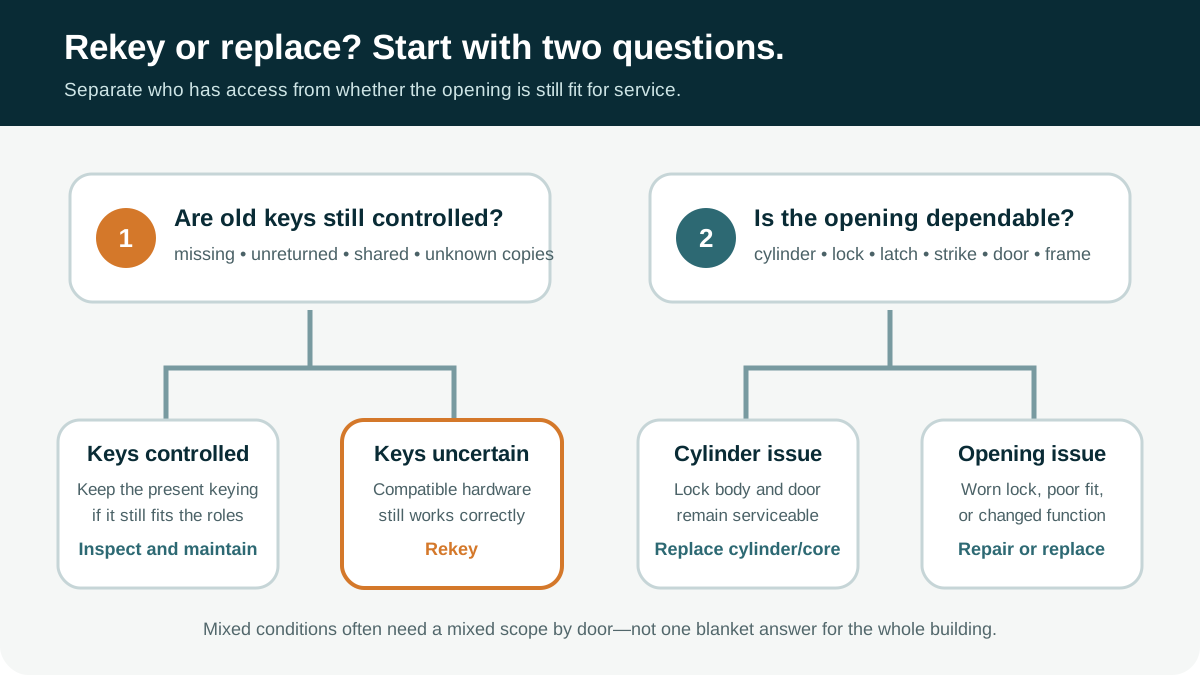
A key-control problem means the business cannot confidently account for everyone who can unlock an opening. Common triggers include an unreturned employee key, a missing manager ring, contractor turnover, a tenant change, a key found in an unknown location, or years of casual duplication. Rekeying can address that problem when the cylinders are compatible and the rest of the hardware remains serviceable, because the old key combination is changed while much of the installed assembly stays in place. If this condition matches your situation, review the service scope for commercial lock change.
A hardware problem is different. A lever that droops, a latch that hesitates, a cylinder that binds, loose trim, impact damage, corrosion, an obsolete product, or repeated repairs can justify repair or replacement even when every issued key is accounted for. Putting a new key combination into a tired cylinder does not make the latch retract cleanly, and swapping the lock does not straighten a door that has dropped on its hinges.
Some service calls involve both issues at once. A departing supervisor may have an unreturned master key while two heavily used entrances also have worn hardware, so the useful plan may rekey compatible cylinders and replace only the assemblies that no longer deserve another service cycle. That mixed scope is often more sensible than forcing every door into one answer just because the work happens on the same day.
Who may still have a working key?
Map missing, unreturned, shared, and possibly duplicated keys to every opening they may operate.
What is the hardware actually doing?
Record binding, looseness, intermittent operation, impact, corrosion, and prior repair history.
What must the opening do next?
Define authorized users, daily traffic, key hierarchy, exit operation, and any planned expansion.
Understand what rekeying changes—and what it leaves alone
Commercial rekeying changes the mechanical key combination in a compatible cylinder so the previous operating key no longer turns it. The lock body, lever or trim, latch, strike, closer, hinges, door, and frame generally remain, although a technician may remove and reinstall components to complete and test the work. That limited scope is precisely why rekeying can be efficient when the existing hardware is sound and the business goal is restoring control over mechanical keys. If this condition matches your situation, review the service scope for commercial locksmith services.
Rekeying does not automatically improve resistance to wear, impact, unauthorized duplication, or a keyway that no longer matches the organization's needs. It also does not create a new master-key hierarchy by magic; cylinders must be compatible, available key combinations must be considered, and the requested access levels must be designed. A business should know whether it is receiving a simple change key, a keyed-alike group, work within an existing master system, or a redesigned hierarchy.
The old keys should be treated as active until every affected cylinder has been changed and verified. A partially completed project can create confusing islands where some doors accept the new key, others accept the old one, and no manager has a reliable list. Sequence the work, identify temporary access, and document completion by door ID so the business does not have to reconstruct the project from a handful of unlabeled keys later.
| Element | Typical rekey result | Reason to expand the scope |
|---|---|---|
| Cylinder combination | Changed so approved new keys operate it | Cylinder is damaged, incompatible, obsolete, or outside the planned system |
| Lock body and trim | Retained when serviceable | Wear, looseness, failure, poor fit, or unsuitable function |
| Latch, strike, and alignment | Inspected and tested | Binding, incomplete latching, frame movement, or damaged components |
| Door and closer | Remain unless separately included | Door does not close, latch, or move reliably under normal conditions |
| Key records | Reissued for the new combination | No reliable custodian, hierarchy, count, or duplication process exists |
Inventory doors, keys, and authority before deciding the scope
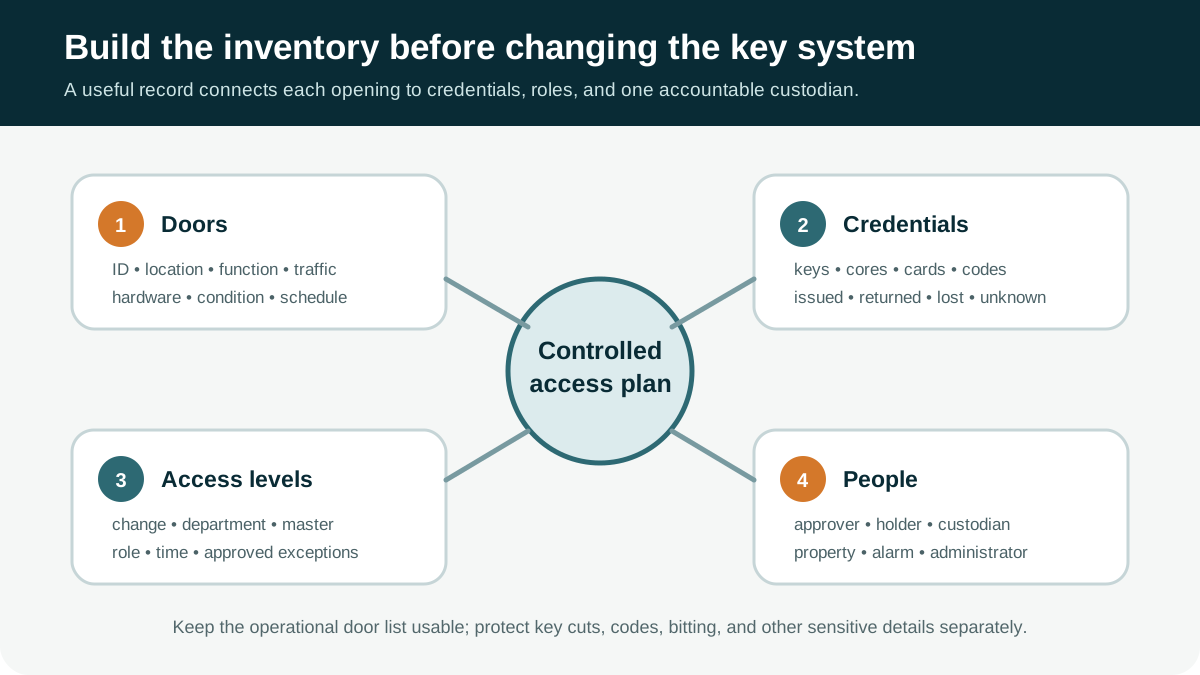
Give every affected opening a stable name such as Front-01, Office-03, or Receiving-02 rather than relying on 'the side door.' Record the location, normal users, public or staff function, current hardware, key marking where appropriate, and whether it belongs to a shared or master-key group. Wide photographs can help identify the opening and hardware, but do not circulate close images of key cuts, codes, alarm details, or other sensitive information in an ordinary email thread. If this condition matches your situation, review the service scope for master key systems.
Build a separate credential list showing which roles hold change keys, department keys, sub-master keys, grand-master keys, override keys, or electronic credentials. The FTC guidance for protecting business information (opens in a new tab) recommends controlling who has a key and the number of keys, which is a useful operational principle even when the immediate project concerns the front door rather than a records room. A lost high-level key may widen the scope from one office to many openings, while a lost key limited to one storage room may have a much smaller effect.
Name the person who can approve work and receive the new credentials. A property owner, tenant, facilities manager, corporate security team, franchise operator, and building manager may each control different parts of the system, so the technician needs clear authorization before changing access. Resolve lease requirements, restricted-key permissions, and master-system ownership before the service window instead of asking a field technician to referee them beside a disabled entrance.
- Stable door ID, location, normal function, traffic level, and service window
- Lock, cylinder, keyway, core, trim, exit hardware, closer, and visible door condition
- Keys issued by role, known returns, missing keys, shared copies, and possible duplicates
- Master-key relationships, restricted-key authorization, and future expansion needs
- Named approver, credential custodian, property contact, and system record location
Choose rekeying when the hardware is sound and access is the issue
Rekeying is often the strongest value when commercial cylinders are compatible, locks operate smoothly, doors align and latch, and the desired function will remain the same. It can restore known control after employee or tenant turnover, combine appropriate doors into a planned keyed-alike group, or change selected levels within a master-key system. Retaining sound hardware also avoids unnecessary finish changes, patching, and product substitutions on a door that already works well.
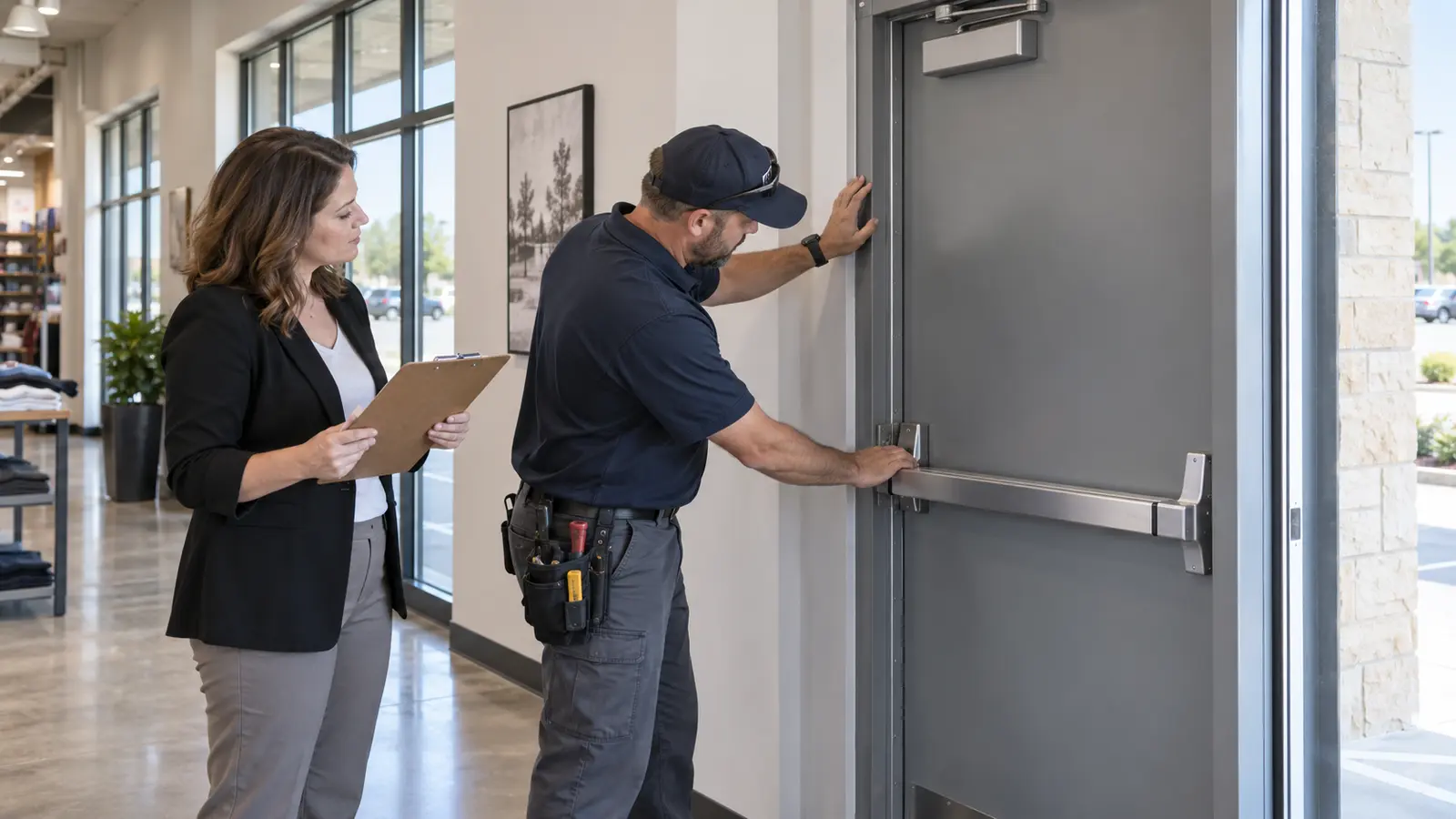
The technician should still inspect more than the keyway. Each opening should be operated from authorized sides, with the door open and closed, to reveal binding, latch drag, closer problems, loose trim, or strike misalignment that a key-only test can miss. If a small adjustment or repair is needed, it should be listed separately so the business can see what restored key control and what restored reliable door operation.
Cost comparisons should count cylinders, labor, keys, master-key planning, after-hours scheduling, compatible cores, restricted blanks where applicable, and final testing. A low per-cylinder number may not include the keys people actually need or the work required to preserve the existing hierarchy. Ask for the complete installed and documented scope rather than treating the least expensive line item as the entire project.
Choose replacement when condition, compatibility, or function has changed
Replacement deserves consideration when the lock body or cylinder is worn, damaged, unreliable, corroded, repeatedly repaired, unsupported, or incompatible with the intended key system. It may also be appropriate when the current residential-style product was never a good fit for commercial traffic or when the opening needs a different function. The reason should appear in plain language on the estimate so the owner can connect every new component to an observed condition or operational requirement.
Compatibility includes the door preparation, backset, thickness, frame, strike, handing, trim clearance, keyway, finish, and any listed or regulated assembly involved. A product that fits the hole may still be wrong for the traffic, exit function, accessibility, fire-door requirements, or nearby access-control equipment. When another trade or a project-specific code decision is required, the scope should identify who owns that work before installation begins.
Replacement is not always all-or-nothing. A project may retain serviceable lock bodies while replacing incompatible cylinders, replace worn high-traffic levers while rekeying lower-use offices, or preserve a master-key structure with compatible new hardware. A door schedule lets the business make those distinctions deliberately instead of accepting a uniform product swap that solves some conditions and ignores others.
| Observed condition | Likely direction | Confirm before approval |
|---|---|---|
| Sound compatible hardware; access uncertainty | Rekey | Affected key group, quantities, hierarchy, and final tests |
| Worn or damaged cylinder only | Cylinder or core replacement | Compatibility with lock body, keyway, and records |
| Unreliable lock body or unsuitable function | Lock replacement | Door preparation, function, traffic, finish, warranty, and egress |
| Door does not align or close | Door correction plus lock work as needed | Responsible trade, sequence, and final latch test |
| Need revocable schedules or activity records | Evaluate electronic access | Power, network, credentials, egress, administration, and recurring fees |
Protect the master-key system from a local fix that creates a larger problem
A master-key system assigns different access levels to different keys, which can make daily operations practical across offices, stockrooms, shared entrances, and management spaces. That convenience also concentrates risk. Losing a key that operates twenty doors is not the same event as losing a key that operates one closet, even if both pieces of metal look ordinary on the ring.
Before rekeying or replacing anything, identify the key level involved and the doors it may operate. Confirm whether the site uses standard cylinders, interchangeable cores, restricted or patented keyways, landlord-controlled systems, or a corporate specification. Installing an unrelated cylinder because it is available today can break manager access, complicate future service, and leave one door outside the records everyone assumes are complete.
Design for the next change, not only the present loss. Limit broad access to roles that need it, preserve expansion for future departments or tenants, control duplicate authorization, and keep the key schedule with a responsible custodian. The best master-key plan is understandable enough to administer but protected enough that sensitive bitting and hierarchy details are not posted beside the general door inventory.
Trace the missing key level
Identify every opening a missing change, master, or grand-master key may operate before setting scope.
Preserve the intended system
Confirm keyway, core, ownership, restrictions, and expansion before mixing replacement parts.
Assign one accountable record
Control issue, return, duplication, storage, lost-key response, and future authorization.
Use a risk-based decision without pretending every business is a federal facility
A neighborhood shop, medical office, warehouse, church, restaurant, and professional suite do not share the same access profile. Consider what lies behind each door, how often it is used, who needs entry, what happens if the opening fails, and how quickly the business can respond to a lost credential. Risk rises with broad key access, sensitive areas, irreplaceable inventory, after-hours use, public traffic, and a weak ability to detect or revoke unauthorized entry.
The NIST security and privacy control catalog (opens in a new tab) is written for information systems and organizations rather than as a shopping list for local locks, but its risk-management structure offers a useful lesson: controls should follow mission and business needs, threats, and required assurance. For a Wichita business, that means choosing a proportionate scope and documenting why it fits. It does not mean every office needs the most expensive cylinder or an electronic reader on every interior door.
Write down the trigger, affected openings, likely consequence, temporary controls, chosen remedy, and person responsible for follow-up. That short record improves consistency when the next key goes missing or another location needs service. It also gives managers a better basis for comparing repair, rekeying, replacement, and electronic access than fear-based language or an unsupported claim that one product is universally 'high security.'
- What asset, person, record, or operation does this opening protect?
- How many known and unknown credentials could operate it?
- What is the consequence of unauthorized entry or a failed lock?
- How quickly can the business detect, contain, and document a problem?
- What focused control reduces the real risk without disrupting safe daily use?
Compare itemized estimates instead of headline prices
Ask each estimate to identify door IDs, findings, service by opening, cylinders or hardware, keyway and keying plan, key quantities, labor, service timing, tax, shipping, disposal, testing, warranty, and documentation. Separate door or frame correction, special-order parts, electronic integration, and after-hours work so the business can compare like with like. A one-line 'change locks' total is hard to approve responsibly and nearly impossible to audit later.
For rekeying, confirm whether the price covers every affected cylinder, existing master-key compatibility, new keys by access level, restricted blanks or authorization where applicable, and removal of old access. For replacement, confirm manufacturer, series or equivalent specification, function, finish, cylinder or core, door preparation, strike, trim, warranty, and final adjustments. If the scope uses allowances or substitutions, state who approves the change and how the price will be updated.
Use a documented change process when hidden conditions appear. The technician should show the condition, explain its effect, propose an option, and state the cost and schedule difference before expanding the work. A short pause for approval is far less disruptive than discovering after installation that the invoice, key plan, or hardware function no longer matches what management authorized.
| Scope area | Rekey proposal | Replacement proposal |
|---|---|---|
| Door list | Each compatible cylinder and key group | Each assembly, function, and preparation |
| Credentials | New keys by level and issued quantity | Included cylinders, cores, keys, cards, or codes |
| Related work | Adjustment or repair listed separately | Door, frame, wiring, finish, or integration responsibility |
| Testing | Old-key rejection and new-key operation | Entry, release, closing, latching, locking, and connected functions |
| Closeout | Key count, hierarchy record, and affected openings | Product record, warranty, credentials, and maintenance information |
Schedule the change so the business remains usable
A multi-door rekey can interrupt customer entry, employee movement, deliveries, tenant access, alarms, and opening or closing routines. Decide the sequence in advance and keep one authorized route available whenever conditions permit. Notify the people who manage reception, loading, property access, alarms, cleaning, and after-hours operations without broadcasting sensitive key details to people who do not need them.
Control old and new keys during the transition. Use a named custodian, count keys at handoff, avoid leaving labeled rings unattended, and distribute access by role rather than convenience. If an electronic system, mechanical override, or lockbox is connected to the same operating plan, include its credentials and responsible administrator in the change even when the physical work is primarily mechanical.
Temporary measures need an owner and an end time. A door that must be monitored, a limited interim key, or a postponed replacement should be recorded with the responsible person and completion date. Temporary does not mean improvised; it means a defined, authorized bridge to the permanent result while required exit, accessibility, and daily operations remain intact.
Close the project with testing and a record the next manager can use
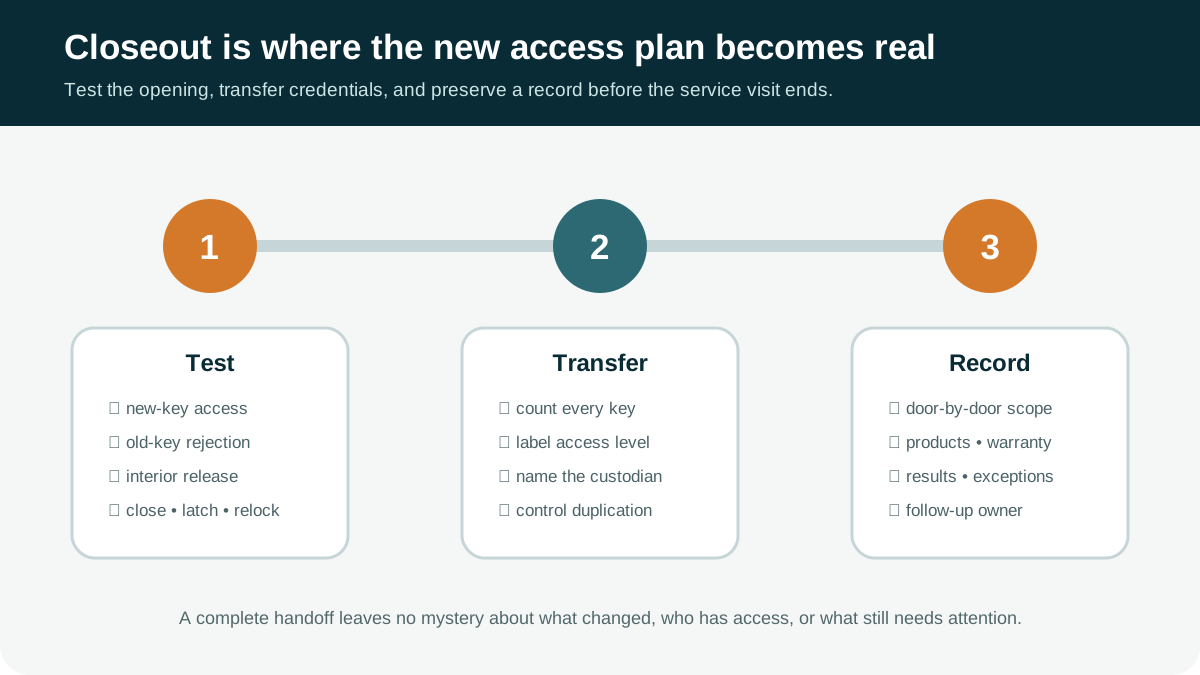
Test every opening under normal conditions, not only with the door propped open. Confirm each promised new key operates the correct doors, old keys no longer operate rekeyed cylinders, interior release works, the latch retracts and returns, the door closes and latches, and the lock secures without excessive force. Sample every access level in a master-key system and record exceptions before the technician leaves.
Complete a controlled credential handoff. Count keys by access level, identify the custodian, obtain acknowledgment, and explain who may authorize duplicates or future service. Keep sensitive keying details separate from the everyday door list, and do not attach a property address to spare keys stored off site unless the business has an appropriate protected process.
Retain the approved estimate, final invoice, door schedule, installed products, warranty terms, key quantities, change record, test results, and open items. Record any door, frame, closer, electrical, alarm, or access-control work assigned to another party. Good closeout turns the project from a one-day transaction into a usable part of the business's security and maintenance program.
Test every affected door
Verify new access, old-key rejection, interior release, closing, latching, and relocking under normal conditions.
Count and assign credentials
Hand keys to the named custodian and record access level, quantity, and duplication authority.
Keep a complete closeout record
Store scope, products, warranty, tests, exceptions, and follow-up responsibility in a controlled location.
When to call Heartland for a commercial lock change in Wichita
Call when a commercial key is lost or unreturned, turnover creates uncertainty, a lock becomes unreliable, or the business wants to simplify an inconsistent key system. Stop using an opening when loose components, impact damage, broken glass, severe misalignment, compromised exit hardware, or another unsafe condition could injure someone or prevent dependable security. Contact emergency services first for a suspected crime in progress, fire, medical danger, or another immediate threat.
Before the visit, gather the business address and suite, authorization contact, door IDs, symptoms, key types, known missing credentials, master-key relationships, hours, traffic considerations, and any landlord or corporate requirements. Share wide photographs when safe and useful, but keep key cuts, codes, alarm details, and sensitive security records out of routine messages. A clear inventory helps the technician prepare without pretending a photograph can replace an on-site diagnosis.
Heartland can inspect the complete opening, distinguish key-control work from hardware or door problems, and explain a practical rekey, repair, replacement, or mixed scope. Start with our commercial lock change service, broader commercial locksmith services, or master key systems guidance, then schedule around the business's operations. The goal is a result that works at the door today and still makes sense at the next hiring change, tenant turnover, lost key, and service call.
Frequently asked questions
Questions readers ask
Is rekeying a commercial lock the same as replacing it?
No. Rekeying changes which mechanical key operates a compatible cylinder while generally retaining the lock body and trim. Replacement installs a different cylinder, core, lock, or complete hardware assembly because of condition, compatibility, function, or another documented need.
Should a Wichita business rekey after an employee leaves?
Review the access level, whether every issued key was returned, whether duplicates could exist, and which doors the key operated. An unreturned high-level key can justify prompt rekeying across a larger group, while a fully returned individually controlled key may call for a different response based on policy and risk.
Can worn commercial locks still be rekeyed?
They may be technically rekeyable, but a new key combination does not correct worn, loose, damaged, or unreliable hardware. A technician should inspect the cylinder, lock body, latch, strike, door, and frame and explain whether repair, cylinder replacement, or complete replacement is the more dependable scope.
Will rekeying affect a master key system?
It can. The new combination must be planned within the existing hierarchy if authorized master keys are expected to continue working. The technician needs accurate system information, compatible cylinders or cores, and authorization before changing any opening that belongs to a landlord, corporate, restricted, or multi-level key system.
What should be tested after commercial locks are rekeyed or replaced?
Test each new key at the doors it should operate, confirm old keys no longer work where access changed, and verify interior release, latch movement, closing, latching, and relocking under normal conditions. Count issued credentials and record products, warranties, exceptions, and follow-up work before closeout.
The right solution depends on the specific lock, door, vehicle or garage door system. Check the Wichita-area service pages, then call or send the details for an evaluation.