Commercial locksmith
Commercial Lock Repair in Wichita: When the Lock Isn’t the Whole Problem
A commercial lock that sticks, rattles, misses its strike, or refuses to latch can interrupt opening, closing, deliveries, and staff access. Yet the part everyone calls the lock is only one member of a working door assembly. The lever, cylinder, latch, strike, closer, hinges, door, frame, threshold, and any electronic controls have to cooperate. This guide helps Wichita business owners and property managers describe the symptom, understand a complete diagnosis, and choose a repair that addresses the cause rather than the most obvious part.
Commercial lock repair should begin with the complete opening. A key that binds only when the door is closed, a latch that misses its strike, or a door that must be pulled to lock may point to alignment, hinge, closer, frame, or door problems instead of a failed cylinder. Targeted repair makes sense when the fault is contained and the surrounding hardware is compatible and stable; replacement or additional door work is appropriate when parts are damaged, obsolete, mismatched, or repeatedly affected by an unstable opening.
A commercial lock that sticks, rattles, misses its strike, or refuses to latch can interrupt opening, closing, deliveries, and staff access. Yet the part everyone calls the lock is only one member of a working door assembly. The lever, cylinder, latch, strike, closer, hinges, door, frame, threshold, and any electronic controls have to cooperate. This guide helps Wichita business owners and property managers describe the symptom, understand a complete diagnosis, and choose a repair that addresses the cause rather than the most obvious part. Continue with the complete library of commercial locksmith guides when you want to compare related decisions.
Key takeaways
- Describe when and how the symptom occurs before choosing a replacement part.
- Test the lock with the door open and closed because that difference can reveal alignment or load.
- Treat the lock, latch, strike, closer, hinges, door, and frame as one commercial opening.
- Compare repair estimates by the complete installed result, testing, exclusions, and remaining work.
- Preserve required egress, accessibility, closing, and latching while improving entry security.
Start with the symptom, not a replacement part
The phrase ‘broken lock’ can describe several very different conditions. A key may be difficult to turn, a lever may sag, a latch may not enter the strike, a cylinder may move in the door, or an electronic release may work only some of the time.
Staff may also say the lock is failing when the door closes too slowly, bounces off the frame, or needs a hard pull before the key will operate. Each symptom leads to a different inspection path, and naming it accurately saves time. If this condition matches your situation, review the service scope for commercial lock repair.
Ask when the problem appears. Does the key turn normally while the door is open but bind after the door closes? Does the latch retract from the interior but fail to line up with the strike?
Does the problem follow temperature, wind, heavy traffic, a recent impact, or another contractor's work? Does it affect one credential, every key, or only the electronic release? These observations are more useful than guessing which component has failed.
Avoid repeated force. A strained key can break, a loose cylinder can become more damaged, and slamming can worsen a closer, hinge, latch, or frame condition.
Do not spray an unknown product into hardware as a substitute for diagnosis, and do not remove covers from electrified or exit hardware on an occupied opening. Record the behavior from a safe distance, keep sensitive codes and key details private, and arrange assessment when ordinary operation is no longer dependable.
Open versus closed
A lock that changes behavior when the door closes often points toward load, alignment, or strike contact.
Timing and traffic
Note weather, peak-use periods, recent impacts, and whether the symptom is constant or intermittent.
Who is affected
Separate one worn key or credential from a problem shared by every authorized user.
Map the complete commercial opening
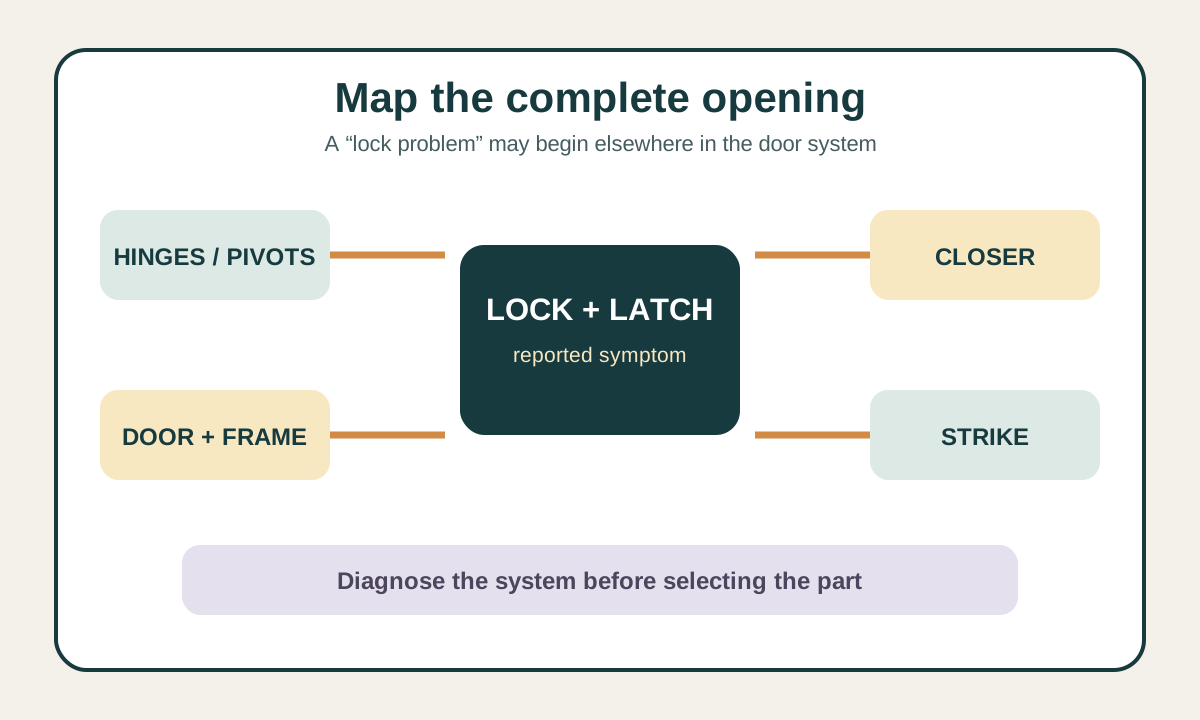
A commercial opening is a small system. Hinges or pivots support the door and establish its position. The closer controls the swing and return.
The latch or bolt meets a strike attached to the frame. A cylinder accepts the key, while a lever, knob, paddle, pull, or exit device gives the user control. Weather seals, thresholds, door sweeps, automatic operators, alarm contacts, readers, electric strikes, and power transfers may add resistance or change how the opening behaves. If this condition matches your situation, review the service scope for commercial locksmith services.
A problem in one part often appears somewhere else. Worn hinges can lower the latch edge until it rubs below the strike. A loose closer arm can change closing speed or leave the door short of latching.
A damaged frame can move the strike away from the latch. A swelling or distorted door can create friction that users overcome by pulling on the lever. Replacing the lock body in those situations may provide new hardware without restoring reliable operation.
Identification matters before parts are ordered. Commercial cylindrical locks, mortise locks, narrow-stile storefront hardware, deadbolts, exit devices, and electrified products have different preparations and functions.
Door thickness, handing, backset, fire label, frame type, strike, credential plan, and interior release all affect compatibility. A product that looks close in a catalog can still be wrong for the opening, which is why a useful service scope begins with the installed assembly rather than a shopping link.
| Opening component | Its job | Clue worth noting | Common mistaken assumption |
|---|---|---|---|
| Cylinder and key | Authorize mechanical operation | One key binds, cylinder moves, or rotation is inconsistent | Every hard turn requires a whole new lock |
| Latch, bolt, and strike | Secure the door at the frame | Rubbing, incomplete engagement, or a visible height mismatch | Lubricant will correct door position |
| Hinges or pivots | Carry and locate the door | Uneven gaps, sag, looseness, or rubbing | Support hardware cannot affect the lock |
| Closer | Control return and closing | Slamming, stalling, rebounding, or inconsistent latching | Closing force should simply be increased |
| Door and frame | Hold the hardware in alignment | Impact damage, movement, corrosion, or loose preparation | New trim will stabilize damaged structure |
Read common symptoms as clues
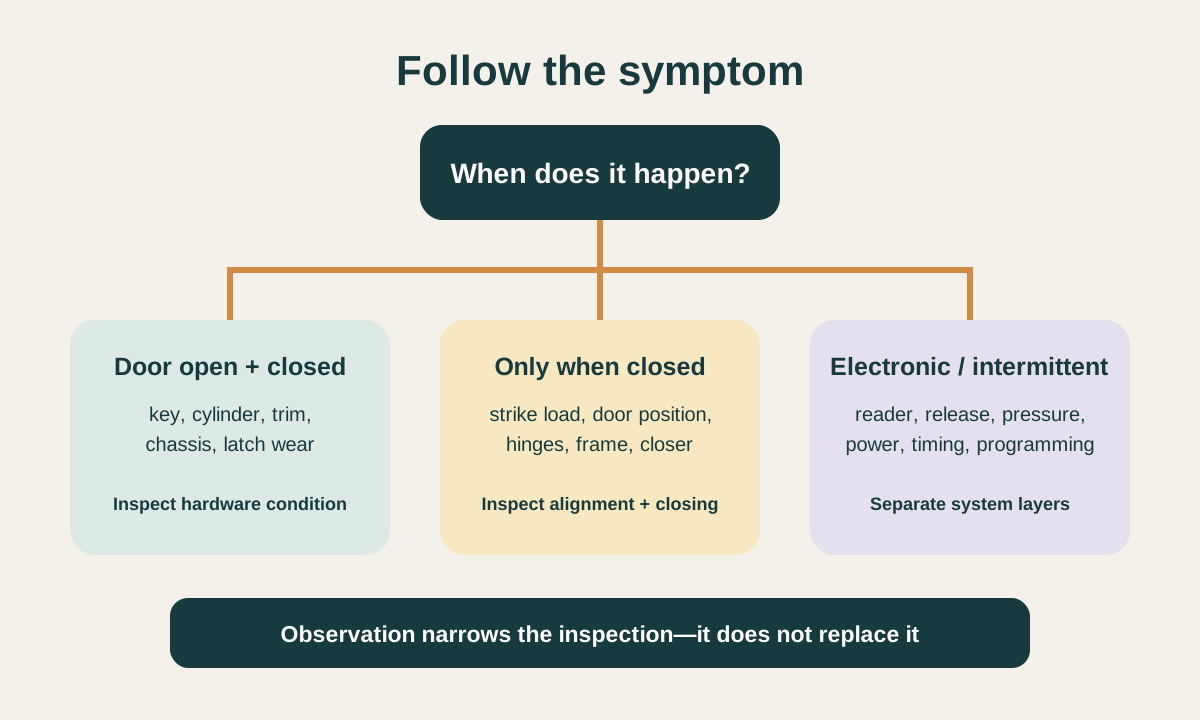
A key that works with the door open but becomes difficult when it is closed suggests the bolt or latch may be loaded against the strike. The cause can include door sag, frame movement, closer pressure, a shifted strike, or another alignment condition.
A key that remains rough with the door open may instead involve the key, cylinder, lock mechanism, mounting, or contamination. Neither test proves the final diagnosis, but the contrast tells a technician where to look first. If this condition matches your situation, review the service scope for storefront door lock service.
A sagging lever can involve return springs, trim mounting, the lock chassis, or wear from high traffic. A latch that stays retracted may involve the latch itself, trim, linkage, or pressure at the strike.
A door that closes but will not latch can be moving too slowly, contacting a seal or threshold, rebounding from the frame, or missing the strike. A loose cylinder may be a mounting issue, but continued operation can damage connected parts and should not be ignored.
Intermittent electronic symptoms need both mechanical and system context. An access reader can approve a credential while the electric strike remains under pressure. A release may sound without allowing the door to open because the latch and strike are not aligned.
Power, wiring, programming, schedules, request-to-exit devices, alarms, and mechanical hardware may cross contractor boundaries. A clear scope states which layer was tested and which provider owns anything outside the locksmith work.
- Key turns only with the door open: inspect latch load and alignment before blaming the cylinder.
- Lever droops or has excess travel: inspect trim, return action, chassis, mounting, and use history.
- Door must be slammed or pulled: inspect support, closer, seals, threshold, frame, latch, and strike.
- Cylinder rotates or feels loose: stop forcing it and have its mounting and connected hardware checked.
- Reader approves but door stays locked: document the electronic response and the mechanical door behavior separately.
Know when targeted repair makes sense
Repair is usually the sensible first choice when the installed hardware is appropriate for the opening, the fault is contained, compatible service parts are available, and the surrounding door and frame can hold the correction. Examples can include securing sound mounting, replacing a worn compatible latch or spring component, correcting a supported adjustment, or aligning the strike after the underlying door condition is resolved. The purpose is dependable operation, not preserving every old component at any cost.
Commercial hardware is evaluated for different functions and performance levels. The ANSI/BHMA standards library (opens in a new tab) provides context for standards covering locks, latches, closers, exit devices, hinges, pivots, cylinders, and related builders hardware.
A grade or brand alone does not prove fit for a particular opening. Traffic, function, environment, door preparation, required release, maintenance history, and the condition of connected components all belong in the decision.
A repair proposal should say what is being corrected and what condition will remain. Ask whether the price includes diagnosis, compatible parts, labor, alignment within the service scope, repeated operational testing, cleanup, documentation, and a warranty.
Ask who is responsible if the door, frame, glass, closer, access system, power, or fire-rating issue falls outside that scope. A narrow repair can be excellent value when the boundaries are visible and the complete opening is stable.
Contained fault
The symptom traces to a serviceable component or correction rather than widespread wear.
Compatible support
The installed family has correct service parts, information, and a function suited to the opening.
Stable opening
The hinges, closer, door, frame, and strike can preserve alignment after the work.
Recognize when the scope should expand
Replacement becomes more practical when hardware is cracked, bent, severely worn, repeatedly failing, improperly modified, incompatible with the door, or no longer supported. It can also be justified when the existing function does not match current operations.
A door that should latch automatically during business hours has a different need from an after-hours deadbolt. The replacement should solve the actual access and security requirement, not merely resemble the part being removed.
Sometimes the lock work must wait on door or frame correction. A damaged hinge reinforcement, distorted hollow-metal door, loose frame, failed pivot, cracked glass-door component, or significant closer problem may need another trade or a broader approved scope.
Installing new locking hardware on an unstable opening can transfer force into the new part and repeat the failure. A responsible proposal identifies that dependency instead of hiding it in a vague exclusion.
Modernization also requires system thinking. Adding a keypad, reader, electric strike, electrified lock, or remote release affects credentials, power, wiring, interior release, alarm coordination, door position, failure behavior, and administration.
The electronic feature cannot correct a door that drags or a latch that misses. Start with a mechanically sound opening, define who owns each system layer, and verify the final sequence under ordinary business conditions.
| Possible scope | Good fit | Changes | Does not automatically correct |
|---|---|---|---|
| Rekey | Serviceable compatible cylinder; authorized users changed | Which mechanical key operates the cylinder | Worn hardware, misalignment, or a damaged door |
| Targeted repair | A supported component or adjustment has a contained fault | The diagnosed mechanical condition | An obsolete function or unstable opening |
| Hardware replacement | Damage, wear, incompatibility, or functional change is substantial | Selected lock, trim, or related hardware | Door, frame, electrical, or integration work unless listed |
| Door or frame work | Structure or alignment cannot support reliable locking | The base condition of the opening | Key control or electronic administration unless included |
Protect egress, accessibility, and daily operation
Commercial entry security must coexist with safe, understandable exit. Interior operation, occupancy, fire-door conditions, panic hardware, clear width, maneuvering space, operating force, threshold height, closing speed, and latching may affect the available choices.
The exact requirements depend on the building and opening. A lock repair should not introduce an unfamiliar release, disable required hardware, or make staff rely on a special action during an emergency.
The U.S. Access Board guide to entrances, doors, and gates (opens in a new tab) explains accessibility topics such as maneuvering clearance, thresholds, door hardware, opening force, closing speed, and automatic doors.
It is a useful federal reference, not a substitute for project-specific review or local enforcement. Existing conditions, lease responsibilities, fire protection, alterations, and the authority having jurisdiction can change the required scope.
Do not chain, block, or disable an exit to solve an entry problem. Do not increase closing force blindly because a latch sometimes fails to catch, and do not remove a closer because the door feels difficult.
If staff prop the door to keep operations moving, treat that as evidence that the opening or workflow needs attention. The desired result is controlled entry, intuitive exit, manageable opening effort, predictable closing, and dependable latching.
Plan the visit around the business
A correct repair can still create a poor outcome when authorization and scheduling are overlooked. Identify the business contact, property representative, affected suite, opening and closing times, delivery windows, peak customer periods, alternate entrances, alarm schedule, and the person who can approve changes. Clarify whether the tenant or landlord owns the door, frame, master-key system, access control, or common-area hardware before work begins.
Prepare a safe continuity plan if the primary entrance may be temporarily unavailable. That can mean directing customers to another accessible entrance, coordinating with security, protecting deliveries, or scheduling work outside the busiest period.
The plan must not obstruct required exits or leave the property unsecured while an unexpected part is sourced. A proposal should make any expected downtime and temporary condition explicit.
Protect access information during coordination. Share ordinary photos of the full opening, the symptom, and visible product labels when helpful, but do not email key cuts, alarm instructions, administrator passwords, access codes, protected wiring diagrams, or confidential credential records. Tell the service provider whether the opening connects to an alarm, reader, automatic operator, fire system, or master key so the right people can be involved without exposing sensitive details.
- Name the authorized decision-maker and property contact before hardware changes.
- Identify peak traffic, deliveries, opening and closing routines, and an approved service window.
- Confirm whether alternate customer and staff routes remain safe and accessible.
- List connected alarms, readers, operators, and master-key constraints without sharing secrets.
- Assign ownership for locksmith, door, frame, glass, electrical, and access-control work.
Compare commercial lock repair estimates fairly
Two estimates with the same headline can describe different results. One may include a latch and cylinder but exclude alignment, closer work, keys, or testing. Another may include a complete compatible lockset, strike, finish, installation, repeated cycles, documentation, and a warranty.
Normalize the scopes before comparing prices. The cheapest line item can be expensive if it leaves the cause untouched or requires a second visit from another trade.
Look for a plain-language diagnosis, named hardware function, compatibility assumptions, included door and frame corrections, number and type of keys or credentials, electronic integration, finish, schedule, cleanup, testing, warranty, and exclusions. Ask whether the proposed component is new, supported, and suitable for the traffic and environment. If an allowance is used because the opening cannot be fully identified until service, ask how approval will work before the price changes.
Separate urgent restoration from optional improvement. A failing employee entrance may need a prompt like-for-like repair, while a broader key-control or electronic-access upgrade deserves planning.
Combining the projects can be efficient when the design is ready, but an emergency should not force an unreviewed system decision. A good estimate tells the business what must happen now, what can wait, and what information would change the recommendation.
| Compare | What should be clear | Question to ask |
|---|---|---|
| Diagnosis | Observed symptom and likely cause | What evidence points to this correction? |
| Installed scope | Exact components, function, finish, and related alignment | What will work differently when complete? |
| System boundaries | Door, frame, closer, power, alarm, and access-control ownership | Which remaining condition belongs to whom? |
| Acceptance | Entry, exit, closing, latching, locking, and connected tests | How many ordinary cycles will be demonstrated? |
| Handoff | Keys, records, product details, warranty, and open items | What will the authorized manager receive? |
Test the complete result before handoff
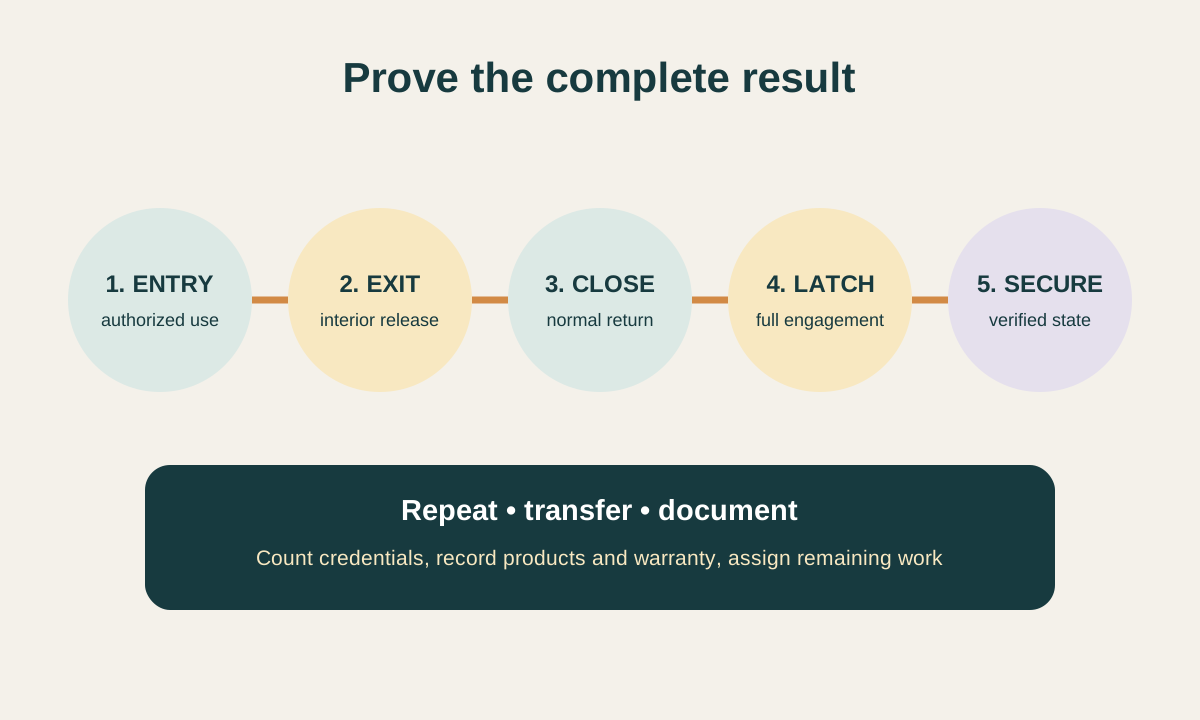
Final testing should reproduce ordinary use, not a single convenient movement with the door held open. Operate the authorized key or credential, enter from the intended side, release from the interior, allow the closer to move the door without assistance, confirm the latch or bolt engages, and verify the secured state. Repeat the sequence enough times to reveal an intermittent rub, rebound, slow close, or electronic timing problem.
Check the agreed operating conditions. If the door serves deliveries, employee arrival, public entry, after-hours locking, or scheduled electronic access, demonstrate each function included in the work.
Confirm that keys and credentials match the approved roles and that old credentials behave as planned. Testing should not expose bypass methods or protected programming; it should prove that ordinary authorized use and exit are predictable.
Closeout records protect both the business and the next technician. Keep the approved scope, installed product information, key or credential count, service notes, test result, warranty, and a list of remaining work.
Record any door, frame, closer, hinge, glass, electrical, alarm, or access-control condition assigned elsewhere. A manager should be able to understand what changed without relying on memory or a photo of an unlabeled key.
When to call Heartland for commercial lock repair
Arrange service when a commercial key begins binding, a cylinder moves, a lever sags, a latch misses, the door must be pulled or slammed to secure, or an electronic release becomes unreliable. Seek prompt assessment after forced entry, impact, visible door or frame damage, a sudden loss of secure closing, or any condition affecting a required exit. For an active crime, fire, medical emergency, or immediate threat, contact emergency services first.
Before the visit, gather the Wichita address and suite, a responsible contact, business hours, safe photos of the full opening, a description of when the symptom occurs, and any visible product information. Note recent impacts or repairs, whether the behavior changes with the door open, and whether a closer, reader, alarm, automatic operator, master key, landlord, or property manager is involved. Keep codes, passwords, key details, and sensitive system records out of ordinary messages.
Heartland can inspect the complete opening, explain the relationship among the lock, latch, strike, support hardware, closer, door, and frame, and propose the narrowest complete correction within the service scope. Start with the commercial lock repair hub for a problem at one or more business doors, or use the broader commercial locksmith page when access levels, rekeying, master keys, and multiple openings need coordinated planning. The goal is a dependable door, not merely a new part.
Frequently asked questions
Questions readers ask
Why does my commercial lock work when the door is open but bind when it is closed?
The latch or bolt may be loaded against the strike because the door, hinges, closer, frame, seal, or threshold has changed position. That pattern often points toward alignment or closing conditions rather than the cylinder alone. Avoid forcing the key and have the complete opening assessed.
Can a commercial lock be repaired instead of replaced?
Often, yes, when the hardware is suitable, supported, and generally sound and the fault is contained. Replacement is more practical when parts are damaged, obsolete, incompatible, repeatedly failing, or installed on an opening that cannot hold the correction.
Will rekeying fix a commercial door that will not latch?
No. Rekeying changes which key operates a serviceable cylinder. It does not correct a worn latch, misaligned strike, sagging door, damaged frame, hinge problem, closer problem, or incompatible hardware, though rekeying can be included for a separate access-control need.
Who repairs the door if the lock problem is caused by the frame or hinges?
Responsibility depends on the material, damage, lease, opening, and provider capabilities. A locksmith may handle defined hardware and minor related corrections, while a door, frame, glass, electrical, fire-protection, or access-control specialist may own other work. The estimate should assign each item clearly.
What should a Wichita business receive after commercial lock repair?
Request demonstrated entry, interior release, closing, latching, and locking; counted keys or credentials; installed product information; service notes; warranty details; and a written list of any remaining door, frame, closer, electrical, alarm, or access-control work.
The right solution depends on the specific lock, door, vehicle or garage door system. Check the Wichita-area service pages, then call or send the details for an evaluation.