Automotive locksmith
Spare Car Keys: When Making One Saves a Very Expensive Day
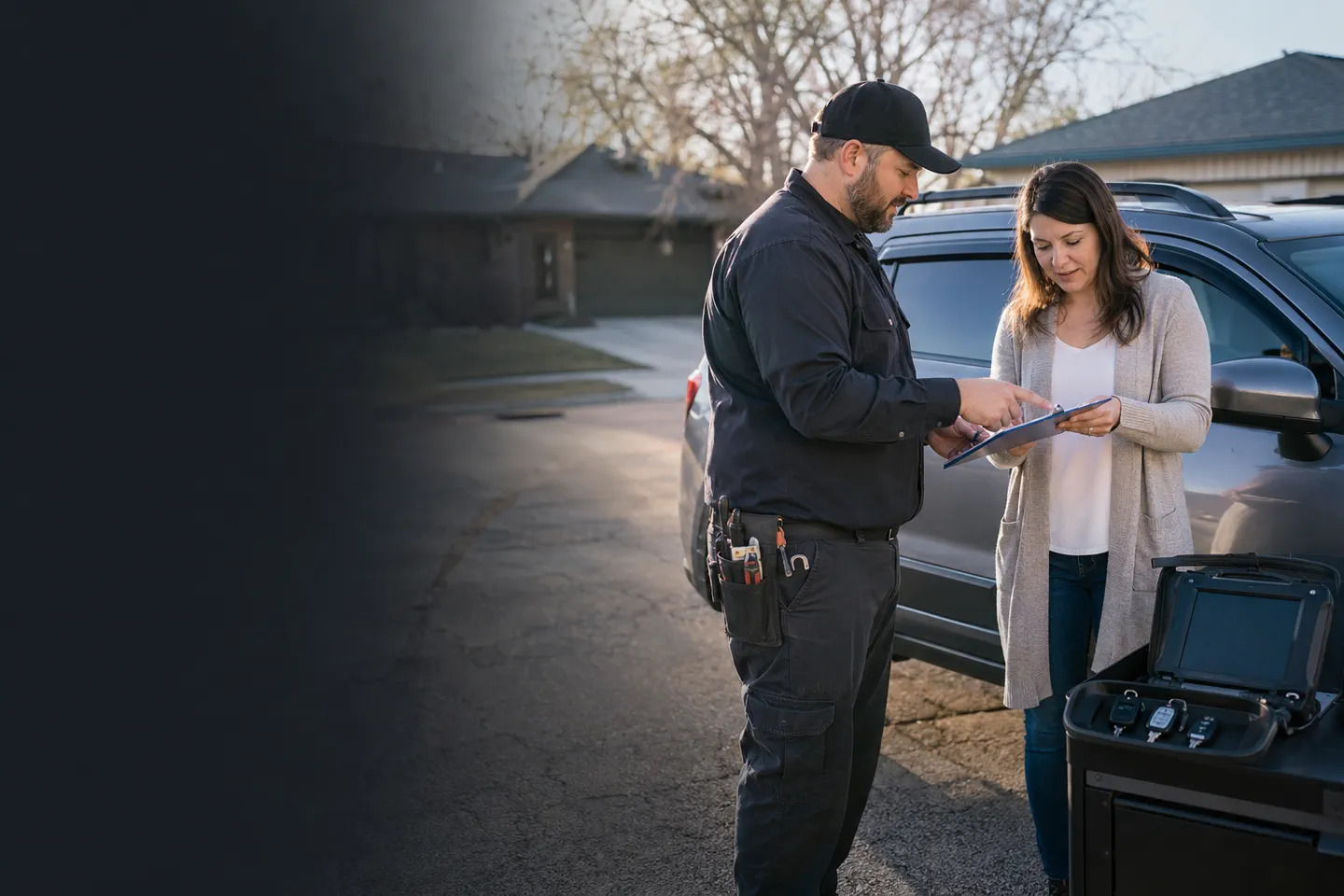
Most drivers do not think about a spare key until the original is missing, cracked, wet, locked somewhere inconvenient, or having a very dramatic disagreement with the car. Making a spare while one working key still exists is usually calmer, simpler and easier to verify. It is not glamorous preventive maintenance, but neither is standing in a parking lot explaining that the keys are definitely not in the cup holder for the fourth time.
A useful spare car key is a compatible credential that has been cut or prepared correctly, programmed when the vehicle requires it, tested for every promised function, and stored separately from the vehicle and the daily key. The best time to make one is while a working key is still available.
Most drivers do not think about a spare key until the original is missing, cracked, wet, locked somewhere inconvenient, or having a very dramatic disagreement with the car. Making a spare while one working key still exists is usually calmer, simpler and easier to verify. It is not glamorous preventive maintenance, but neither is standing in a parking lot explaining that the keys are definitely not in the cup holder for the fourth time. Continue with the complete library of automotive locksmith guides when you want to compare related decisions.
Key takeaways
- A spare is most valuable when it works independently of the key you carry every day.
- Exact vehicle compatibility matters more than a fob shell that merely looks familiar.
- Ask for a complete function test: entry, start authorization, remote features and emergency blade where equipped.
- Store the spare in a secure, separate place and update the plan when the vehicle, household or drivers change.
A spare key is not just a duplicate
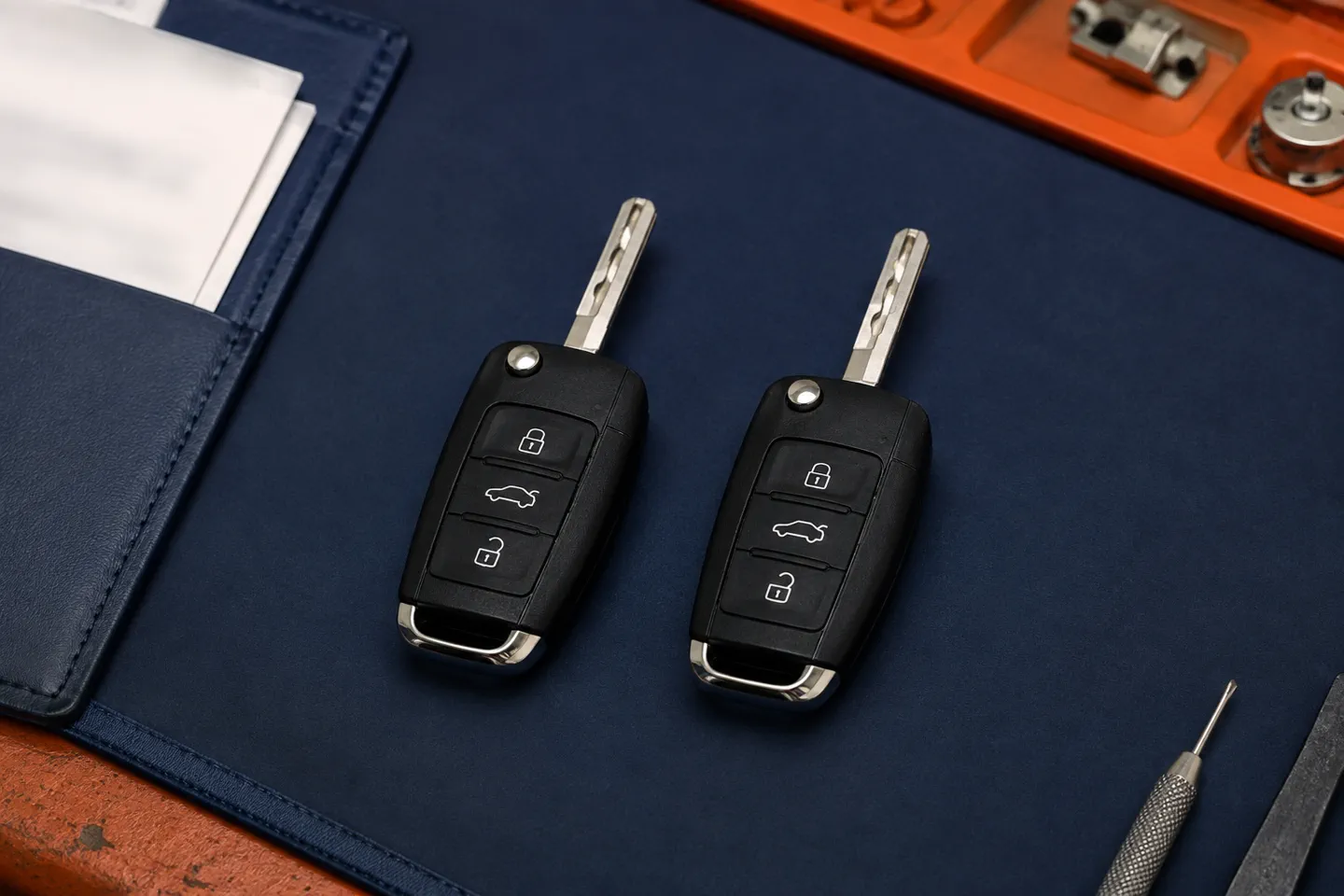
For an older turn-key vehicle, a spare may be mostly a properly cut mechanical key. For many newer vehicles, it can be a combination of an emergency blade, a transponder that authorizes the engine, remote buttons, and sometimes proximity functions. The word ‘spare’ sounds simple, but the finished item needs to match the job your vehicle actually asks it to do. If this condition matches your situation, review the service scope for automotive locksmith service.
That distinction matters because a key can succeed at one task and fail at another. It may unlock the door but not start the vehicle.
It may start the vehicle but leave the trunk button, panic function, or passive entry unavailable. A practical spare is not a mystery-object for the junk drawer; it is a tested second way to access and operate the vehicle.
Think of it as an insurance policy with a battery, a blade, or both. You hope it stays boring. If it is needed, however, it should be ready without a scavenger hunt, an online compatibility gamble, or a last-minute tow conversation.
When it is smart to make one
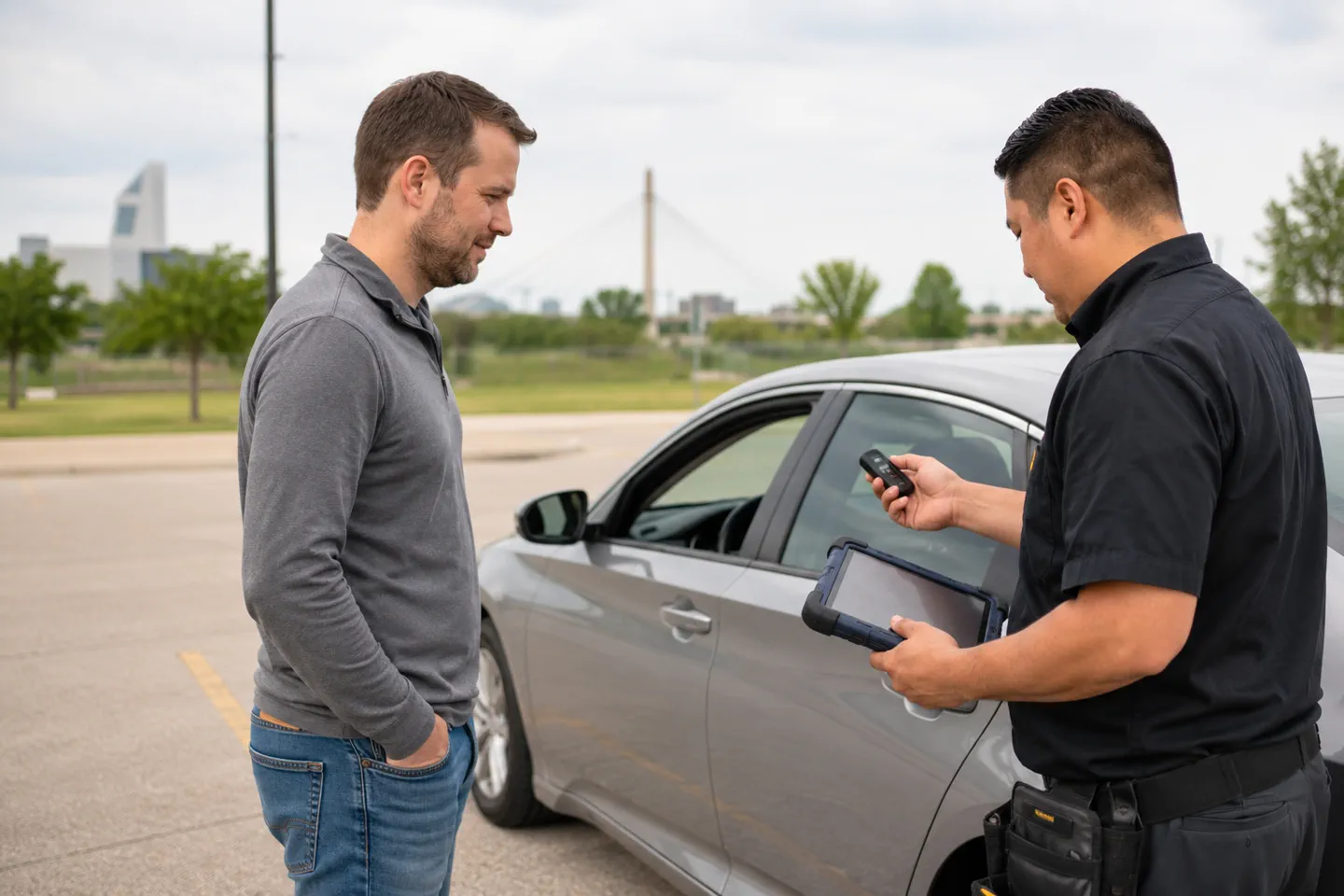
The best moment is while one working key or fob remains. A locksmith or service technician can compare it with the vehicle, verify the expected functions, and test the new credential against a known-good reference. That usually reduces uncertainty compared with starting from an all-keys-lost situation. If this condition matches your situation, review the service scope for car key replacement.
A spare deserves priority after buying a used vehicle, moving to a new household, adding a teen driver, receiving a single-key company vehicle, or noticing a fob shell that is splitting and a button that needs just the right angle. Those are not automatic emergencies, but they are excellent moments to replace wishful thinking with a plan.
If you are unsure which features came with the vehicle, start with the vehicle owner's manual (opens in a new tab) and the working key in hand. The manual can clarify ordinary features and backup operation, while the physical vehicle and key still need to be checked for the exact equipment present. It is better to discover a difference in the driveway than at 10:40 p.m. outside a closed grocery store.
| Situation | Useful next step |
|---|---|
| One reliable key still works | Plan a compatible spare and complete testing while a reference key is available. |
| Fob shell is cracked or buttons are intermittent | Address it before the credential fails or pieces are lost. |
| Used vehicle came with one key | Restore a backup path after ownership is documented. |
| No working key remains | Request all-keys-lost replacement service with identification and vehicle details ready. |
| Key is locked inside | Treat it as an authorized-entry issue, not proof that a new key is needed. |
Match the spare to the exact vehicle—not the photo in a listing
Marketplace photos can be wonderfully persuasive. Two fobs may have the same black plastic case, the same three buttons, and a title that promises compatibility with an impressively broad range of cars. Inside that case, though, frequency, transponder family, board revision, emergency-blade profile and feature set can differ. If this condition matches your situation, review the service scope for key fob replacement.
Bring or provide the make, model, year, trim, start style, VIN when available, and the status of every existing key. If there is one working key, keep it available for the appointment. Those details help identify the right replacement path instead of treating a look-alike fob as evidence.
Customer-supplied parts are not automatically a bad idea. They do require an honest compatibility check before the purchase becomes part of the plan.
Ask whether the item can support the functions you need, whether it can be prepared for the vehicle, and what happens if the supplied part proves incompatible. A small confirmation now beats a collection of tiny plastic regrets later.
A complete spare should be tested like a real key
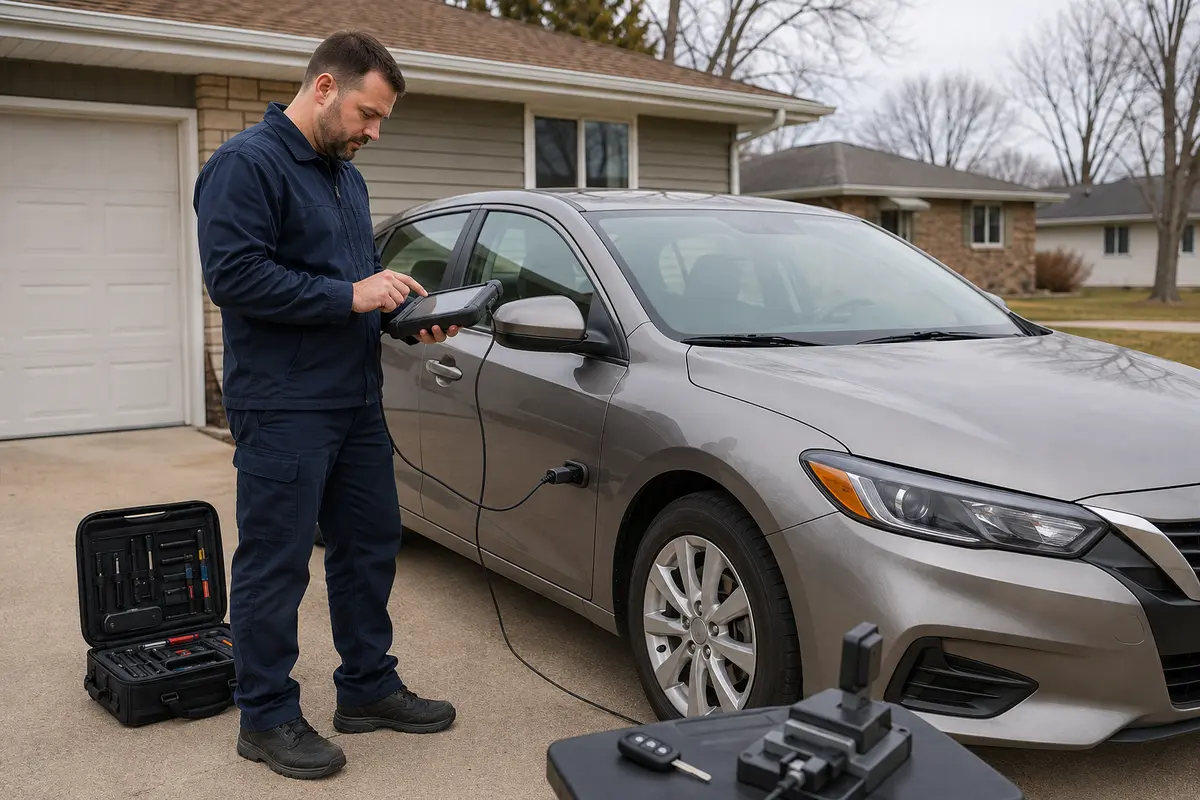
Before service wraps up, test the second key at the driver door and in the actual start position. For a turn-key vehicle, that includes normal key operation and starting. For a push-button vehicle, test the fob's ordinary start authorization and the model-specific backup method described by the manufacturer—without forcing an emergency blade into a cylinder that feels wrong. If this condition matches your situation, review the service scope for car key programming.
Then test the functions that were included in the job: lock, unlock, trunk or hatch, panic, remote start, passive entry and remote range where equipped. If a function is not supported by the selected part, that should be clear before the job is finished, not learned during a rainy school pickup.
Keep all retained keys present when requested. Some vehicle procedures can affect the active key list, and the technician should explain whether missing credentials remain authorized or whether the vehicle needs a separate security review. The goal is a clean handoff: two known keys, clear expectations, and no surprises waiting in the glove compartment.
Store the backup separately and securely
A spare cannot save a difficult day if it lives on the same ring as the daily key. Choose a secure place away from the vehicle and away from the normal set of keys, where an authorized person can find it when needed. The right location is personal: it should be dependable for your household without turning the spare into an easy target.
Avoid leaving a spare inside the car or relying on a predictable hiding place outside it. That does not create a true backup, and it can create a security issue. If another person will hold the spare, agree on who that person is, what vehicle it belongs to, and how you will reach each other after a phone, travel or schedule problem.
For a fleet, family with multiple drivers, or a vehicle that is rarely used, write down only the practical details needed to locate the spare and keep the record with other secure vehicle information. If the car is sold, a driver leaves, or the key is lost, revisit the plan. Keys are small, but access control has a long memory.
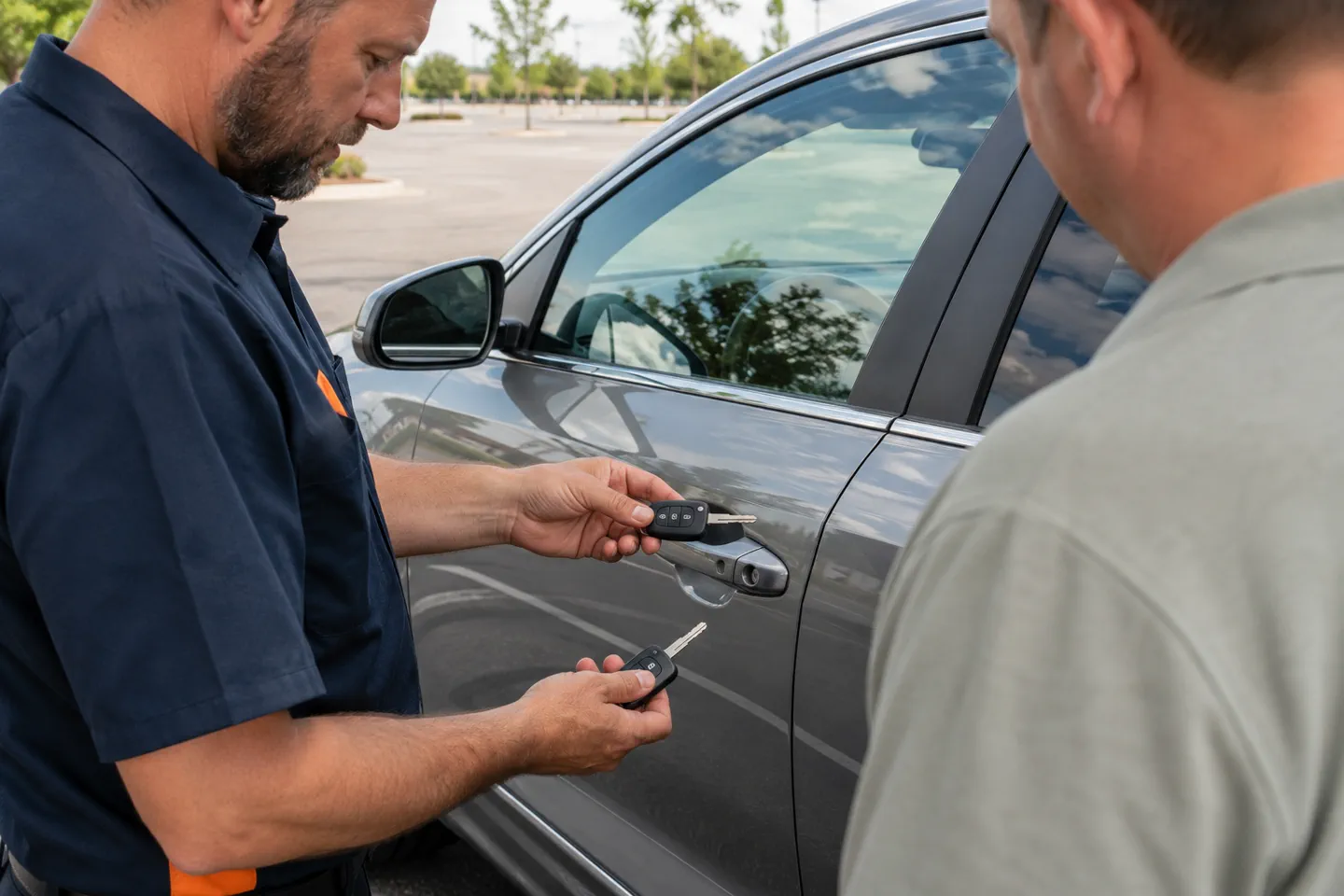
Do not overlook the fob battery and emergency blade
A spare fob may sit unused long enough for its battery to weaken. That does not necessarily make the spare useless, but it is a reason to inspect it periodically and follow the vehicle manufacturer's instructions for the correct battery and replacement method. An intermittent spare is a useful warning, not something to discover only after the primary fob is gone.
If the fob includes an emergency blade, make sure it is present, correctly prepared when the vehicle uses one, and gently tested in the intended door cylinder. It is not meant for aggressive experimentation. A cylinder that binds, a blade that will not insert normally, or a key that turns with unusual resistance needs professional attention rather than extra force.
This is also a good time to consider whether the original needs attention. A worn blade, failing button, split case or water-damaged fob does not improve with optimism. Protect the working key, make the spare, and retire a failing credential before it chooses the timing for you.
The calm-day checklist
Before leaving the appointment, carry both keys to the vehicle and test every promised function. Ask what was supplied, what was programmed, whether the emergency blade was prepared, and whether any function was intentionally not included. Save the receipt and any useful part or battery details with your vehicle records.
Then separate the keys. Carry the daily one; secure the spare elsewhere. Let the appropriate person know how it can be accessed in a genuine need, and update that answer after a move, sale, change in drivers, or a lost key.
The point is not to build a complicated system. It is to have one answer that still makes sense on a stressful day.
If you have only one key now, the practical next step is simple: confirm the vehicle details, gather ownership information, and arrange a spare while the original still works. Future-you will not throw a parade, but future-you may get home on time—and that is a perfectly good prize.
Frequently asked questions
Questions readers ask
Can a locksmith make a spare car key if I have one working key?
Often, yes. The exact process depends on the vehicle and may include a compatible key or fob, mechanical blade preparation, transponder or remote programming, ownership verification and full function testing.
Should I keep a spare car key inside the vehicle?
No. A spare stored in the vehicle is usually unavailable during a lockout and can create a security concern. Store it separately in a secure location that works for your household or authorized driver.
Do all spare car keys need programming?
No. Some older mechanical keys do not. Many modern transponder keys, remotes and proximity fobs do require compatible electronic authorization or pairing for some or all functions.
How often should I test a spare key fob?
Check it periodically and before long travel, especially if it has sat unused. Test the functions you expect it to provide and follow the owner's manual for battery guidance.
The right solution depends on the specific lock, door, vehicle or garage door system. Check the Wichita-area service pages, then call or send the details for an evaluation.