Automotive locksmith
Lost Your Car Keys in Wichita? Your Replacement Options Explained
Losing a car key is annoying. Losing the only car key has a way of turning a normal Tuesday into a paperwork-and-phone-battery event. The useful news: replacement is often possible, but the fastest path depends on the vehicle, whether any working key remains, and whether the problem is truly a lost key rather than a lockout or no-start issue.
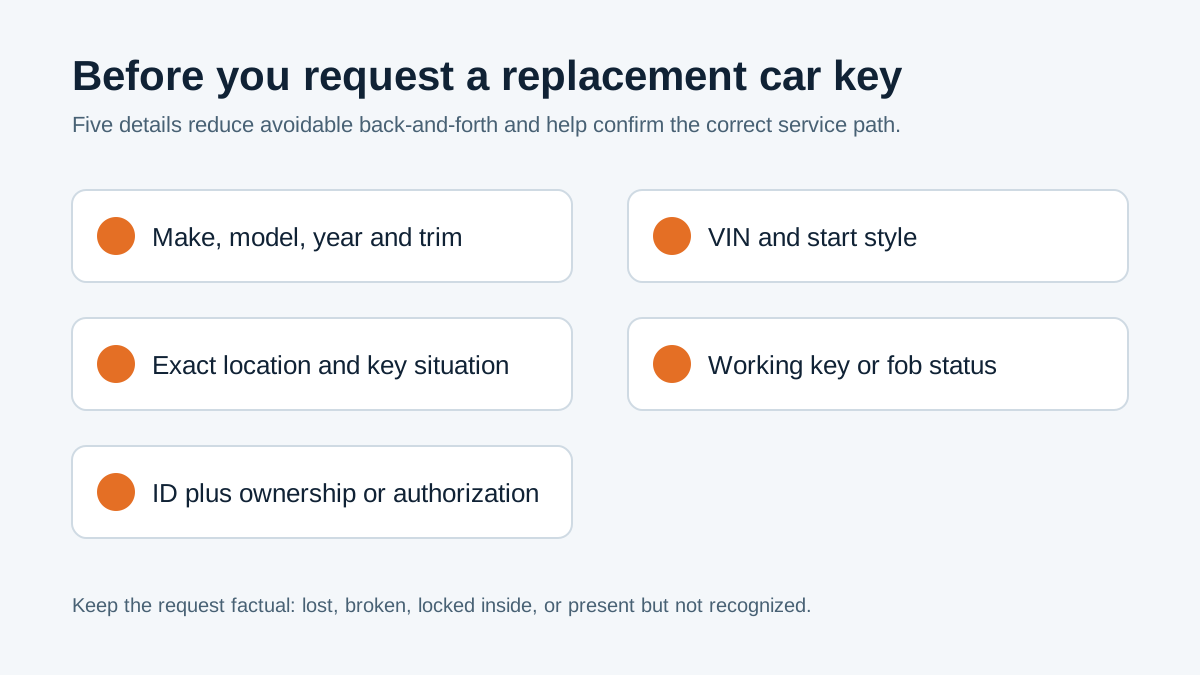
A replacement vehicle key may require a mechanical blade, a compatible transponder or fob, electronic programming, and proof that you own or are authorized to use the vehicle. Bring the make, model, year, VIN, location, and any remaining key or fob. Do not buy a look-alike key online until compatibility is confirmed.
Losing a car key is annoying. Losing the only car key has a way of turning a normal Tuesday into a paperwork-and-phone-battery event. The useful news: replacement is often possible, but the fastest path depends on the vehicle, whether any working key remains, and whether the problem is truly a lost key rather than a lockout or no-start issue. Continue with the complete library of automotive locksmith guides when you want to compare related decisions.
Key takeaways
- A key locked inside, a damaged key, and an all-keys-lost situation are different service paths.
- Make, model, year, trim, start style, VIN and any working key materially affect compatibility.
- A replacement is only complete after the door, start system and supported remote functions are tested.
- Proof of ownership or authorized use is a normal safeguard—not an inconvenient extra.
First, name the problem correctly
A key locked inside the vehicle is primarily an authorized-entry problem. A missing key that was working yesterday is a replacement problem.
A fob that is present but will not start the vehicle may be a key issue, a fob-battery issue, or a vehicle-side issue. Those differences sound small, but they prevent the classic mistake of ordering a replacement for a key that is sitting in the trunk. If this condition matches your situation, review the service scope for automotive locksmith service.
Before calling, take thirty seconds to note the exact situation: Is any key still available? Is the vehicle in a safe legal location? Does it use a turn-key ignition or push-button start?
Is the key lost, broken, wet, locked inside, or simply not recognized? A clear answer helps a service technician prepare for the right job instead of arriving with a very expensive guessing game.
If a child, pet, or anyone is in immediate danger inside the vehicle, call 911 first. For a routine lockout or replacement request, stay in a visible, safe place and avoid forcing the door, prying trim, or repeatedly pressing a damaged remote. Modern vehicle hardware does not appreciate improvisation nearly as much as action movies suggest.
The five details that shape your replacement options
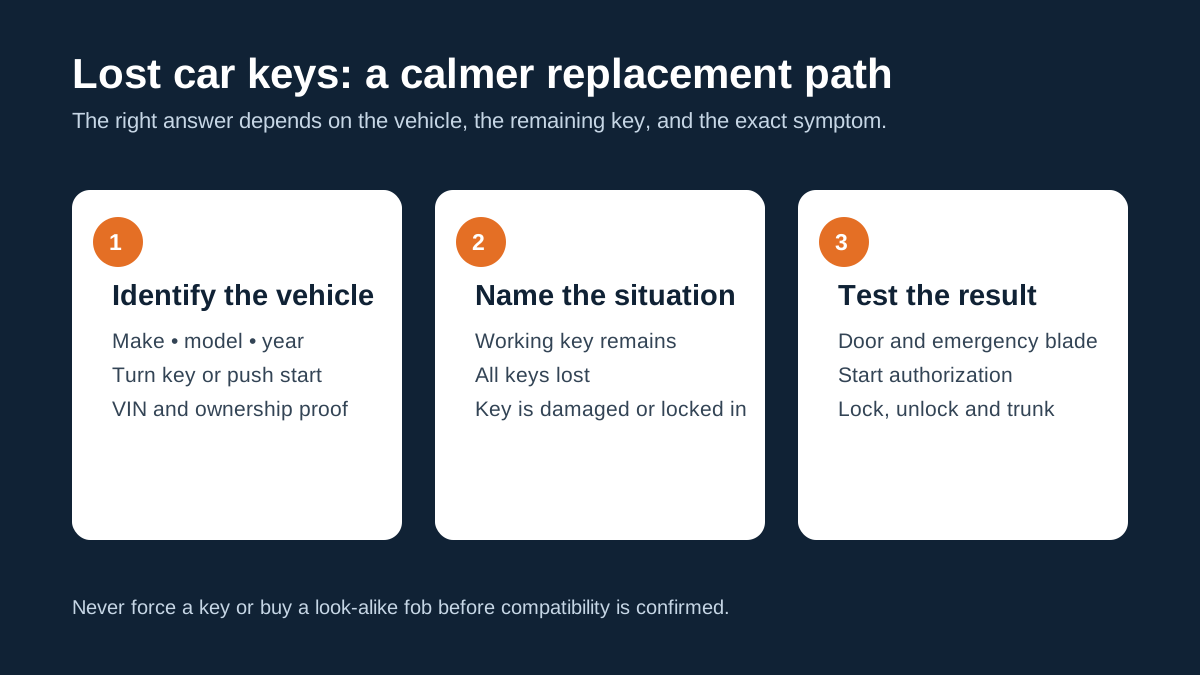
The vehicle’s make, model, year and trim are the starting point, but they are not the whole story. The ignition style, key format, remote features, build variations and prior repairs can matter too. Two vehicles that look nearly identical can use different transponders, frequencies, emergency blades, or programming procedures. If this condition matches your situation, review the service scope for car key replacement.
Have the 17-character VIN ready when possible. The official NHTSA VIN decoder (opens in a new tab) can help verify basic manufacturer and vehicle information, which is useful when a registration card is not immediately handy. It does not prove which lock cylinder or module is currently in the vehicle, so a responsible technician still verifies the real vehicle and key system.
Also mention whether you have one working key, a damaged original, an old fob that sometimes works, or no key at all. One verified working key can make a duplicate or spare easier to plan. All-keys-lost service can require a broader sequence of identification, cutting, authorization and testing.
| Detail | Why it helps |
|---|---|
| Make, model and year | Narrows key and system compatibility. |
| VIN | Supports vehicle identification and parts research. |
| Turn key or push-button start | Identifies the likely key format. |
| Working key or fob status | Changes the available replacement path. |
| Ownership or authorization | Allows responsible key service to proceed. |
Your likely replacement path
If one working key remains, the sensible move is often to make a spare before the original wears out or disappears. The technician can compare operation, confirm supported functions, and test the new credential against a real baseline. That is almost always calmer than discovering the last key is gone in the rain, after business hours, with a grocery cart rolling away in the background. If this condition matches your situation, review the service scope for car key programming.
If all keys are lost, the job may include authorized vehicle entry, research for the proper key, mechanical blade work, electronic registration and removal or review of missing credentials where the system supports it. Some makes and model years require additional security steps or may have limited mobile-service availability. Exact compatibility should be confirmed before anyone promises a one-size-fits-all turnaround.
A damaged key sits in the middle. A cracked shell may still contain usable electronics; a worn blade may be a poor copying source; water exposure can create intermittent remote behavior.
Keep every piece, including the broken blade or fob shell, and describe what still works. The remaining parts may help identify the correct replacement without being treated as a magic fix.
Why an online fob can become an expensive detour
Marketplace listings often rely on a shared shell shape: the fob looks right, the buttons look familiar, and the title says it fits a long list of vehicles. Unfortunately, matching plastic is not the same thing as matching electronics. Frequency, transponder family, board revision, button configuration and vehicle options can all matter.
Customer-supplied parts are not automatically wrong, but they should be confirmed before purchase and before an appointment is booked around them. Some used keys cannot be reliably reused; some aftermarket units have limited functions; some emergency blades are blank or missing. Ask what part information is needed, which functions are expected to work, and whether the provider can test the supplied item.
This is not a pitch for the most expensive key in the room. It is a pitch for buying once with enough information to avoid buying twice. A compatible key that starts the vehicle but cannot lock it, or opens the door but will not authorize the engine, is not really a completed replacement.

Ownership verification is part of legitimate service
A car key is an access credential, so a locksmith or service technician should ask for reasonable proof that the requester owns or is authorized to use the vehicle. Common examples include identification plus registration, title, insurance information, rental documents, fleet authorization, or a dealership record that connects the person to the vehicle.
If those documents are inside the locked vehicle, say so upfront. Verification can sometimes be completed after access is restored, depending on the situation.
What should raise a flag is a request to create a key for an unattended vehicle with no person present and no credible authorization. That safeguard is there to protect the owner—not to make a difficult day harder.
For fleet or employer vehicles, have a company contact or authorization record available. For a recently purchased vehicle, bring the bill of sale or transfer paperwork along with identification. A little preparation prevents a technician from being forced to stop after arriving.
Test the finished key before the technician leaves
Do not stop at one successful engine start. Test the mechanical door function where the vehicle has one, then lock, unlock, trunk or hatch, panic, remote start, passive entry and push-button start as applicable.
If the fob includes an emergency blade, test it too. That tiny backup is rarely exciting—until the day it is the only thing that works.
Mention any warnings on the dash, weak range, intermittent buttons or a door lock that behaves differently from the other doors. Those symptoms may point to a vehicle-side concern rather than a newly created key. A clear closeout documents what was tested and what, if anything, requires a separate diagnosis.
It is also worth checking the NHTSA recall lookup for open manufacturer safety recalls on the vehicle. A recall is not usually the explanation for a lost key, but it is a useful, free ownership check while you already have the VIN and vehicle details in front of you.
Frequently asked questions
Questions readers ask
Can a locksmith replace a car key if I lost every key?
Often, yes. Requirements vary by vehicle. The service may require identification, ownership verification, correct key selection, blade work, electronic programming and full function testing.
Do I need the VIN to replace a car key?
It is very helpful, especially when no working key remains. The VIN assists identification, but vehicle-side verification is still important because locks and modules may have been changed previously.
Should I buy a cheap replacement fob first?
Not until compatibility is confirmed. Similar-looking fobs can use different frequencies, chips or board revisions and may not provide every expected function.
The right solution depends on the specific lock, door, vehicle or garage door system. Check the Wichita-area service pages, then call or send the details for an evaluation.