Garage door repair
Garage Door Won’t Open or Close All the Way? Common Causes
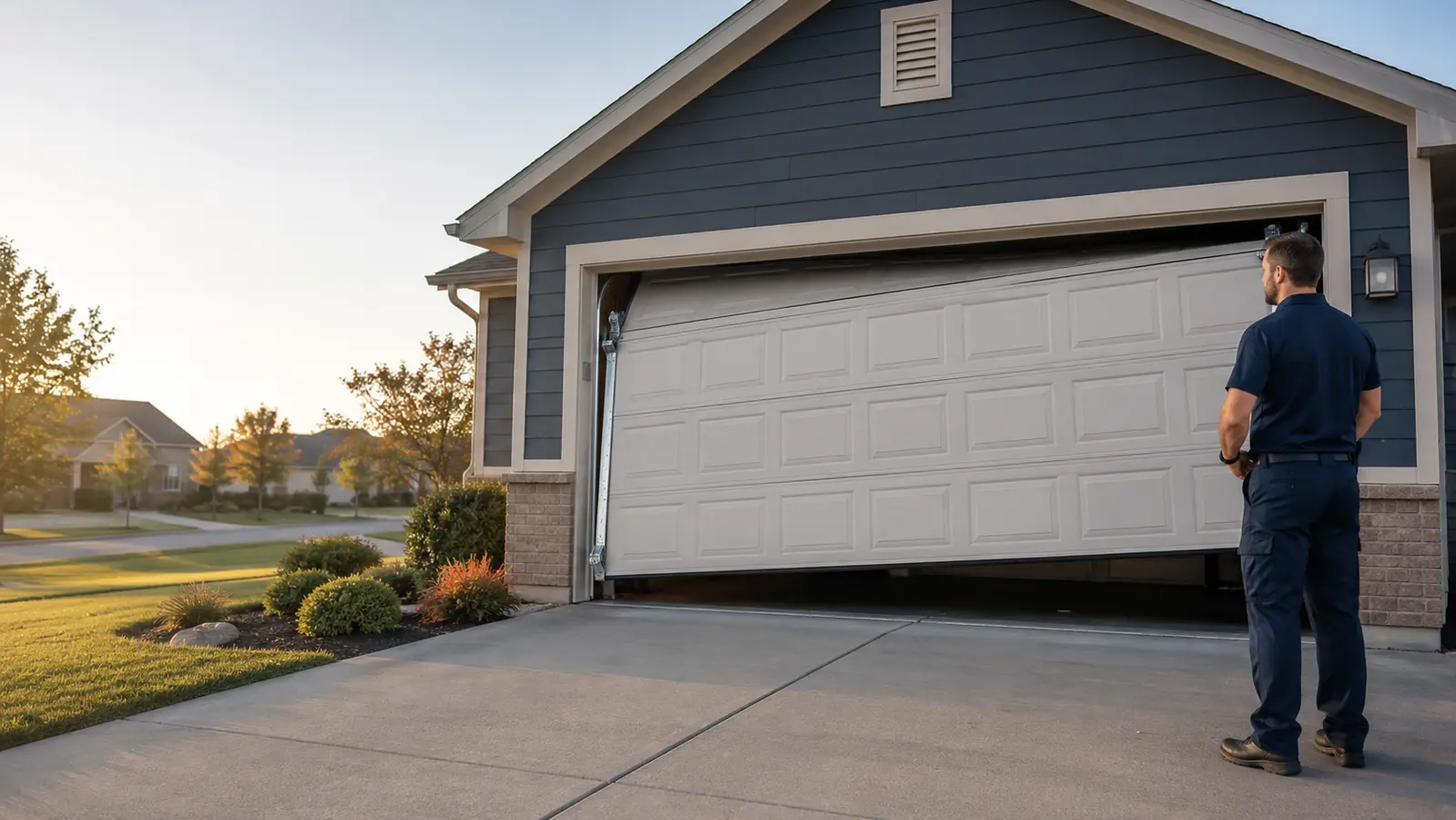
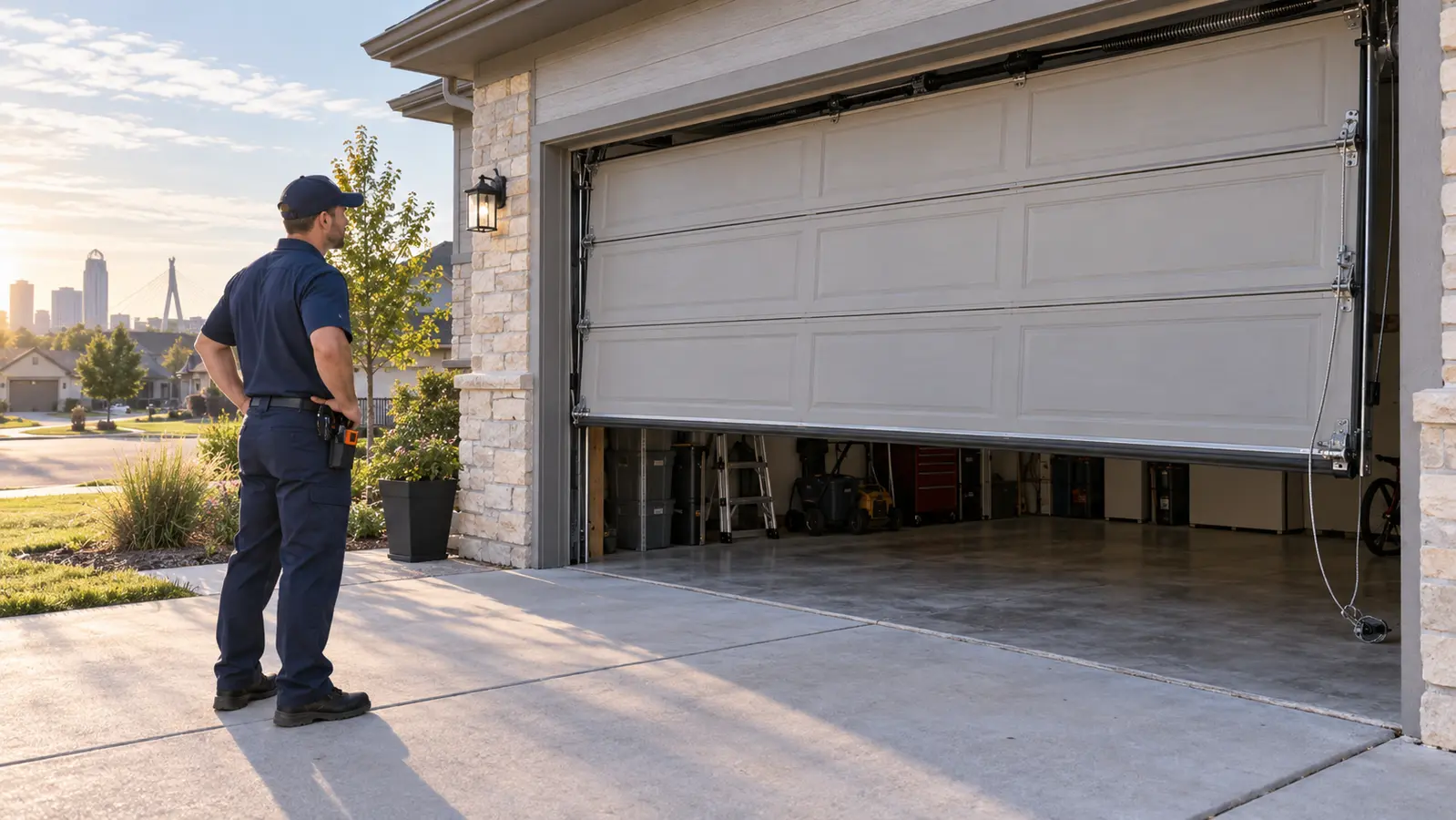
When a garage door stops a foot short of the floor, reverses unexpectedly, or lifts only partway, the cause is not always the opener. It may be a simple obstruction or sensor issue, but it can also involve tracks, rollers, springs, cables, door balance, locks, travel limits, or the operator itself. The goal is to make safe observations—not to force the door through a system that is telling you something is wrong.
If a garage door will not open or close all the way, first stop repeated cycles and look for a visible obstruction, damaged track, loose cable, crooked door, or sensor issue from a safe distance. Do not force the door, bypass safety sensors, or pull the emergency release under a raised or unstable door. A technician should assess any abnormal movement, heavy door, grinding, or visible counterbalance problem.
When a garage door stops a foot short of the floor, reverses unexpectedly, or lifts only partway, the cause is not always the opener. It may be a simple obstruction or sensor issue, but it can also involve tracks, rollers, springs, cables, door balance, locks, travel limits, or the operator itself. The goal is to make safe observations—not to force the door through a system that is telling you something is wrong. Continue with the complete library of garage door repair guides when you want to compare related decisions.
Key takeaways
- A closing problem may involve photo-eye sensors, but an opening problem often needs a broader mechanical check.
- Do not override safety functions or use the opener to force a binding door.
- Door position, exact symptom, and visible damage help a technician diagnose the complete system.
- A partly open or crooked door should be treated as an unstable condition.
Separate a closing problem from an opening problem
If a door starts down and then reverses, the photo-eye sensors near the floor are a reasonable first observation. They should face each other across the opening and have a clear line of sight. Look for ordinary debris or an obvious obstruction without crawling beneath a moving or unstable door. If this condition matches your situation, review the service scope for garage door repair.
If the door is closed and will not rise, sensors are less likely to be the whole explanation. The door may be locked, the trolley may be disconnected, or the opener may be encountering a heavy or binding door caused by spring, cable, roller, track, or panel trouble.
A door that stops partway can involve either side of the system. Do not diagnose from one symptom alone. Watch only from a safe position and note whether the motor runs, the trolley moves, the door shifts, and whether the same behavior happens with both the wall control and remote.
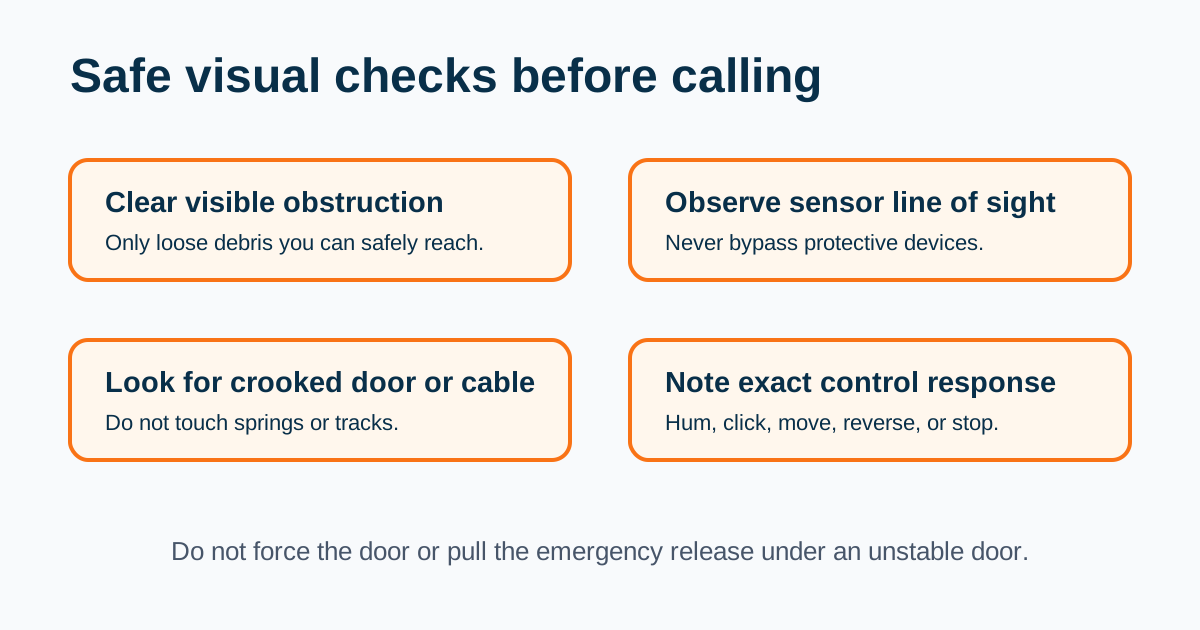
Safe checks a homeowner can make
Check the opening for boxes, tools, a broom, ice, or other ordinary obstructions. Look at the sensor lenses near the floor and make sure nothing is directly blocking them. If the door has just been bumped by a car or object, look for obvious panel or track damage from the driveway. If this condition matches your situation, review the service scope for garage door spring repair.
Look for a crooked door, a roller outside the track, a loose or frayed cable, a visible spring gap, or a door that is unusually heavy. These are stop signs, not issues to test repeatedly. Keep people, pets, and vehicles clear of the opening.
Do not bypass, tape over, or hold a control to defeat a safety function. CPSC garage-door opener safety guidance (opens in a new tab) exists for good reason: the automatic door is a moving system, and a workaround that closes it once may defeat the protection needed the next time.
| Symptom | Possible system area | Safe response |
|---|---|---|
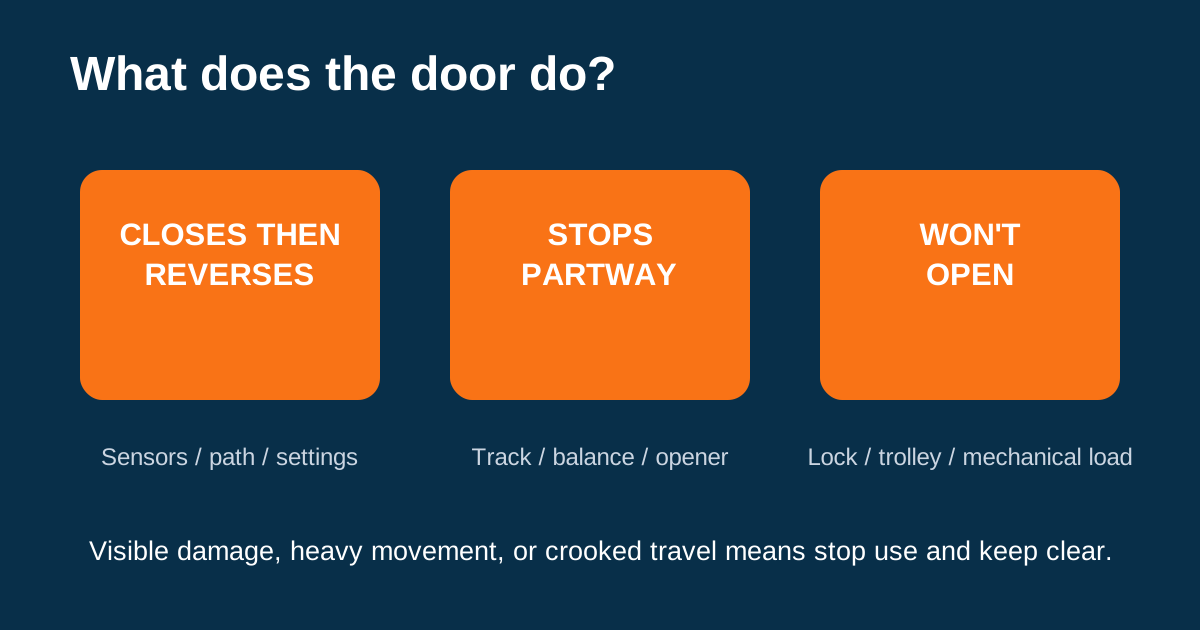
| Closes then reverses | Sensors, obstruction, force or travel settings | Check visible path and sensors; do not bypass. |
| Opener hums but door stays still | Door balance, trolley, opener drive, or mechanical bind | Stop cycling and arrange diagnosis. |
| Door stops partway and is crooked | Track, roller, cable, spring, or panel issue | Keep clear; do not force it. |
| Door will not close flush | Obstruction, sensor, track, limit, or alignment issue | Observe, clear only obvious safe debris. |
| Door feels unusually heavy | Counterbalance/spring issue | Do not pull release or lift it manually. |
Why forcing the door can multiply the damage
An opener is designed to move a properly balanced door through a clear, correctly aligned path. It is not meant to drag a damaged door through a bent track, lift the full weight of a failed counterbalance system, or compensate for a cable that has left its drum. If this condition matches your situation, review the service scope for garage door opener repair.
Repeated button presses can overheat the opener, strip drive components, bend the rail, or pull hard on the top section. Changing force or travel controls without understanding the cause can also interfere with the way the opener responds to resistance.
Avoid pulling the emergency release automatically. If the door is partly open, tilted, off track, or unusually heavy, release can allow it to move unexpectedly. A trained garage-door technician can determine when and how it is safe to disconnect or stabilize the door.
The common mechanical causes
A worn roller, bent or shifted track, damaged hinge, broken spring, loose cable, or distorted panel can interrupt normal travel. Because these parts share the load, the first visible symptom may not be the root cause. A door that rubs in the track can overload an opener; a spring failure can make a healthy opener look weak.
Locks and manual slide bolts can also prevent a door from moving, especially after a recent move, service visit, or accidental engagement. The trolley can disconnect from the opener in some situations. Those possibilities should be checked alongside the door’s mechanical condition, not in place of it.
DASMA’s garage-door safety guidance supports a whole-system approach. A safe repair asks why the door stopped, whether the door is balanced, and whether every connected component can return to normal operation—not merely how to get it past the stuck point.
A visual troubleshooting overview for a door that will not travel normally. Do not bypass safety devices or operate a door that is crooked, heavy, or visibly damaged. Watch the source playlist (opens in a new tab).
How to prepare a useful repair request
Tell the technician whether the door is fully closed, open, or stopped partway. Describe exactly what happens when the control is pressed: does it hum, click, move a few inches, reverse, or stop at the same point? Mention any bang, scrape, car impact, weather event, or change that came before the issue.
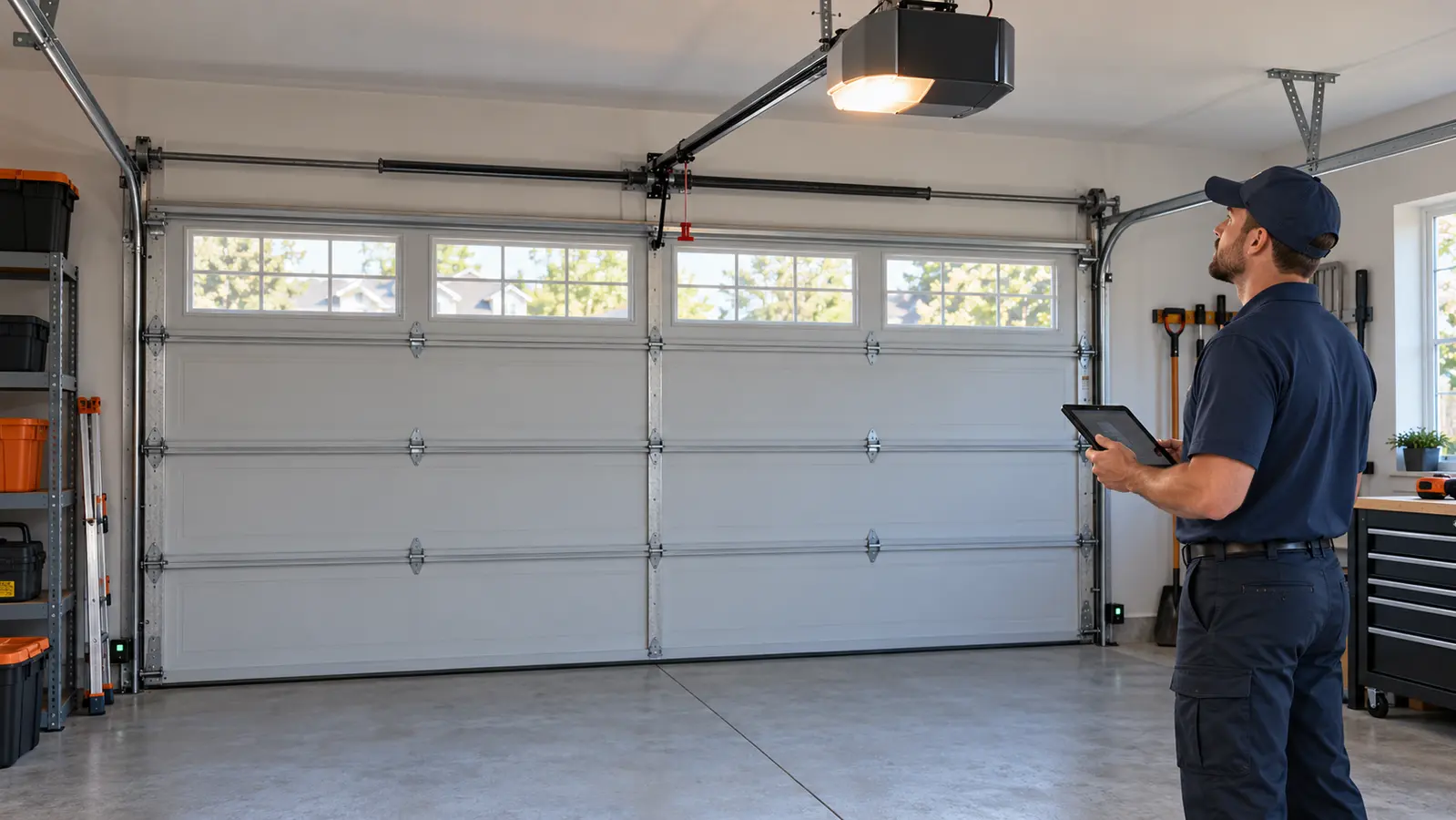
Take wide photos only from a safe place: the full door, both vertical tracks, the opener, and any visible cable or spring condition. Do not put a hand or phone beneath a raised door to improve the angle. A useful photo never needs a risky position.
If a vehicle is trapped, say so when requesting help. That changes the planning priority, but it should not lead to forcing the door. The technician can evaluate the safest approach based on the door position and counterbalance system.
- Door position: closed, open, or partly open.
- Exact control response: hum, click, move, reverse, or stop.
- Any visible crookedness, cable issue, or track damage.
- Whether a vehicle is inside the garage.
- The opener make/model, if easy to read safely.
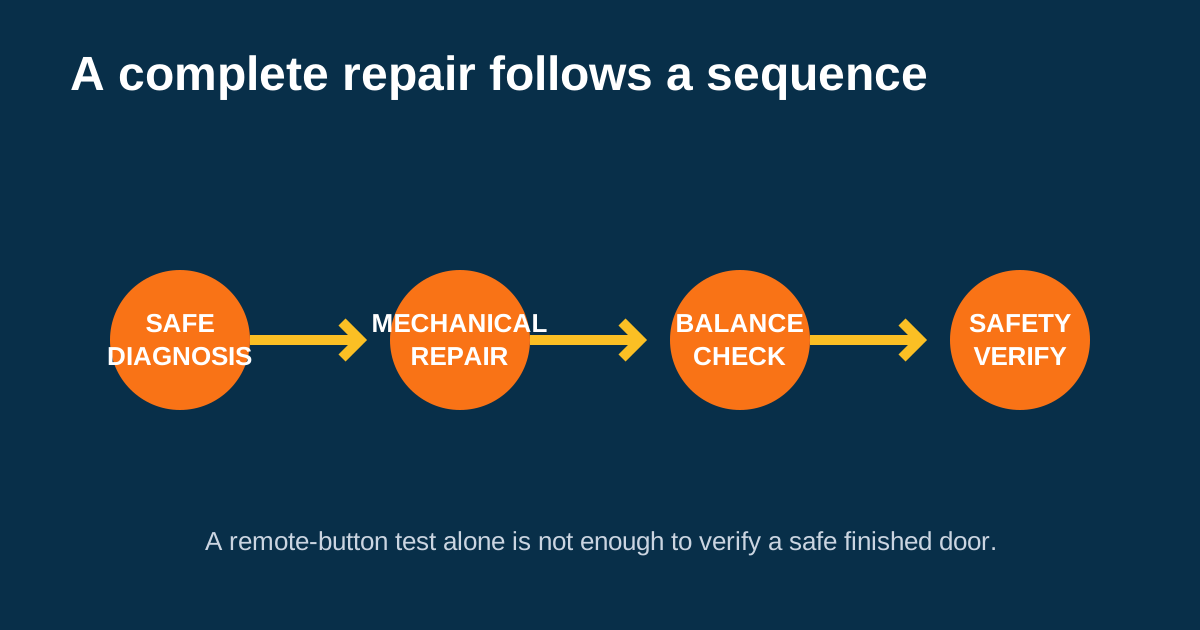
What good repair verification looks like
After the cause is corrected, the door should travel smoothly and evenly through a complete open-and-close cycle. The technician should verify the relevant mechanical components first, then check the opener’s normal operation and safety functions as appropriate for the model.
Ask what caused the problem and what was repaired or replaced. A clear explanation—such as sensor alignment, a failed spring, track resistance, a worn drive component, or a cable issue—makes it easier to notice whether the same symptom returns.
Do not settle for a door that merely opens once. It should also close smoothly, sit correctly at the floor, and operate without new scraping, straining, or uneven movement. The best garage door is the one you stop thinking about because it does its job quietly.
Frequently asked questions
Questions readers ask
Why does my garage door open partway and stop?
Possible causes include opener trouble, a disconnected trolley, a broken spring, cable or track issue, roller damage, or a binding door. Stop repeated attempts and have the complete system checked.
Why does my garage door close then reverse?
Photo-eye sensors, an obstruction, travel settings, force sensing, or a mechanical problem can cause reversal. Check only obvious, safely reachable obstructions and do not bypass safety devices.
Can I pull the emergency release when my door is stuck?
Not automatically. Do not pull it on a raised, crooked, off-track, or unusually heavy door because the door can move unexpectedly.
The right solution depends on the specific lock, door, vehicle or garage door system. Check the Wichita-area service pages, then call or send the details for an evaluation.