Garage door repair
Garage Door Off Track? What Wichita Homeowners Should Do First
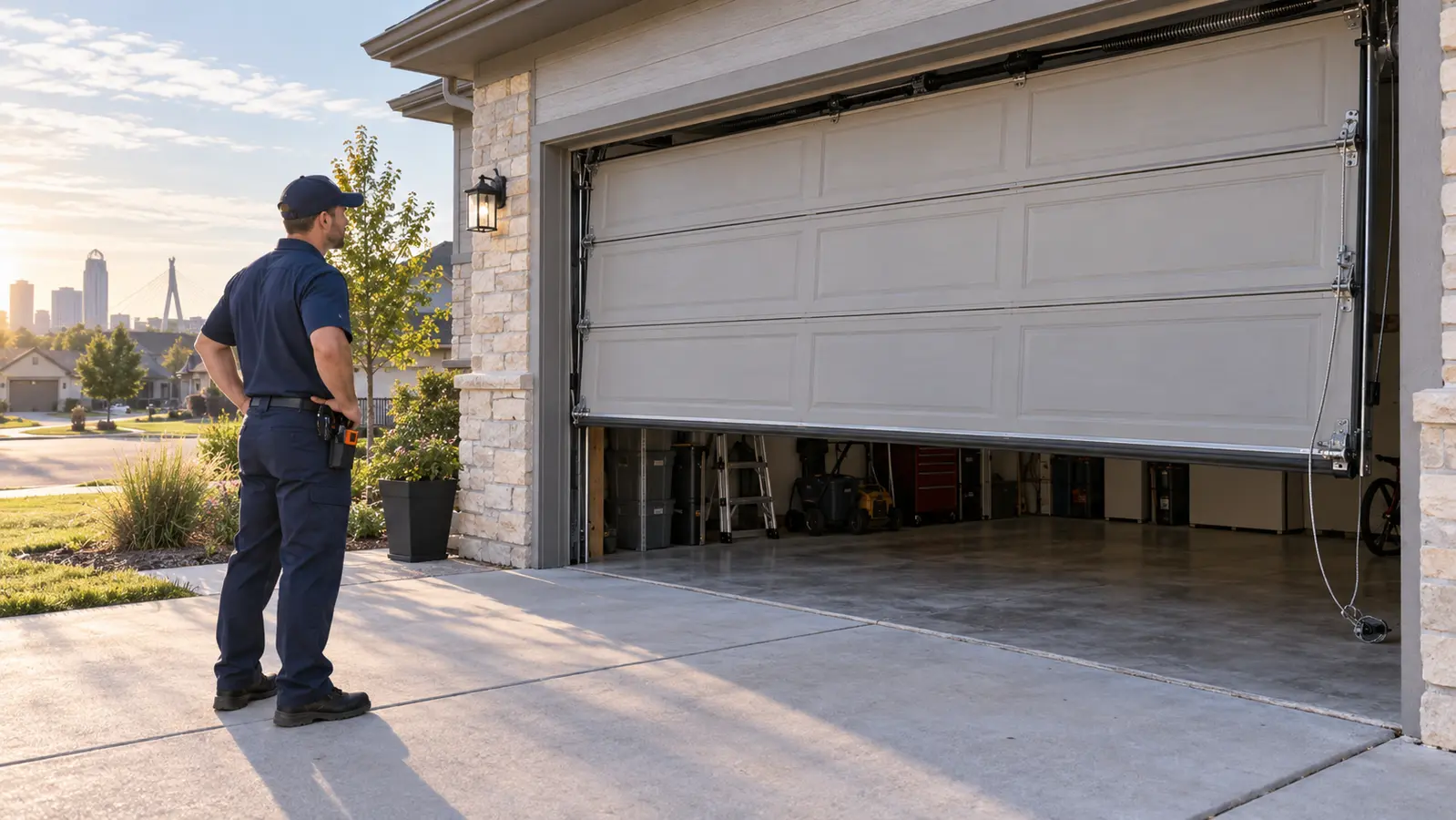
A garage door that is crooked, hanging unevenly, rubbing hard against a track, or refusing to move normally is not a ‘try it one more time’ problem. A sectional door is heavy, its components work under tension, and continued operation can turn a track issue into damaged panels, cables, hardware, an opener problem—or an injury. The best first move is simple: stop the door, keep people clear, and gather the details that let a qualified technician assess the actual system.
If a garage door is off track, stop using the opener and do not pull on the cables, springs, bottom brackets, or door itself. Keep people and vehicles clear, photograph the condition from a safe distance, and arrange professional evaluation. A technician needs to identify why the door left the track before any reset or repair is attempted.
A garage door that is crooked, hanging unevenly, rubbing hard against a track, or refusing to move normally is not a ‘try it one more time’ problem. A sectional door is heavy, its components work under tension, and continued operation can turn a track issue into damaged panels, cables, hardware, an opener problem—or an injury. The best first move is simple: stop the door, keep people clear, and gather the details that let a qualified technician assess the actual system. Continue with the complete library of garage door repair guides when you want to compare related decisions.
Key takeaways
- Stop operation as soon as the door moves crookedly, binds, drops, or visibly leaves a track.
- Do not force the opener, pull emergency hardware, or attempt cable, spring, roller, or bottom-bracket work.
- A door can come off track because of an impact, worn roller, loose hardware, cable problem, alignment issue, or a combination of factors.
- Clear photos, door position, visible damage, and whether a vehicle is trapped help plan the right Wichita repair response.
Know the signs that mean stop
The clearest warning is a door that rises or closes at an angle: one side moves while the other hesitates, a roller is outside the track, a cable looks slack, or a panel is no longer sitting square. Grinding, popping, sudden jerking, a crooked gap at the floor, or an opener that strains and stops are also reasons to stop operation rather than troubleshoot by repetition. If this condition matches your situation, review the service scope for garage door repair.
A door can look only slightly wrong and still carry a serious risk. The tracks guide the door, but the springs, cables, rollers, hinges, panels and opener all share the work. When one part moves out of position, the load can shift in a way that is not obvious from the driveway.
If the door is open, partly open, or unstable, do not walk beneath it and do not park or drive under it. Keep children, pets and bystanders clear. If there is an immediate threat to life or property safety, contact local emergency services; otherwise, secure the area and arrange professional evaluation.
What not to do with an off-track door
Do not keep pressing the wall button or remote to see whether the door will straighten itself out. An opener is designed to operate a balanced, properly guided door—not to drag a crooked or jammed one back into place. Extra cycles can bend the track, tear a roller out farther, damage panels or overload the opener. If this condition matches your situation, review the service scope for garage door track repair.
Avoid pulling on cables, touching torsion or extension springs, loosening track fasteners, or working around bottom brackets. Those parts may be under substantial tension. Review the garage door safety guidance from DASMA (opens in a new tab) before assuming a visible part is a safe DIY adjustment; the fact that you can see the issue does not make its stored energy harmless.
Do not use straps, clamps, boards, a vehicle, or extra people to force the door shut or open. A makeshift move can create a second failure and make the original cause harder to diagnose. If the garage cannot be secured, tell the service provider that upfront so the immediate condition can be assessed alongside the permanent repair.
| What you see | Best immediate action |
|---|---|
| Door is crooked, binding, or partly open | Stop the opener and keep clear of the opening. |
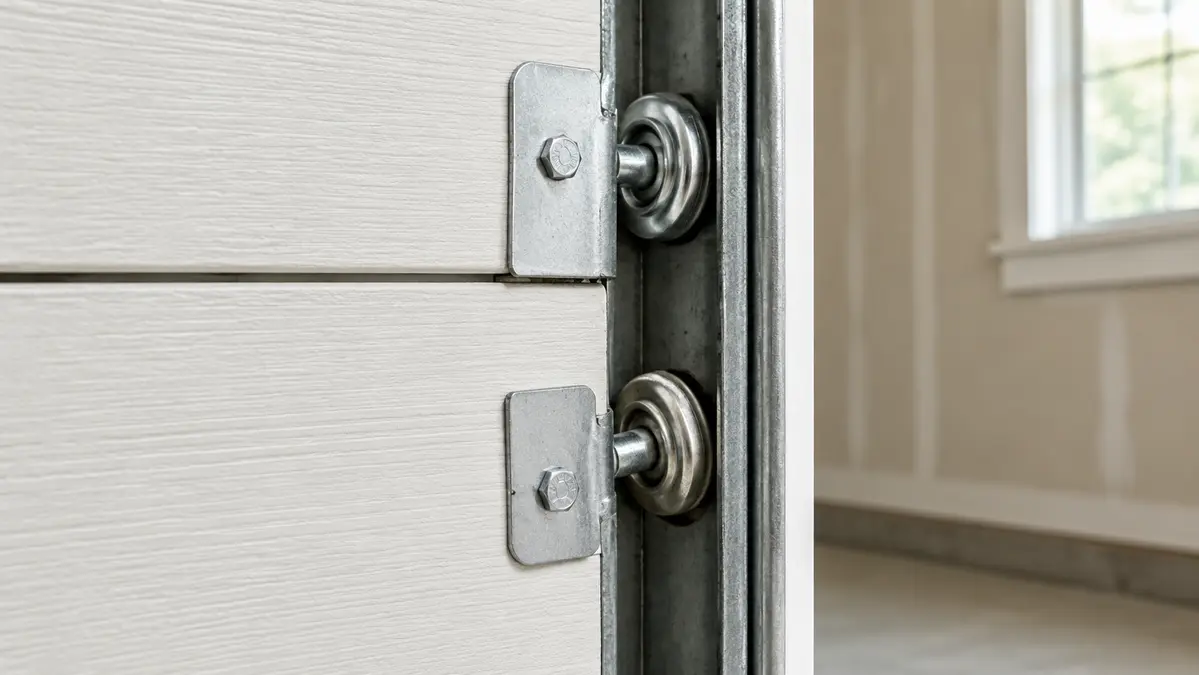
| Roller is outside the track | Do not try to reseat it; photograph it from a safe distance. |
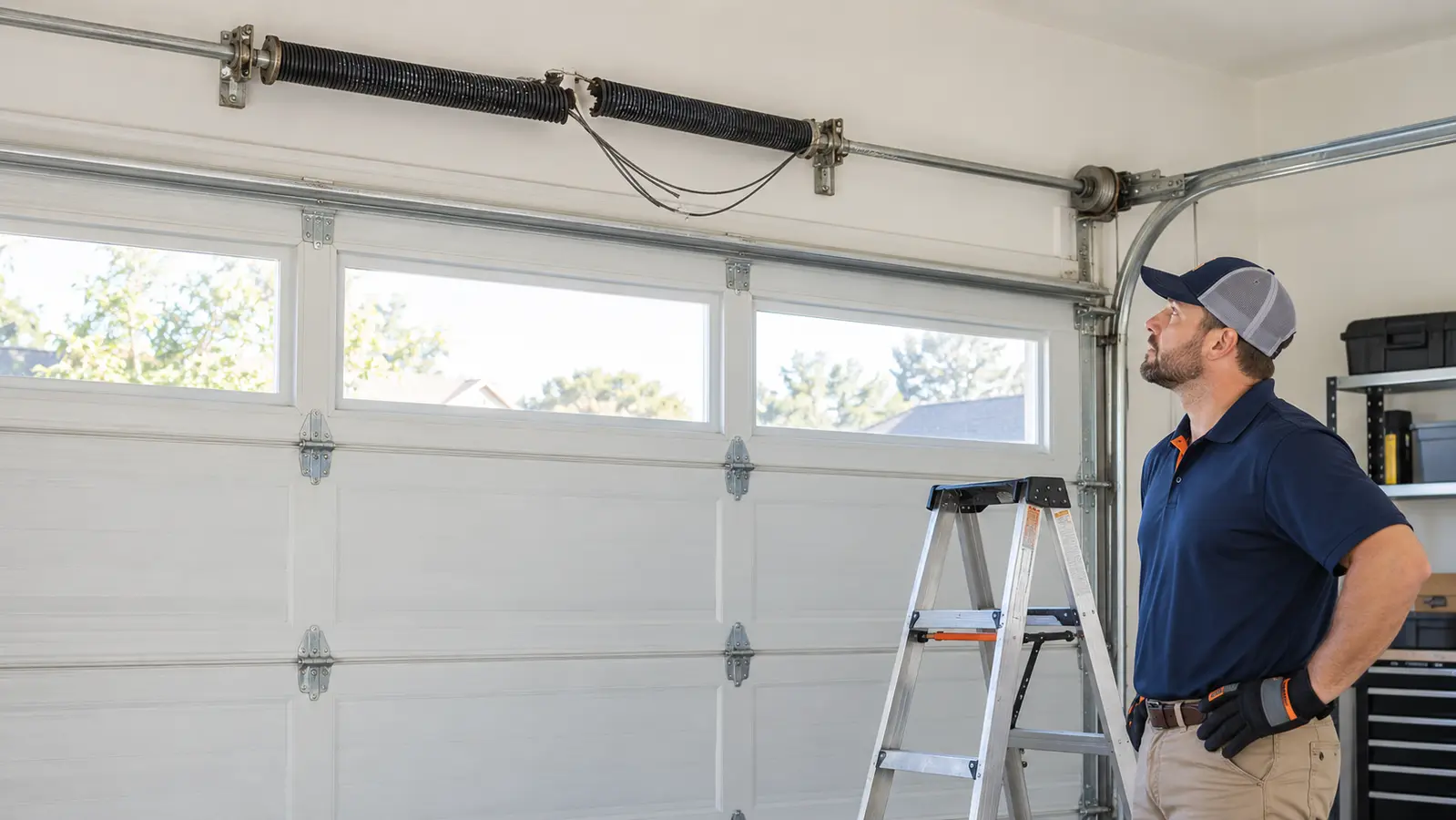
| Cable appears loose, tangled, or broken | Do not touch it or operate the door. |
| Door has been hit by a vehicle | Stop use and note visible panel, track and frame damage. |
| Vehicle is trapped inside | Tell the repair provider; do not force the door around the vehicle. |
Why garage doors leave their tracks
A direct impact is one common cause. A vehicle bump, a ladder, a bicycle, or a heavy object contacting the door can bend a track or shift a panel enough that the rollers no longer travel cleanly. A door does not need a dramatic dent for alignment to change. If this condition matches your situation, review the service scope for garage door cable repair.
Wear can be quieter. Rollers can deteriorate, hinges can loosen, fasteners can shift, and a track can gradually move out of alignment. A cable or counterbalance problem can also make one side of the door travel differently from the other, which puts the rollers in a position they were never meant to hold.
The cause matters as much as the visible symptom. Simply pushing a roller back into a track without checking the track, roller, cable, door balance, panel connection and opener may create a short-lived appearance of success. A proper evaluation identifies what allowed the door to leave its intended path in the first place.
The details that help a technician plan the visit
Take a few photos from a safe distance: the full door, each vertical track, the area where the door appears crooked, and any obvious panel or vehicle damage. Do not lean into the opening or move behind a partly raised door to get a better angle. A useful photo is never worth standing in an unsafe position. If this condition matches your situation, review the service scope for garage door spring repair.
Note whether the door is fully closed, partly open, or hanging; whether a vehicle is inside; whether the opener was running when the problem started; and whether you heard a bang, pop or grinding sound. If the door was struck, mention what happened. These details help distinguish a likely track issue from a cable, spring, roller, panel, opener or broader system problem.
For a commercial bay or a door serving a business, include the door type, opening size if known, operating schedule and whether the opening affects security, deliveries or safe egress. Commercial systems can have different duty, hardware and access considerations, so the exact setup matters.
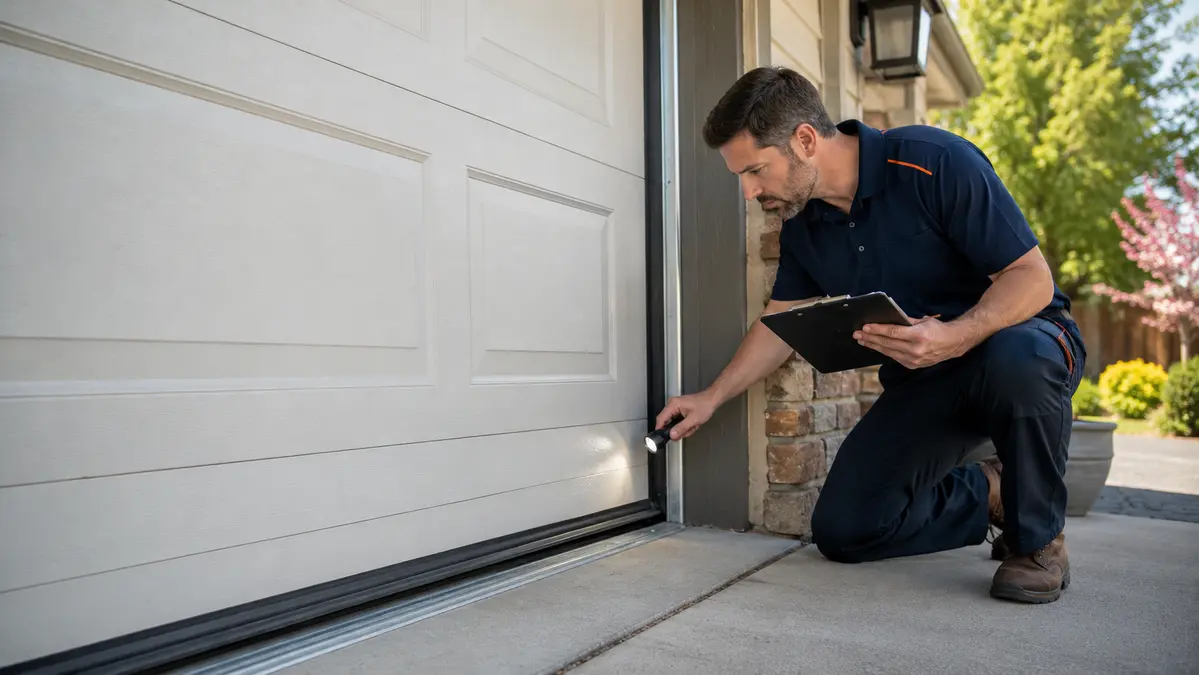
Why professional evaluation is the safer path
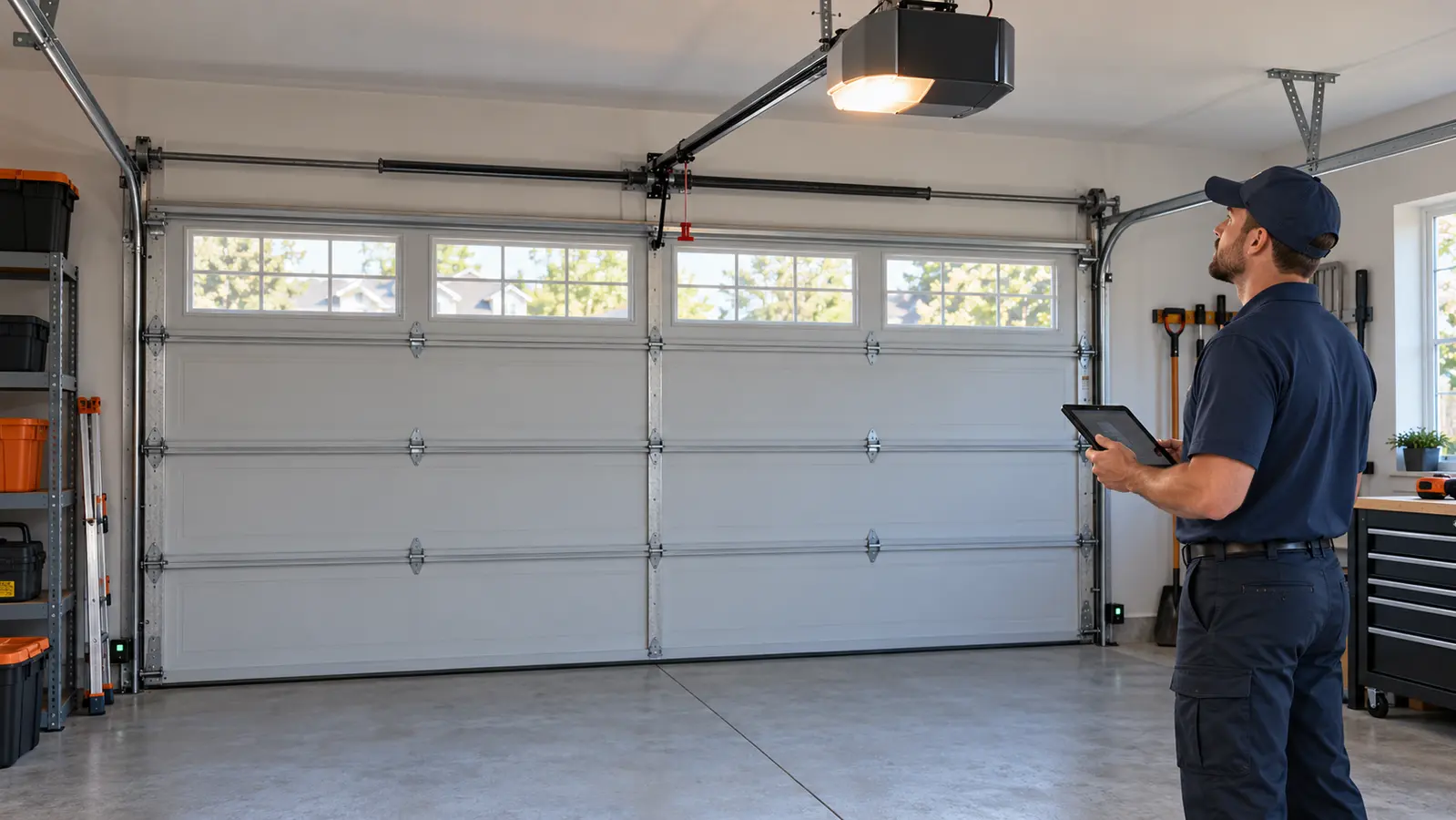
A garage door repair is not just about making the door look level. The system should be assessed for track condition, roller travel, hinges, panel connections, cables, counterbalance components, hardware fastening, door balance and opener behavior. The finished result should operate smoothly and be tested before regular use resumes.
DASMA technical safety resources (opens in a new tab) emphasize the risks around counterbalance systems and other garage-door components. That is why responsible service does not treat a visible off-track roller as an invitation to experiment with springs or cables. A controlled repair sequence is the difference between correcting a condition and creating a dangerous one.
If the door cannot be safely operated or secured, say that when you request service. Heartland can coordinate a Wichita-area evaluation for residential and compatible commercial garage-door problems, subject to the exact system and independent-contractor availability.
After repair: prevent the same problem from repeating
Once the cause has been corrected, ask what was found, what was repaired or replaced, and whether the system needs a follow-up check. If impact damage contributed, avoid assuming a door is fine simply because it still opens. Small alignment changes can become a larger problem over repeated cycles.
Use the door normally, but pay attention to a change in sound, uneven travel, rubbing, hesitation or a door that does not rest squarely at the floor. Do not add lubricant or tighten components at random; a qualified technician can advise what is appropriate for the actual hardware and condition.
The useful habit is early attention. A door that is beginning to bind is far easier to assess before it fully leaves the track. Treat it like a warning light, not a challenge to win against the remote button.
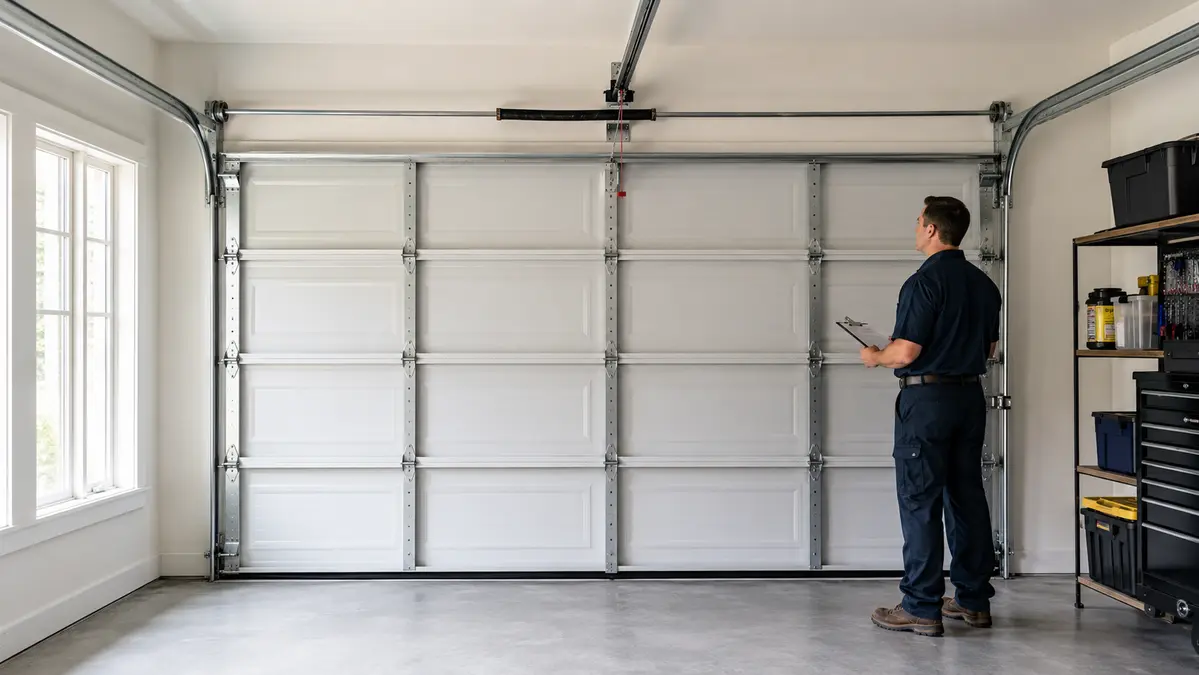
Frequently asked questions
Questions readers ask
Can I use my garage door opener if one roller is off the track?
No. Stop operating the opener. Continued use can worsen track, roller, cable, panel or opener damage and may create an unsafe condition.
Why did my garage door come off track?
Common causes include impact, a bent or shifted track, worn rollers, loose hardware, a cable problem, damaged panels or a counterbalance issue. A technician should determine the actual cause before repair.
Can I push a garage door roller back into the track myself?
It is not recommended. The door, cables, springs and bottom hardware can be under dangerous force. The underlying issue also needs assessment so the problem does not repeat.
What should I tell a garage door repair technician?
Share the door position, whether a vehicle is trapped, what happened before the issue, any visible cable or track damage, the door type, and safe photos of the condition.
The right solution depends on the specific lock, door, vehicle or garage door system. Check the Wichita-area service pages, then call or send the details for an evaluation.