Garage door repair
Garage Door Cable Loose or Broken? What the Symptoms Mean
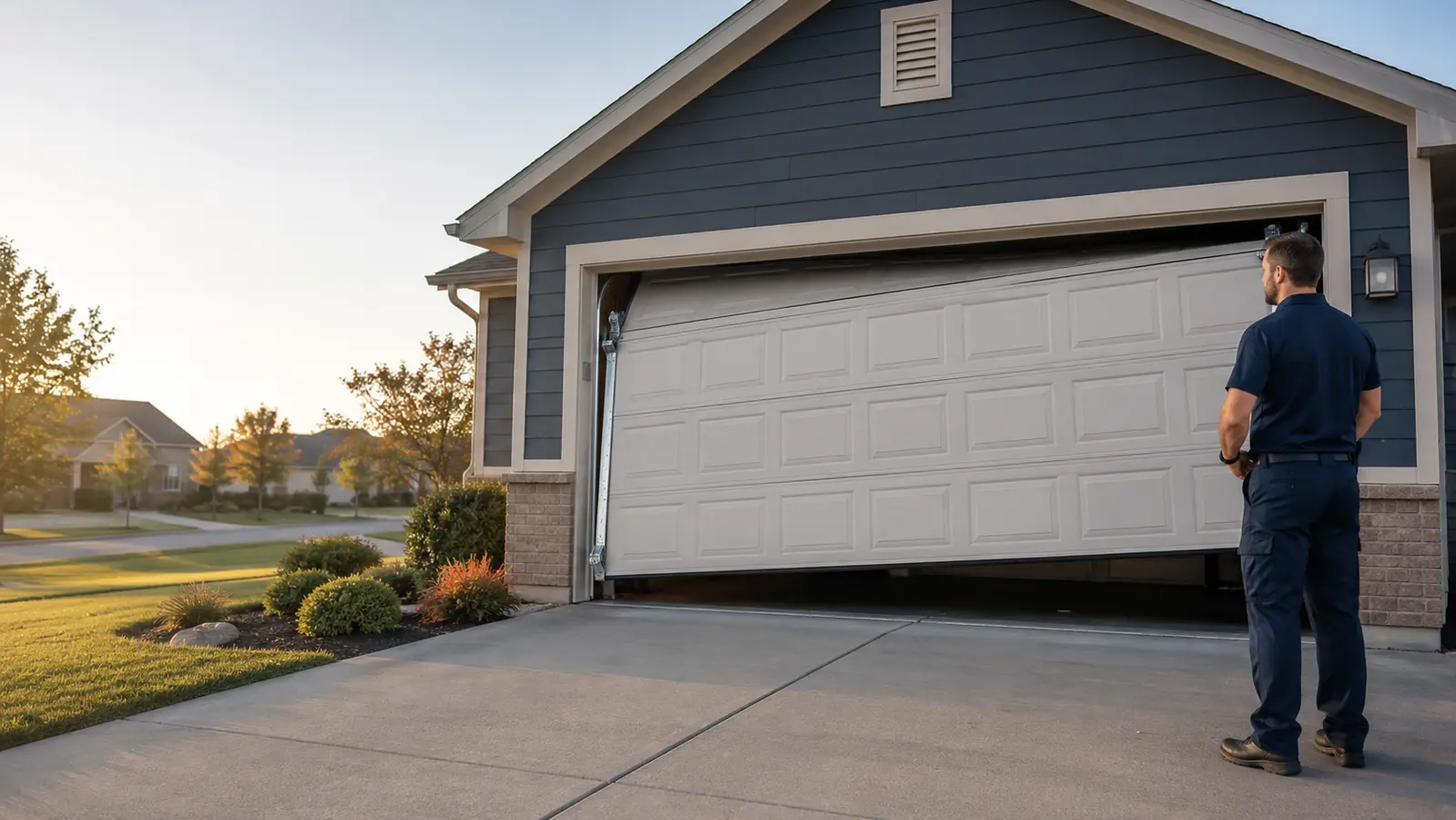
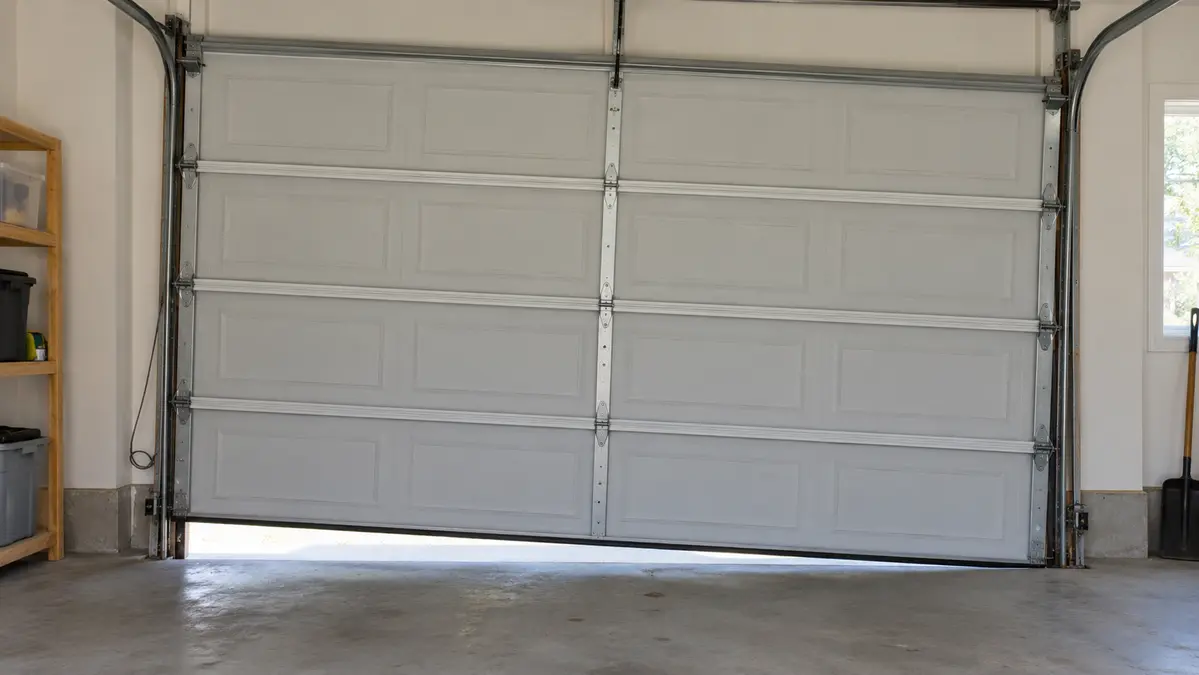
A garage-door cable rarely sends a polite calendar invitation before it causes trouble. The first clue may be a door sitting crooked, a cable hanging near the track, a sharp bang followed by a door that will not move, or an opener that suddenly sounds much more ambitious than effective. Those symptoms deserve caution because the cables work with the spring system to control a door that can weigh hundreds of pounds.
If a garage-door cable looks loose, frayed, tangled or broken—or the door rises unevenly—stop operating the door and keep everyone clear. Do not touch the cable, spring, drum or bottom bracket, and do not try to force the door open or closed. Photograph the condition from a safe position and arrange a professional inspection of the complete counterbalance and door system.
A garage-door cable rarely sends a polite calendar invitation before it causes trouble. The first clue may be a door sitting crooked, a cable hanging near the track, a sharp bang followed by a door that will not move, or an opener that suddenly sounds much more ambitious than effective. Those symptoms deserve caution because the cables work with the spring system to control a door that can weigh hundreds of pounds. Continue with the complete library of garage door repair guides when you want to compare related decisions.
Key takeaways
- A crooked door, slack cable, visible fraying or sudden heavy movement can point to a cable or counterbalance problem.
- Garage-door cables, springs, drums and bottom brackets can carry dangerous force even when the door is not moving.
- Replacing only the visible cable may be incomplete if wear, alignment, spring condition or other hardware caused the failure.
- Tell the technician the door position, what happened immediately before the symptom and whether a vehicle is trapped inside.
What a garage-door cable actually does
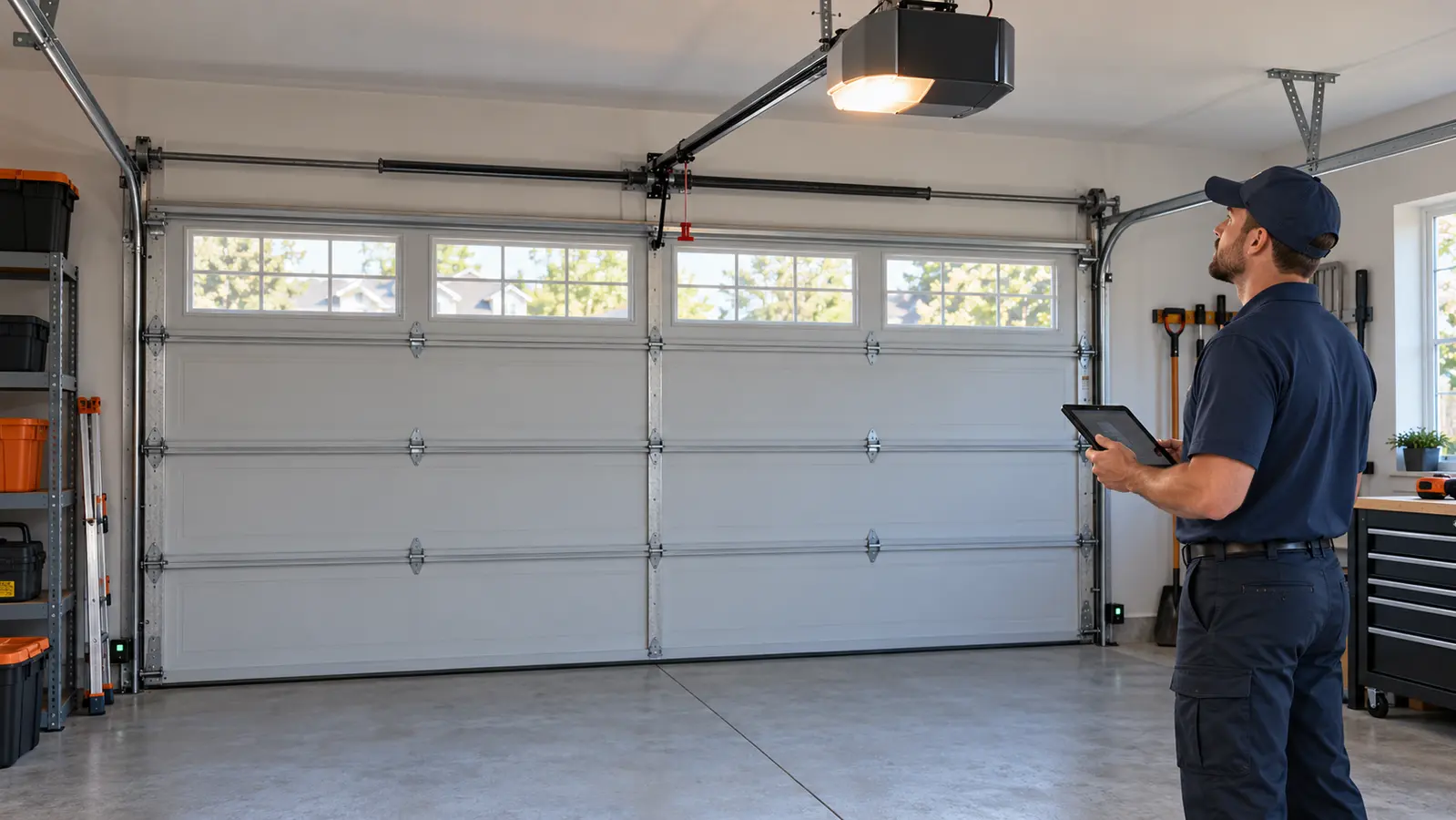
On many sectional garage doors, lift cables connect near the bottom of the door and travel to drums or pulleys as part of the counterbalance system. The spring system stores and releases energy; the cables transfer that controlled force so the door can rise and lower evenly. The opener guides a properly balanced door through its travel, but it is not supposed to carry the door's full weight. If this condition matches your situation, review the service scope for garage door cable repair.
That relationship explains why a cable problem can affect one side first. If one cable loses tension, leaves its drum, frays or breaks, the opposite side may continue to move while the affected side lags. The result can be a crooked door, a roller leaving the track, damaged panels or an opener that stalls under a load it was never designed to lift.
A cable is therefore not an isolated piece of wire. Its condition depends on the springs, drums or pulleys, bottom fixtures, track alignment, rollers, door balance and how the entire opening moves. A safe repair starts by understanding that system, not by tugging the visible strand back toward where it seems to belong.
The warning signs you should not ignore
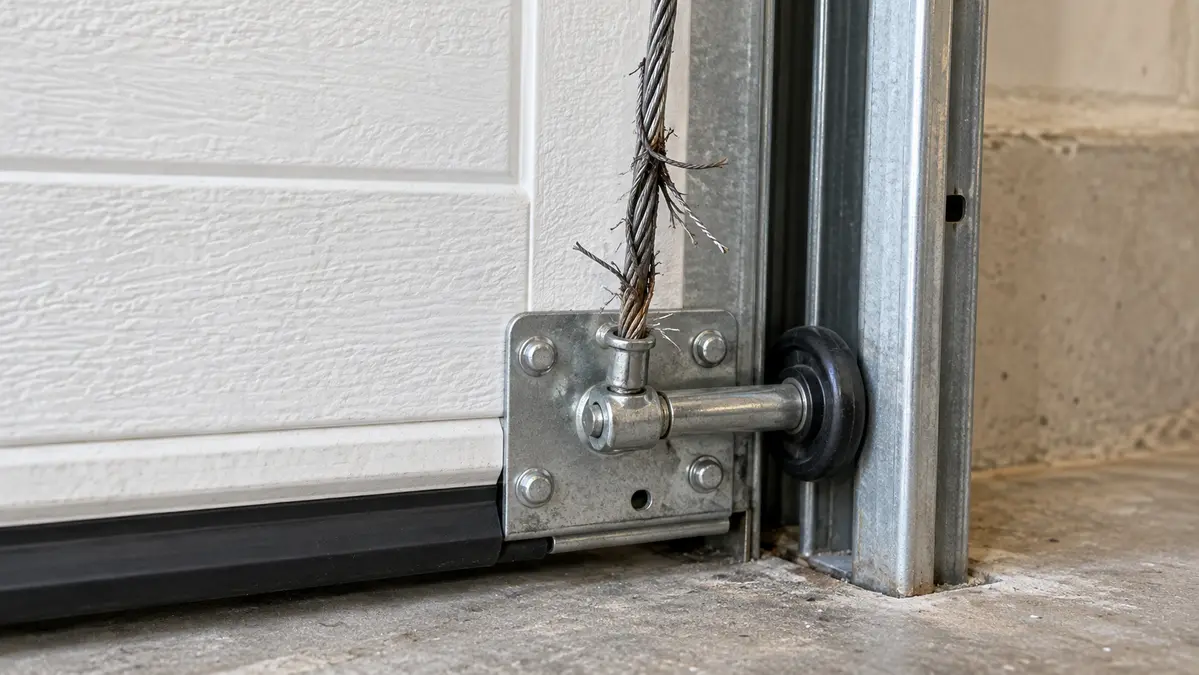
Look for a door that sits lower on one side, rises diagonally, binds after moving a short distance or leaves an uneven gap at the floor. A loose cable may hang beside the vertical track or appear unwound near the upper drum. Fraying can show as broken steel strands, rust, flattening or a visibly rough section near a bend or attachment point. If this condition matches your situation, review the service scope for garage door repair.
Sound can be part of the clue. A sharp bang may come from a spring or cable-related event, while scraping, rubbing or repeated popping can accompany a cable that is no longer tracking normally. The sound alone does not identify the failed component, so avoid diagnosing by volume and then ordering a single part from a photo.
DASMA's garage-door safety guidance (opens in a new tab) advises regular visual checks while leaving repairs to trained service personnel. A visual check means observing from a safe position—not touching the cable to see whether it is ‘really loose.’ If anything looks displaced, frayed or uneven, stop using the door until the system is assessed.
| Symptom | What it may indicate | Immediate response |
|---|---|---|
| Door rises or rests crooked | Uneven cable tension, track binding or another balance problem | Stop operation and keep clear. |
| Cable hangs beside the track | Cable may be off its drum, slack or broken | Do not touch or rewind it. |
| Broken wire strands or rust | Cable wear or corrosion | Arrange inspection before another cycle. |
| Bang followed by a heavy door | Spring, cable or counterbalance failure | Do not lift or use the opener. |
| Opener strains or reverses | Door resistance or imbalance | Stop repeated attempts and disconnect power only if safely accessible. |
What to do right now
Stop pressing the remote or wall control. If the door is partly open, crooked or hanging, keep people, pets and vehicles away from the opening and do not pass underneath it. Leave the door in place unless a qualified technician determines how it can be stabilized and moved safely. If this condition matches your situation, review the service scope for garage door spring repair.
Take photographs from outside the danger area: one view of the full door, one of each vertical track and a closer view of the cable only if it can be captured without stepping beneath the door or reaching near the hardware. Note whether the door is open or closed, whether a car is trapped, and what happened immediately before the symptom appeared.
Call for professional evaluation and describe the condition plainly. ‘The right side is six inches lower and a cable is hanging near the left track’ is more useful than ‘the opener is broken.’ Clear facts help the technician prepare for cable, spring, track and stabilization needs without treating a remote diagnosis as certain.
Why this is not a safe DIY repair
The most dangerous assumption is that a slack cable has no tension. Depending on the door position and system condition, another component may still hold substantial stored energy or the door's weight may shift without warning. Loosening the wrong fastener can release hardware or allow the door to drop. If this condition matches your situation, review the service scope for garage door track repair.
Do not clamp, pull, cut, unwind or attempt to place a cable back on a drum. Avoid loosening bottom brackets, set screws, spring hardware or track fasteners in an effort to create room. Those steps can change the load path before the door is stabilized, which turns a visible repair attempt into an uncontrolled movement problem.
Also avoid using the opener as a lifting tool. Even if it moves the door once, that does not prove the system is safe or balanced. The opener rail, trolley and motor can be damaged when asked to overcome a heavy or crooked door, adding a second repair to the original cable issue.
What a complete professional assessment should cover
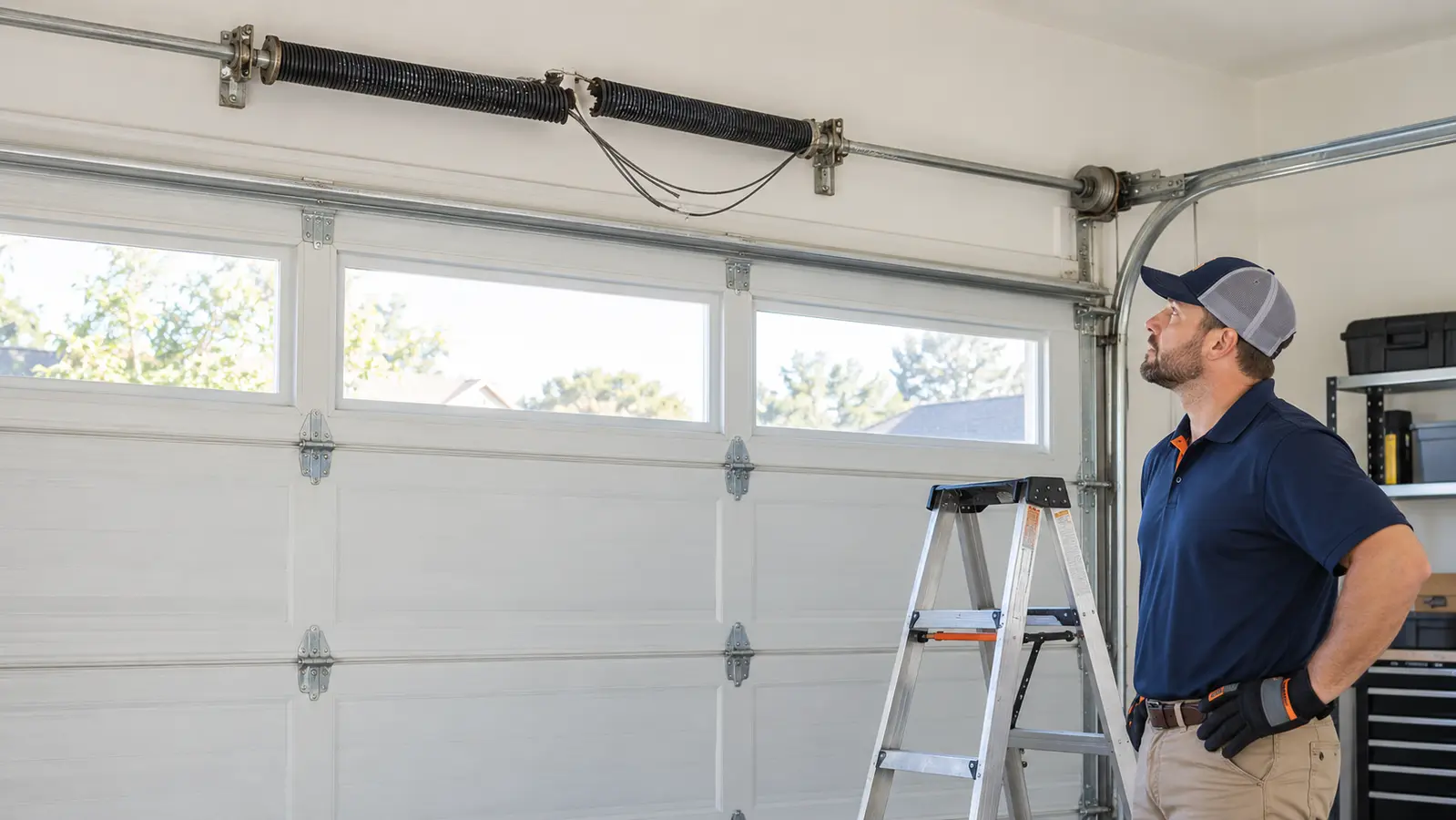
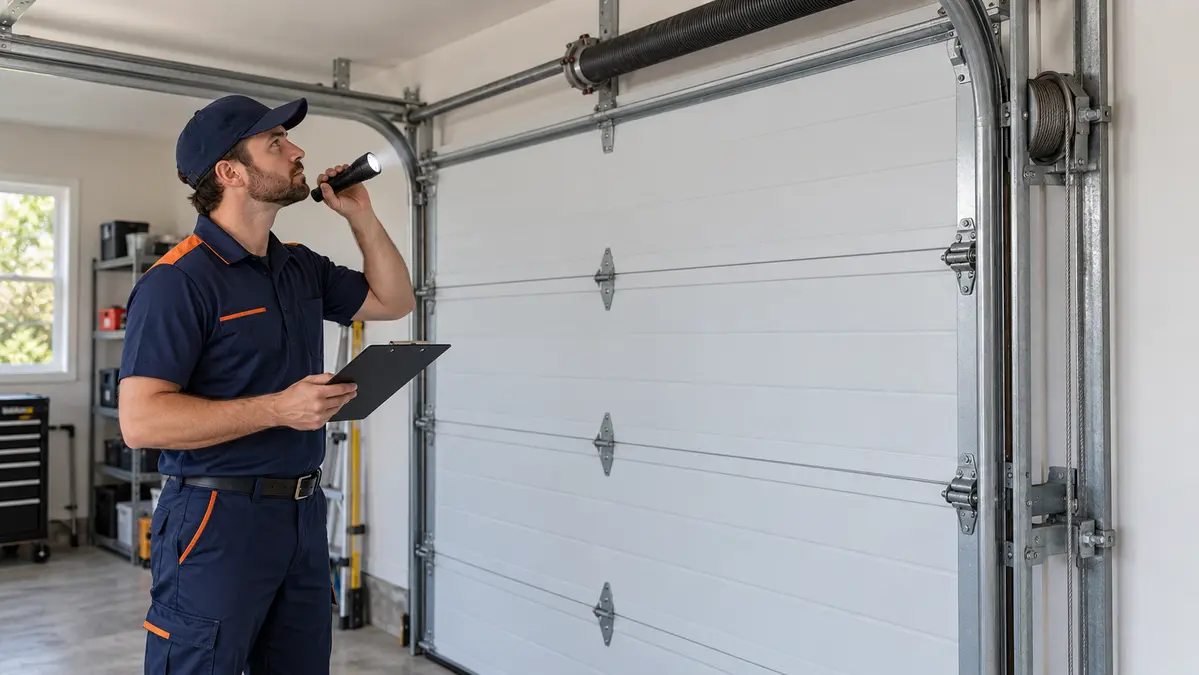
A technician should evaluate both lift cables, their attachment points, drums or pulleys, spring condition, track alignment, rollers, hinges, panels and overall door balance. The purpose is to identify why the cable became loose or failed. Ordinary wear, corrosion, a seized roller, impact damage, incorrect prior work or a counterbalance problem can all change the appropriate scope.
The DASMA technical data sheets (opens in a new tab) provide industry safety and system information that helps explain why the counterbalance assembly must be treated as a whole. Cable size, routing and compatibility are not details to estimate by appearance. The door's construction, weight, spring system and hardware determine what belongs on that opening.
After the repair, the door should be checked for even travel, correct cable tracking, balance and safe opener operation where applicable. Ask what was replaced, what caused the condition and whether another worn component needs monitoring. A good closeout explains the system rather than leaving you with a new cable and the same unanswered question.
How to reduce the chance of another cable problem
Pay attention to early changes in movement. A door that starts rubbing, shuddering, rising unevenly or making a new scraping sound is asking for inspection before the symptom becomes a full failure. Do not wait for a cable to hang visibly or for a roller to leave the track.
Keep the floor and track area clear of objects that can strike or obstruct the door, and avoid backing into a door that is not fully open. Impact does not need to crumple a panel to shift hardware or alignment. If a vehicle, mower or stored item contacts the door, have unexpected movement checked before continuing normal cycles.
Use visual observation as maintenance, not a reason to adjust tensioned parts. If you see corrosion, frayed strands, displaced hardware or an uneven door, stop and request service. Catching a developing condition early is less dramatic, which is precisely the point.
Frequently asked questions
Questions readers ask
Can I open a garage door with a broken cable?
Do not attempt it. The door may be extremely heavy, uneven or unstable, and its remaining components may be under dangerous force. Keep clear and arrange professional stabilization and repair.
Why is one garage-door cable loose?
Possible causes include a cable leaving its drum, uneven door movement, a spring or counterbalance problem, track binding, impact, worn hardware or incorrect prior adjustment. The complete system should be inspected.
Should both garage-door cables be replaced together?
It depends on the door, system and condition of both cables. A technician should compare wear, corrosion, compatibility and the cause of failure before recommending the scope.
Is a frayed garage-door cable an emergency?
It is a serious warning sign. Stop operating the door and schedule prompt professional evaluation before more strands fail or the door becomes uneven or unstable.
The right solution depends on the specific lock, door, vehicle or garage door system. Check the Wichita-area service pages, then call or send the details for an evaluation.