Garage door repair
Garage Door Opener Hums but the Door Won’t Move: What It May Mean
You press the garage-door remote, the opener light comes on, and the motor hums—but the door stays exactly where it is. That sound can tempt you to press the button three more times, as if the fourth attempt will inspire the machine. Usually, repeated cycling only adds stress. A humming opener can point to an opener problem, a disconnected trolley, a blocked or unbalanced door, a spring or cable failure, or a door that has reached a safe operating limit.
If the opener hums but the garage door does not move, stop repeated attempts. Keep people clear, look for a crooked door, broken spring, slack cable, damaged track or disconnected trolley without touching tensioned parts, and do not try to lift a heavy or unstable door. A technician should determine whether the problem is in the opener or the door system before repair.
You press the garage-door remote, the opener light comes on, and the motor hums—but the door stays exactly where it is. That sound can tempt you to press the button three more times, as if the fourth attempt will inspire the machine. Usually, repeated cycling only adds stress. A humming opener can point to an opener problem, a disconnected trolley, a blocked or unbalanced door, a spring or cable failure, or a door that has reached a safe operating limit. Continue with the complete library of garage door repair guides when you want to compare related decisions.
Key takeaways
- A humming motor does not prove the opener itself is the only failed component.
- Stop immediately if the door is crooked, unusually heavy, off track or accompanied by a broken spring or loose cable.
- Safe observations include power, remote behavior, wall-control response, visible trolley position and sensor indicators—not spring or cable adjustment.
- A complete diagnosis tests the door separately from the opener only after the system is made safe.
First, stop repeated button presses
One short attempt is enough to confirm the symptom. If the opener hums, buzzes, clicks or starts and immediately stops while the door remains still, release the control. Repeated attempts can overheat the motor, wear internal gears or force the opener against a door that is jammed, unbalanced or too heavy to move safely. If this condition matches your situation, review the service scope for garage door opener repair.
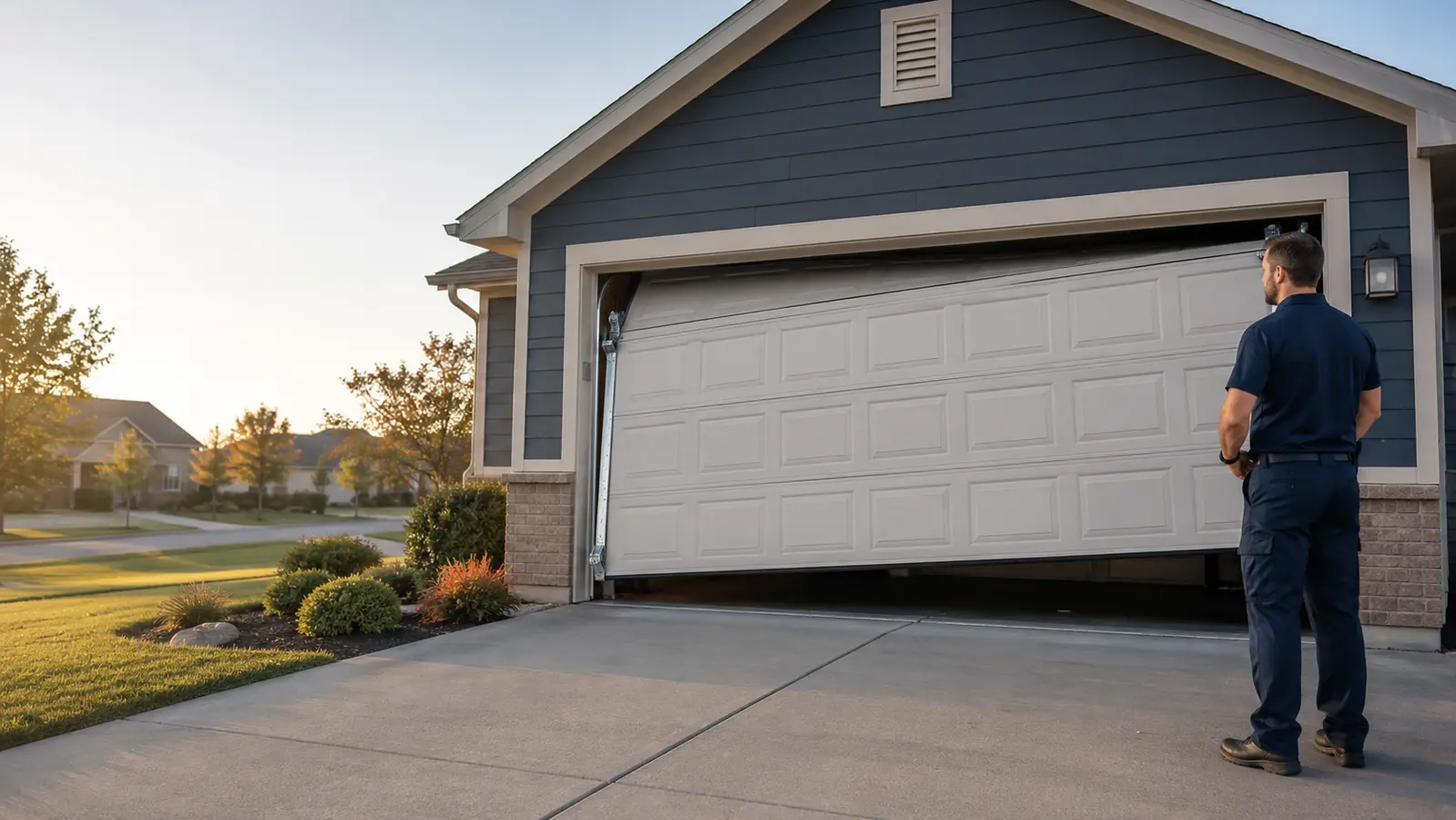
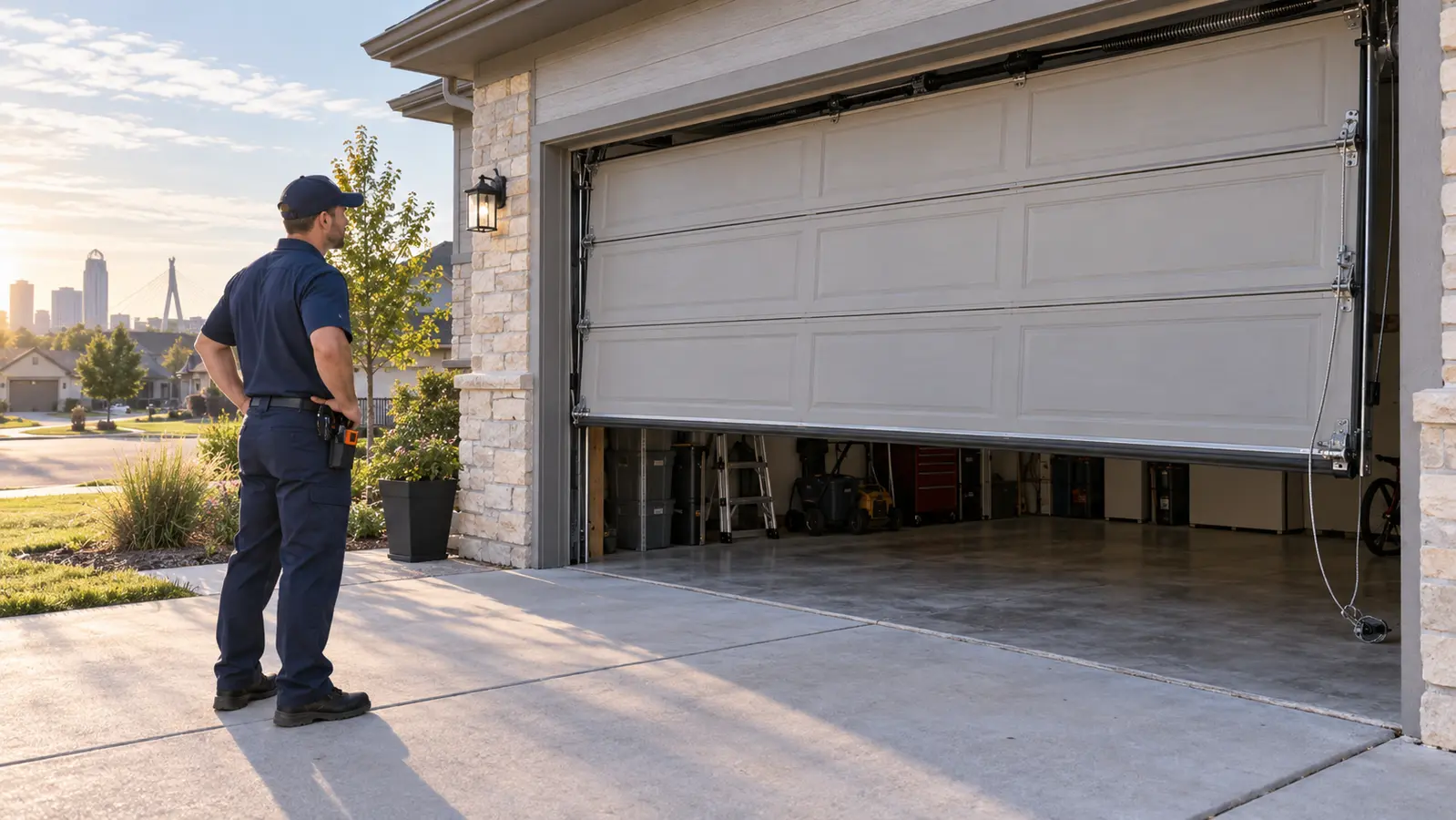
Stand outside the door's travel path and observe the whole opening. Is the door sitting level? Are the tracks clear?
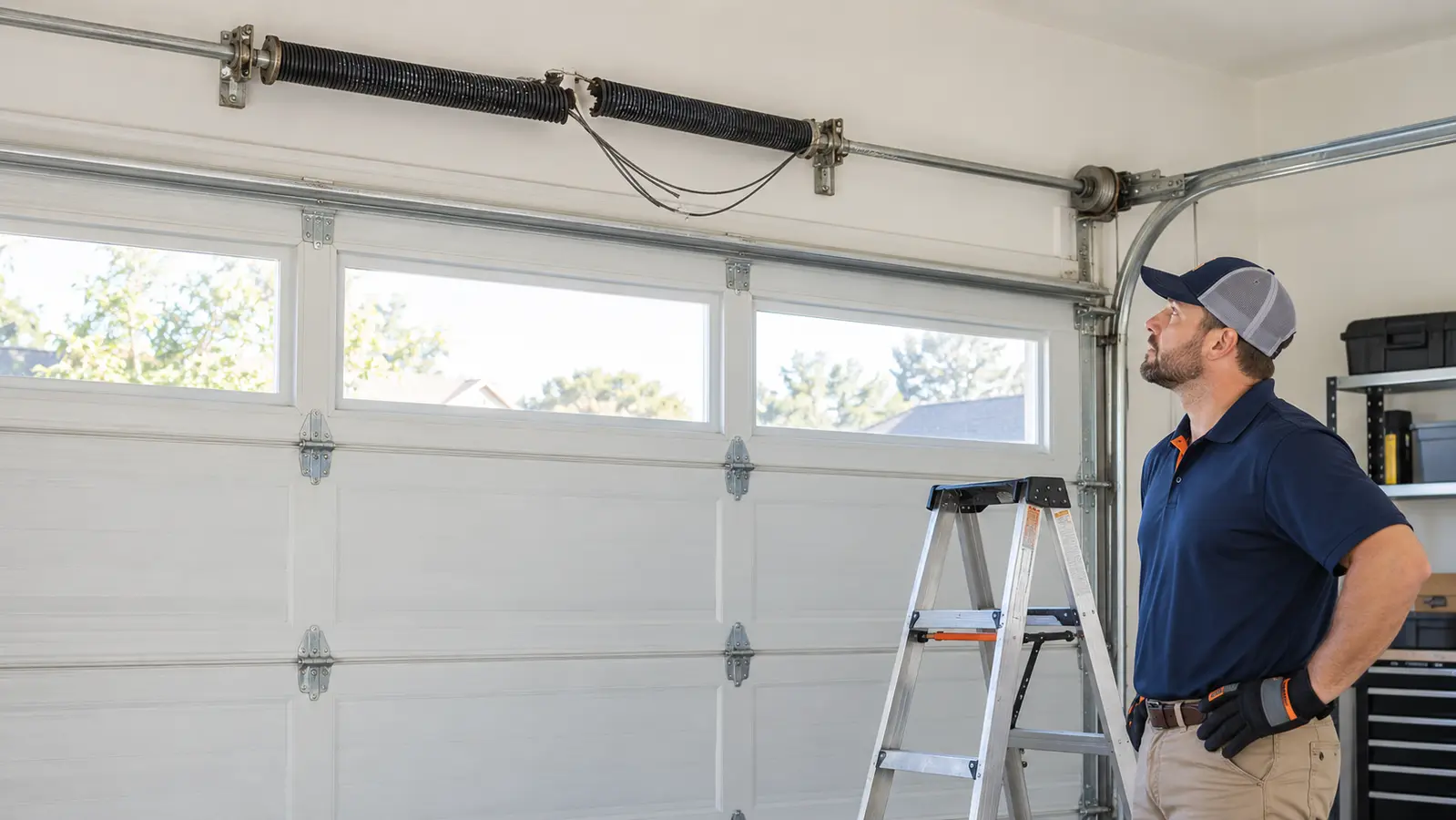
Does a spring above the door appear separated? Is a cable hanging near one side?
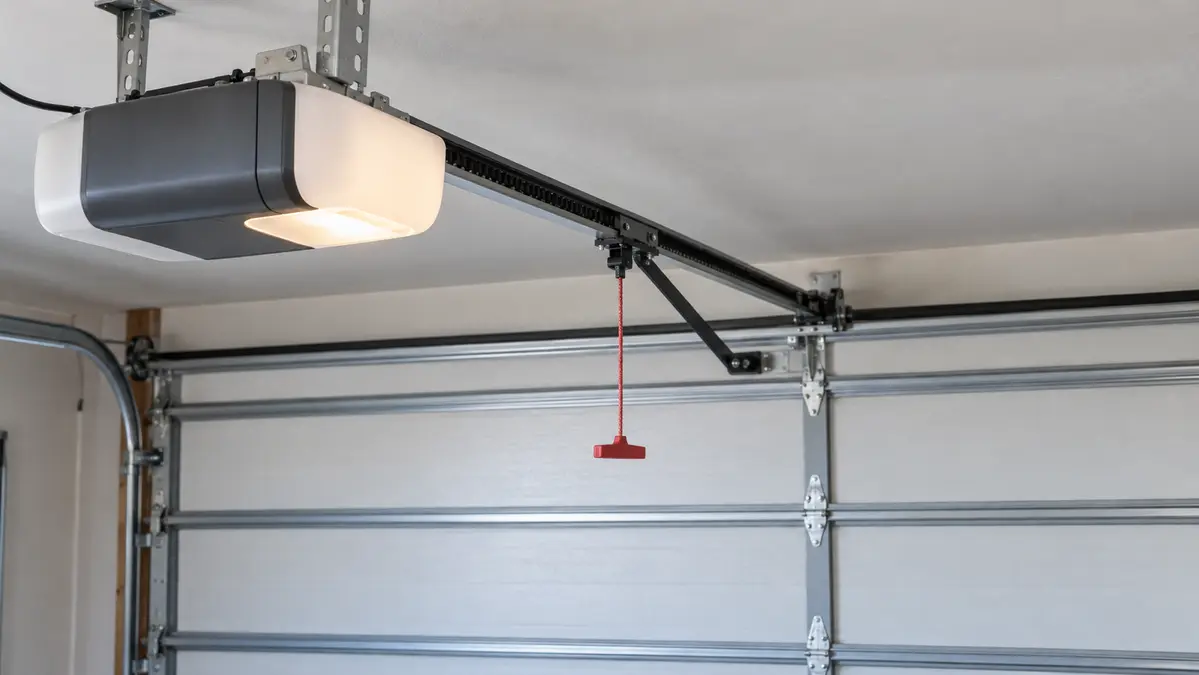
Is the trolley connected to the door arm? These are visual clues only; do not pull, loosen or reposition hardware to confirm a guess.
If the door is crooked, partly open, off track or unstable, keep everyone away and arrange service. Do not walk beneath it, pull the emergency-release handle or try to move it by hand. The immediate goal is preventing uncontrolled movement—not winning an argument with the wall button.
Why humming does not identify one specific failure
The hum tells you that the opener is receiving some power and attempting to do something. It does not tell you whether the motor can transfer motion through the drive system, whether the trolley is engaged, or whether the door is mechanically able to move. Several different failures can produce a remarkably similar sound. If this condition matches your situation, review the service scope for garage door repair.
Inside the opener, worn gears, a failing capacitor, a seized motor component or a drive problem can prevent movement. Outside the opener, a broken spring, cable problem, track obstruction, damaged roller, frozen door or engaged manual lock can make the door resist. An opener may stop to protect itself when the load exceeds its operating limit.
That is why a useful diagnosis separates the powered operator from the door and counterbalance system—but only after the door is stabilized and a technician confirms it is safe to do so. Replacing an opener without checking door balance can leave the original mechanical problem untouched and damage the new unit.
| What you observe | Possible area to evaluate | Safety response |
|---|---|---|
| Light turns on; motor hums; trolley does not move | Opener motor, capacitor, gear or drive system | Stop repeated cycles and schedule diagnosis. |
| Trolley moves but door remains closed | Disconnected door arm, release mechanism or door resistance | Do not reconnect until the door is checked. |
| Door looks crooked or a cable hangs loose | Cable, track or counterbalance problem | Keep clear and do not operate. |
| Visible gap in torsion spring | Possible broken spring | Do not lift the door or use the opener. |
| Door starts then reverses | Obstruction, sensor, force or travel issue | Clear ordinary debris only from a safe position; do not bypass safety devices. |
Safe observations you can make before calling
Confirm that the opener's power cord is connected and that the circuit has not been switched off, provided both are safely accessible without climbing near the door hardware. Try the wall control once and note whether its response differs from the remote. If only one remote fails while the wall control works normally, the problem may be limited to the remote rather than the door system. If this condition matches your situation, review the service scope for garage door spring repair.
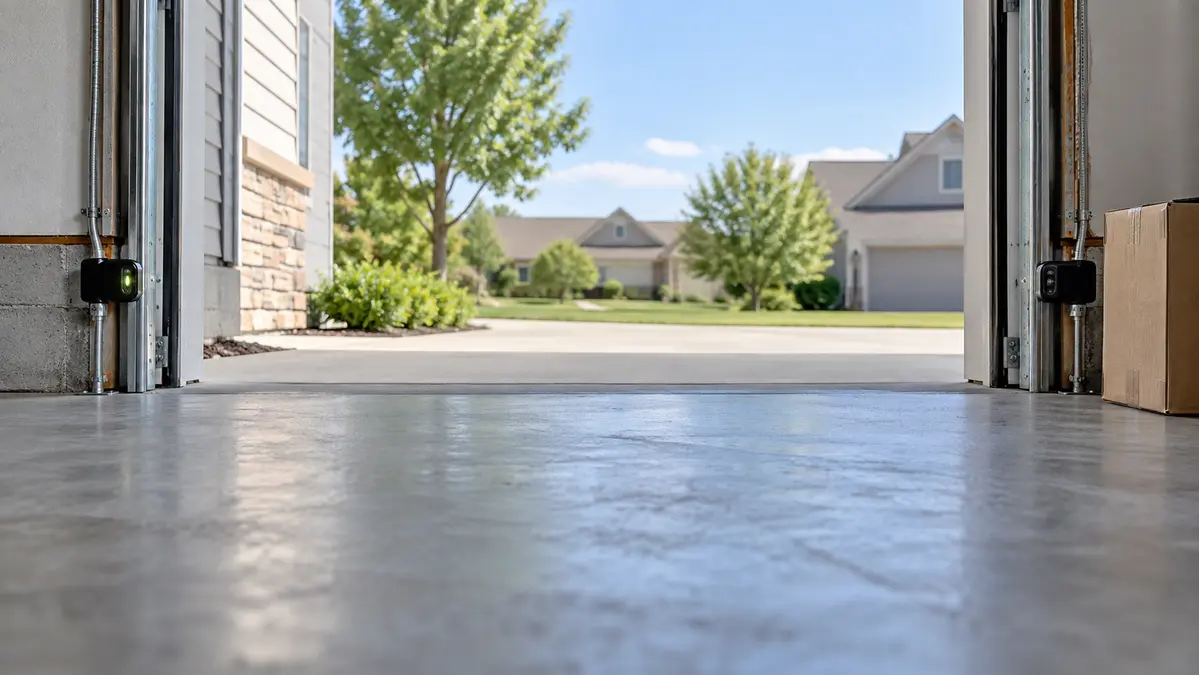
Look at the photo-eye sensors near the floor. They should face each other across the opening, and many models use indicator lights to show alignment or power.
Remove only ordinary loose debris that can be reached without entering beneath an unstable door. Do not tape, bypass or hold a control to defeat a safety function.
The CPSC garage-door opener safety guidance (opens in a new tab) emphasizes functional reversing protection and professional attention when the system does not operate correctly. Sensor trouble more commonly affects closing than opening, so a closed door that will not rise still deserves a broader mechanical and opener assessment. Record what the lights, controls and door did instead of treating one indicator as the entire diagnosis.
Do not pull the emergency release automatically
The red emergency-release handle disconnects the door from the opener trolley on many residential systems. It can be useful in the correct conditions, but it is not a universal first step. If a spring or cable has failed, the door may be far heavier than expected; if the door is partly open or unstable, releasing it can allow uncontrolled movement. If this condition matches your situation, review the service scope for garage door track repair.
Do not pull the release while standing beneath the door or when the door is crooked, off track or unsupported. Do not attempt to lift a heavy door with extra people, clamps, straps or a vehicle. The safe decision depends on the door position, counterbalance condition and exact hardware—not on whether the handle is within reach.
If a vehicle is trapped inside, say so when requesting service. That information changes the priority and preparation, but it does not make force a safe shortcut. A technician can assess how to stabilize the opening before disconnecting or moving the door.
This video covers one common travel symptom. An opener hum can also involve the door, counterbalance system, trolley, or drive, so do not force the system to run. Watch the source playlist (opens in a new tab).
What a complete professional diagnosis should include
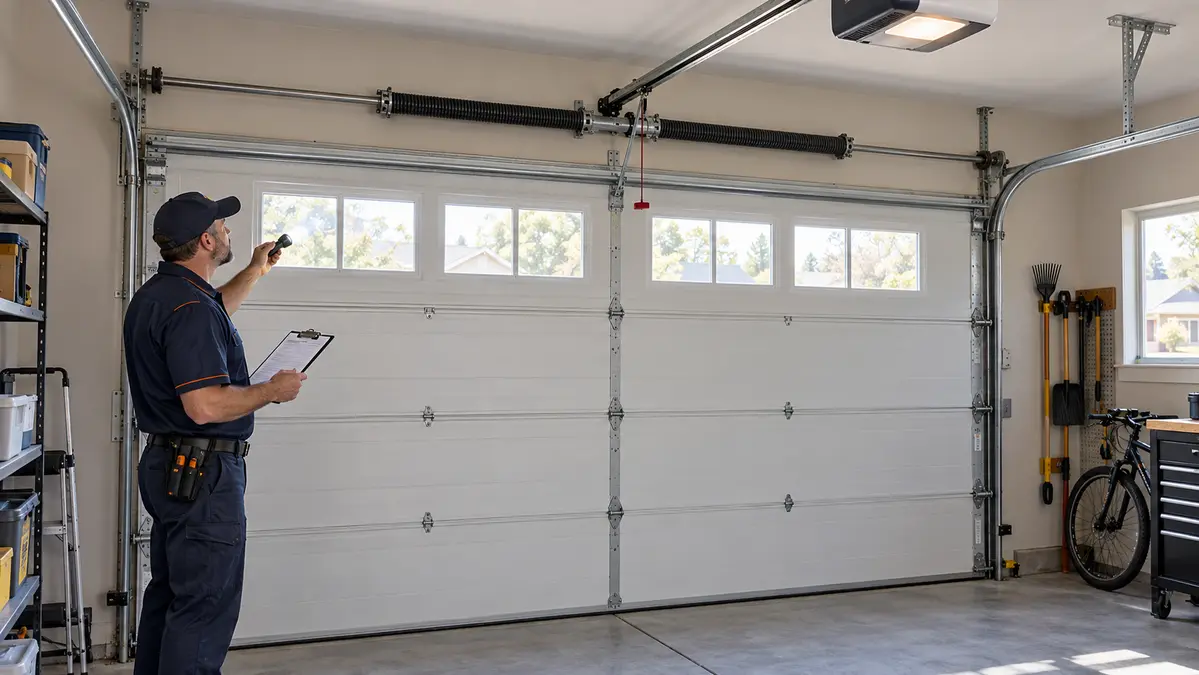
A technician should begin with the door itself: tracks, rollers, hinges, panels, cables, springs, manual lock and overall balance. The opener should then be checked for power, control response, rail and trolley condition, drive components, travel limits, force settings and safety-reversal operation as appropriate for the model.
DASMA garage-door safety guidance (opens in a new tab) treats the door and operator as a connected system. The opener is designed to move a properly installed and balanced door; it should not be used to compensate for binding tracks, failed counterbalance parts or impact damage. Finding the root cause protects both the door and the replacement decision.
If the opener needs repair, ask which component failed and whether parts remain appropriate for the unit's age and condition. If replacement is recommended, capacity, rail type, door size, duty, controls, lighting, backup features and compatibility should be considered together. The most expensive opener is not automatically the best fit, and the cheapest one is not a bargain if the door still binds.
Test the finished system before normal use
After service, watch a complete open-and-close cycle from a safe position. The door should travel smoothly and evenly without new rubbing, jerking or hesitation. The opener light, wall control, remotes, keypad and connected features should perform as promised.
The technician should confirm the safety-reversal system according to the manufacturer's instructions and explain any maintenance or follow-up need. Never treat a successful opening as the entire test; safe closing, stopping and reversing matter just as much.
Finally, ask what caused the symptom. A clear answer—such as a worn drive gear, failed capacitor, broken spring, disconnected trolley or track resistance—helps you recognize whether the repair addressed the real problem. The quietest outcome is a door that goes back to being boring, and for garage equipment, boring is excellent.
Frequently asked questions
Questions readers ask
Why does my garage-door opener hum but not open the door?
Possible causes include an opener motor, capacitor, gear or drive problem; a disconnected trolley; an engaged lock; or a door that is jammed, unbalanced or affected by a spring, cable or track failure. The complete system should be diagnosed.
Should I keep pressing the garage-door button if it only hums?
No. Stop repeated attempts. Continued cycling can overheat or damage the opener and may force it against a door that cannot move safely.
Can I pull the emergency release when the opener will not move?
Only when the door is stable and the counterbalance system is known to be safe. Do not pull it on a crooked, partly open, off-track or unusually heavy door; arrange professional assessment instead.
Could the photo-eye sensors stop a garage door from opening?
Photo-eye problems usually interfere with closing rather than opening, although controls and models vary. A closed door that will not rise needs a broader check of the opener, door and counterbalance system.
The right solution depends on the specific lock, door, vehicle or garage door system. Check the Wichita-area service pages, then call or send the details for an evaluation.