Garage door repair
Garage Door Springs: Why They Break and Why DIY Repairs Are Risky
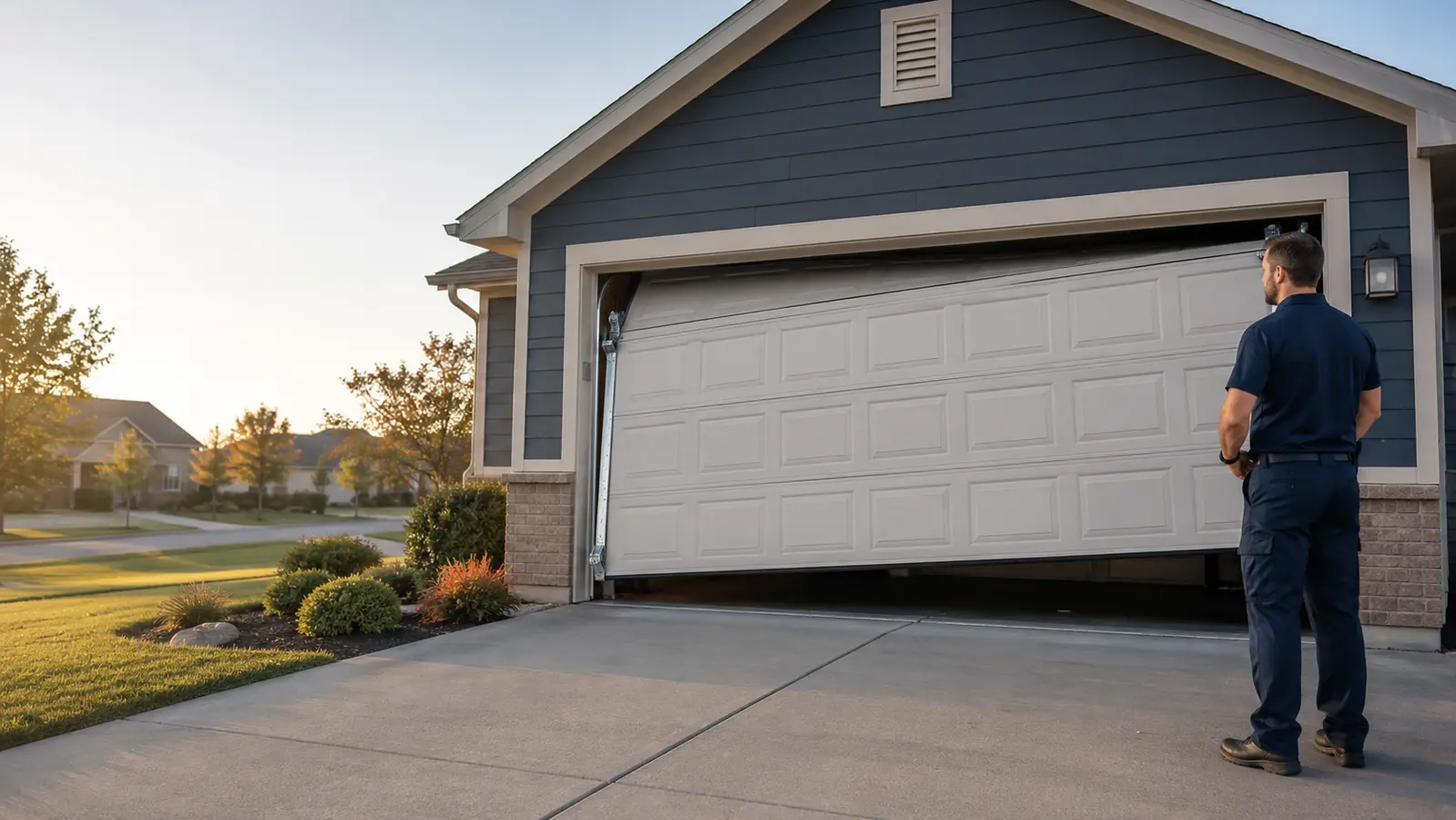
A garage door can weigh hundreds of pounds, yet it normally feels surprisingly manageable because the spring system does most of the lifting work. When a spring breaks, that helpful balance disappears in a hurry. The result may be a loud bang, a door that opens only a few inches, or an opener that suddenly sounds like it has been asked to tow a truck. The smart response is to stop operation, keep clear, and treat the counterbalance system as a safety issue rather than a weekend experiment.
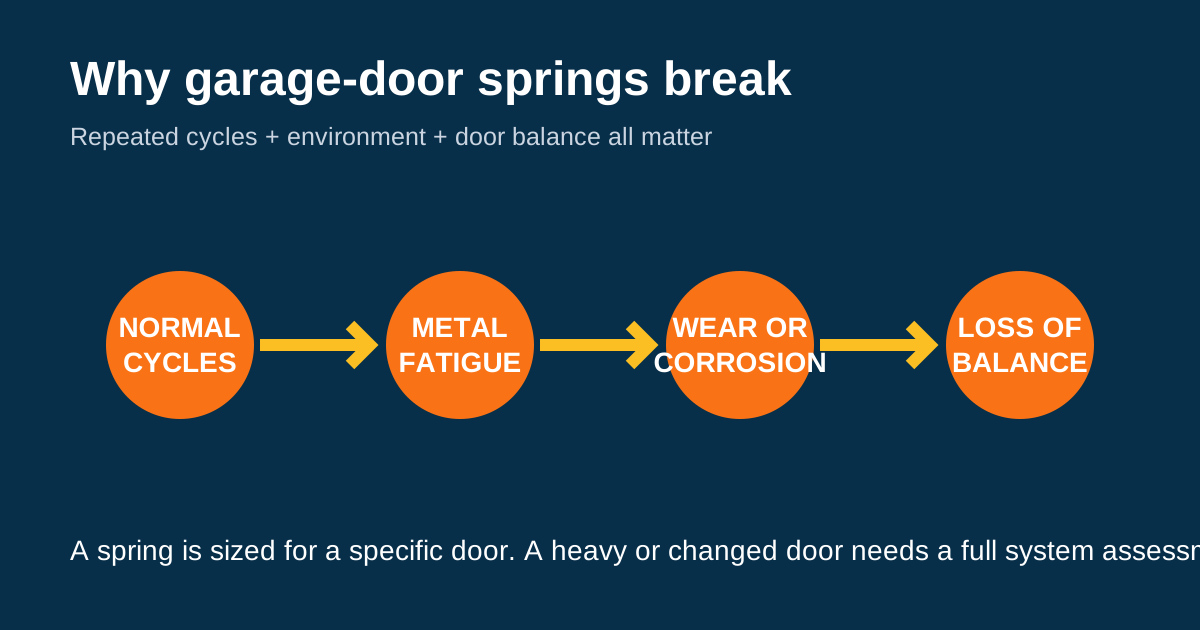
Garage-door springs usually break because metal fatigue, corrosion, wear, incorrect sizing, or changed door weight eventually overcome the spring’s cycle life. If the door becomes unusually heavy, crooked, or difficult to move, stop using the opener and do not touch springs, cables, drums, or bottom brackets. A trained garage-door technician should assess the complete system.
A garage door can weigh hundreds of pounds, yet it normally feels surprisingly manageable because the spring system does most of the lifting work. When a spring breaks, that helpful balance disappears in a hurry. The result may be a loud bang, a door that opens only a few inches, or an opener that suddenly sounds like it has been asked to tow a truck. The smart response is to stop operation, keep clear, and treat the counterbalance system as a safety issue rather than a weekend experiment. Continue with the complete library of garage door repair guides when you want to compare related decisions.
Key takeaways
- Springs counterbalance the door; the opener is not meant to lift its full weight.
- A broken spring can be visible as a gap in a torsion coil, but not every failure is obvious.
- Cables, drums, rollers, tracks, and the door itself must be checked with the spring system.
- Do not pull the emergency release beneath a raised or unstable door.
Why springs are doing the hard work
A torsion spring is mounted above the door on a shaft. As the door closes, the spring stores energy; as the door opens, that energy is released through drums and lift cables to offset the door’s weight. Extension-spring systems use a different arrangement along the tracks, but the job is the same: keep the door controllable through its travel. If this condition matches your situation, review the service scope for garage door repair.
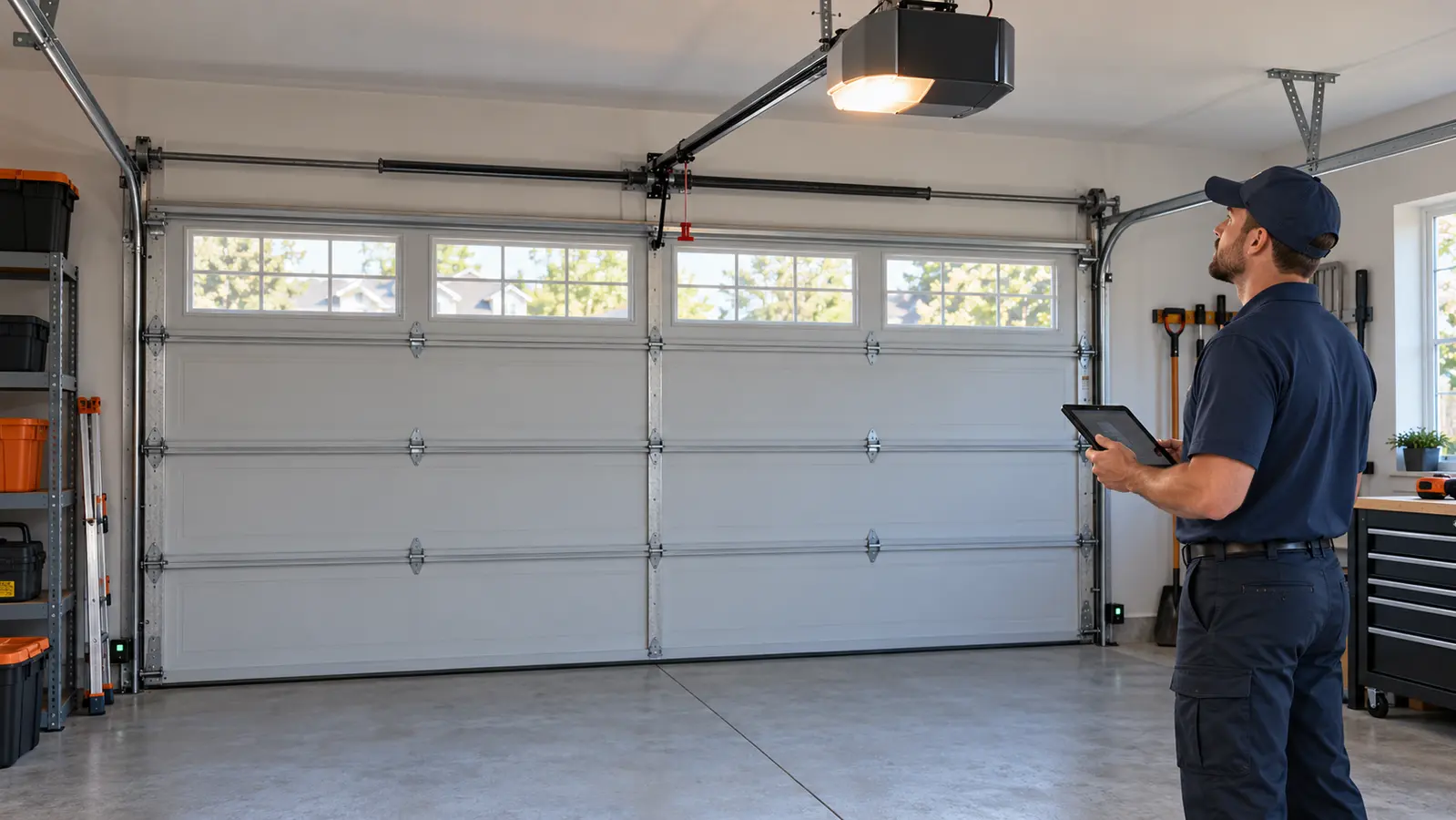
The opener provides motion and control. It should not be treated as the component that makes an unbalanced door safe. When a spring has lost tension, the motor, rail, trolley, top section, and mounting points can all be pushed beyond normal loads.
That is why a door that suddenly feels heavy is useful information, not a challenge for the remote button. Stop the cycle and look from a safe distance. The door can have more stored energy—and more ways to move—than its everyday appearance suggests.
Spring
Offsets most of the door’s effective weight.
Cables and drums
Carry spring force to both sides of the door.
Opener
Moves a balanced door; it does not replace the spring system.
What makes a garage-door spring break
The most common reason is plain mechanical fatigue. Every open-and-close cycle flexes the steel, and no spring lasts forever. A household that uses the garage as its main entrance may accumulate cycles faster than expected, even though the door still looks fine from the driveway. If this condition matches your situation, review the service scope for garage door spring repair.
Corrosion can shorten service life by pitting the coils and reducing their effective strength. Moisture, road salt tracked into the garage, and neglected maintenance can all contribute. Door changes matter too: adding heavy panels, windows, insulation, or hardware without rebalancing can make the existing springs work outside their intended range.
Incorrect prior sizing is another possibility. A spring that looks close enough is not necessarily correct for the door’s exact weight, height, drums, and lift system. A technician should verify the setup rather than simply matching the old part by appearance.
| What you notice | Possible meaning | Best next step |
|---|---|---|
| Sharp bang, then a heavy door | A torsion spring may have broken | Stop operating the door. |
| Door opens a few inches and stops | Lost counterbalance or mechanical resistance | Do not keep cycling the opener. |
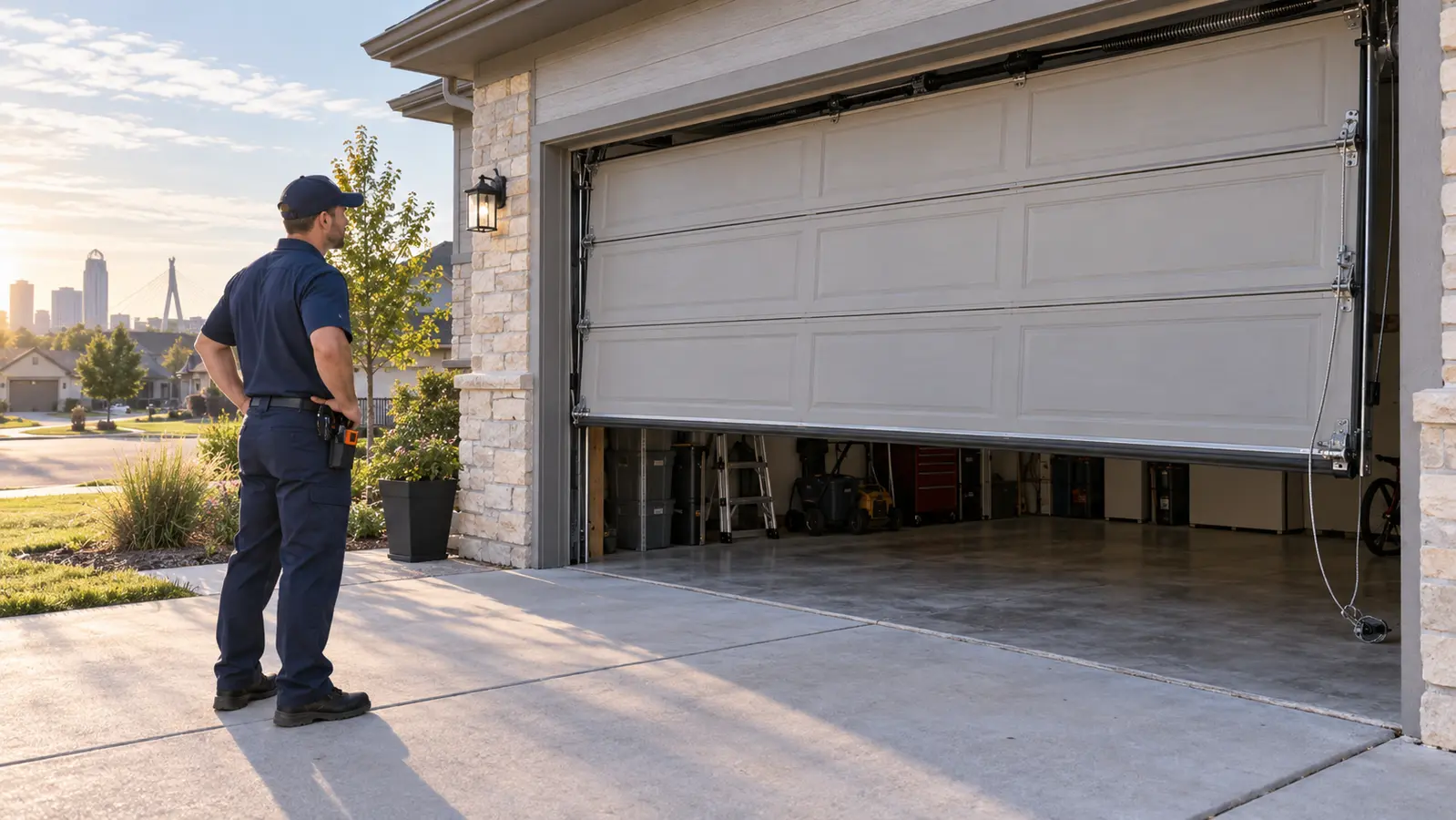
| Visible gap in a coil above the door | Likely broken torsion spring | Do not touch the shaft or spring. |
| Door rises unevenly or cable is loose | Counterbalance, cable, track, or roller issue | Keep clear and arrange assessment. |
The signs that call for an immediate stop
A single loud bang followed by a stubbornly heavy door is a classic warning. So are a visible gap in the torsion coil, a cable hanging near the track, one side of the door lifting faster than the other, or an opener that strains without moving the door normally. If this condition matches your situation, review the service scope for garage door opener repair.
Not every problem announces itself dramatically. A door may begin closing faster than before, shake at the same point in its travel, or require more effort to lift. Those quieter changes deserve attention before they become a failure that traps a car inside or leaves a door partly open.
DASMA’s garage-door safety guidance is useful here: observe, do not improvise. Keep children, pets, and vehicles out of the opening. A wide photo from a safe position can help describe the issue; operating the door again just to collect a video is not worth the risk.
Why DIY spring work is especially risky
The danger is not just the spring itself. Adjusting a torsion system involves winding bars, set screws, a rotating shaft, drums, cables, and a door whose weight may shift if the load is released incorrectly. A loose cable can be a symptom of the same system failure, not a separate household fix.
Do not use household tools, clamps, a vehicle, or extra people to force the door up or down. Do not cut a cable, loosen a bottom fixture, or increase the opener’s force setting. Each shortcut can add a second problem while the original load is still uncontrolled.
The red emergency-release handle is not automatically safe either. On a raised, crooked, or unusually heavy door, disconnecting the opener can remove the mechanism currently restraining movement. Leave the system as it is and describe the door position when you request help.
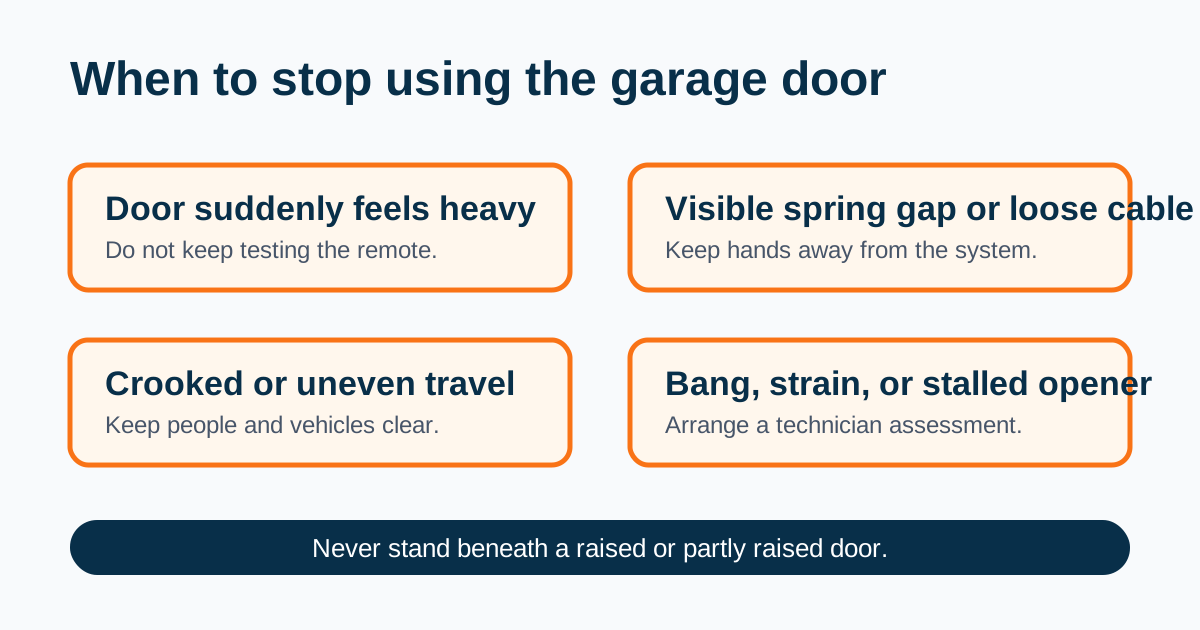
- Stop use of remotes and wall controls.
- Keep clear of a raised or partly raised door.
- Do not stand beneath the opening.
- Use another property entrance if available.
- Tell the technician whether a vehicle is trapped.
What a complete spring repair should include
A proper assessment starts with the actual door: its size, construction, hardware, spring arrangement, cables, drums, bearings, tracks, rollers, and opener attachment. The visible broken part does not always explain the complete failure. For example, an impact-damaged track or a seized roller can change how the counterbalance system behaves.
After compatible springs are installed, the door should be checked for balanced, even travel before normal opener operation resumes. Cables should track correctly, the door should not bind, and related hardware should be examined for wear or damage. A successful repair is not merely a door that moves once when the remote is pressed.
CPSC guidance on automatic garage-door openers (opens in a new tab) also reinforces the value of a working, properly adjusted system. Ask what failed, what was replaced, how balance was verified, and whether any related component should be monitored. Boring, smooth operation is exactly the outcome you want from a garage door.
Frequently asked questions
Questions readers ask
Can I open my garage door with a broken spring?
A broken spring can make the door extremely heavy and unstable. Do not force it with the opener or lift it under an unsupported door.
Why did my garage door spring break?
Common causes include normal cycle fatigue, corrosion, wear, incorrect sizing, and changed door weight or balance.
Should both garage-door springs be replaced?
That depends on the door’s paired system, spring condition, age, sizing, and the technician’s inspection. The complete setup should be evaluated.
The right solution depends on the specific lock, door, vehicle or garage door system. Check the Wichita-area service pages, then call or send the details for an evaluation.