Residential locksmith
Why Your Front-Door Deadbolt Will Not Lock
A deadbolt that suddenly refuses to lock may have a cylinder problem, but door sag, strike alignment, weather seal pressure and frame movement are equally common parts of the diagnosis. The safest first step is a controlled open-door comparison—not more force on the key.
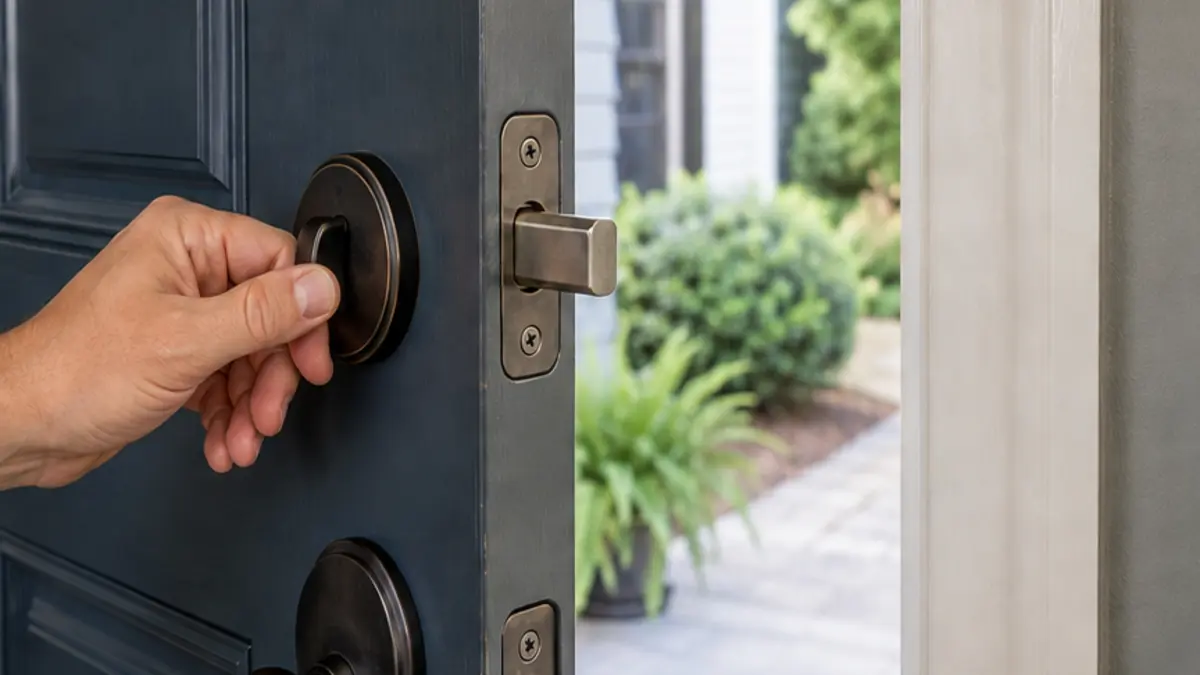
Test the deadbolt with the door open. If it turns freely open but binds closed, the bolt and strike are probably not aligning or the door is under pressure. If it binds in both positions, the cylinder, thumbturn, bolt mechanism or installation may need service. Stop forcing the key, check for obvious door movement and request an evaluation before damage spreads.
A deadbolt that suddenly refuses to lock may have a cylinder problem, but door sag, strike alignment, weather seal pressure and frame movement are equally common parts of the diagnosis. The safest first step is a controlled open-door comparison—not more force on the key. Continue with the complete library of residential locksmith guides when you want to compare related decisions.
Key takeaways
- Open-versus-closed testing separates lock mechanism trouble from door fit.
- A key that bends or requires force is a warning, not a technique.
- Hinges, weather seals and frame movement can redirect the bolt.
- Strike enlargement is not the only or always the correct adjustment.
- Repair should finish with smooth operation, full bolt engagement and testing from both sides.
Start with the open-door comparison
The door position is the fastest non-destructive diagnostic variable. With the slab open, the bolt does not have to enter the strike, so resistance that disappears isolates the closed-opening geometry.
This distinction matters because the visible symptom is not always the failed component, and a useful request should describe what the complete opening does rather than name a replacement part before inspection. For a planned residential service decision, separating observation from assumption helps the responding independent contractor arrive with better context and reduces the chance that an unrelated alignment, frame, key-control or hardware issue is overlooked. If this condition matches your situation, review the service scope for residential lock repair.
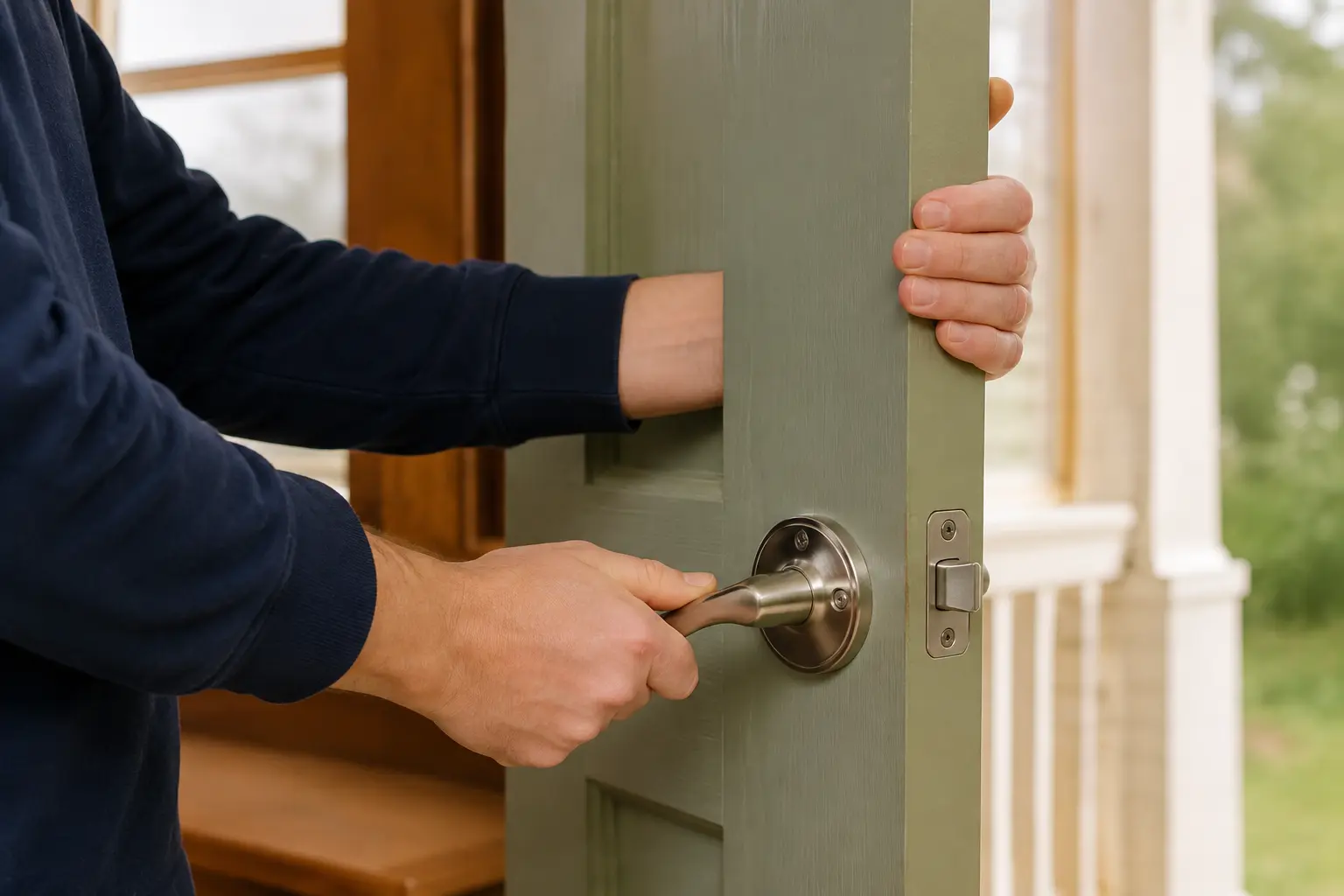
Work through the condition in a controlled order. Support the door normally and extend the bolt once while open. Retract it and listen for scraping or grinding.
Close the door gently without pulling it tight. Repeat the test and compare the exact point of resistance. These observations can be shared by phone or through the service-request form without dismantling the lock or forcing the door.
Treat a smooth-open and binding-closed result as an alignment or pressure clue. The contractor should still confirm the diagnosis, explain the available scope and provide the price before authorized work begins.
Illustrative scenario: the thumbturn moves fully when the door is open but stops halfway after the latch catches. The example is not a report of a Heartland customer or completed job; it shows how the same initial complaint can lead to different next steps after the door, frame, lock and access history are considered together.
Keep fingers clear of the door edge and do not slam the extended bolt into the frame. If conditions appear unsafe, someone may be in danger or unauthorized entry may be occurring, move to safety and contact the appropriate public authority before treating the situation as an ordinary locksmith request.
Observe
Support the door normally and extend the bolt once while open.
Compare
Retract it and listen for scraping or grinding.
Confirm
Close the door gently without pulling it tight.
Recognize door sag and hinge movement
A small vertical change can move the bolt outside the strike opening. Loose hinge screws, worn hinges, heavy doors and shifted framing can lower or rotate the latch edge.
This distinction matters because the visible symptom is not always the failed component, and a useful request should describe what the complete opening does rather than name a replacement part before inspection. For a planned residential service decision, separating observation from assumption helps the responding independent contractor arrive with better context and reduces the chance that an unrelated alignment, frame, key-control or hardware issue is overlooked. If this condition matches your situation, review the service scope for home lock change.
Work through the condition in a controlled order. Watch the top gap while gently lifting the latch edge. Check whether hinge leaves move against the door or frame.
Look for fresh contact at the top or bottom of the strike. Note whether the door must be lifted by the handle to lock. These observations can be shared by phone or through the service-request form without dismantling the lock or forcing the door.
Correct the support or alignment cause before treating the strike symptom alone. The contractor should still confirm the diagnosis, explain the available scope and provide the price before authorized work begins.
Illustrative scenario: lifting the handle a fraction makes the deadbolt work, revealing that the door position—not the key—is changing engagement. The example is not a report of a Heartland customer or completed job; it shows how the same initial complaint can lead to different next steps after the door, frame, lock and access history are considered together.
Longer screws and structural adjustments must be selected carefully to avoid concealed wiring, glass or damaged framing. If conditions appear unsafe, someone may be in danger or unauthorized entry may be occurring, move to safety and contact the appropriate public authority before treating the situation as an ordinary locksmith request.
For independent guidance, review Builders Hardware Manufacturers Association's ANSI/BHMA product grade levels (opens in a new tab).
- Watch the top gap while gently lifting the latch edge
- Check whether hinge leaves move against the door or frame
- Look for fresh contact at the top or bottom of the strike
- Note whether the door must be lifted by the handle to lock
Consider weather seal and closing pressure
A door can be aligned vertically yet sit too far from or too tightly against the stop. New seals, swelling, paint buildup and wind can require the slab to be pushed or pulled before the bolt lines up.
This distinction matters because the visible symptom is not always the failed component, and a useful request should describe what the complete opening does rather than name a replacement part before inspection. For a planned residential service decision, separating observation from assumption helps the responding independent contractor arrive with better context and reduces the chance that an unrelated alignment, frame, key-control or hardware issue is overlooked. If this condition matches your situation, review the service scope for lock installation.
Work through the condition in a controlled order. Observe whether compressing the weather seal changes the thumbturn. Inspect for folded, detached or unusually thick seal material.
Check whether the latch holds the door consistently against the stop. Compare behavior during different weather if the problem is intermittent. These observations can be shared by phone or through the service-request form without dismantling the lock or forcing the door.
Restore a consistent closed position without defeating weather protection or secure engagement. The contractor should still confirm the diagnosis, explain the available scope and provide the price before authorized work begins.
Illustrative scenario: a newly installed seal pushes the door outward enough that the deadbolt clips the front edge of the strike. The example is not a report of a Heartland customer or completed job; it shows how the same initial complaint can lead to different next steps after the door, frame, lock and access history are considered together.
Do not remove all sealing material as a substitute for correcting fit. If conditions appear unsafe, someone may be in danger or unauthorized entry may be occurring, move to safety and contact the appropriate public authority before treating the situation as an ordinary locksmith request.
Identify cylinder and bolt-mechanism symptoms
Resistance in both open and closed positions points back toward the lock assembly. A worn key, contaminated cylinder, loose tailpiece, shifted installation or damaged bolt can bind independent of the jamb.
This distinction matters because the visible symptom is not always the failed component, and a useful request should describe what the complete opening does rather than name a replacement part before inspection. For a planned residential service decision, separating observation from assumption helps the responding independent contractor arrive with better context and reduces the chance that an unrelated alignment, frame, key-control or hardware issue is overlooked.
Work through the condition in a controlled order. Try a known good original key if one exists. Compare exterior key operation with the interior thumbturn.
Look for loose trim or a cylinder that moves in the door. Note grinding, spring failure or a bolt that will not extend fully. These observations can be shared by phone or through the service-request form without dismantling the lock or forcing the door.
Request lock service when resistance remains with the door open or differs sharply between key and thumbturn. The contractor should still confirm the diagnosis, explain the available scope and provide the price before authorized work begins.
Illustrative scenario: the thumbturn works but every key catches at the same point, focusing attention on the key and cylinder path. The example is not a report of a Heartland customer or completed job; it shows how the same initial complaint can lead to different next steps after the door, frame, lock and access history are considered together.
Do not spray mixed chemicals into the cylinder or use pliers on the key. If conditions appear unsafe, someone may be in danger or unauthorized entry may be occurring, move to safety and contact the appropriate public authority before treating the situation as an ordinary locksmith request.
Observe
Try a known good original key if one exists.
Compare
Compare exterior key operation with the interior thumbturn.
Confirm
Look for loose trim or a cylinder that moves in the door.
Evaluate the strike without weakening it
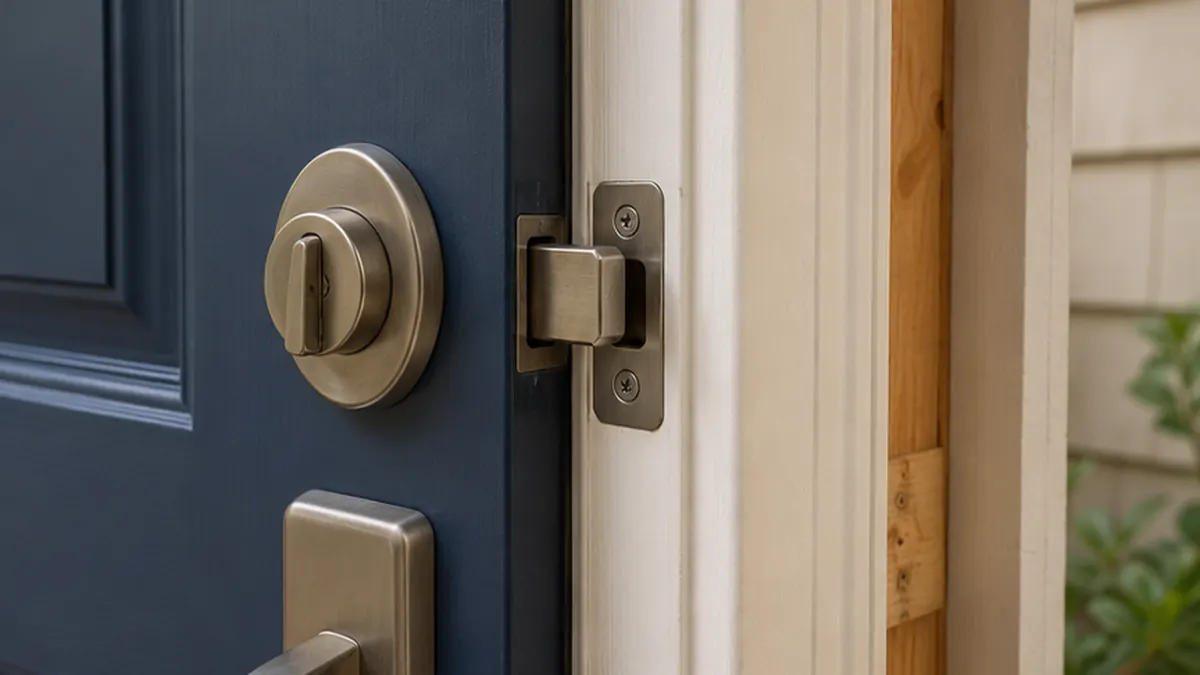
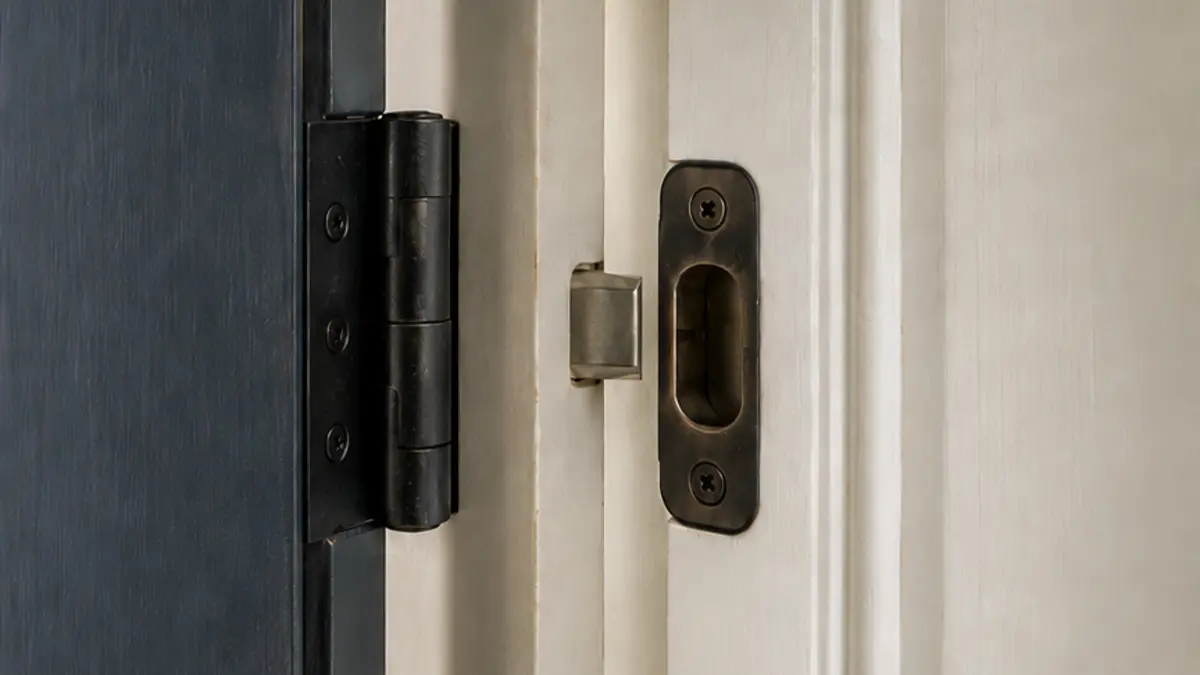
The strike should receive the bolt fully and reinforce the jamb. Misplaced openings, loose screws, thin plates and split wood can reduce both reliability and resistance to force.
This distinction matters because the visible symptom is not always the failed component, and a useful request should describe what the complete opening does rather than name a replacement part before inspection. For a planned residential service decision, separating observation from assumption helps the responding independent contractor arrive with better context and reduces the chance that an unrelated alignment, frame, key-control or hardware issue is overlooked.
Work through the condition in a controlled order. Use rub marks to identify contact direction. Check whether the plate moves or screws spin.
Inspect surrounding wood for cracks or compressed fibers. Confirm that the bolt reaches its intended depth when aligned. These observations can be shared by phone or through the service-request form without dismantling the lock or forcing the door.
Choose adjustment or reinforcement that preserves full engagement and sound attachment. The contractor should still confirm the diagnosis, explain the available scope and provide the price before authorized work begins.
Illustrative scenario: a bolt enters only after the plate is shifted because the original screw holes no longer hold. The example is not a report of a Heartland customer or completed job; it shows how the same initial complaint can lead to different next steps after the door, frame, lock and access history are considered together.
Random filing can create an oversized opening that hides movement and leaves minimal bearing surface. If conditions appear unsafe, someone may be in danger or unauthorized entry may be occurring, move to safety and contact the appropriate public authority before treating the situation as an ordinary locksmith request.
- Use rub marks to identify contact direction
- Check whether the plate moves or screws spin
- Inspect surrounding wood for cracks or compressed fibers
- Confirm that the bolt reaches its intended depth when aligned
Know when replacement is and is not justified
A binding deadbolt is a symptom, not an automatic replacement order. Adjustment may restore a sound lock, while corrosion, internal damage, poor fit or missing function may support replacement.
This distinction matters because the visible symptom is not always the failed component, and a useful request should describe what the complete opening does rather than name a replacement part before inspection. For a planned residential service decision, separating observation from assumption helps the responding independent contractor arrive with better context and reduces the chance that an unrelated alignment, frame, key-control or hardware issue is overlooked.
Work through the condition in a controlled order. Ask which exact component is failed. Compare repair and replacement when both are viable.
Include strike or frame work in the same estimate. Confirm that replacement hardware fits the existing door preparation. These observations can be shared by phone or through the service-request form without dismantling the lock or forcing the door.
Replace only when the diagnosis or desired function supports it. The contractor should still confirm the diagnosis, explain the available scope and provide the price before authorized work begins.
Illustrative scenario: a sound deadbolt operates normally after hinge and strike correction, while a second corroded lock on the same door still warrants replacement. The example is not a report of a Heartland customer or completed job; it shows how the same initial complaint can lead to different next steps after the door, frame, lock and access history are considered together.
Do not assume a smart lock motor can overcome alignment that already binds a manual deadbolt. If conditions appear unsafe, someone may be in danger or unauthorized entry may be occurring, move to safety and contact the appropriate public authority before treating the situation as an ordinary locksmith request.
For independent guidance, review Builders Hardware Manufacturers Association's Residential lock and deadbolt standards (opens in a new tab).
How to prepare a useful residential service request
A concise description is more useful than a long guess about the repair. Begin with the address area or ZIP code, whether the opening serves a house, apartment, attached garage, detached building or shared property, and whether you are currently locked out or can still operate another entrance. Identify the door material if known, the visible hardware, what the key or thumbturn does, when the behavior began and whether impact, weather, a move, a lost key or a security event preceded it.
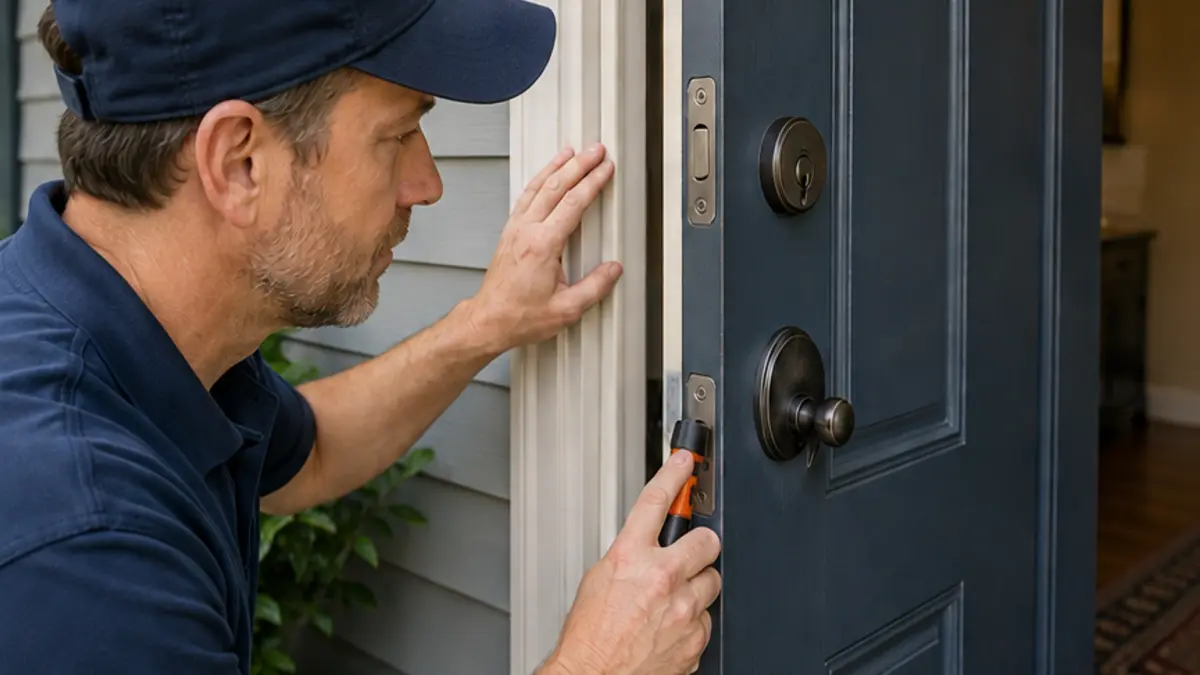
Test the deadbolt once with the door open and once closed. Note whether pushing, pulling or lifting the door changes operation. Look for hinge movement, fresh rub marks and damaged weather seal.
Stop using a bent, cracked or heavily worn key. Photograph the complete door from inside and outside only when it is safe and lawful to do so.
Add close views of the lock, door edge, strike area and any visible damage, but do not publish or send access codes, key-cut details, identification documents or other sensitive information through an unsecured channel. A contractor may request proof of ownership or authorized occupancy directly before entry work.
A request through Heartland is a request for referral and coordination, not a guaranteed appointment or final estimate. An independent contractor must accept the request, confirm timing and inspect or otherwise evaluate the actual condition.
Ask for the contractor’s legal business name, applicable credentials, estimate, payment terms and written 90-day workmanship-warranty details before authorizing work. The contractor—not Heartland—performs the work, collects payment and administers any qualifying warranty.
| Detail | Why it matters | What not to send |
|---|---|---|
| Location and property type | Helps evaluate coverage, access and likely door construction | Do not post a full address publicly |
| Exact symptom | Separates key, cylinder, latch, bolt, alignment and frame concerns | Do not force or disassemble the hardware |
| Access authorization | Entry work requires proof that you control the property | Do not email unnecessary identity documents |
| Timing and safety | Clarifies urgency and whether public emergency help is needed first | Do not remain near a suspected intruder or hazard |
Questions to ask the responding independent contractor
The most useful conversation is specific to the actual opening. Ask what the contractor believes is causing the symptom, what observations support that conclusion and whether the proposed work addresses the full door system or only the visible lock. For a topic such as why your front-door deadbolt will not lock, ask whether adjustment, repair, rekeying, cylinder work or complete replacement are realistic alternatives and what would make one option inappropriate.
Request a written or clearly itemized estimate before authorizing work. It should identify the service-call or diagnostic amount, labor, parts, taxes and any after-hours charge that applies. Confirm who is performing the work and who will appear on the receipt.
If the scope changes after the hardware is opened or hidden damage is discovered, ask for the updated amount and reason before additional work proceeds. Do not rely on a vague low telephone price that excludes every material part of the actual request.
Ask how the completed opening will be tested and which written warranty applies. A participating contractor may provide a 90-day workmanship warranty on qualifying work, but coverage and exclusions belong to that contractor’s invoice or warranty terms.
Confirm whether parts carry separate manufacturer coverage, what records must be kept and whom to contact if the same workmanship issue returns. A clear closeout includes operating the door from both sides, verifying latch or bolt engagement and receiving keys, codes or instructions that apply.
What is the diagnosis?
Ask which component or alignment condition explains the observed symptom.
What is the full price?
Confirm service call, labor, parts, taxes and after-hours charges before approval.
What is warranted?
Keep the contractor’s invoice and written 90-day workmanship-warranty terms.
Wichita-area conditions and practical planning
Temperature shifts, wind exposure and foundation or framing movement can change Wichita door alignment enough to make a bolt rub even when the deadbolt itself remains serviceable. Local relevance should come from the actual property and operating conditions, not from repeating a city name.
Sun exposure, wind, temperature swings, soil movement, door material, building age, traffic and previous adjustments can all influence how an opening fits and operates. Record when the symptom changes—morning versus afternoon, dry versus wet weather, or open versus closed—because a pattern can help separate cylinder trouble from door movement or strike alignment.
Coverage includes Wichita and surrounding communities, but contractor availability varies by location, day, service type and current volume. Emergency requests may often target a response or estimated arrival within about one hour, yet that is not guaranteed.
Weather, traffic, distance, earlier jobs, parts, communications and unexpected operational issues can extend the time. Keep another safe entry available when possible and tell the coordinator if the property cannot be secured while you wait.
For rental homes, apartments, managed properties and shared buildings, contact the owner or manager when required by the lease or building policy. They may control master keys, approved hardware, common doors or payment authorization.
For a recently purchased home, gather closing or occupancy documents and identify every exterior opening before requesting key-control changes. These steps are administrative rather than mechanical, but they often determine what work can be authorized and who should receive the final keys or codes.
Frequently asked questions
Questions readers ask
Why does my deadbolt work only when the door is open?
That pattern usually indicates the bolt does not align with the strike or the closed door is under pressure. Hinges, seals, frame movement and strike position should be checked.
Can I file the strike plate myself?
Filing may enlarge an opening without correcting why alignment changed and can reduce engagement. A small appropriate adjustment is different from removing material without diagnosis.
Why do I have to lift the door to lock it?
The latch edge may have dropped because of hinge wear, loose fasteners or door/frame movement. The support and alignment condition should be evaluated.
Will a smart lock fix a binding deadbolt?
No. A motorized lock can struggle or fail sooner when the bolt binds. The door must allow smooth manual extension before electronic operation is commissioned.
Should I keep forcing the key until service arrives?
No. Force can bend or break the key and damage cylinder components. Use another secure entrance if available and stop cycling the lock.
What should a completed repair test include?
The door should close naturally, latch, lock and unlock smoothly from both sides with full bolt engagement and no need to lift, shove or pull the slab.
The right solution depends on the specific lock, door, vehicle or garage door system. Check the Wichita-area service pages, then call or send the details for an evaluation.