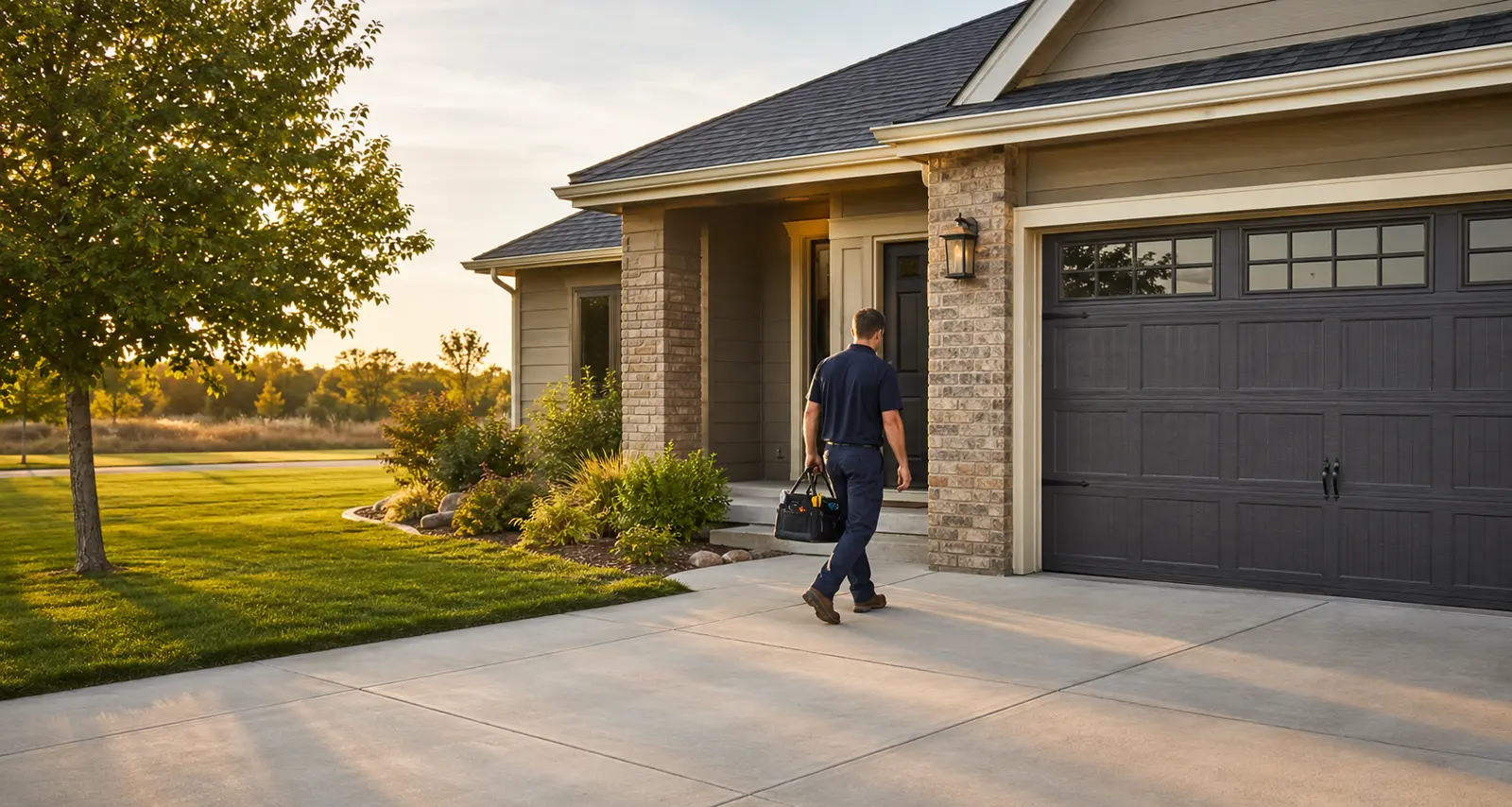
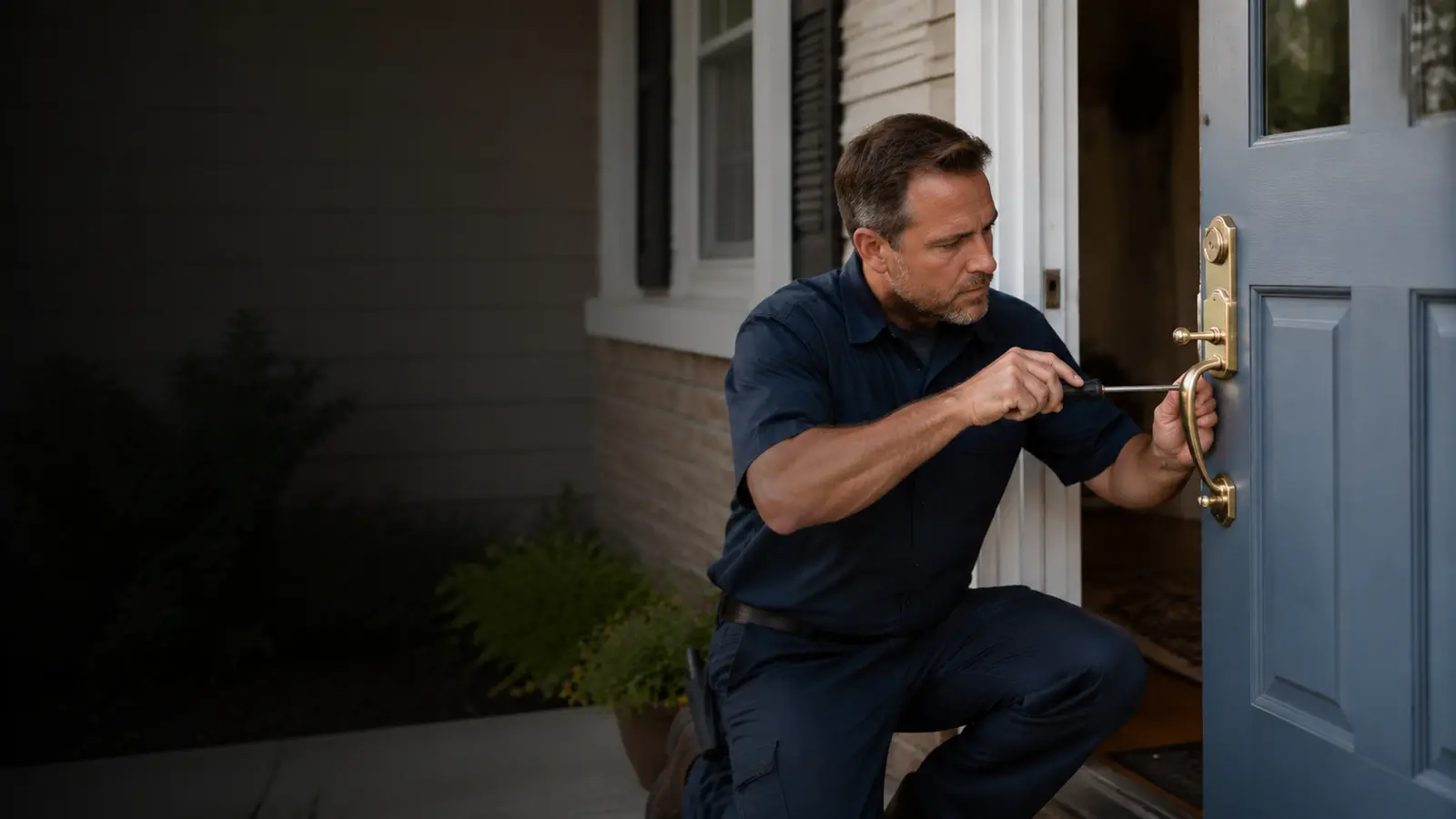
Key or cylinder wear
Worn keys, pins and cylinders can make turning inconsistent or leave a key stuck.
Residential Locksmith
A lock that sticks today can become a lockout tomorrow. Have the full door-and-lock system checked before a small alignment issue becomes a larger repair.
Wichita-area serviceFocused on local homes and businesses
Two specialtiesLocksmith and garage door help
Independent professionalsContractors provide scope and pricing
Easy to requestCall or send service details online
About this service
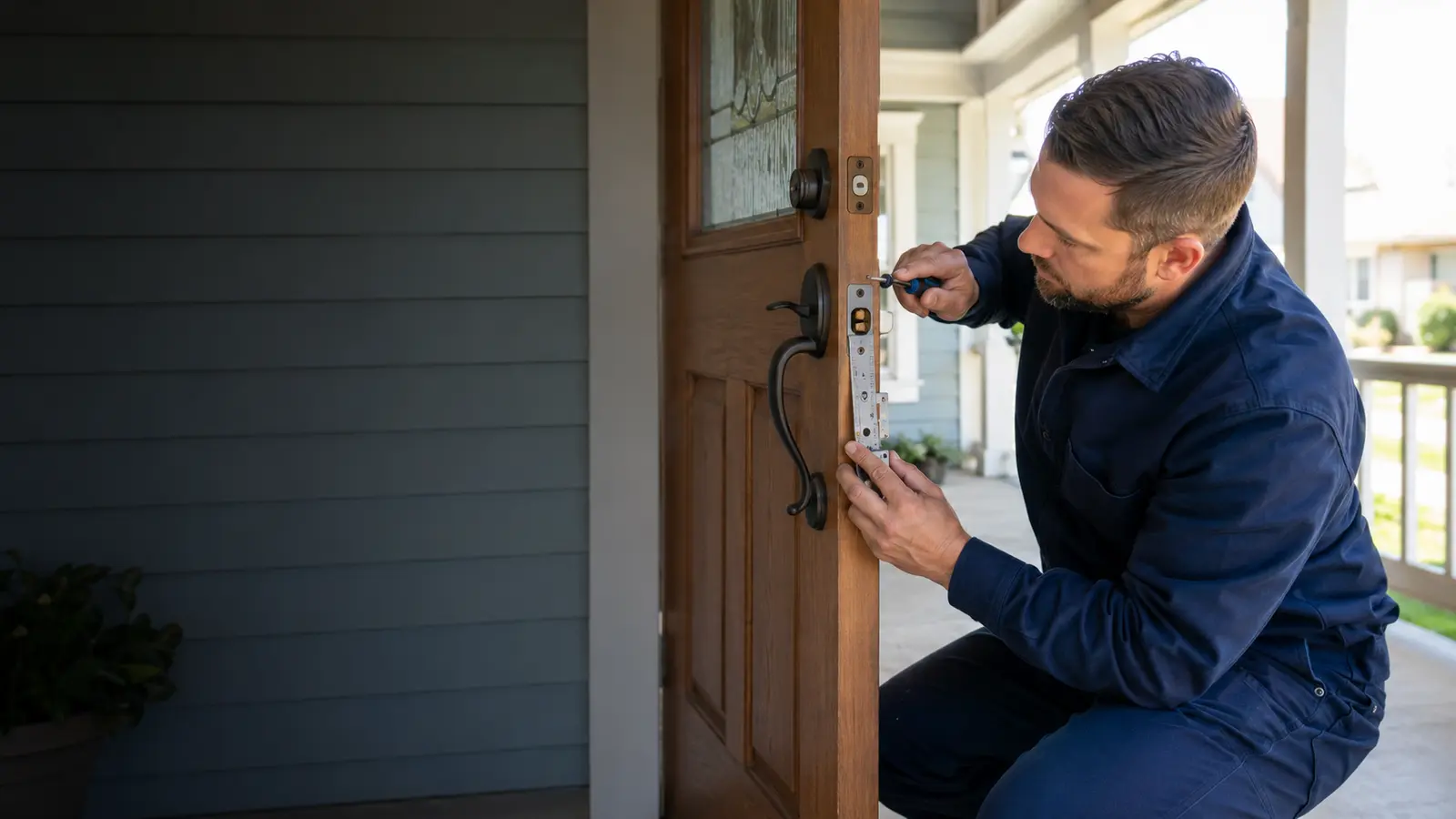
Residential lock trouble often starts outside the cylinder. Seasonal door movement, loose fasteners, a shifted strike or worn latch can make a healthy lock feel defective. A proper diagnosis separates repairable alignment and hardware problems from locks that should be replaced. See how this fits within the broader residential locksmith service category.
Repair may involve tightening and resetting components, correcting strike alignment, servicing a cylinder or replacing only the failed part. Doors with extensive damage, severe corrosion or compromised security may need new hardware instead. If the diagnosis points elsewhere, compare house lockout service before deciding on the scope.
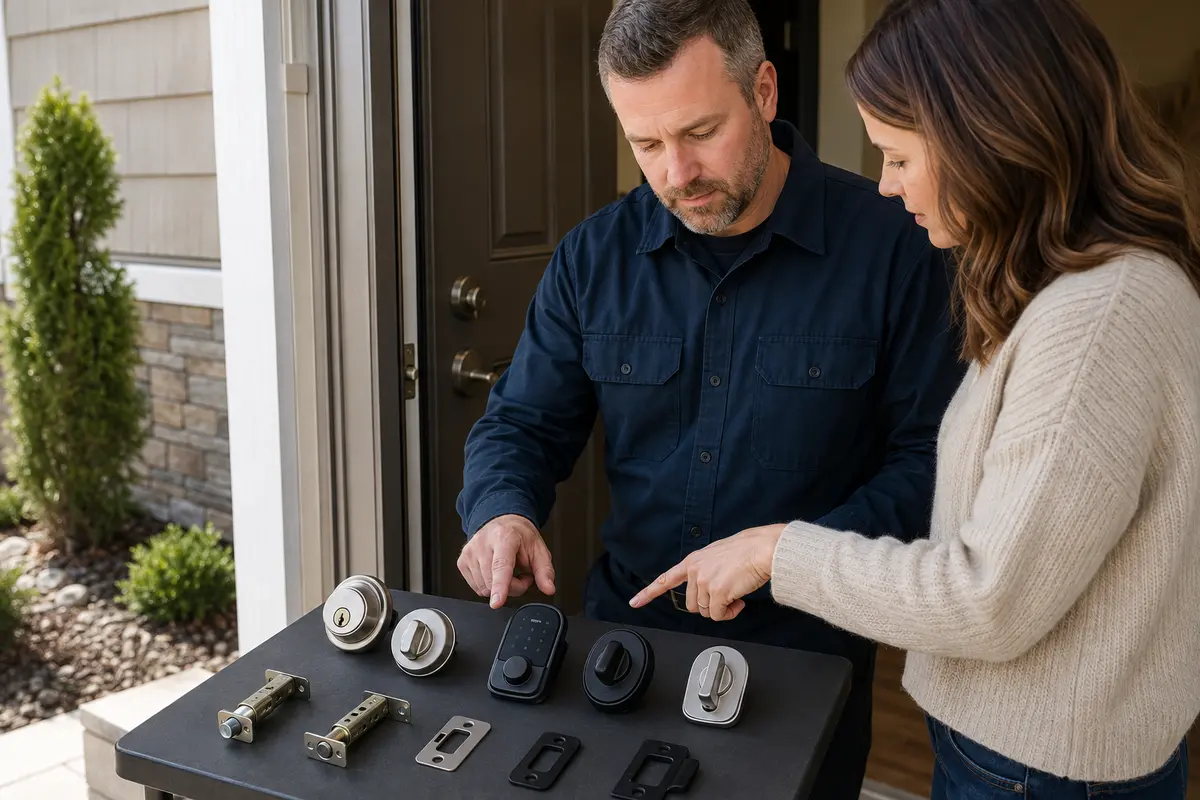
Why problems develop
Residential lock problems often come from the way the key, cylinder, latch, door and frame interact. Looking at the complete opening prevents a new lock from inheriting the old problem.
Worn keys, pins and cylinders can make turning inconsistent or leave a key stuck.
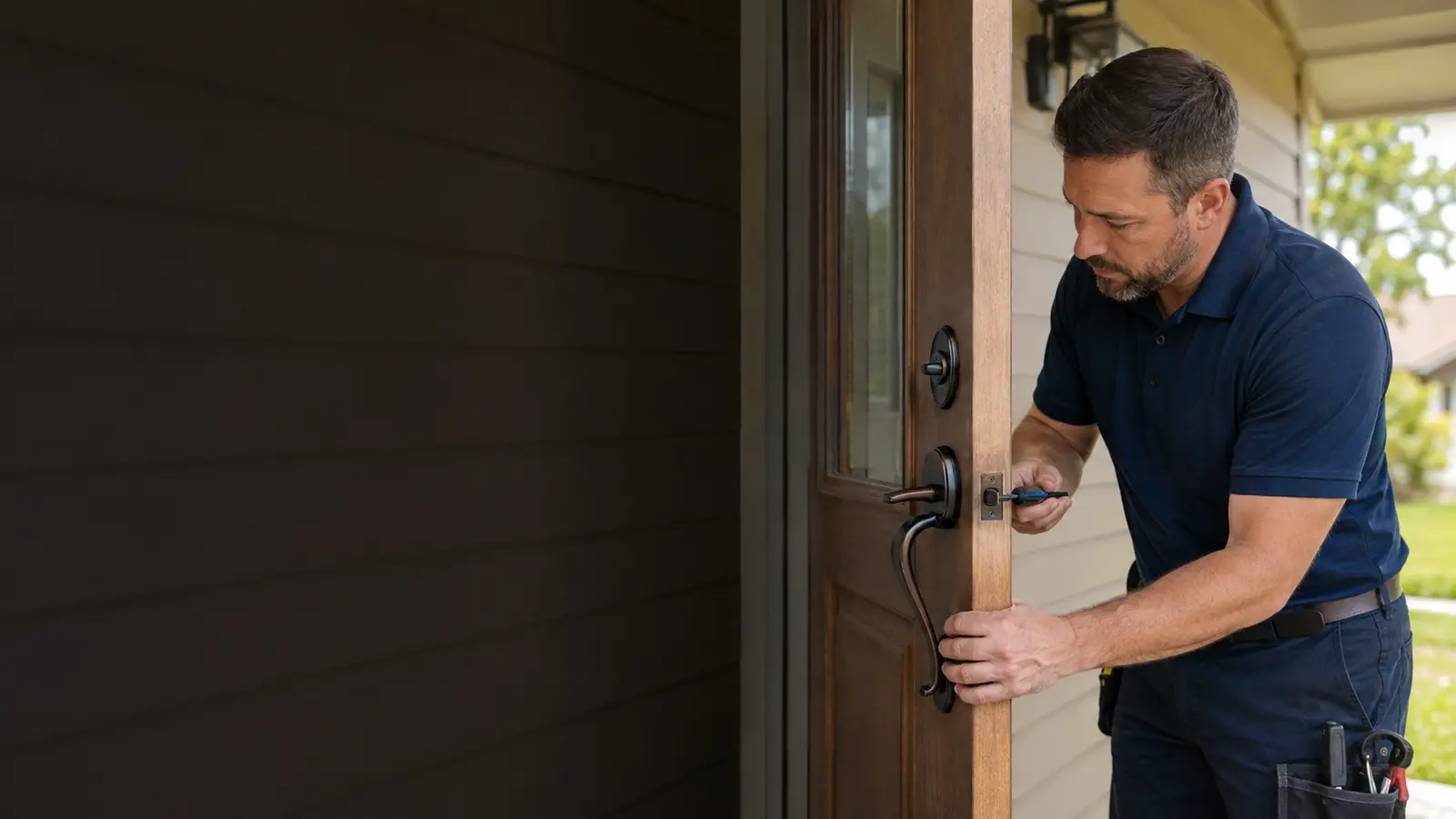
Hinge wear, settling and Kansas temperature swings can shift the latch away from the strike.
Incorrect backset, door thickness or bore preparation can keep replacement hardware from operating correctly.
Moves, lost keys and household changes can create a key-control problem even when the lock still works.
For residential lock repair, the final recommendation depends on the specific equipment, damage, compatibility and desired function.
Warning signs
Service scope
Compare the paths
Not every problem needs the most extensive option. Condition, compatibility, security, safety and long-term value shape the decision.
Useful when serviceable hardware has a correctable alignment, fastening or component problem.
Appropriate when the lock is damaged, unreliable, obsolete or no longer provides the needed function.
Adds convenience or control through stronger deadbolts, keypads, smart locks or coordinated keying.
Scope, cost and timing factors
Accurate information about the opening, equipment, symptoms and damage helps narrow the likely work. Parts, compatibility, access, damage and the selected solution can all affect scope and timing; final recommendations follow an on-site evaluation.
Safety and professional limits
Exterior-door hardware must support reliable locking from outside and practical egress from inside. Avoid improvised barricades, damaged double-cylinder setups, or smart-lock installations that bind the deadbolt.
Service extends across the Wichita metro and nearby communities, subject to the type of request and current availability.
View service areasDirect answers
Clear answers help you make a better decision and explain the request accurately.
Often. Misalignment, loose hardware or light wear may be correctable. A damaged bolt, badly worn cylinder or distorted door may require replacement or additional door work.
Use only a lubricant appropriate for lock cylinders and avoid forcing the key. If alignment or internal wear is the cause, lubricant alone will not solve the problem.
Call 316-799-3003 or send the service request form with your location and a short description. Useful details help us understand the request before the visit.
The independent service contractor should evaluate the situation, explain the practical options and provide the price before authorized work proceeds.
Local request pages
Local request details, availability limits and related service links.
→Sedgwick CountyResidential Lock Repair in Bel Aire, KSLocal request details, availability limits and related service links.
→Sedgwick and Sumner countiesResidential Lock Repair in Mulvane, KSLocal request details, availability limits and related service links.
→Butler CountyResidential Lock Repair in Augusta, KSLocal request details, availability limits and related service links.
→Wichita service request
Call now or send a service request with your location and the useful details.