Residential locksmith
Sliding Patio Door Security: A Practical Homeowner Guide
A sliding patio door is a complete moving system: panel, rollers, track, latch, keeper, frame, glass and any auxiliary lock must work together. Adding a bar can be useful in some homes, but it does not repair a latch that misses its keeper or a panel that can be lifted because the rollers and guides are poorly adjusted.
Close and latch the panel without lifting or forcing it, confirm the latch fully captures a firmly attached keeper, inspect track and roller condition, and identify how the panel is prevented from being lifted. Choose auxiliary security only after normal operation and required egress are preserved. Tempered glass, door design and manufacturer limitations make drilling or improvised fasteners risky.
A sliding patio door is a complete moving system: panel, rollers, track, latch, keeper, frame, glass and any auxiliary lock must work together. Adding a bar can be useful in some homes, but it does not repair a latch that misses its keeper or a panel that can be lifted because the rollers and guides are poorly adjusted. Continue with the complete library of residential locksmith guides when you want to compare related decisions.
Key takeaways
- The latch and keeper must align before auxiliary devices are added.
- Roller condition and panel height affect both operation and security.
- A track bar is one layer, not a repair for failed hardware.
- Drilling near tempered glass can destroy the panel.
- Any solution must preserve simple emergency egress from inside.
Understand how a sliding-door latch secures the panel
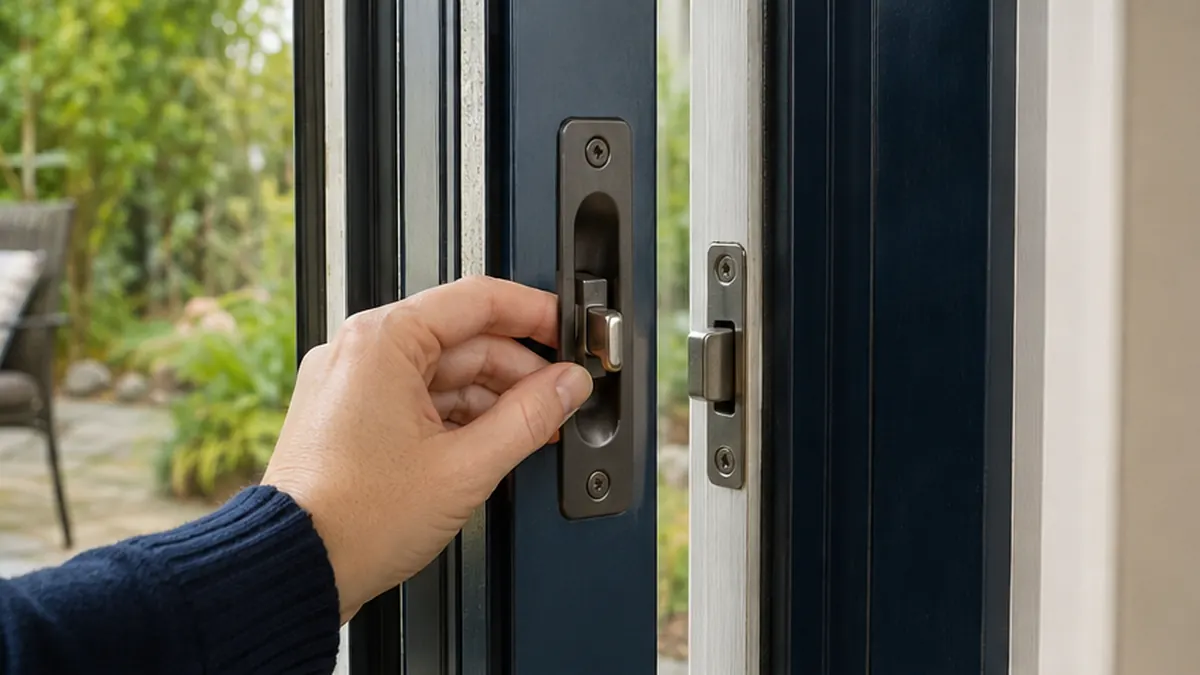
Most sliding-door latches hook or engage a keeper on the jamb. Security depends on full engagement, solid attachment and a panel position that does not pull the latch away.
This distinction matters because the visible symptom is not always the failed component, and a useful request should describe what the complete opening does rather than name a replacement part before inspection. For a planned residential service decision, separating observation from assumption helps the responding independent contractor arrive with better context and reduces the chance that an unrelated alignment, frame, key-control or hardware issue is overlooked. If this condition matches your situation, review the service scope for residential locksmith.
Work through the condition in a controlled order. Operate the latch slowly while watching the keeper. Check whether the handle moves without the hook engaging.
Look for loose keeper screws or cracked frame material. Confirm the panel cannot slide when the latch is set. These observations can be shared by phone or through the service-request form without dismantling the lock or forcing the door.
Repair engagement before adding accessories. The contractor should still confirm the diagnosis, explain the available scope and provide the price before authorized work begins.
Illustrative scenario: the handle clicks down but the hook passes beside a shifted keeper. The example is not a report of a Heartland customer or completed job; it shows how the same initial complaint can lead to different next steps after the door, frame, lock and access history are considered together.
Do not assume a closed handle means the latch is actually captured. If conditions appear unsafe, someone may be in danger or unauthorized entry may be occurring, move to safety and contact the appropriate public authority before treating the situation as an ordinary locksmith request.
Observe
Operate the latch slowly while watching the keeper.
Compare
Check whether the handle moves without the hook engaging.
Confirm
Look for loose keeper screws or cracked frame material.
Check rollers, track and panel height
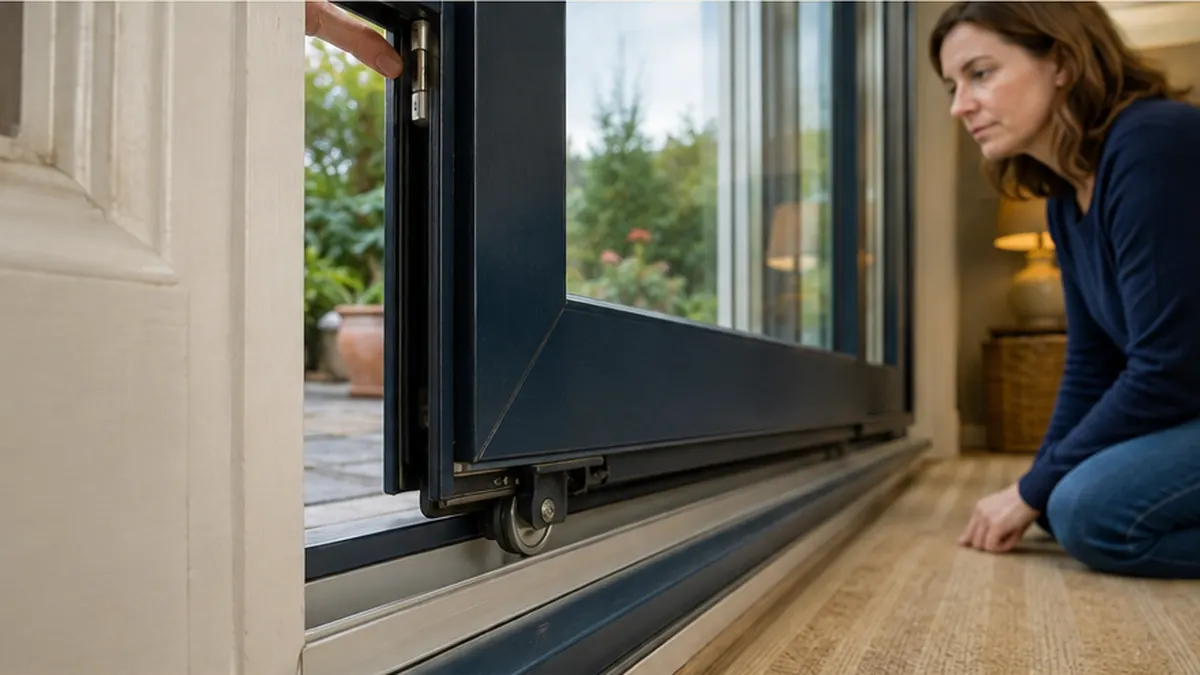
The lock cannot align if the moving panel rides at the wrong height. Worn rollers, debris, damaged track and adjustment changes can tilt or lower the panel.
This distinction matters because the visible symptom is not always the failed component, and a useful request should describe what the complete opening does rather than name a replacement part before inspection. For a planned residential service decision, separating observation from assumption helps the responding independent contractor arrive with better context and reduces the chance that an unrelated alignment, frame, key-control or hardware issue is overlooked. If this condition matches your situation, review the service scope for lock repair.
Work through the condition in a controlled order. Slide the door through its full travel. Listen for grinding and watch for vertical movement.
Clean accessible loose debris without dismantling the panel. Compare gaps at the top and sides. These observations can be shared by phone or through the service-request form without dismantling the lock or forcing the door.
Address movement and support before final keeper adjustment. The contractor should still confirm the diagnosis, explain the available scope and provide the price before authorized work begins.
Illustrative scenario: a door latches only when the owner lifts the handle because the panel has dropped. The example is not a report of a Heartland customer or completed job; it shows how the same initial complaint can lead to different next steps after the door, frame, lock and access history are considered together.
Sliding panels can be heavy and glass can break; removal should be handled appropriately. If conditions appear unsafe, someone may be in danger or unauthorized entry may be occurring, move to safety and contact the appropriate public authority before treating the situation as an ordinary locksmith request.
For independent guidance, review Builders Hardware Manufacturers Association's ANSI/BHMA product grade levels (opens in a new tab).
- Slide the door through its full travel
- Listen for grinding and watch for vertical movement
- Clean accessible loose debris without dismantling the panel
- Compare gaps at the top and sides
Evaluate lift resistance and upper clearance
Some panels can move vertically enough to disengage rollers or latches. Excessive upper clearance, missing guides or incorrect adjustment may allow unintended lift.
This distinction matters because the visible symptom is not always the failed component, and a useful request should describe what the complete opening does rather than name a replacement part before inspection. For a planned residential service decision, separating observation from assumption helps the responding independent contractor arrive with better context and reduces the chance that an unrelated alignment, frame, key-control or hardware issue is overlooked. If this condition matches your situation, review the service scope for lock installation.
Work through the condition in a controlled order. Observe vertical play without attempting forced entry. Look for existing anti-lift blocks or guides.
Check whether adjustments remain within manufacturer limits. Include the fixed panel and frame attachments in the review. These observations can be shared by phone or through the service-request form without dismantling the lock or forcing the door.
Use compatible lift-control methods that preserve smooth travel. The contractor should still confirm the diagnosis, explain the available scope and provide the price before authorized work begins.
Illustrative scenario: a well-latched panel still has excessive vertical movement because a top guide is missing. The example is not a report of a Heartland customer or completed job; it shows how the same initial complaint can lead to different next steps after the door, frame, lock and access history are considered together.
Improvised fasteners near glass or moving parts can create breakage and egress hazards. If conditions appear unsafe, someone may be in danger or unauthorized entry may be occurring, move to safety and contact the appropriate public authority before treating the situation as an ordinary locksmith request.
Compare auxiliary bars, pins and secondary locks
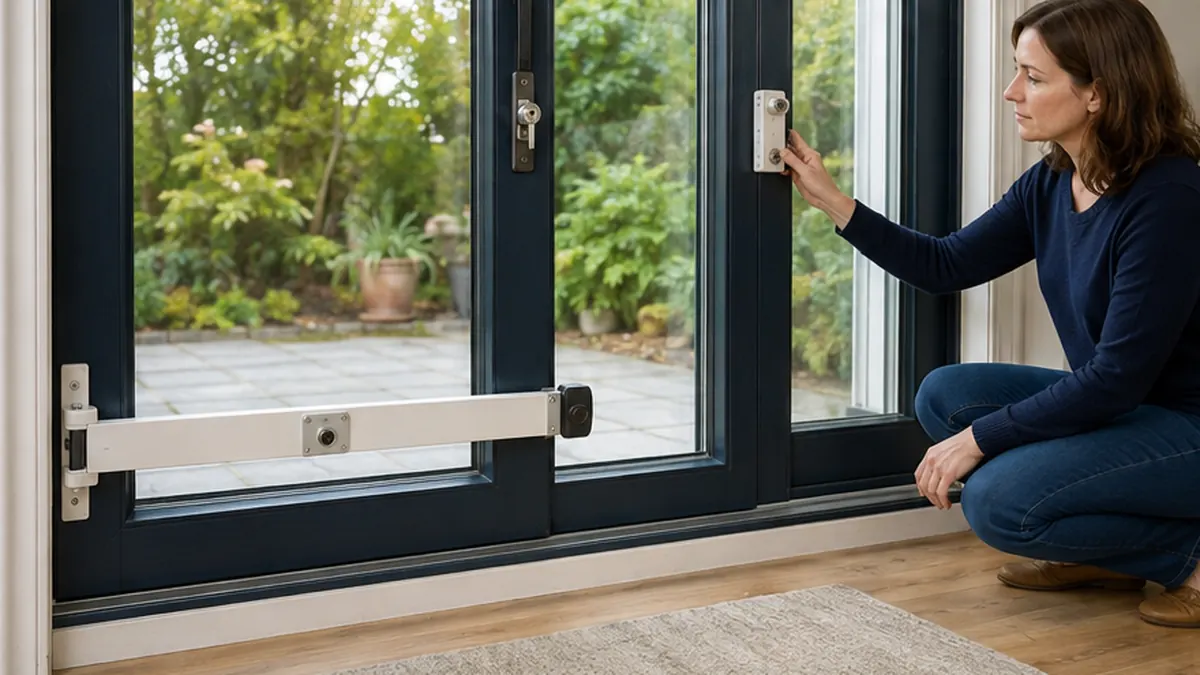
Auxiliary devices work differently and fit different household routines. A bar limits travel, a pin can join panel and frame, and a secondary lock adds another controlled point.
This distinction matters because the visible symptom is not always the failed component, and a useful request should describe what the complete opening does rather than name a replacement part before inspection. For a planned residential service decision, separating observation from assumption helps the responding independent contractor arrive with better context and reduces the chance that an unrelated alignment, frame, key-control or hardware issue is overlooked.
Work through the condition in a controlled order. Confirm every regular user can operate the device. Plan for nighttime and emergency egress.
Avoid trip or pinch hazards. Check compatibility with glass, frame and warranty. These observations can be shared by phone or through the service-request form without dismantling the lock or forcing the door.
Choose a layer that the household will use consistently without defeating exit. The contractor should still confirm the diagnosis, explain the available scope and provide the price before authorized work begins.
Illustrative scenario: a floor-mounted lock is secure but unusable for a resident with limited reach. The example is not a report of a Heartland customer or completed job; it shows how the same initial complaint can lead to different next steps after the door, frame, lock and access history are considered together.
A device left disengaged because it is inconvenient provides no practical benefit. If conditions appear unsafe, someone may be in danger or unauthorized entry may be occurring, move to safety and contact the appropriate public authority before treating the situation as an ordinary locksmith request.
Observe
Confirm every regular user can operate the device.
Compare
Plan for nighttime and emergency egress.
Confirm
Avoid trip or pinch hazards.
Include glass, frame and adjacent openings
The lock is not the only part of a glazed opening. Frame attachment, fixed-panel retention, nearby windows and visibility influence the overall plan.
This distinction matters because the visible symptom is not always the failed component, and a useful request should describe what the complete opening does rather than name a replacement part before inspection. For a planned residential service decision, separating observation from assumption helps the responding independent contractor arrive with better context and reduces the chance that an unrelated alignment, frame, key-control or hardware issue is overlooked.
Work through the condition in a controlled order. Inspect cracked glass and damaged frame areas. Confirm the fixed panel is retained as designed.
Use coverings that preserve visibility choices without blocking exit. Coordinate alarms or sensors with actual household use. These observations can be shared by phone or through the service-request form without dismantling the lock or forcing the door.
Avoid overselling one lock as protection for every layer. The contractor should still confirm the diagnosis, explain the available scope and provide the price before authorized work begins.
Illustrative scenario: a strong secondary latch is installed while the fixed panel retainers remain loose. The example is not a report of a Heartland customer or completed job; it shows how the same initial complaint can lead to different next steps after the door, frame, lock and access history are considered together.
Security film and glass products require accurate claims and compatible installation. If conditions appear unsafe, someone may be in danger or unauthorized entry may be occurring, move to safety and contact the appropriate public authority before treating the situation as an ordinary locksmith request.
- Inspect cracked glass and damaged frame areas
- Confirm the fixed panel is retained as designed
- Use coverings that preserve visibility choices without blocking exit
- Coordinate alarms or sensors with actual household use
Finish with an operation and egress test
A secure patio door must still open normally from inside. Multiple devices can create confusion during darkness, smoke or an urgent exit.
This distinction matters because the visible symptom is not always the failed component, and a useful request should describe what the complete opening does rather than name a replacement part before inspection. For a planned residential service decision, separating observation from assumption helps the responding independent contractor arrive with better context and reduces the chance that an unrelated alignment, frame, key-control or hardware issue is overlooked.
Work through the condition in a controlled order. Lock and unlock every layer in normal sequence. Test the primary latch and each auxiliary device.
Confirm children and adults understand the exit path. Document keys or codes for keyed patio hardware. These observations can be shared by phone or through the service-request form without dismantling the lock or forcing the door.
Remove unnecessary complexity that makes emergency exit uncertain. The contractor should still confirm the diagnosis, explain the available scope and provide the price before authorized work begins.
Illustrative scenario: two unlabelled pins and a bar slow a resident who cannot remember the order. The example is not a report of a Heartland customer or completed job; it shows how the same initial complaint can lead to different next steps after the door, frame, lock and access history are considered together.
Never create a setup that traps occupants or conflicts with applicable egress requirements. If conditions appear unsafe, someone may be in danger or unauthorized entry may be occurring, move to safety and contact the appropriate public authority before treating the situation as an ordinary locksmith request.
For independent guidance, review Builders Hardware Manufacturers Association's Residential lock and deadbolt standards (opens in a new tab).
How to prepare a useful residential service request
A concise description is more useful than a long guess about the repair. Begin with the address area or ZIP code, whether the opening serves a house, apartment, attached garage, detached building or shared property, and whether you are currently locked out or can still operate another entrance. Identify the door material if known, the visible hardware, what the key or thumbturn does, when the behavior began and whether impact, weather, a move, a lost key or a security event preceded it.
Photograph the complete sliding panel and fixed panel. Test latch engagement without lifting the handle. Inspect visible track debris and roller behavior.
Identify glass markings and manufacturer information before drilling. Photograph the complete door from inside and outside only when it is safe and lawful to do so.
Add close views of the lock, door edge, strike area and any visible damage, but do not publish or send access codes, key-cut details, identification documents or other sensitive information through an unsecured channel. A contractor may request proof of ownership or authorized occupancy directly before entry work.
A request through Heartland is a request for referral and coordination, not a guaranteed appointment or final estimate. An independent contractor must accept the request, confirm timing and inspect or otherwise evaluate the actual condition.
Ask for the contractor’s legal business name, applicable credentials, estimate, payment terms and written 90-day workmanship-warranty details before authorizing work. The contractor—not Heartland—performs the work, collects payment and administers any qualifying warranty.
| Detail | Why it matters | What not to send |
|---|---|---|
| Location and property type | Helps evaluate coverage, access and likely door construction | Do not post a full address publicly |
| Exact symptom | Separates key, cylinder, latch, bolt, alignment and frame concerns | Do not force or disassemble the hardware |
| Access authorization | Entry work requires proof that you control the property | Do not email unnecessary identity documents |
| Timing and safety | Clarifies urgency and whether public emergency help is needed first | Do not remain near a suspected intruder or hazard |
Questions to ask the responding independent contractor
The most useful conversation is specific to the actual opening. Ask what the contractor believes is causing the symptom, what observations support that conclusion and whether the proposed work addresses the full door system or only the visible lock. For a topic such as sliding patio door security: a practical homeowner guide, ask whether adjustment, repair, rekeying, cylinder work or complete replacement are realistic alternatives and what would make one option inappropriate.
Request a written or clearly itemized estimate before authorizing work. It should identify the service-call or diagnostic amount, labor, parts, taxes and any after-hours charge that applies. Confirm who is performing the work and who will appear on the receipt.
If the scope changes after the hardware is opened or hidden damage is discovered, ask for the updated amount and reason before additional work proceeds. Do not rely on a vague low telephone price that excludes every material part of the actual request.
Ask how the completed opening will be tested and which written warranty applies. A participating contractor may provide a 90-day workmanship warranty on qualifying work, but coverage and exclusions belong to that contractor’s invoice or warranty terms.
Confirm whether parts carry separate manufacturer coverage, what records must be kept and whom to contact if the same workmanship issue returns. A clear closeout includes operating the door from both sides, verifying latch or bolt engagement and receiving keys, codes or instructions that apply.
What is the diagnosis?
Ask which component or alignment condition explains the observed symptom.
What is the full price?
Confirm service call, labor, parts, taxes and after-hours charges before approval.
What is warranted?
Keep the contractor’s invoice and written 90-day workmanship-warranty terms.
Wichita-area conditions and practical planning
Wind, dust, temperature changes and sun exposure around Wichita patios can affect tracks, seals and frames, making cleaning and alignment part of a useful security review. Local relevance should come from the actual property and operating conditions, not from repeating a city name.
Sun exposure, wind, temperature swings, soil movement, door material, building age, traffic and previous adjustments can all influence how an opening fits and operates. Record when the symptom changes—morning versus afternoon, dry versus wet weather, or open versus closed—because a pattern can help separate cylinder trouble from door movement or strike alignment.
Coverage includes Wichita and surrounding communities, but contractor availability varies by location, day, service type and current volume. Emergency requests may often target a response or estimated arrival within about one hour, yet that is not guaranteed.
Weather, traffic, distance, earlier jobs, parts, communications and unexpected operational issues can extend the time. Keep another safe entry available when possible and tell the coordinator if the property cannot be secured while you wait.
For rental homes, apartments, managed properties and shared buildings, contact the owner or manager when required by the lease or building policy. They may control master keys, approved hardware, common doors or payment authorization.
For a recently purchased home, gather closing or occupancy documents and identify every exterior opening before requesting key-control changes. These steps are administrative rather than mechanical, but they often determine what work can be authorized and who should receive the final keys or codes.
Frequently asked questions
Questions readers ask
Is a wooden bar enough for a sliding door?
A correctly sized bar can limit travel, but it does not repair a failed latch, loose keeper, worn roller, weak frame or excessive lift. The complete opening should be checked.
Why does my patio door latch only when I lift it?
The panel may have dropped because of roller, track or adjustment issues, moving the latch away from the keeper.
Can I drill a pin lock into the frame?
Drilling near tempered glass or unknown frame reinforcement can cause damage. Product and door compatibility should be verified first.
What is an anti-lift device?
It is a compatible guide or block intended to limit vertical panel movement. Design and installation depend on the door.
Should the patio door be part of a home rekey?
If it uses a keyed cylinder, include it in the inventory. Compatibility and whether it should share a key depend on the hardware and access plan.
Does Heartland guarantee patio-door work?
Heartland is a referral brand. A participating independent contractor may offer a written 90-day workmanship warranty on qualifying work.
The right solution depends on the specific lock, door, vehicle or garage door system. Check the Wichita-area service pages, then call or send the details for an evaluation.