Residential locksmith
Moving Into a New Home? The First Locks and Keys to Address
A closing packet can tell you who owns a house, but it cannot prove how many working keys, codes, remotes, and app accounts still exist. The first move-in lock decisions should restore control without turning every opening into an emergency replacement. This guide gives Wichita homeowners a practical order: secure the doors that matter first, identify what is unknown, correct operating problems, and leave the household with a key and credential record it can maintain.
Start with every exterior route into the living space: the front door, rear and side doors, the door from an attached garage, walkout or basement entries, and any connected keypad or smart lock. Record which keys operate which cylinders, who may still have copies, and whether each door closes, latches, locks, and unlocks normally. Rekey serviceable compatible cylinders when the main issue is unknown key history; repair or replace hardware that is damaged, unreliable, unsuitable, or incompatible with the new key plan. Reset digital users, garage remotes, and owner accounts separately, then count and document every new credential before service closes out.
A closing packet can tell you who owns a house, but it cannot prove how many working keys, codes, remotes, and app accounts still exist. The first move-in lock decisions should restore control without turning every opening into an emergency replacement. This guide gives Wichita homeowners a practical order: secure the doors that matter first, identify what is unknown, correct operating problems, and leave the household with a key and credential record it can maintain. Continue with the complete library of residential locksmith guides when you want to compare related decisions.
Key takeaways
- Prioritize doors that reach the living space before detached storage or cosmetic hardware changes.
- Returned keys do not reveal every duplicate, so a move-in plan should create a new known key baseline.
- Rekeying changes authorization; it does not repair worn hardware, a weak frame, or a misaligned strike.
- Mechanical keys, smart-lock users, keypad codes, and garage remotes are separate credential layers.
- A complete handoff includes tested doors, counted credentials, model information, and a secure household record.
Begin with the routes that reach the living space
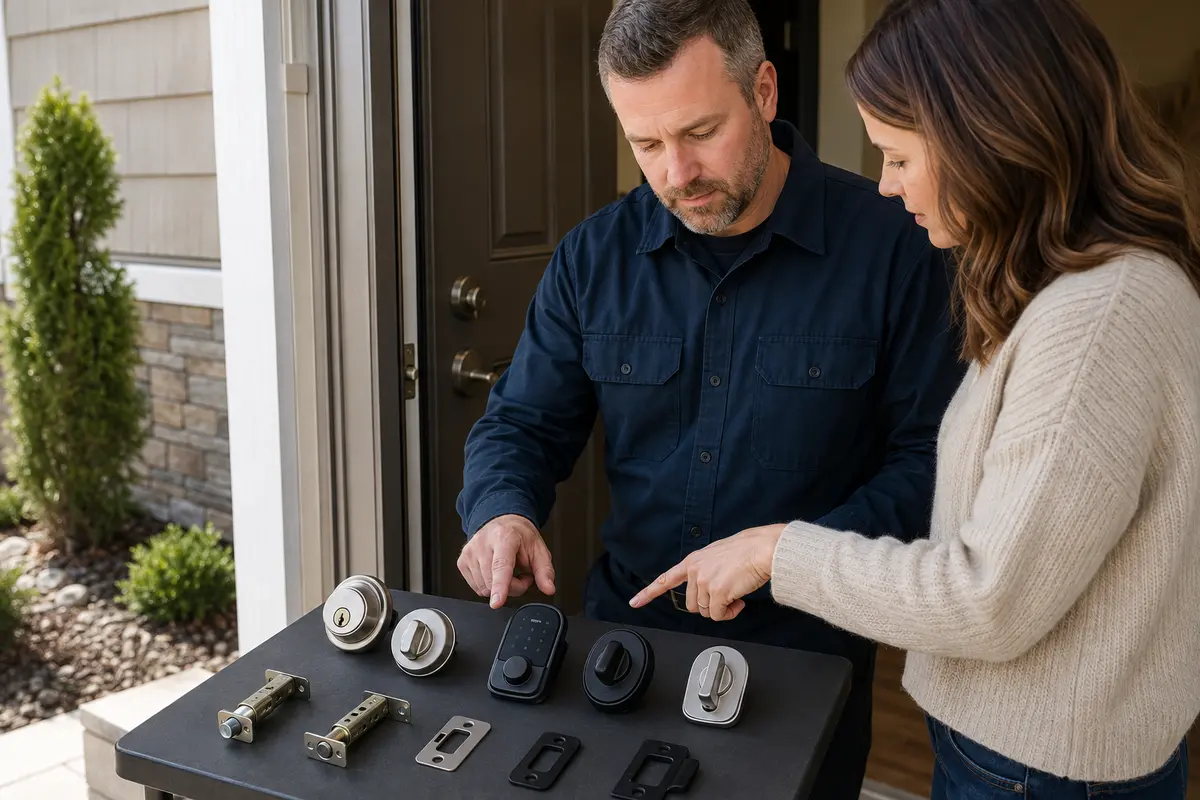
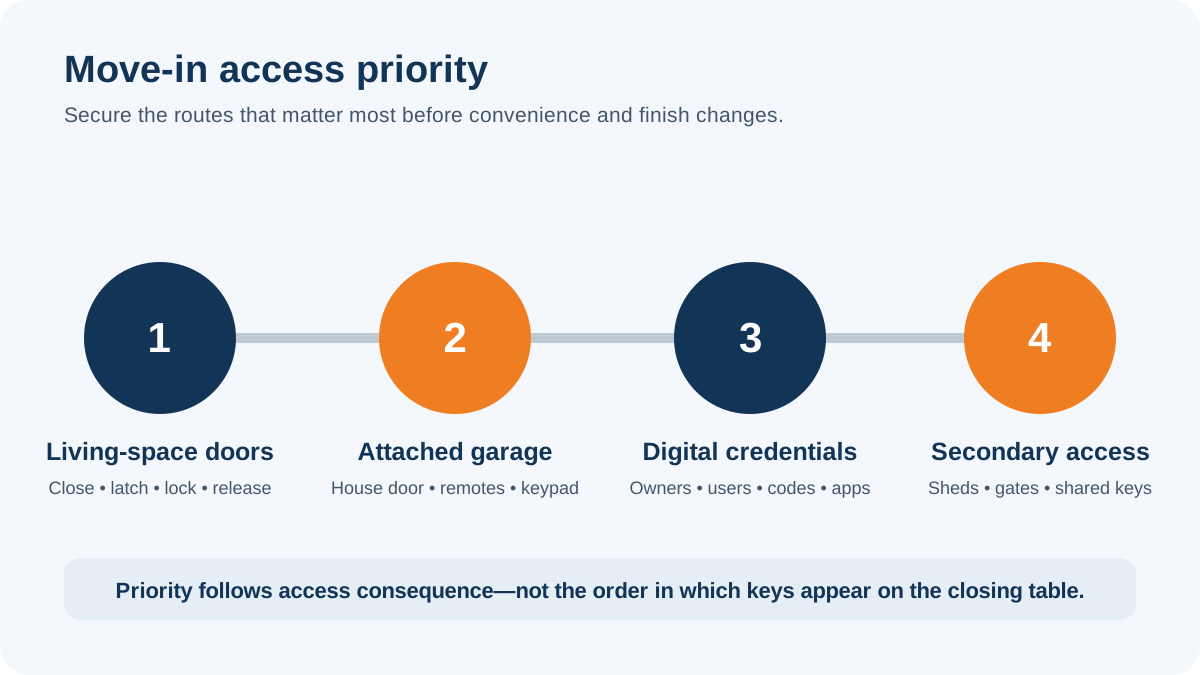
Move-in day produces dozens of small decisions, so the first lock review needs a priority rule. Begin with doors that lead directly into the occupied home: the front entry, rear or side entries, a basement walkout, and the door between an attached garage and the living area. A detached shed matters, but it usually does not outrank a house door whose key history is unknown or whose deadbolt will not engage without lifting the slab. If this condition matches your situation, review the service scope for residential locksmith.
Walk the property in daylight and give each controlled opening a simple name that everyone will understand later. Record the lock type, visible brand, which received key operates it, whether another door shares that key, and whether the door is part of the heated living space. Include storm doors, gates, detached buildings, mail equipment, and garage controls in the inventory, but keep the priority distinction between direct home access and secondary property access.
Do not test a questionable opening by repeatedly forcing keys or slamming the door. Operate the latch and deadbolt gently with the door open, then repeat with it closed only if the slab, hinges, glass, and frame appear stable. If the bolt is smooth open but binds closed, mark that opening for alignment diagnosis; if the key remains rough in both positions, record the cylinder and key symptom without turning harder.
| Priority | Opening or credential | First question |
|---|---|---|
| 1 | Doors into the living space | Can each door close, latch, lock, and unlock normally? |
| 2 | Attached-garage access | Which remotes, keypads, and house-door keys still work? |
| 3 | Smart locks and alarms | Who owns the account and which users remain enrolled? |
| 4 | Detached buildings and gates | What is stored there and who received access? |
| 5 | Convenience and finish changes | Can appearance work wait until the access plan is settled? |
Treat unknown key history as the first authorization problem
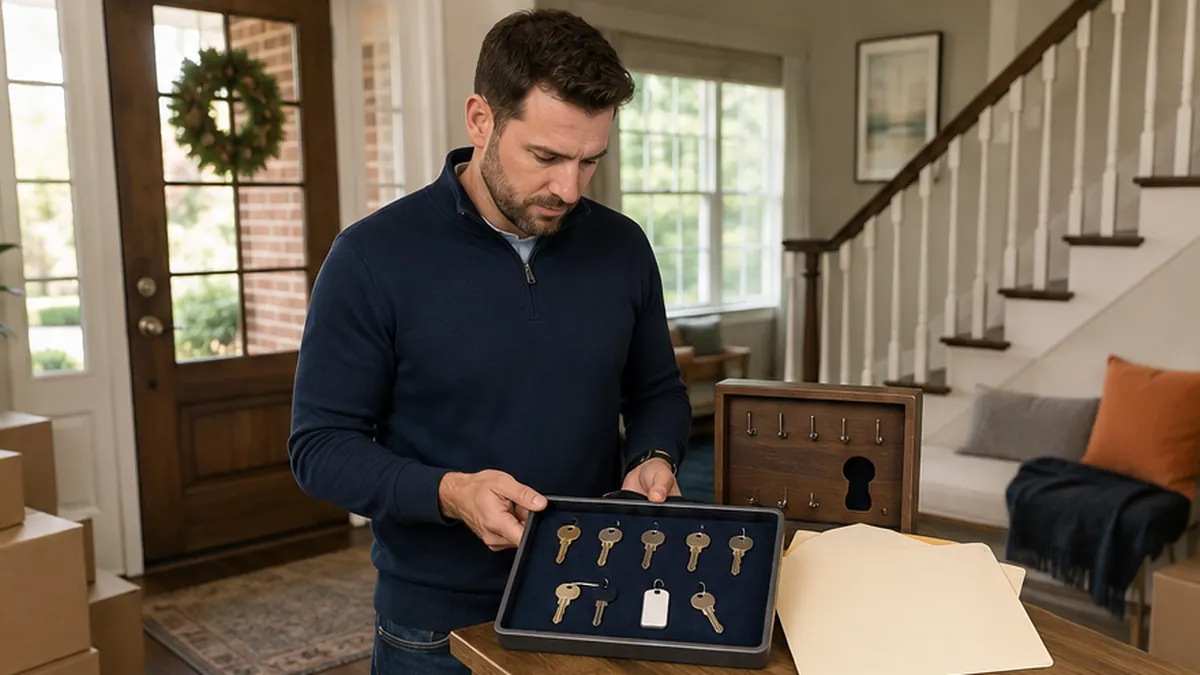
The keys delivered at closing are known keys, not a certified history of every copy. Over time, a house key may have been shared with relatives, neighbors, cleaners, pet sitters, real-estate professionals, tradespeople, tenants, or property managers. That ordinary history does not imply wrongdoing; it simply means the new owner cannot build a reliable access record from the number of keys placed on the counter. If this condition matches your situation, review the service scope for home lock change.
Map each received key to every cylinder it operates. One front-door key may also open the garage service door, while a similar-looking key may belong only to a patio lock or detached building. Use removable numbered tags during the inventory instead of writing the full address on a key, and keep the mapping in a separate secure record so a misplaced ring does not advertise both the property and its access pattern.
If key history is uncertain, the remedy should fit the hardware condition and desired access plan. Serviceable compatible cylinders may be rekeyed so the former keys no longer operate them, while worn, damaged, corroded, unreliable, or incompatible hardware may call for repair or replacement. Decide which doors should share a household key only after identifying the people who should enter each space; convenience should not silently combine a rental area, home office, workshop, or private storage room with the main house.
Keys in hand
Count and map every received key, remote, card, fob, and written code without assuming the set is complete.
Copies and former users
List roles that may have received access so the new baseline addresses ordinary handoff uncertainty.
Authorized household access
Choose the final key groups, users, spares, and temporary-access process before issuing credentials.
Separate rekeying from repair and replacement
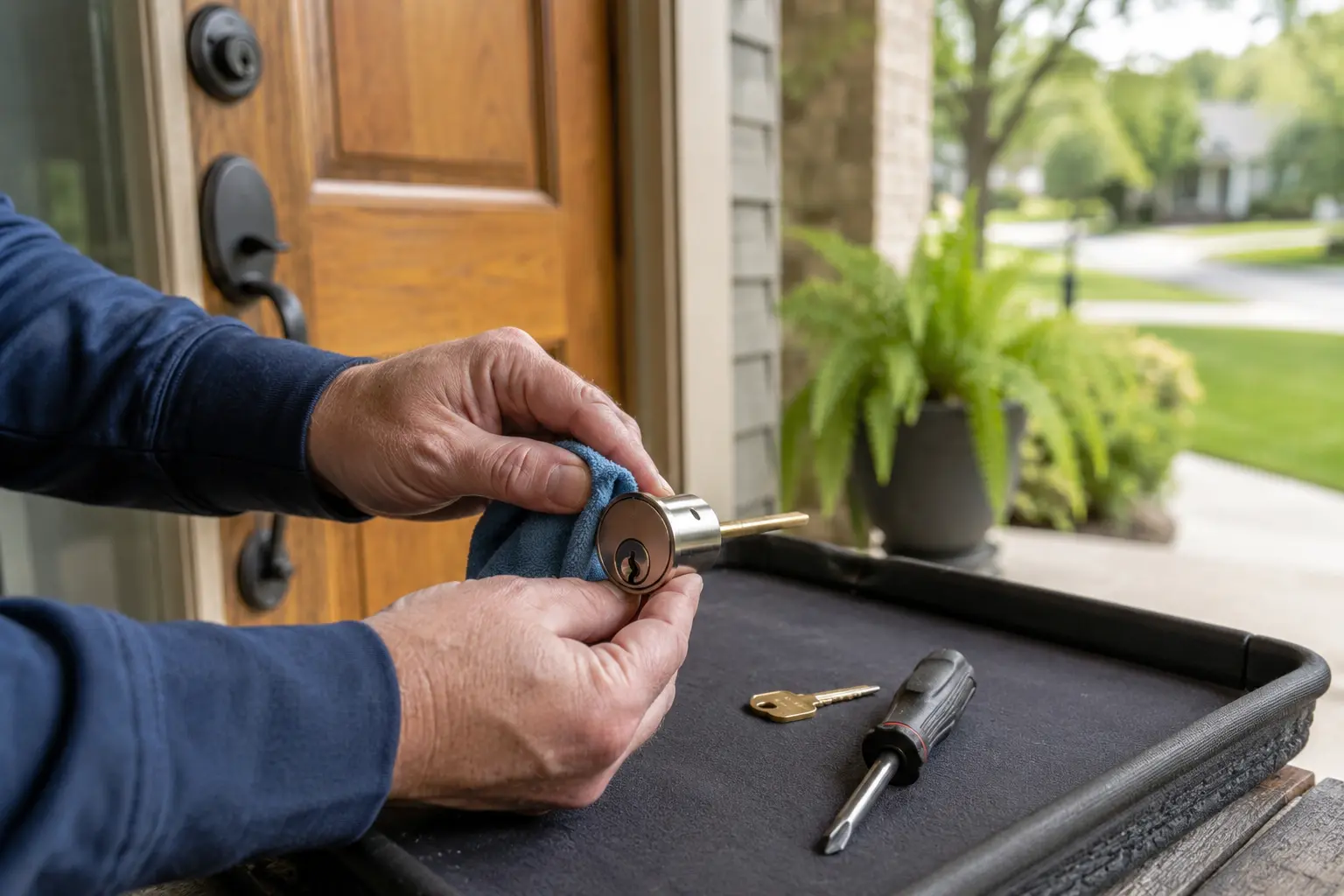
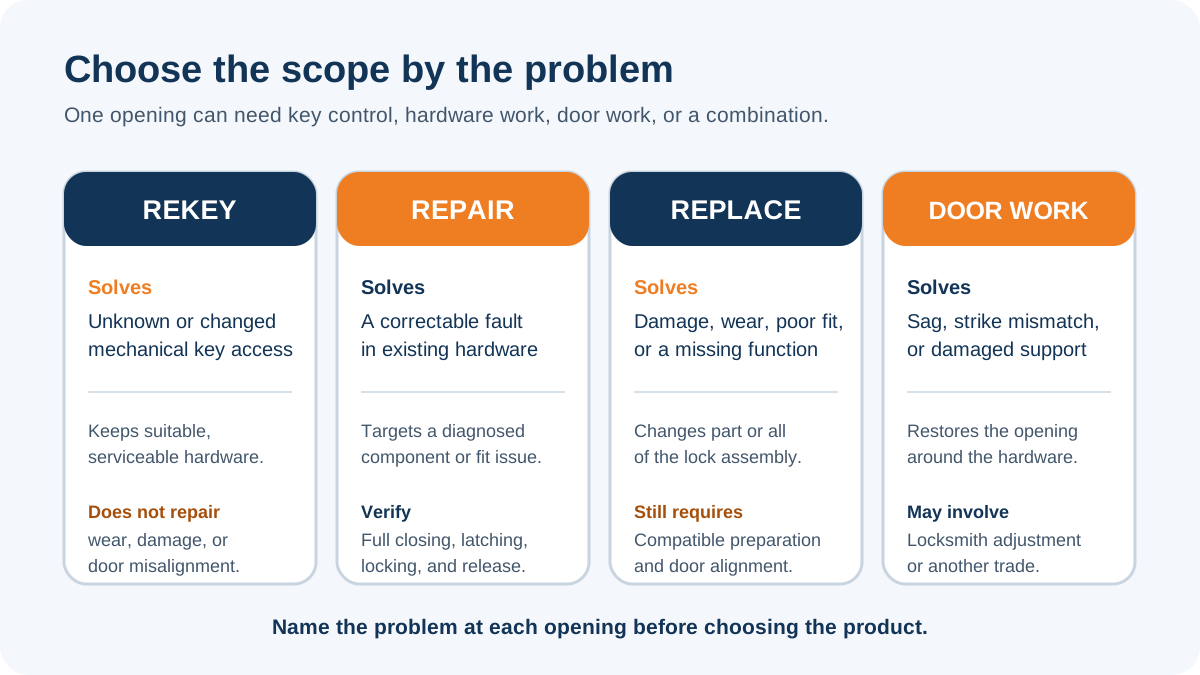
Rekeying changes which mechanical key operates a compatible cylinder; it does not replace the latch, strengthen damaged wood, tighten loose hinges, or repair a worn lock body. It is often the focused answer when the hardware is serviceable and the main concern is unknown authorization. A useful proposal should identify each cylinder included, the new key groups, the quantity of supplied keys, and any openings that cannot join the plan without different parts. If this condition matches your situation, review the service scope for smart lock installation.
Repair addresses a specific operating fault that can be corrected without changing the entire assembly. Loose trim, a partially retracting latch, a shifted strike, sagging hinges, or a replaceable internal component can create symptoms that homeowners describe as a bad lock. The technician should explain what failed, why the repair is appropriate, and whether the door support or frame condition must also be corrected for the hardware to remain dependable.
Replacement becomes more sensible when hardware is cracked, severely worn, corroded, unsupported, poorly fitted, missing a needed function, or incompatible with the planned cylinders and keys. New hardware still must match door thickness, backset, bore preparation, handing, trim clearance, and the way the household exits. Compare the installed scope rather than a package photograph: lock, latch or bolt, strike, necessary preparation, alignment, keying, testing, finish expectations, disposal, product coverage, and labor terms.
Check the door, frame, strike, and hinges with the lock
A deadbolt can be mechanically healthy and still refuse to enter a shifted strike. Wichita temperature swings, wind, moisture, soil movement, worn hinges, thick weather seals, and previous adjustments can change where a door rests in its frame. The open-versus-closed test helps separate internal lock resistance from fit, but it is only a clue; a complete inspection should consider the slab, jamb, hinges, latch, bolt, strike, fasteners, and surrounding material together.
Look for a door that drops as it opens, rubs at one corner, moves when the handle is lifted, rebounds after the latch touches the strike, or needs a shoulder push before the deadbolt turns. Observe daylight, torn seal, cracked jamb material, spinning screws, loose trim, rust, impact marks, or a strike opening that has been enlarged repeatedly. These details affect both security and everyday reliability, and they can change whether the correct scope is adjustment, reinforcement, carpentry, hardware work, or a combination.
Avoid filing the strike, installing random long screws, driving fasteners into unknown concealed conditions, or asking a motorized lock to overcome a binding bolt. Removing material can reduce engagement while hiding the reason the opening moved, and an electronic motor can drain batteries or wear gears when the door is not aligned. The finished door should close naturally, latch without a slam, lock without lifting or pulling, and release from the interior in the intended simple way.
- Test the latch and deadbolt open, then closed, without force.
- Note door sag, rub marks, rebound, weather-seal pressure, and loose hardware.
- Inspect the strike and surrounding jamb material rather than the cylinder alone.
- Preserve a clear, intuitive interior exit path when choosing new hardware.
- Include frame or door work in the scope when hardware cannot solve the underlying condition.
Reset smart locks, keypads, and connected owner accounts
A mechanical rekey does not remove a former smart-lock administrator, guest code, phone key, automation, or cloud integration. Identify the exact device and obtain its current instructions before resetting it, because transfer and factory-reset procedures vary. Confirm that the physical backup key is present, belongs to that lock, and works smoothly before changing digital ownership, particularly when the electronic device is the household's primary entrance.
FTC guidance for buying or selling a smart home (opens in a new tab) advises buyers to reset connected devices, review privacy settings, establish their own accounts, and apply available updates. For a lock or keypad, that means removing obsolete administrators and users, creating individual codes where practical, reviewing activity and notification settings, and changing reused or default account credentials. Enable multifactor authentication when the provider supports it, and store recovery information somewhere secure that remains available if a phone is lost.
Test the system in normal and failure conditions before relying on it. Verify the thumbturn, authorized code, app, key, battery warning, offline behavior, and any emergency-power method promised by the product, then revoke one temporary credential to prove the household understands the process. If the device remains tied to an unavailable former account, cannot be updated, lacks a workable backup, or struggles against the door, treat that as an ownership or compatibility problem rather than adding more users to an uncertain system.
| Layer | Move-in action | Closeout proof |
|---|---|---|
| Owner account | Create or transfer verified ownership | New owner can administer the device |
| Users and codes | Remove old entries and issue individual access | Authorized credentials work; obsolete ones do not |
| Integrations | Review hubs, assistants, automations, and alerts | Only intended services remain connected |
| Recovery | Document backup key, battery, and account recovery | Household can enter during common failures |
| Updates | Install supported firmware and app updates | Device reports current supported status |
Include attached-garage remotes and the house-entry door
An attached garage creates two related access layers: the overhead door and the passage door into the home. A vehicle remote, exterior keypad, app user, or learned in-vehicle control can admit someone to the garage even after the front lock is rekeyed. Inventory every transmitter and connected user, follow the opener manufacturer's process for removing unknown controls, then enroll and label only the remotes the household intends to keep.
The door from the garage to the house should be reviewed as a complete opening, not treated as an interior convenience door. Confirm how it closes, latches, locks, and releases, and preserve any required door, closer, or fire-separation features that apply to the property. Do not wedge it open, disable a closer, or install hardware that makes emergency exit confusing merely because the garage perimeter has an automatic door.
Keep the passage door locked according to the household's plan and avoid leaving remotes in an unlocked vehicle. If the overhead door is crooked, unusually heavy, off track, affected by loose cables or broken springs, or otherwise unstable, do not use the opener reset process as a substitute for garage-door diagnosis. Credential control matters only when the physical door and its protective systems operate reliably.
Remotes, keypad, and app
Remove unknown controls and enroll only the devices and users the new household accepts.
Garage-to-home door
Verify closing, latching, locking, interior release, and any required assembly features.
Door and opener condition
Access control does not correct an unstable overhead door or failed protective function.
Address secondary openings without losing the priority order
Once direct home access is controlled, review detached garages, sheds, gates, pool enclosures, cellar doors, utility spaces, and lockable storage. Their priority depends on what they protect, whether they provide a route toward the house, and who legitimately needs access. A detached workshop containing tools may deserve prompt key control, while an empty garden shed with a serviceable padlock may wait until the household settles the main-door plan.
Patio and sliding doors need more than a glance at the thumb latch. Check that the panel travels correctly, the latch reaches its keeper, and any secondary bar or pin is compatible with ordinary use and a clear exit. Windows, pet doors, storm doors, and decorative gates do not automatically become locksmith projects, but they should be recorded when their condition changes how an exterior door secures or how the household moves through the property.
Mail keys, association access, shared-building credentials, and utility locks may belong to a postal service, homeowners association, landlord, property manager, or utility rather than the homeowner's private lock scope. Verify responsibility before altering them. CISA's personal security action guide also frames home protection as layered use of locks, keys, alarms, lighting, and procedures, which is a useful reminder that one premium deadbolt cannot compensate for unmanaged credentials or an ignored secondary route.
Create a household key plan before ordering duplicates
The easiest time to prevent key sprawl is before the first batch of duplicates is made. List permanent residents, trusted emergency contacts, caregivers, cleaners, pet sitters, and recurring service providers, then decide who needs permanent, temporary, scheduled, or no access. A person who occasionally waters plants may need a limited code for one door rather than the same mechanical key that opens the house, workshop, and detached garage.
Use the smallest number of understandable key groups that preserves necessary separation. Front, back, and garage-entry cylinders may share a household key when compatible and authorized users are identical, while an office, rental suite, workshop, or locked medication space may remain separate. A one-key plan reduces clutter, but it also expands the impact of one lost key, so the household should be willing to rekey every included opening if that credential becomes unaccounted for.
Number issued mechanical keys without addresses, assign individual electronic credentials when supported, and set a return or revocation step for temporary access. Decide where one tested spare will be stored away from the property entrance and away from the daily ring. Avoid obvious outdoor hiding places, close-up key photographs that reveal useful details, and informal shared codes that remain active because nobody remembers who received them.
| User type | Typical access | Control method |
|---|---|---|
| Residents | Regular approved home entrances | Counted key or individual permanent credential |
| Emergency contact | One planned fallback route | Documented spare with retrieval agreement |
| Caregiver or service provider | Only necessary door and time | Temporary code or tracked limited key |
| Guest | Short-duration entry | Expiring credential when supported |
| Former user | No continuing access | Returned key plus rekey or revoked credential as needed |
Prepare a service request that can be scoped accurately
A useful residential locksmith request begins with the property and the openings, not a demand for one product. Provide the Wichita-area address or ZIP code, ownership or authorization status, number of exterior doors, lock types if known, keys received, desired key groups, electronic devices, attached-garage access, and any door that binds or fails to secure. Mention recent closing, tenant turnover, lost keys, break-in damage, or another event that changes urgency without sending sensitive codes or close-up key-cut images.
Photograph each complete door from a safe position, then capture the interior and exterior hardware, door edge, strike area, and visible model label. Keep the address, codes, alarm information, and key details out of public posts. If the door is unstable, glass is broken, the frame is split, unauthorized entry may be occurring, or someone may be in danger, move to safety and contact the appropriate public authority before treating the condition as an ordinary scheduled lock appointment.
Ask for an itemized estimate that separates service call, labor, rekeyed cylinders, repaired hardware, replacement products, keys, door or strike adjustment, electronic setup, taxes, and any work that requires another trade. Confirm who is performing the work, how authorization will be verified, what payment is due, which product and labor terms apply, and what conditions could change the scope after inspection. A precise estimate lets the homeowner prioritize direct-access doors without accepting a generic whole-house package.
- List and name every exterior opening before requesting a price.
- State which doors should share access and which must remain separate.
- Describe open-door versus closed-door symptoms without forcing the hardware.
- Identify smart locks, keypads, garage remotes, and missing backup keys.
- Request an itemized installed scope, testing plan, and written closeout record.
Verify the new baseline before the technician leaves
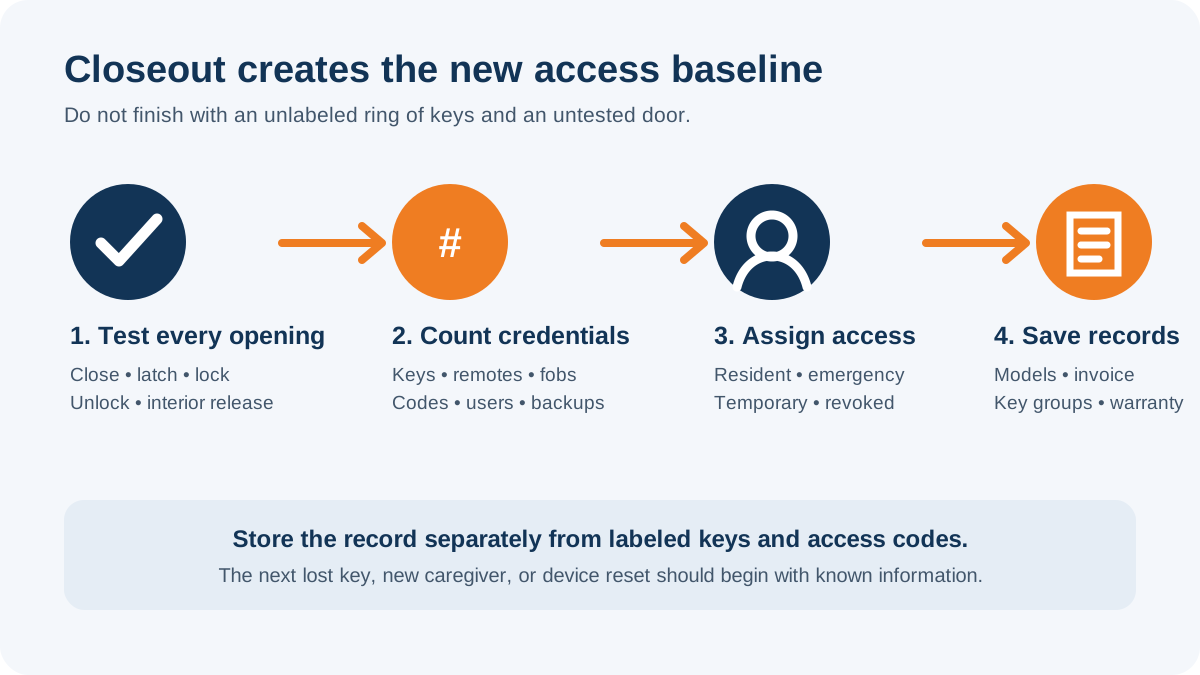
Closeout should prove the full operating cycle at every serviced door. Let each door close naturally, confirm the latch engages, operate the lock from both authorized sides, verify full bolt extension without pushing or lifting, and test every supplied key before accepting the handoff. For keyed-alike groups, test the correct new key at every included cylinder and confirm that excluded groups remain separate.
Count the physical keys, remotes, cards, fobs, and active electronic users in front of the person handing them over. Confirm that prior mechanical keys no longer operate rekeyed cylinders and that obsolete digital users or codes are removed, using a safe test that does not create a lockout. Record each model, battery type, key group, credential holder, service date, invoice, product information, and written warranty terms in a secure location separate from the keys themselves.
Heartland's residential locksmith service can help route a Wichita-area move-in request based on the doors, hardware, credential history, and current availability. The home lock change page explains the focused path when unknown keys or unsuitable hardware drive the request, while smart lock installation is the relevant route when the household wants connected access after the door is confirmed compatible and mechanically sound. The goal is not to buy the most locks on moving day; it is to leave the home with known authorization, dependable openings, and a record that stays useful after the boxes are unpacked.
Test every complete door
Close, latch, lock, unlock, and release each serviced opening without force or special handling.
Transfer every credential
Verify keys, remotes, codes, users, backups, and separated access groups before closeout.
Preserve the new baseline
Store models, assignments, invoices, and warranty terms securely for the next access change.
Frequently asked questions
Questions readers ask
Should I change every lock immediately after moving into a new home?
Restore control of every exterior route promptly, but the correct work may be rekeying, repair, adjustment, replacement, or a combination. Prioritize direct home access, then let hardware condition, compatibility, and the desired key plan determine the scope.
Is rekeying enough when former owners returned their keys?
Returned keys do not reveal every ordinary duplicate. Rekeying serviceable compatible cylinders can establish a known key baseline, but it will not correct worn hardware, door misalignment, or a damaged frame.
Which door should I address first after a move?
Start with exterior doors that enter the living space, especially any opening that cannot close, latch, lock, or unlock normally. Include the door from an attached garage and its connected remotes or keypads in that first group.
Do smart locks need to be reset when a house changes owners?
Yes. Review the exact manufacturer's transfer process, establish the new owner account, remove old administrators and users, change codes, review integrations, update the device, and test the mechanical backup and recovery path.
Can all my new home's locks use one key?
Only when the cylinders are compatible and the same people should enter every included space. Rental areas, workshops, offices, detached buildings, and private storage may need separate key groups.
What should I receive after move-in lock service?
Receive tested working doors, the agreed keys and credentials, an itemized invoice, product and model information, warranty terms, and a clear record of which credential operates each opening. Confirm obsolete keys and users no longer work where the scope required their removal.
The right solution depends on the specific lock, door, vehicle or garage door system. Check the Wichita-area service pages, then call or send the details for an evaluation.