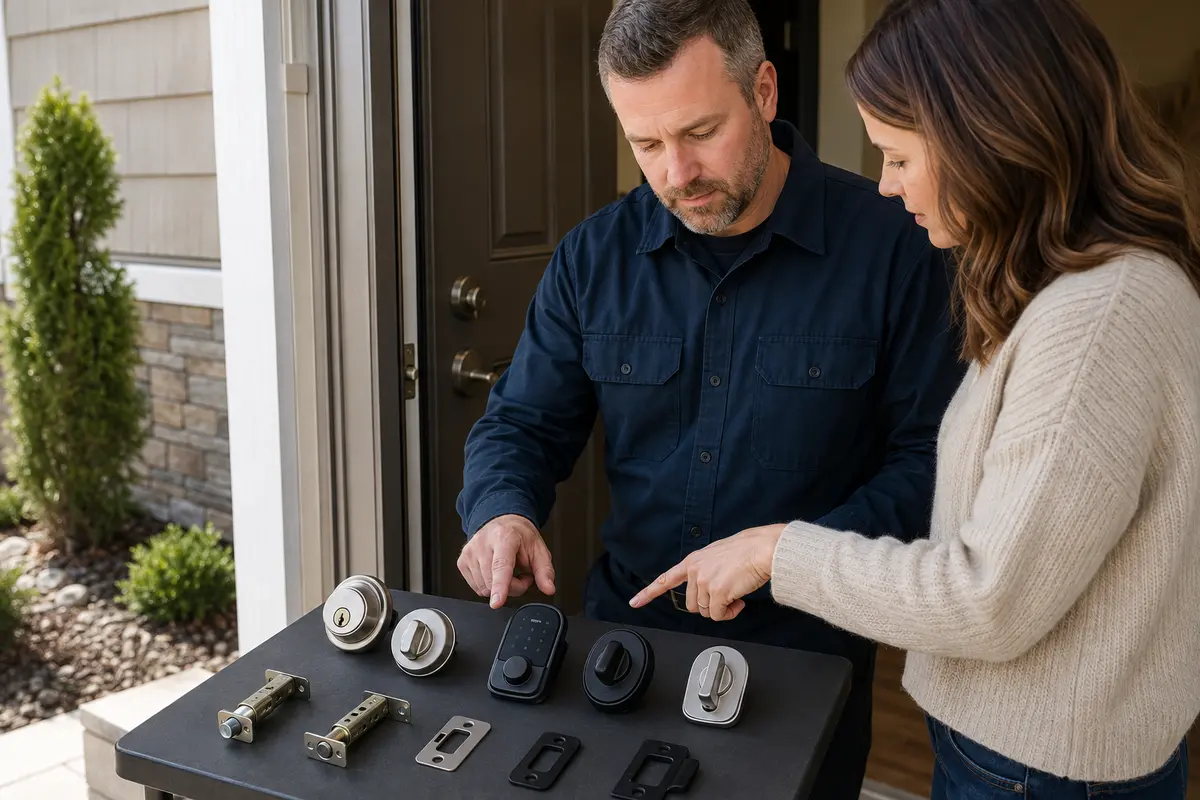
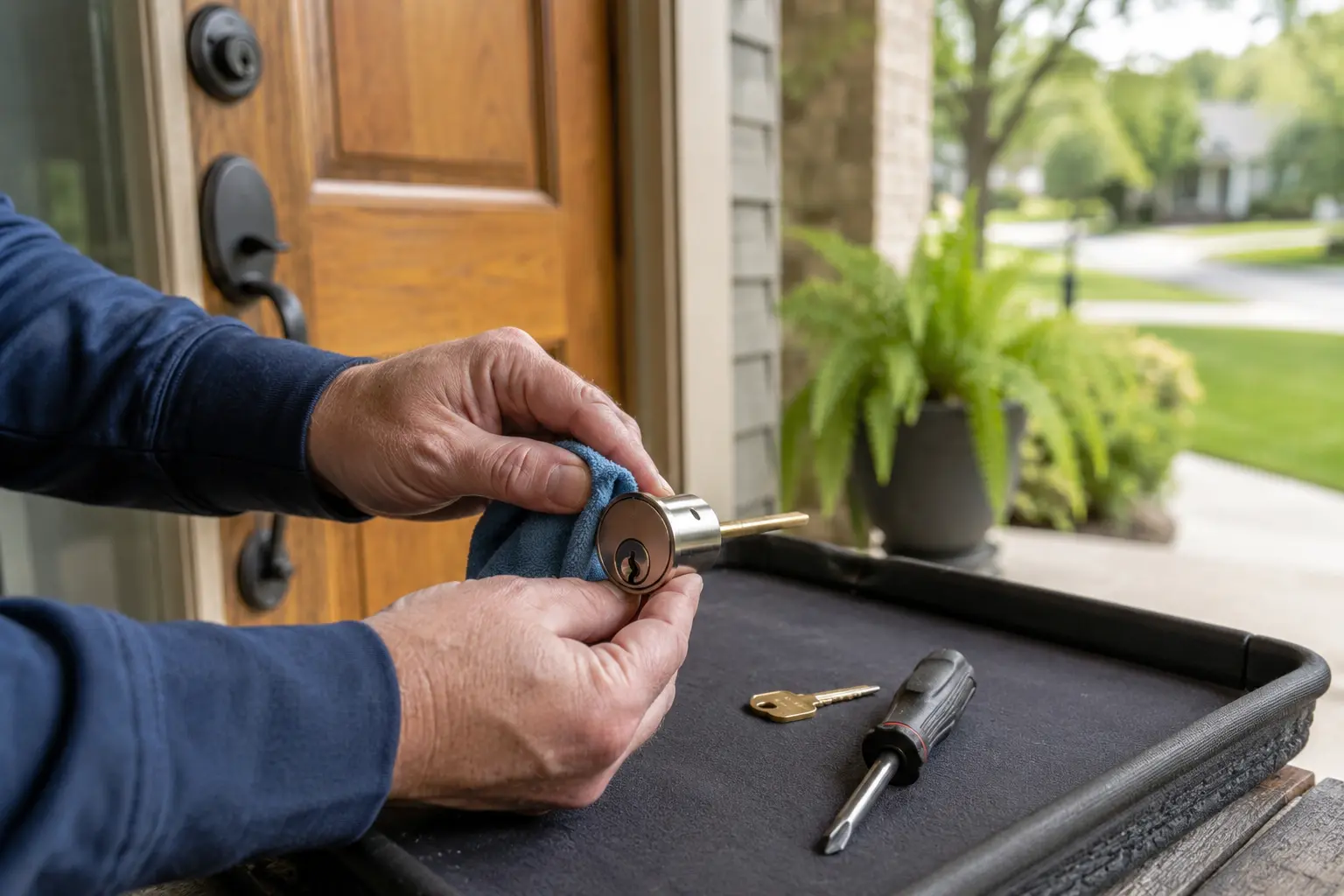
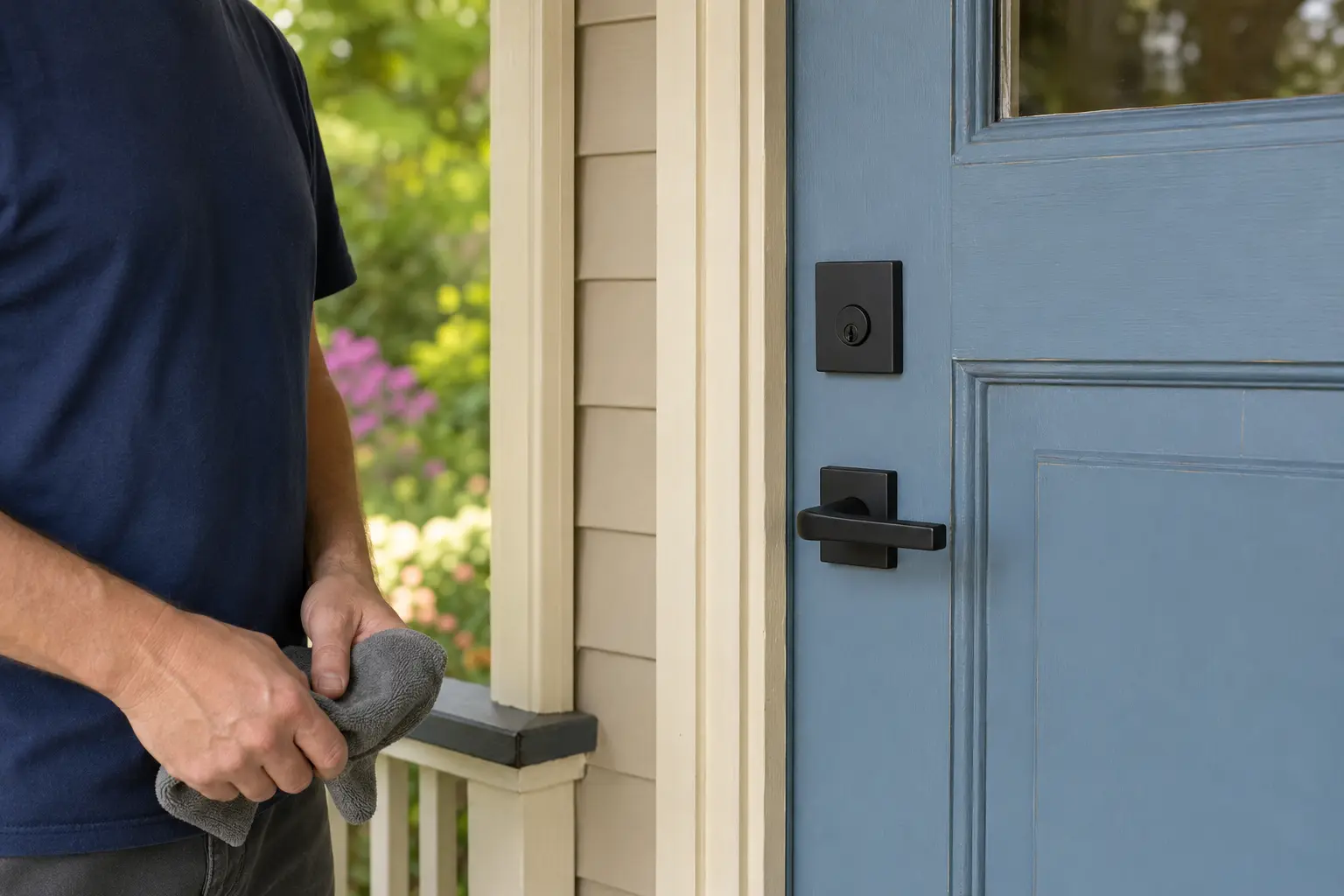
Residential locksmith
When Should You Replace the Locks on Your Wichita Home?
A lock does not need to be completely broken before replacement makes sense. Key control, reliability, door condition and the way your household uses each entrance are equally important parts of the decision. This guide explains how Wichita homeowners can separate a simple adjustment from a repair, complete lock change or practical upgrade.
Replace or reconfigure a home lock when you cannot account for every key, the hardware is damaged or unreliable, the door no longer latches and locks smoothly, the lock does not provide the access function you need, or a move, tenant change or security incident has changed who should have entry. Do not assume a new lock alone will correct a shifted door or damaged frame.
A lock does not need to be completely broken before replacement makes sense. Key control, reliability, door condition and the way your household uses each entrance are equally important parts of the decision. This guide explains how Wichita homeowners can separate a simple adjustment from a repair, complete lock change or practical upgrade. Continue with the complete library of residential locksmith guides when you want to compare related decisions.
Key takeaways
- A move or unaccounted-for key is a key-control issue even when the lock still works perfectly.
- Binding deadbolts often point to door, hinge or strike alignment—not only a bad cylinder.
- Repair, cylinder changes, complete replacement and smart-lock upgrades solve different problems.
- Exterior locks should balance entry security with reliable, uncomplicated exit from inside.
- Choose hardware around the actual door and household routine instead of buying by appearance alone.
The real decision is control, condition and function
Homeowners often wait for a key to stop turning before they think about a lock change. Mechanical failure is only one reason to act. A smooth-working lock can still be the wrong lock if old occupants, contractors, caregivers or unknown third parties may have copies.
Conversely, a frustrating lock may not need replacement if the cylinder is healthy and the real problem is a sagging door or misaligned strike. A sound decision begins by identifying which of three questions has changed: who controls the keys, whether the opening operates reliably, and whether the current hardware still fits the household's needs. If this condition matches your situation, review the service scope for home lock change.
Treat the lock as one component in a complete opening. The key operates a cylinder; the cylinder moves a latch or bolt; the bolt must enter a strike; the strike is fastened to a frame; and the door must hang square enough for those parts to meet.
Weather, settling, loose hinges, repeated slamming and ordinary wear can disturb that chain. Replacing only the visible lock can create an expensive version of the same symptom when the new deadbolt still rubs the strike or the latch still fails to engage.
The best time to evaluate residential locks is before an urgent failure. A planned review gives you time to compare keying, grade, finish, electronic features and door preparation without making a rushed purchase.
It also lets you group related entrances when keyed-alike convenience makes sense. For Wichita homes, seasonal temperature changes and strong weather can expose small alignment problems, so note whether a lock behaves differently during hot, cold, dry or humid periods.
Who has access?
Account for household members, former occupants, cleaners, contractors, relatives, pet sitters and every spare key.
Does it operate freely?
Test the lock with the door open and closed. A difference often reveals alignment rather than cylinder trouble.
Does it fit your routine?
Consider children, guests, deliveries, rental turnover, accessibility and how temporary access is managed.
Replace or reconfigure locks after moving
A move is the clearest reason to restore key control. Sellers, tenants, property managers, maintenance workers, real-estate professionals, cleaners and remodeling crews may all have handled keys at some point.
Even if every known copy was returned, ordinary keys can be duplicated without leaving a record. This is not an accusation against anyone; it is a practical reset that establishes a known starting point for the new household. If this condition matches your situation, review the service scope for lock installation.
Walk every exterior opening before deciding what work is needed. Include front and back doors, the door between an attached garage and the house, detached-garage service doors, patio doors with keyed hardware and any gate or outbuilding that protects valuable equipment.
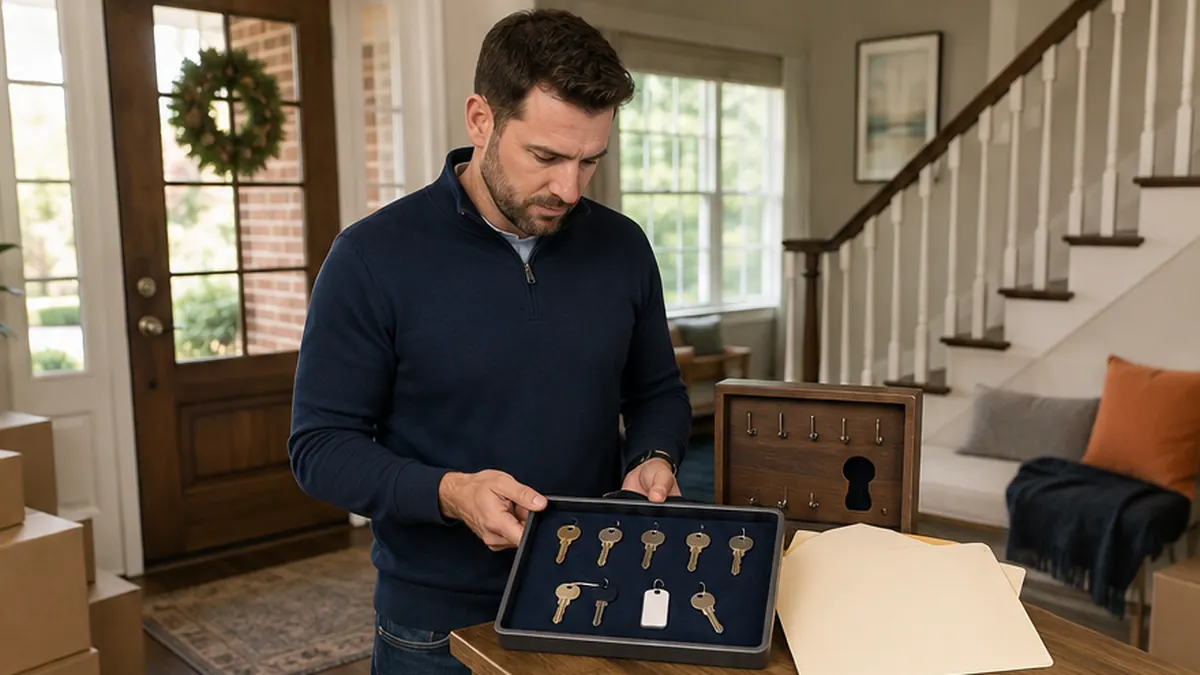
Record which locks use the same key, which doors have deadbolts, where the hardware is loose and whether each door closes without lifting, pulling or pushing. This inventory is more useful than simply asking for one lock to be changed.
A complete hardware replacement is not always necessary after a move. Some compatible locks can be reconfigured at the cylinder level, while worn, mismatched or undesirable hardware may justify replacement.
Because Heartland emphasizes lock changes and installations rather than selling a one-size-fits-all answer, the recommendation should reflect the existing hardware, desired key control and condition of the opening. If you want one key for several doors, mention that before hardware is selected because cylinder compatibility matters.
For independent guidance, review Builders Hardware Manufacturers Association's ANSI/BHMA product grade levels (opens in a new tab).
- Inventory every exterior door, garage entry, gate and detached-building lock.
- List all known key holders and identify keys that were never returned.
- Test each deadbolt with the door open and again with it closed.
- Photograph brand markings and the interior and exterior sides of unusual hardware.
- Decide whether keyed-alike convenience or separate keys make more sense.
- Change keypad codes, garage remotes and connected-app permissions as part of the access reset.
Lost, stolen and uncontrolled keys change the risk
A missing key deserves more attention when it can be connected to your home. A key lost by itself somewhere unknown presents a different situation from a key taken with a wallet, bag, identification, vehicle paperwork or anything showing an address.
The same is true when a key disappears during a dispute, employee separation or contractor relationship. The practical question is not whether someone will use the key; it is whether the household is comfortable leaving that possibility unresolved. If this condition matches your situation, review the service scope for smart lock installation.
Start with the doors that the missing key actually opens. If one key operates the entire house, the scope may include several cylinders. If the missing key is for a side entrance that uses a separate key, the response may be narrower.
Do not overlook mechanical overrides supplied with keypads and smart locks. Homeowners sometimes change an electronic code but forget that a missing physical backup key still operates the cylinder.
When immediate replacement cannot happen, use sensible short-term precautions that do not interfere with safe exit. Keep doors and windows secured, improve exterior lighting, monitor available cameras and avoid advertising the loss publicly.
Do not create improvised barricades that could trap occupants or delay emergency egress. If keys were stolen during a crime or someone is threatening entry, contact law enforcement and prioritize personal safety rather than treating the issue as only a hardware appointment.
Mechanical warning signs that deserve attention
A lock usually gives clues before it fails completely. Keys may require extra wiggling, insertion may feel rough, a thumbturn may become stiff, screws may repeatedly loosen or the latch may stop springing freely.
Corrosion, a cracked housing, a bent spindle and visible movement between the lock and door are also useful evidence. These symptoms can come from wear inside the hardware, but they can also be accelerated by a door that forces the latch or deadbolt against the strike on every cycle.
One simple observation is especially useful: compare operation with the door open and closed. If the key and thumbturn move smoothly while the door is open but bind when it is closed, the lock may be functioning while alignment is not. Check whether the door has to be lifted by the handle, pushed inward, pulled toward you or slammed before the bolt moves.
Those workarounds are not normal operation. They transfer stress to the cylinder, bolt, hinges and frame and may eventually leave the door unable to lock or unlock.
Stop forcing a key when resistance becomes unusual. A broken key inside a cylinder turns a manageable repair into a more disruptive problem, and excessive force can damage internal components.
Lubrication is not a universal cure; the wrong product can attract debris or interfere with a manufacturer's intended maintenance. When the hardware is visibly damaged, loose in the door or unreliable from one cycle to the next, professional inspection is a better next step than repeatedly experimenting.
| Symptom | Possible source | Useful next check | Avoid |
|---|---|---|---|
| Key turns only with wiggling | Worn key, cylinder wear or debris | Compare a known-good spare and inspect key damage | Forcing or bending the key |
| Deadbolt binds only when closed | Strike or door alignment | Operate the bolt with the door open | Enlarging holes without diagnosing movement |
| Lever or knob feels loose | Fastener, spindle or chassis wear | Limit use and inspect mounting | Continuing until the handle detaches |
| Latch does not catch | Door position, strike or failed spring latch | Close slowly and observe alignment | Relying on the deadbolt to pull the door shut |
| Electronic lock reports repeated jams | Mechanical binding or installation issue | Test manual bolt travel | Increasing motor force through repeated cycles |
Repair, change, install or upgrade: understand the options
Residential locksmith terms are often used interchangeably even though the work differs. A repair keeps serviceable hardware and corrects a specific fault, such as fastening, alignment or a replaceable component. A lock change replaces the operating hardware or cylinder arrangement to restore key control, reliability or desired function.
A new installation prepares a door for hardware that was not previously present, such as adding a deadbolt. An upgrade changes the level of control or convenience through stronger mechanical hardware, a keypad or connected smart lock.
The least extensive option is not automatically the least expensive over time, and the most feature-rich option is not automatically the best. Repairing an old lock can be sensible when the hardware is durable, compatible and otherwise in good condition.
Replacement may be more coherent when parts are worn, finishes are failing, keys are uncontrolled or several components no longer work together. New preparation needs accurate backset, bore and door-thickness measurements so the hardware is supported rather than improvised.
Ask what will remain after the work. If the cylinder changes, will the old key stop operating every intended entrance? If the lock changes, is the existing strike appropriate and securely fastened?
If a smart lock is installed, does the mechanical bolt move freely and what happens when batteries are depleted? Clear answers matter more than product jargon. The goal is an opening that closes, latches, locks, unlocks and allows safe exit consistently.
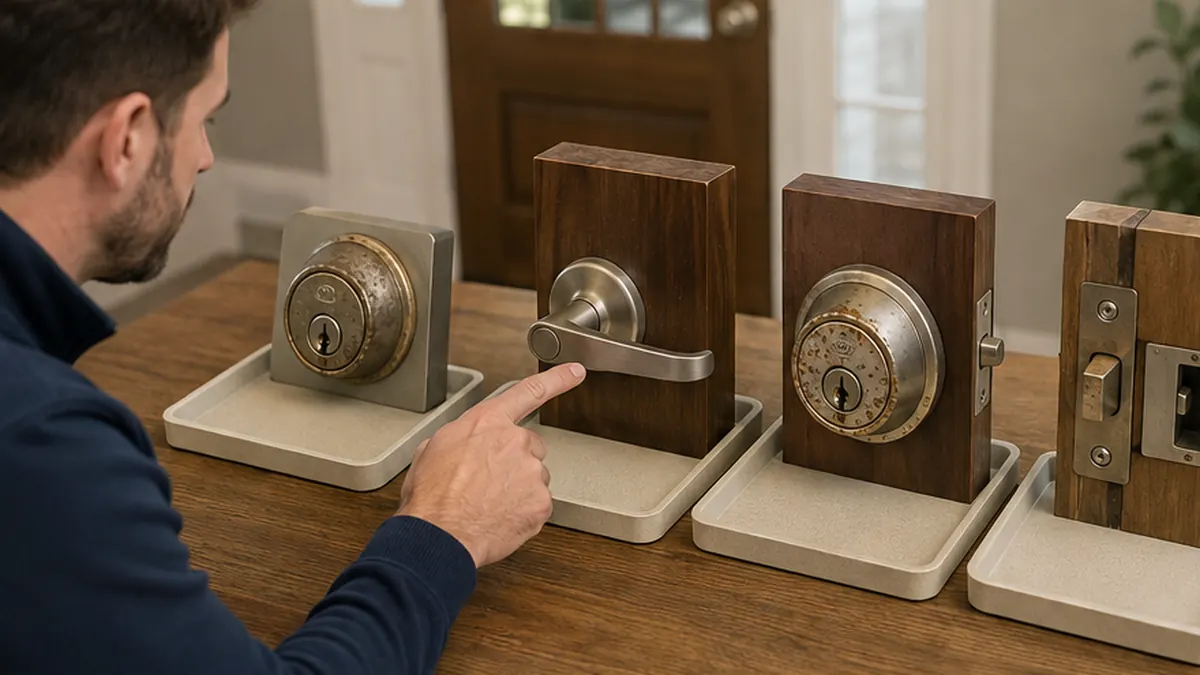
| Option | Best suited to | What it may preserve | Important limitation |
|---|---|---|---|
| Repair | Correctable wear, looseness or alignment | Existing quality hardware | Cannot restore control over unknown keys by itself |
| Cylinder or key-control change | Moves, missing keys and access changes | Compatible lock body and trim | Compatibility varies by lock format |
| Complete lock change | Damaged, obsolete or unwanted hardware | Door preparation when compatible | Door and strike issues still need correction |
| New deadbolt installation | Door lacks a suitable dedicated bolt | Existing latch or lever | Requires accurate preparation and frame support |
| Smart-lock upgrade | Codes, temporary access and connected features | Mechanical key option on some models | Electronics cannot overcome a binding door |
When door and frame problems matter more than the lock
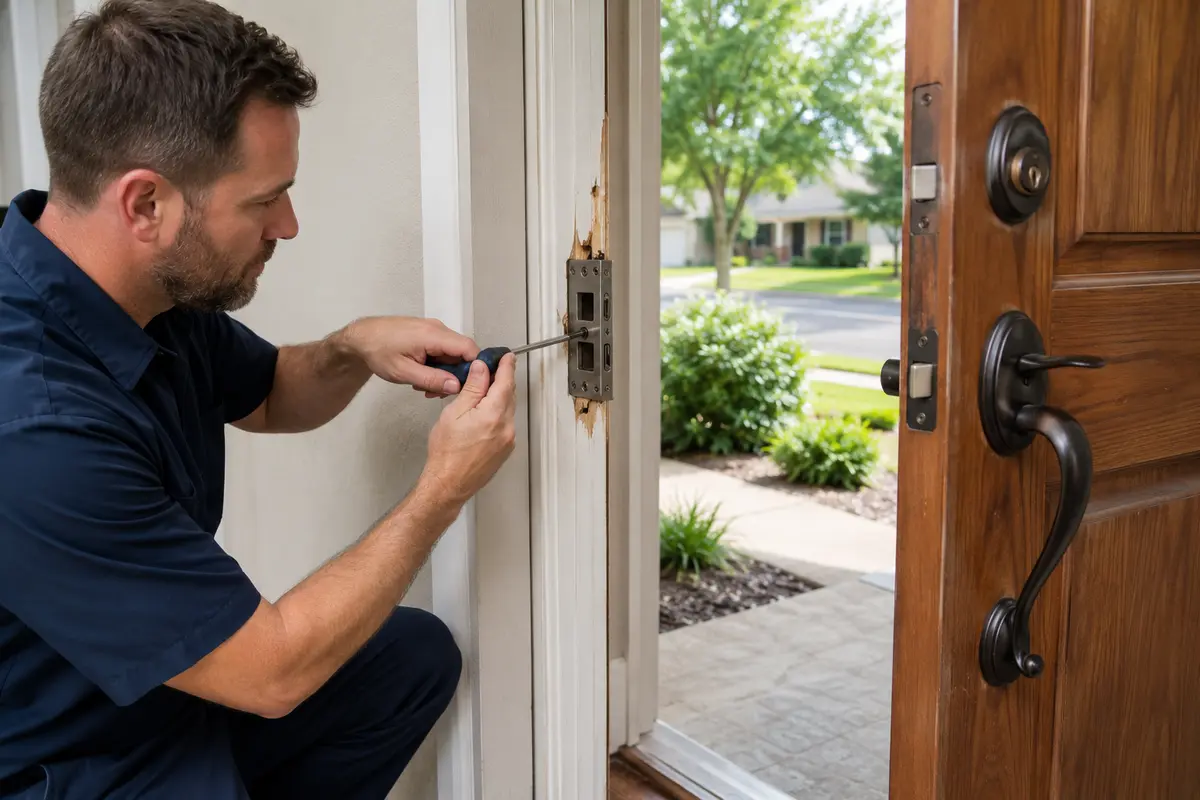
A secure lock depends on the material around it. Loose hinges can lower the latch side of a door; a split jamb can weaken the strike; an oversized or damaged bore can prevent the chassis from clamping correctly; and a warped door can make the bolt scrape. After forced entry, the cylinder may be only the most visible damage while the jamb, strike screws, door edge and surrounding framing carry the real loss of strength.
Look for widening gaps, daylight around the perimeter, rub marks near the strike, cracks radiating from screw holes and a door that moves when pushed while locked. On double doors, examine the inactive leaf and its flush bolts. On metal or fiberglass doors, watch for deformation around the lock preparation.
A locksmith can evaluate the hardware and opening, but some conditions require coordinated door, frame or carpentry work. A responsible recommendation should say when the repair extends beyond lock components.
Do not use the deadbolt as a device for pulling a misaligned door into place. If you must push the door hard while turning the thumbturn, the bolt is carrying side pressure it was not intended to manage.
Correcting hinges, strike position, weather-seal compression or structural damage can improve both security and daily usability. It also reduces the load on an electronic lock motor, which may otherwise report jams or consume batteries quickly.
For independent guidance, review Builders Hardware Manufacturers Association's Residential lock and deadbolt standards (opens in a new tab).
Choosing deadbolts, levers, keypads and smart locks
Begin with the function of the door. A primary entrance used by family members several times a day has different needs from an infrequently used basement or detached-garage door. Decide whether the household values one-key convenience, code entry, temporary guest access, remote status, physical-key backup or minimal maintenance.
Then evaluate products that meet those needs and fit the door. Buying the device first can lead to compromises in backset, bore size, trim clearance or compatibility with existing handles.
Mechanical deadbolts are straightforward and avoid batteries, apps and connectivity. Keypads can reduce the number of spare keys distributed and make temporary codes convenient.
Connected smart locks may add notifications, schedules and remote administration, but their usefulness depends on the product, network, account security and how reliably household members manage it. Any electronic option still needs a freely moving bolt, appropriate door preparation and a plan for battery depletion or service interruption.
Interior operation deserves the same attention as exterior resistance. Occupants should be able to leave without searching for a removable key or navigating a confusing routine.
Double-cylinder deadbolts, specialty security devices and modifications near glass require careful consideration of egress and applicable local requirements. Do not trade a theoretical increase in entry resistance for a practical delay in escaping a fire or other emergency.
Mechanical deadbolt
A durable choice when reliable physical-key control and low maintenance are the main goals.
Keypad lock
Useful for households that want codes and fewer distributed keys without depending entirely on a phone.
Smart lock
Adds app-based controls on supported models but requires battery, account and network planning.
A practical whole-home lock audit
A lock audit is a room-by-room and door-by-door review of access, hardware and condition. Start outside during daylight. Check that exterior lighting works, vegetation does not conceal the entrance and the door can be approached safely.
Record the door material, lock type and whether the opening is a primary entrance, secondary entrance, garage connection or seldom-used service door. From inside, test latching and locking without applying unusual pressure.
Create a key list while you inspect. Note how many keys exist, who has them, whether any are hidden outside and whether the same key operates unrelated buildings or spaces. Hidden keys near the door are easy to share and easy to forget.
A coded lock may be a better fit for recurring guests, but codes need owners, expiration rules and periodic review. If you use a lockbox, choose its location and access policy deliberately rather than treating it as permanent storage for an uncontrolled key.
Finish by ranking findings. Immediate items include a door that cannot secure, a lock that may trap someone, forced-entry damage and missing keys tied to the address.
Planned items include worn finishes, inconsistent keying, desired electronic features and low-use doors that need better weather sealing. This priority list helps a service provider prepare and keeps the visit focused on outcomes rather than isolated products.
- Can every exterior door latch without being slammed?
- Can every deadbolt extend fully without pushing or pulling the door?
- Are strikes, hinges and lock trim tight and free of visible cracking?
- Are all issued keys, codes, fobs and garage remotes accounted for?
- Can occupants exit every sleeping and living area without a special key?
- Do electronic locks have current batteries and a documented backup method?
- Are attached-garage and detached-building doors included in the access plan?
- Does each household member understand which entry method to use during an outage?
What information helps before requesting service
Useful details reduce guesswork. Share the number of doors, the reason for the request and whether the goal is key control, repair, replacement or an upgrade. Describe the door material, existing lock format and any brand markings you can read.
Explain whether the lock works with the door open, whether the problem changes with weather and whether there is visible frame damage. Clear photos of both sides of the hardware, the door edge and strike area can help identify what needs closer evaluation.
For a move or key-control concern, say how many locks the key operates and whether you want them coordinated. For a smart-lock request, identify the desired features rather than only a product name: codes, temporary access, app control, rental turnover, voice integration or audit history.
For damaged doors, mention any recent impact, attempted entry or repair. Do not conceal forced-entry conditions because they may change the required scope and the need for other trades.
Be prepared to establish authorization for entry or changes to the property. Renters should follow lease and property-management requirements, while landlords and managers should clarify who can approve work.
The service area includes Wichita and surrounding communities, with availability varying by location and request. Providing the exact city or ZIP code, a callback number and a safe description of the issue makes routing more effective.
How to protect the value of a new lock installation
After service, test the result before relying on it. The door should latch when closed normally, the deadbolt should extend without forcing the door and the key should insert and withdraw smoothly. Test every provided key and every supported keypad or smart-lock function.
If several doors were coordinated, verify the intended key hierarchy rather than assuming each cylinder was included. Ask how the hardware should be maintained and which symptoms should prompt a follow-up.
Avoid hanging heavy objects from keys or using an oversized key ring that places leverage on vehicle and door cylinders. Keep hinges and door closers functioning so the opening does not repeatedly strike or sag.
For electronic locks, follow the manufacturer's battery guidance, protect account access with strong unique credentials and remove codes that are no longer needed. Document who receives physical keys and codes, especially after household, tenant or vendor changes.
Revisit the opening after major weather shifts, remodeling or door adjustment. New flooring, weather stripping and painting can alter clearances.
A lock that begins binding after unrelated work may not have failed; the door may have moved. Addressing the change early protects the hardware and prevents a minor alignment issue from becoming a lockout or broken key.
Frequently asked questions
Questions readers ask
Should I replace my locks when I buy a house?
Yes, restoring known key control is sensible after a purchase because you cannot verify every historical copy. The exact work may be a cylinder-level change or complete hardware replacement depending on compatibility, wear and your goals.
Can a lock be repaired instead of replaced?
Often, when the hardware is serviceable and the problem is limited to fastening, alignment or a replaceable component. Repair does not solve unknown-key control, obsolete hardware or extensive damage.
Why does my deadbolt work with the door open but not closed?
That pattern commonly indicates the bolt and strike are not aligning because of hinge movement, door settling, weather-seal pressure or frame conditions. The opening should be evaluated before replacing the lock.
Is a smart lock automatically more secure than a deadbolt?
No. Security depends on the complete product, installation, door, frame, strike, account settings and user habits. Smart features can improve access management, but they do not correct weak or misaligned openings.
Can several house locks use the same key?
Often, when the cylinders and keyways are compatible. Tell the locksmith which doors you want coordinated before hardware is selected or changed.
What should I do if a house key is stolen with my address?
Prioritize personal safety and contact law enforcement if a crime or threat is involved. Restore control over every lock the key operates, including backup cylinders on electronic locks, and update related codes and remotes.
How often should residential locks be replaced?
There is no universal calendar. Replace or service locks based on key control, operation, damage, compatibility and changing access needs rather than age alone.
Do renters need permission to change locks?
Renters should review the lease and contact the property owner or manager before changing hardware. Authorization, key-copy requirements and local rules can affect what is permitted.
What photos are useful for a lock-change request?
Photograph both sides of the lock, the door edge, latch and deadbolt, strike area, hinges, any damage and any readable brand markings. Include a wider photo showing the complete door.
Can I request service outside Wichita?
Heartland coordinates requests in Wichita and surrounding areas, subject to the service type, exact location and independent-contractor availability. Call with the city or ZIP code.
The right solution depends on the specific lock, door, vehicle or garage door system. Check the Wichita-area service pages, then call or send the details for an evaluation.