Emergency locksmith
What to Do When a Door Lock Is Damaged After a Break-In
After forced entry, the visible lock is only one part of the opening. The door edge, strike, jamb, hinges and surrounding structure may all be damaged. This guide explains how Wichita property owners can prioritize personal safety, preserve information and restore dependable security without rushing into a cosmetic lock swap.
If a crime may still be in progress or anyone is in danger, move to safety and call 911. Do not enter or disturb the scene until law enforcement says it is appropriate. Once released, photograph the complete opening and request an assessment of the lock, latch, deadbolt, strike, frame, door edge and hinges. A new cylinder alone cannot secure a split jamb or distorted door.
After forced entry, the visible lock is only one part of the opening. The door edge, strike, jamb, hinges and surrounding structure may all be damaged. This guide explains how Wichita property owners can prioritize personal safety, preserve information and restore dependable security without rushing into a cosmetic lock swap. Continue with the complete library of emergency locksmith guides when you want to compare related decisions.
Key takeaways
- People and emergency response come before property repair.
- Follow police instructions before touching, cleaning or operating a damaged opening.
- Document wide views and close details of the lock, door edge, strike, jamb and nearby damage.
- Temporary closure and permanent restoration are different scopes.
- Improve the complete opening and access plan rather than relying on a more expensive lock alone.
First priority: move to safety and contact authorities
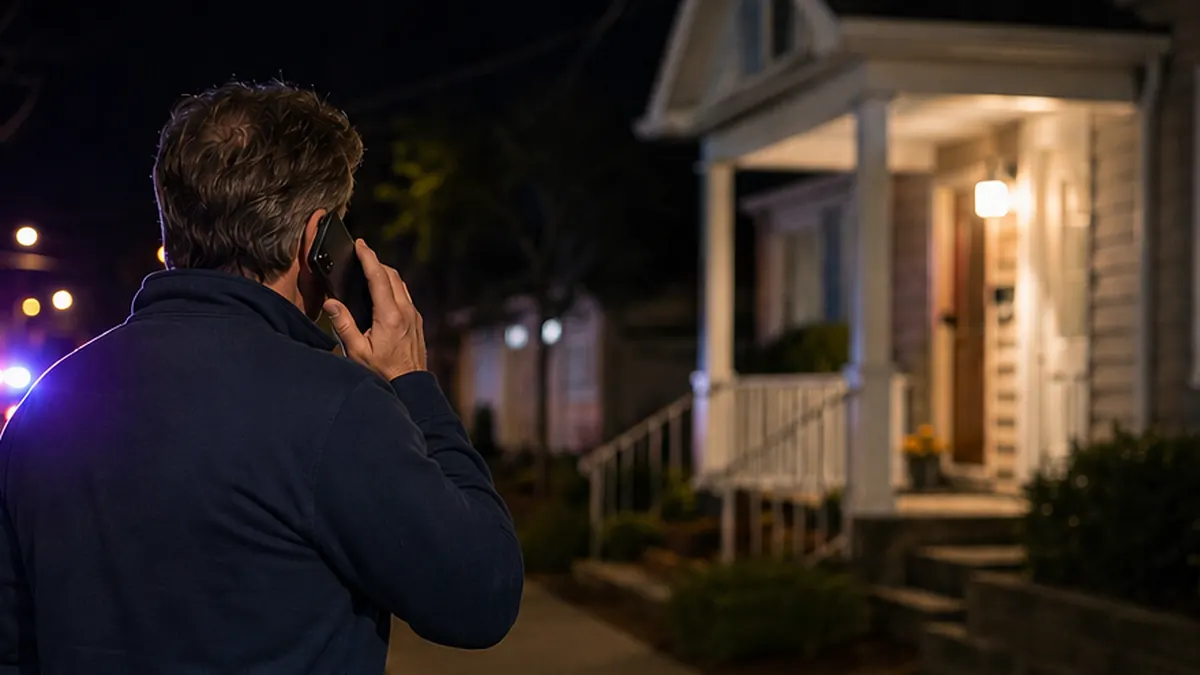
If you arrive and find an open door, broken glass, forced lock or unfamiliar activity, do not assume the property is empty. Move to a safe, visible location and call 911 when a crime may be in progress or anyone could be at risk.
Do not confront a suspected intruder or enter merely to inspect damage. Personal safety is more important than preventing additional property loss. If this condition matches your situation, review the service scope for break-in lock repair.
Follow the responding agency's directions. The opening and nearby surfaces may contain evidence, and premature cleaning, closing or hardware removal can disturb it.
A locksmith or door technician should wait until law enforcement has released the area for repair. If the property is a rental, commercial suite or managed building, notify the responsible owner or manager after immediate safety steps.
Check on occupants from a safe place. If someone is injured, trapped or missing, tell emergency dispatch.
Do not treat a damaged lock as the only issue when a person may need medical, police or fire assistance. Once authorities confirm it is safe to enter, proceed methodically rather than rushing to replace the first broken component.
Preserve and document the scene after release
Once police say documentation and cleanup can begin, take wide photographs that establish the location and full door, then close details of the exterior lock, interior trim, door edge, latch, deadbolt, strike, jamb, hinges and surrounding wall. Photograph tool marks, cracks, splintering, bent metal and displaced screws. Include images with the door open and closed only if it can be moved safely and authorities permit it. If this condition matches your situation, review the service scope for emergency lock change.
Write a simple timeline while events are fresh. Note when the property was last known secure, when damage was discovered, who entered afterward and any unusual sounds, alerts or camera notifications.
Save relevant video in its original form and make a protected copy. Do not post sensitive evidence, access details or security weaknesses publicly.
Create an inventory of damaged and missing property separately from door repair. Keep police report information, photographs, receipts and service invoices together.
Insurance and property-management procedures vary, so contact the appropriate carrier or manager for instructions rather than assuming what documentation will be required. Avoid making coverage guarantees based on general online advice.
For independent guidance, review National 911 Program's When and how to call 911 (opens in a new tab).
- Wide exterior and interior views of the complete opening
- Close photos of lock, latch, deadbolt and strike
- Door-edge, jamb, hinge and wall damage
- Tool marks, cracks, bent metal and displaced fasteners
- Original camera footage and alert timestamps
- Police report or incident reference
- Damaged-property inventory and repair receipts
- Names of authorized people who entered after discovery
Why the visible lock may not be the main failure
Forced entry loads the complete opening. A deadbolt may remain intact while the strike pulls from the jamb. A cylinder may be damaged while the door edge around the lock is also crushed.
A lever can be forced, bending internal components and twisting the door. Hinges or pivots may shift as the door is pried. Replacing only the cylinder can leave damaged structure carrying the new hardware. If this condition matches your situation, review the service scope for commercial lock repair.
Inspect how the door sits in the frame. Look for new gaps, rubbing, a latch that no longer meets the strike and a door that springs open or must be lifted. Cracks can extend behind trim where they are not obvious from the face.
Metal frames can deform around strike preparations, and wood jambs can split along grain. The technician should distinguish replaceable lock components from door and frame repairs that need another trade.
The surrounding wall and fastener support matter. Long screws are useful only when they engage sound material in an appropriate location and do not interfere with utilities or construction.
A decorative reinforcement plate cannot restore rotten or shattered framing. Repairs should be based on what material remains, not on adding the largest available piece of hardware over damage.
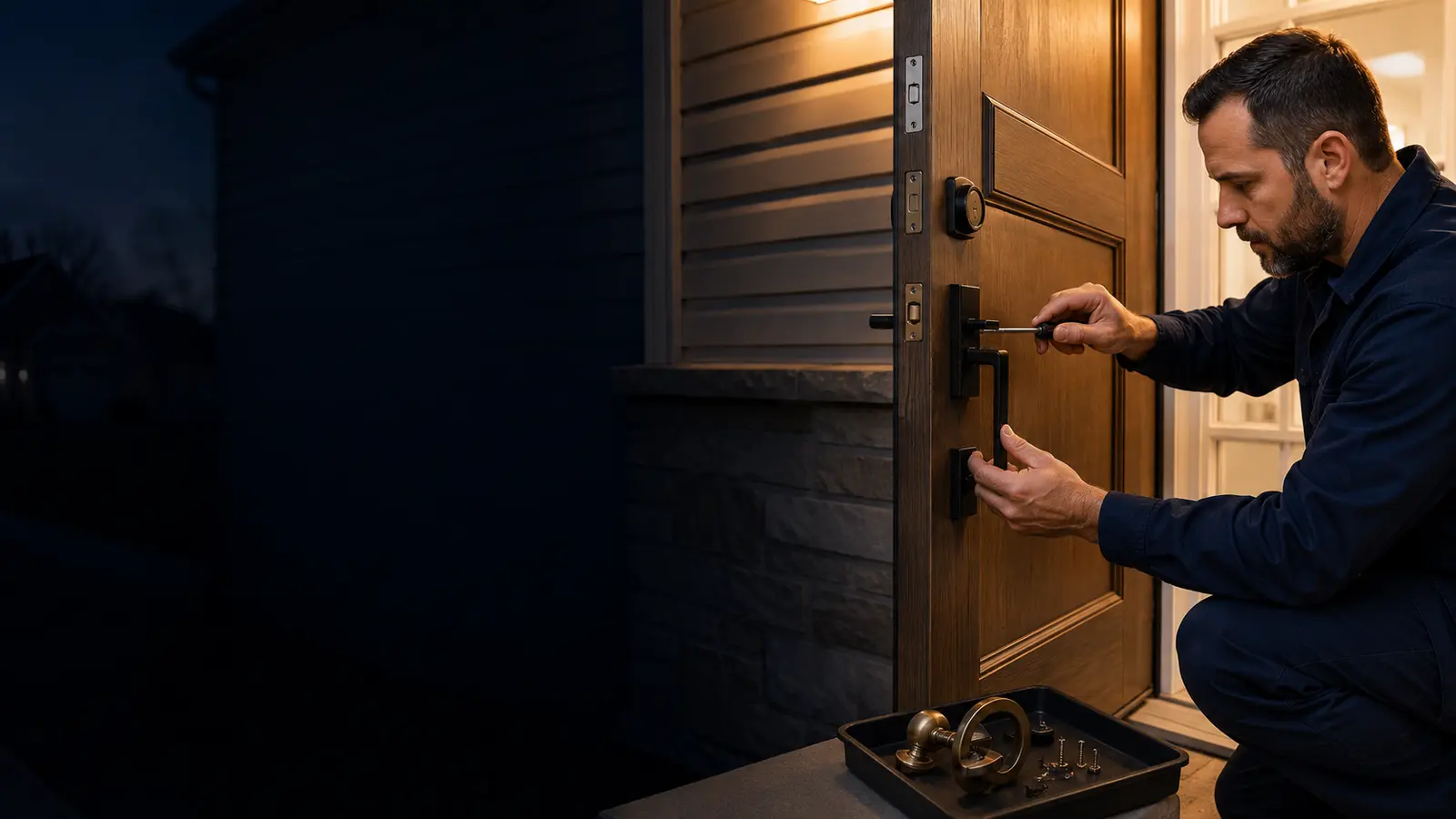
Lock and bolt
Cylinder, housing, latch, deadbolt, screws, spindle and interior release.
Door and frame
Door edge, strike, jamb, hinges, gaps, cracks, deformation and attachment material.
Access system
Keys, codes, garage remotes, smart-lock users, cameras and related entry points.
Temporary securing versus permanent repair
An immediate visit may focus on making the opening close and remain secured for the short term. That can involve removing loose hazards, stabilizing a damaged area or installing compatible temporary hardware when conditions allow.
Temporary work is not a promise that the door has regained its original strength or weather resistance. The scope should clearly state what remains for permanent repair.
Permanent restoration may require lock hardware, strike reinforcement, jamb or frame repair, door replacement, glazing, finish carpentry, painting and alignment. Commercial openings may involve closers, panic devices, access control and fire-rated assemblies that must be coordinated. The locksmith can address supported lock and hardware work while identifying when a door specialist, carpenter, glazier, electrician or other professional is needed.
Do not cover damage before it is documented and released by authorities. Do not use an improvised barricade that traps occupants or blocks a required exit.
If the opening cannot be made safely secure, ask the property manager, insurer or restoration professional about guarded access, boarding or other appropriate temporary measures. A rushed patch that prevents safe egress is not an acceptable solution.
| Goal | Temporary phase | Permanent phase | Important question |
|---|---|---|---|
| Close opening | Stabilize enough for controlled closure | Restore door and frame geometry | Does the door latch without force? |
| Control entry | Compatible temporary lock or restricted access | Correct lock, strike and key plan | Who should retain access? |
| Weather protection | Limit immediate exposure | Repair seals, glazing and finish | Is water entering damaged material? |
| Evidence | Preserve released components and photos | Retain records and invoices | What do police or insurer request? |
| Safe exit | Avoid blocking occupied egress | Restore compliant interior operation | Can occupants leave intuitively? |
Restore key, code and credential control
A break-in can compromise more than the damaged door. Keys, remotes, fobs, access cards and documents may be missing. Inventory every credential that could have been taken and the places it operates.
A house key stored beside identification presents a different risk from a key known to remain inside. Reset decisions should follow actual access paths rather than only the door used during the incident.
Change or remove electronic users where applicable: smart-lock codes, alarm users, garage remotes, gate credentials and commercial access cards. Do not assume changing an app password disables a missing mechanical key.
Likewise, replacing the front-door cylinder does not address a stolen garage remote that opens the attached garage. Build one coordinated access-reset list.
For a business, involve the access-control administrator and property manager. Suspend missing credentials promptly, preserve relevant audit logs and verify mechanical overrides.
If a master key is missing, assess which doors it operates and whether the key system needs broader changes. Document new keys and credentials from the start so emergency action does not create another uncontrolled system.
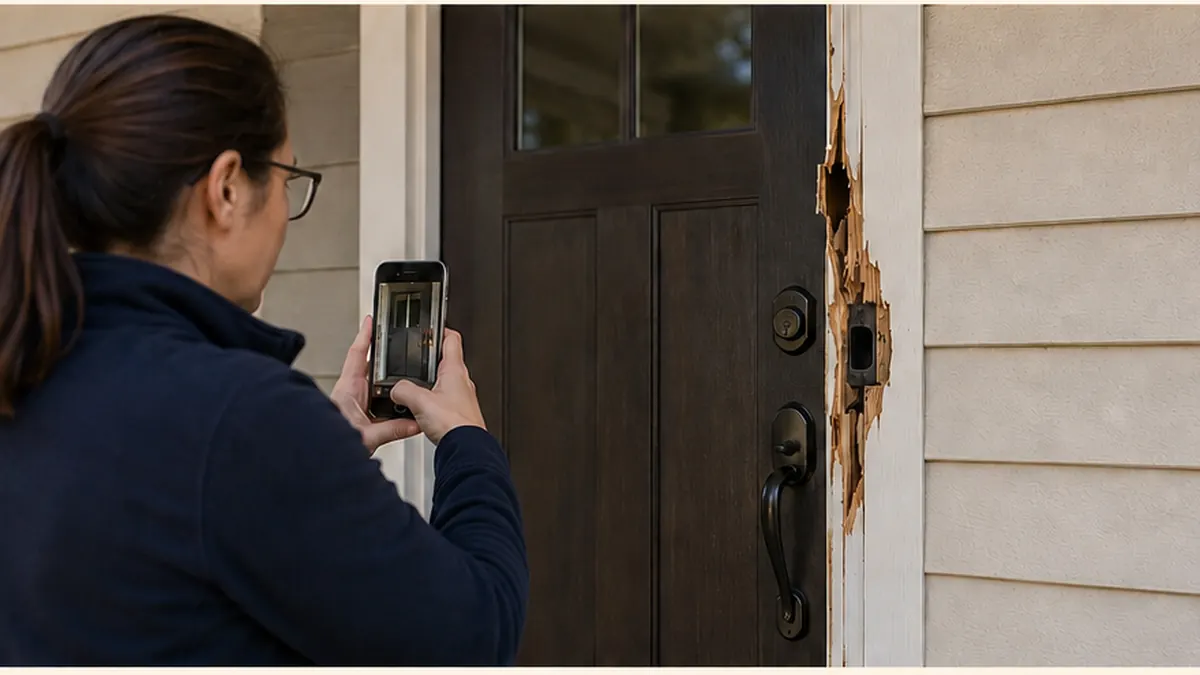
Choose reinforcement based on the failure path
Reinforcement should respond to how the opening failed. If the strike pulled from weak wood, repair may include sound jamb material and appropriate fastening. If the door edge split around the lock, door reinforcement or replacement may be needed.
If glass allowed someone to reach interior hardware, glazing and interior-release choices need coordinated review. Adding a stronger deadbolt while ignoring the failed path offers limited benefit.
A strike plate, wraparound plate, door-edge guard or upgraded deadbolt can be useful in the right construction. They can also fit poorly, interfere with closing or conceal unrepaired damage.
Hardware thickness changes clearances; screw length and position depend on framing; and double-cylinder locks raise egress concerns. Product selection should follow inspection, not a generic list of 'burglar-proof' devices.
There is no burglar-proof residential door. Security is layered through visibility, lighting, doors, frames, locks, credential control, alarms, cameras and household habits.
The goal after an incident is to correct known weaknesses and improve detection and delay without creating a dangerous or unusable opening. Be cautious of absolute promises and fear-based upselling during a stressful event.
For independent guidance, review Builders Hardware Manufacturers Association's Residential lock and deadbolt standards (opens in a new tab).
| Observed failure | Potential repair focus | Related issue to inspect | Avoid |
|---|---|---|---|
| Strike pulled from wood jamb | Sound jamb repair and strike attachment | Frame backing and door alignment | Fastening into shattered material |
| Door edge split at lock | Door reinforcement or replacement | Bore, latch and deadbolt support | Covering deep cracks cosmetically |
| Cylinder or trim forced | Compatible lock replacement | Door preparation and interior function | Changing only the key |
| Glass broken near hardware | Glazing and access-path review | Interior release and egress | Creating a key-required exit without review |
| Commercial exit hardware damaged | Device and door assessment | Closer, latching and rated assembly | Blocking or chaining the exit |
Coordinate with insurance, landlords and property managers
Notify the appropriate insurer according to policy instructions, especially before disposing of damaged components or authorizing major permanent work. Ask what photographs, police information and estimates are needed.
Coverage, deductibles and approval procedures vary. A locksmith can document observed hardware work but should not decide insurance coverage.
Renters should notify the landlord or property manager after immediate safety and police steps. The owner may control door and lock changes, insurance and vendor selection.
If the damaged opening cannot secure, communicate in writing and preserve the timeline. Do not make legal claims based on general web content; tenant and owner responsibilities depend on facts, agreements and applicable law.
Commercial tenants should determine whether the suite door, storefront, common entrance or access-control system is controlled by the tenant, landlord or building manager. Changes made to one layer can affect master keys, fire-rated hardware, alarm monitoring and other occupants. Coordinated authorization prevents an urgent repair from disabling building systems or violating lease requirements.
- Police incident or report reference
- Time-stamped photographs before cleanup
- Inventory of damaged and missing property
- Temporary-security invoice and scope
- Permanent repair estimate
- Authorization from owner or manager
- Saved damaged hardware when requested
- Written record of codes and credentials changed
Support people after the property is secured
A break-in can change how safe a home or workplace feels even after hardware is repaired. People may sleep poorly, avoid certain rooms or repeatedly check locks. Treat those responses seriously.
Give household members clear information about what was changed, which keys and codes now work and what to do if they notice unusual activity. Uncertainty can be reduced through a simple, documented access plan.
Avoid turning the property into a maze of improvised locks that occupants cannot operate under stress. Choose measures that people can use consistently.
Review exterior lighting, camera alerts, emergency contacts and how children or older adults exit. If the incident causes ongoing distress, appropriate personal, community or professional support may be as important as another security product.
For employees, communicate necessary operational changes without sharing sensitive details. Explain new entry procedures, credential replacement and who to contact when access fails.
Preserve privacy around victims and investigation information. A calm, repeatable process helps restore normal operations more effectively than dramatic claims about absolute security.
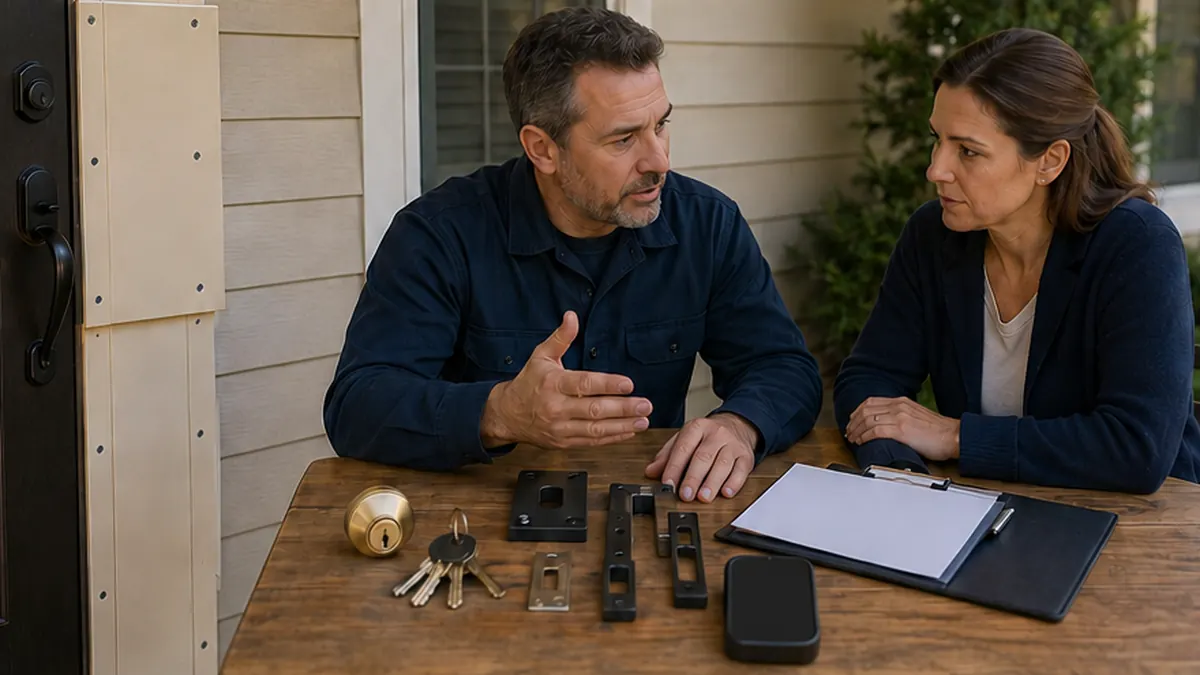
What changed
Tell authorized occupants which doors, locks, keys, codes and procedures are now different.
How to exit
Make sure every occupant can leave normally without searching for a key or special instruction.
How people feel
Property repair does not automatically resolve the stress caused by an intrusion.
Perform a full property access review
Once immediate repairs are complete, review all exterior openings rather than assuming the damaged door was the only weakness. Check side and rear doors, attached-garage entry, detached buildings, accessible windows, gates and commercial service doors.
Verify that each closes, latches and locks without force. Look for old damage, loose strikes and hidden keys that predate the incident.
Review access habits. Are doors routinely propped for deliveries? Do contractors share one code indefinitely?
Are spare keys stored in obvious locations? Are former employees or tenants still active in an electronic system?
Security hardware works only when everyday procedures support it. Small policy changes can produce more benefit than adding devices that users bypass.
Prioritize improvements by consequence and evidence. First correct openings that cannot secure or allow safe exit. Next restore credential control and address the actual failure path.
Then improve lighting, visibility, alerts and convenience where they help users follow the plan. Document lower-priority projects instead of rushing to purchase everything immediately after a stressful event.
- Every exterior door closes and latches normally.
- Deadbolts extend fully without pushing or pulling the door.
- Strikes, jambs, hinges and door edges are sound.
- Keys, codes, fobs and remotes are inventoried.
- Former users and shared temporary codes are removed.
- Exterior lighting and cameras cover useful approaches.
- Occupants understand emergency exit and contact procedures.
- High-priority and planned improvements are documented separately.
What to tell a locksmith when requesting break-in repair
Begin by confirming that police have released the opening for repair. State whether the property is occupied, whether the door can close and lock, and whether glass, sharp metal or unstable material remains.
Describe the door and frame material, lock type and visible damage. Mention commercial exit hardware, access control or a fire label because those conditions can change the required coordination.
Send photographs of the entire door from both sides, the door edge, strike, jamb, hinges and surrounding damage. Include close-ups and context.
Explain which keys, remotes or credentials are missing and which other openings they operate. Have proof of ownership, tenancy, management authority or business authorization available.
Ask the provider to separate immediate securing, locksmith repair and non-locksmith restoration. Confirm what will be functional at the end of the visit and what remains temporary.
Heartland handles supported break-in lock and door-hardware requests in Wichita and surrounding areas, subject to location and current availability. Life-safety danger or an active crime always belongs with 911 first.
Build a calm follow-up plan
Schedule a follow-up check after permanent work is complete. Test the door under normal use, review repaired finish areas and confirm that every intended key, code and credential works.
Remove temporary hardware that is no longer needed. Verify that the door closer, alarm contact or access-control components were restored when applicable.
Update the access inventory. Record new key holders, code owners, fob assignments and mechanical overrides. Store police, insurer and repair documents securely.
If cameras or alarms were changed, confirm notifications reach the correct people and that contact lists are current. A documented baseline makes future access changes easier to manage.
Finally, avoid making fear the permanent decision-maker. Security improvements should be proportionate, usable and supported by evidence from the incident and property review. A clear door, key and response plan creates more durable confidence than a collection of disconnected devices sold with absolute promises.
Frequently asked questions
Questions readers ask
Who should I call first after discovering a break-in?
If a crime may be in progress or anyone is in danger, move to safety and call 911. Wait for law enforcement to release the property before touching or repairing the opening.
Should I replace the lock immediately after a break-in?
The opening should be secured promptly after police release, but the correct scope depends on damage to the lock, door edge, strike, jamb, frame and hinges. A cylinder-only replacement may be insufficient.
Can a split door jamb be fixed with a new strike plate?
Sometimes reinforcement is part of repair, but fastening into shattered or unsound material will not restore strength. The underlying jamb and framing need evaluation.
Should I save the damaged lock?
Follow police and insurer instructions. Photograph it before removal and retain damaged components when requested for evidence or a claim.
What if keys or garage remotes were stolen?
Inventory every lock, vehicle, garage, gate and system they operate. Restore mechanical key control and remove or reset electronic credentials, codes and remotes as applicable.
Can a locksmith repair the entire door and frame?
A locksmith can handle supported lock and door-hardware work. Extensive structural, carpentry, metal, glass or rated-assembly damage may require coordinated specialists.
Can I board or barricade the door myself?
Do not disturb an unreleased scene or create a barricade that blocks occupied egress. If the opening cannot be secured, ask police, property management, insurer or restoration professionals about safe temporary measures.
Will insurance cover break-in lock damage?
Coverage depends on the policy, deductible, cause and documentation. Contact the carrier for instructions; a locksmith should not promise coverage.
What photos are most useful?
Take wide views of the full opening and close images of the lock, door edge, strike, jamb, hinges, cracks, tool marks and nearby damage after law enforcement permits documentation.
Can I request break-in lock repair outside Wichita?
Heartland coordinates supported emergency lock and door-hardware requests in Wichita and surrounding areas, subject to exact location and independent-contractor availability.
The right solution depends on the specific lock, door, vehicle or garage door system. Check the Wichita-area service pages, then call or send the details for an evaluation.