Residential locksmith
Smart Lock Buying Guide for Wichita Homes
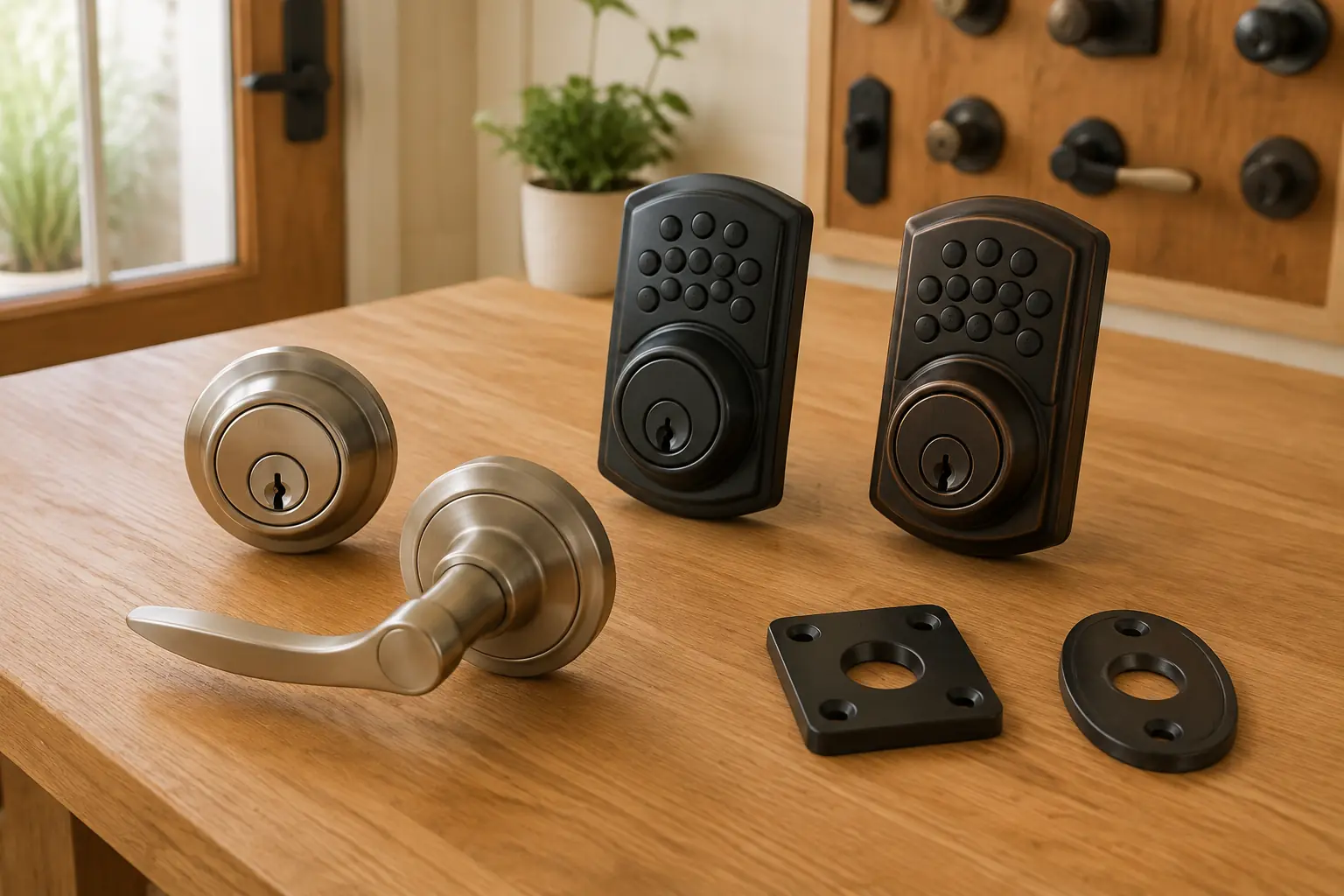
A smart lock is an access-management tool, not a cure for a misaligned door. The best device is one that fits the opening, operates the bolt freely, supports the household's actual users and has a clear plan for dead batteries, lost phones and account changes.
Before comparing apps, confirm that the door closes and the deadbolt moves freely by hand. Then choose the access methods the household will use, verify dimensions and compatibility, understand battery and offline behavior, confirm mechanical or emergency backup, review data-sharing and update practices, and plan how owners, guests, caregivers and service providers will receive and lose access.
A smart lock is an access-management tool, not a cure for a misaligned door. The best device is one that fits the opening, operates the bolt freely, supports the household's actual users and has a clear plan for dead batteries, lost phones and account changes. Continue with the complete library of residential locksmith guides when you want to compare related decisions.
Key takeaways
- Door alignment comes before motorized deadbolt installation.
- Keypad, fingerprint, phone, proximity and physical key access each have tradeoffs.
- Offline and depleted-battery behavior must be understood before purchase.
- Individual codes are more accountable than one shared household code.
- Account ownership and recovery should be documented at installation.
Begin with the complete door, not the app
Smart-lock reliability depends on a mechanically sound opening. A small motor has limited force and repeated binding can drain batteries, trigger errors and wear internal gears.
This distinction matters because the visible symptom is not always the failed component, and a useful request should describe what the complete opening does rather than name a replacement part before inspection. For a planned residential service decision, separating observation from assumption helps the responding independent contractor arrive with better context and reduces the chance that an unrelated alignment, frame, key-control or hardware issue is overlooked. If this condition matches your situation, review the service scope for smart lock installation.
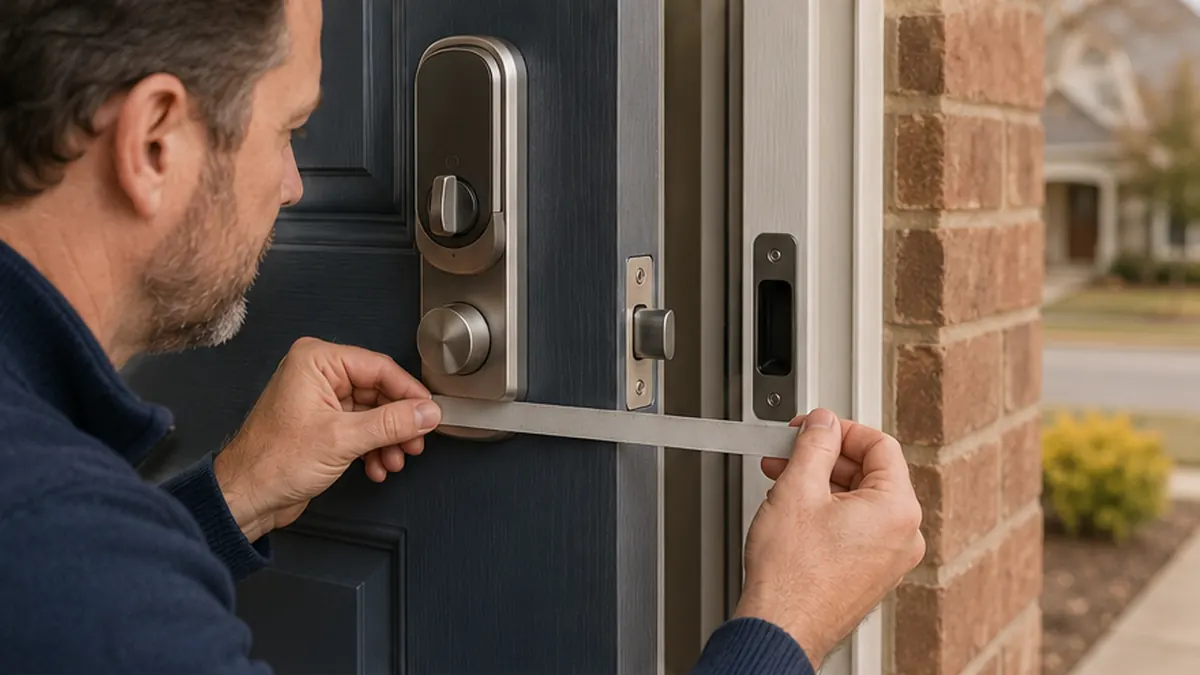
Work through the condition in a controlled order. Operate the existing deadbolt manually with the door open and closed. Check whether the slab must be pushed, pulled or lifted.
Inspect the strike for rub marks and shallow engagement. Correct hinge, frame or weather-seal conditions before installation. These observations can be shared by phone or through the service-request form without dismantling the lock or forcing the door.
Do not install a motorized deadbolt on an opening that does not operate smoothly by hand. The contractor should still confirm the diagnosis, explain the available scope and provide the price before authorized work begins.
Illustrative scenario: a feature-rich lock reports repeated jams because the bolt clips the strike every time the door closes. The example is not a report of a Heartland customer or completed job; it shows how the same initial complaint can lead to different next steps after the door, frame, lock and access history are considered together.
Increasing electronic calibration or retry settings does not repair physical misalignment. If conditions appear unsafe, someone may be in danger or unauthorized entry may be occurring, move to safety and contact the appropriate public authority before treating the situation as an ordinary locksmith request.
Observe
Operate the existing deadbolt manually with the door open and closed.
Compare
Check whether the slab must be pushed, pulled or lifted.
Confirm
Inspect the strike for rub marks and shallow engagement.
Choose access methods around real users
More access options are not always more convenient. Household members, children, caregivers, guests and service providers have different ability, device and scheduling needs.
This distinction matters because the visible symptom is not always the failed component, and a useful request should describe what the complete opening does rather than name a replacement part before inspection. For a planned residential service decision, separating observation from assumption helps the responding independent contractor arrive with better context and reduces the chance that an unrelated alignment, frame, key-control or hardware issue is overlooked. If this condition matches your situation, review the service scope for lock change.
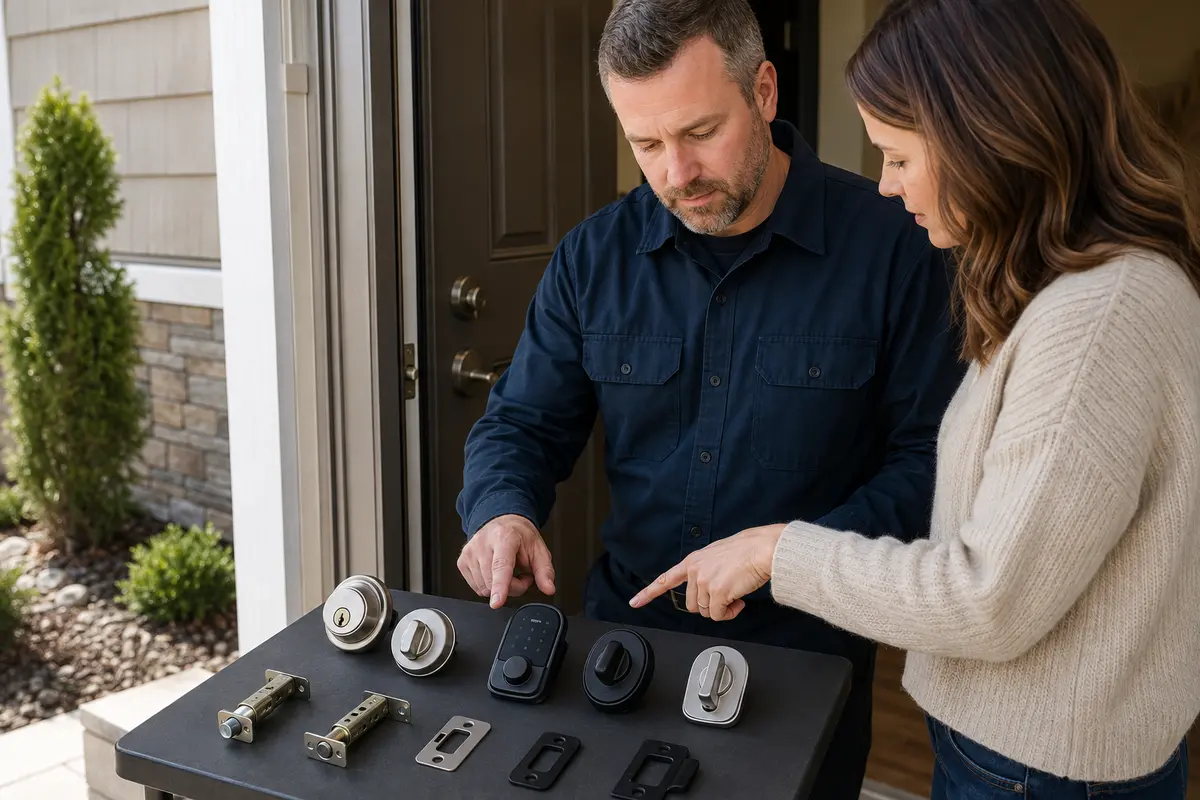
Work through the condition in a controlled order. List who needs permanent, temporary and one-time access. Decide whether phones can be required for every regular user.
Consider tactile keypad and key backup needs. Plan access removal for guests, workers and former residents. These observations can be shared by phone or through the service-request form without dismantling the lock or forcing the door.
Select the simplest combination that every authorized user can operate reliably. The contractor should still confirm the diagnosis, explain the available scope and provide the price before authorized work begins.
Illustrative scenario: a phone-only system frustrates a child without a device and a visiting relative whose battery is depleted. The example is not a report of a Heartland customer or completed job; it shows how the same initial complaint can lead to different next steps after the door, frame, lock and access history are considered together.
One shared code removes the ability to revoke a single person's access without changing it for everyone. If conditions appear unsafe, someone may be in danger or unauthorized entry may be occurring, move to safety and contact the appropriate public authority before treating the situation as an ordinary locksmith request.
For independent guidance, review Cybersecurity and Infrastructure Security Agency's Securing Internet of Things devices (opens in a new tab).
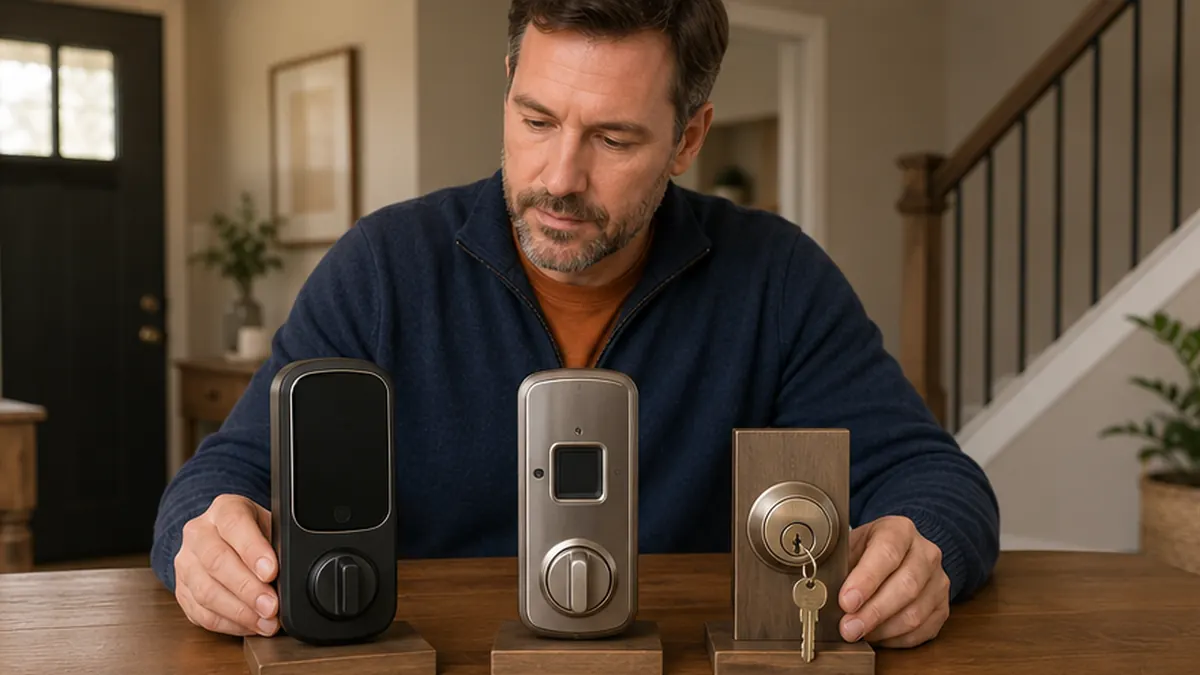
- List who needs permanent, temporary and one-time access
- Decide whether phones can be required for every regular user
- Consider tactile keypad and key backup needs
- Plan access removal for guests, workers and former residents
Understand battery, outage and offline behavior
Every electronic lock eventually encounters depleted power or lost connectivity. Battery chemistry, temperature, radio use, motor load and notification settings affect service life while cloud features may depend on internet access.
This distinction matters because the visible symptom is not always the failed component, and a useful request should describe what the complete opening does rather than name a replacement part before inspection. For a planned residential service decision, separating observation from assumption helps the responding independent contractor arrive with better context and reduces the chance that an unrelated alignment, frame, key-control or hardware issue is overlooked. If this condition matches your situation, review the service scope for lock installation.
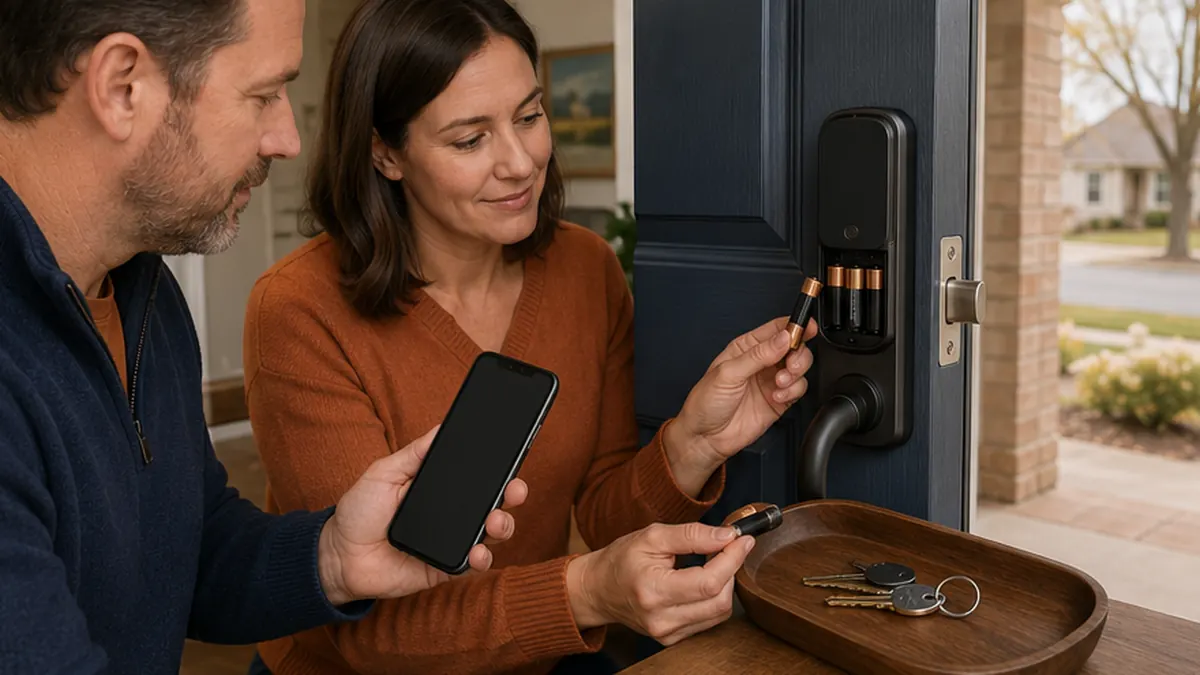
Work through the condition in a controlled order. Read the documented low-battery warning process. Identify emergency power contacts or mechanical override.
Confirm which functions operate without Wi-Fi or a hub. Set a household battery-replacement and testing routine. These observations can be shared by phone or through the service-request form without dismantling the lock or forcing the door.
Buy only after the household can explain how it will enter during battery, phone, internet and account failures. The contractor should still confirm the diagnosis, explain the available scope and provide the price before authorized work begins.
Illustrative scenario: remote unlocking stops during an internet outage but local keypad access continues because the credential is stored on the device. The example is not a report of a Heartland customer or completed job; it shows how the same initial complaint can lead to different next steps after the door, frame, lock and access history are considered together.
Never wait for complete battery failure to discover whether the backup key was cut and tested. If conditions appear unsafe, someone may be in danger or unauthorized entry may be occurring, move to safety and contact the appropriate public authority before treating the situation as an ordinary locksmith request.
Verify physical and electronic compatibility
A product listing cannot see the actual door preparation. Thickness, backset, bore size, edge bore, handing, trim clearance, multipoint hardware and existing cylinders affect fit.
This distinction matters because the visible symptom is not always the failed component, and a useful request should describe what the complete opening does rather than name a replacement part before inspection. For a planned residential service decision, separating observation from assumption helps the responding independent contractor arrive with better context and reduces the chance that an unrelated alignment, frame, key-control or hardware issue is overlooked.
Work through the condition in a controlled order. Measure using the manufacturer's current template. Check clearance from glass, storm doors and decorative trim.
Confirm hub, protocol, phone operating system and account requirements. Determine whether a subscription is required for desired history or remote features. These observations can be shared by phone or through the service-request form without dismantling the lock or forcing the door.
Reject a device that requires improvised fit or omits a required household function. The contractor should still confirm the diagnosis, explain the available scope and provide the price before authorized work begins.
Illustrative scenario: a large interior battery housing strikes a nearby storm-door handle even though the deadbolt dimensions appear compatible. The example is not a report of a Heartland customer or completed job; it shows how the same initial complaint can lead to different next steps after the door, frame, lock and access history are considered together.
Do not enlarge or drill a fire-rated, metal or glass-adjacent door without appropriate evaluation. If conditions appear unsafe, someone may be in danger or unauthorized entry may be occurring, move to safety and contact the appropriate public authority before treating the situation as an ordinary locksmith request.
Observe
Measure using the manufacturer's current template.
Compare
Check clearance from glass, storm doors and decorative trim.
Confirm
Confirm hub, protocol, phone operating system and account requirements.
Review privacy, updates and account ownership
A connected lock creates an administrative system as well as a hardware installation. Cloud accounts may store device identifiers, access events, user names, integrations and remote commands under provider policies.
This distinction matters because the visible symptom is not always the failed component, and a useful request should describe what the complete opening does rather than name a replacement part before inspection. For a planned residential service decision, separating observation from assumption helps the responding independent contractor arrive with better context and reduces the chance that an unrelated alignment, frame, key-control or hardware issue is overlooked.
Work through the condition in a controlled order. Read current privacy and security documentation. Use a unique account password and available multifactor authentication.
Assign a durable owner account rather than an installer or temporary resident. Plan how firmware, users and connected automations will be reviewed. These observations can be shared by phone or through the service-request form without dismantling the lock or forcing the door.
Choose a product whose update policy and account controls match the household's willingness to administer it. The contractor should still confirm the diagnosis, explain the available scope and provide the price before authorized work begins.
Illustrative scenario: a home sale becomes difficult because the lock remains tied to a former resident's personal account. The example is not a report of a Heartland customer or completed job; it shows how the same initial complaint can lead to different next steps after the door, frame, lock and access history are considered together.
Do not share the owner password when an individual user code or guest invitation is available. If conditions appear unsafe, someone may be in danger or unauthorized entry may be occurring, move to safety and contact the appropriate public authority before treating the situation as an ordinary locksmith request.
- Read current privacy and security documentation
- Use a unique account password and available multifactor authentication
- Assign a durable owner account rather than an installer or temporary resident
- Plan how firmware, users and connected automations will be reviewed
Commission and document the final installation
Installation is not complete when the screen lights up. The lock must be aligned, calibrated, enrolled, tested from both sides and documented for future users.
This distinction matters because the visible symptom is not always the failed component, and a useful request should describe what the complete opening does rather than name a replacement part before inspection. For a planned residential service decision, separating observation from assumption helps the responding independent contractor arrive with better context and reduces the chance that an unrelated alignment, frame, key-control or hardware issue is overlooked.
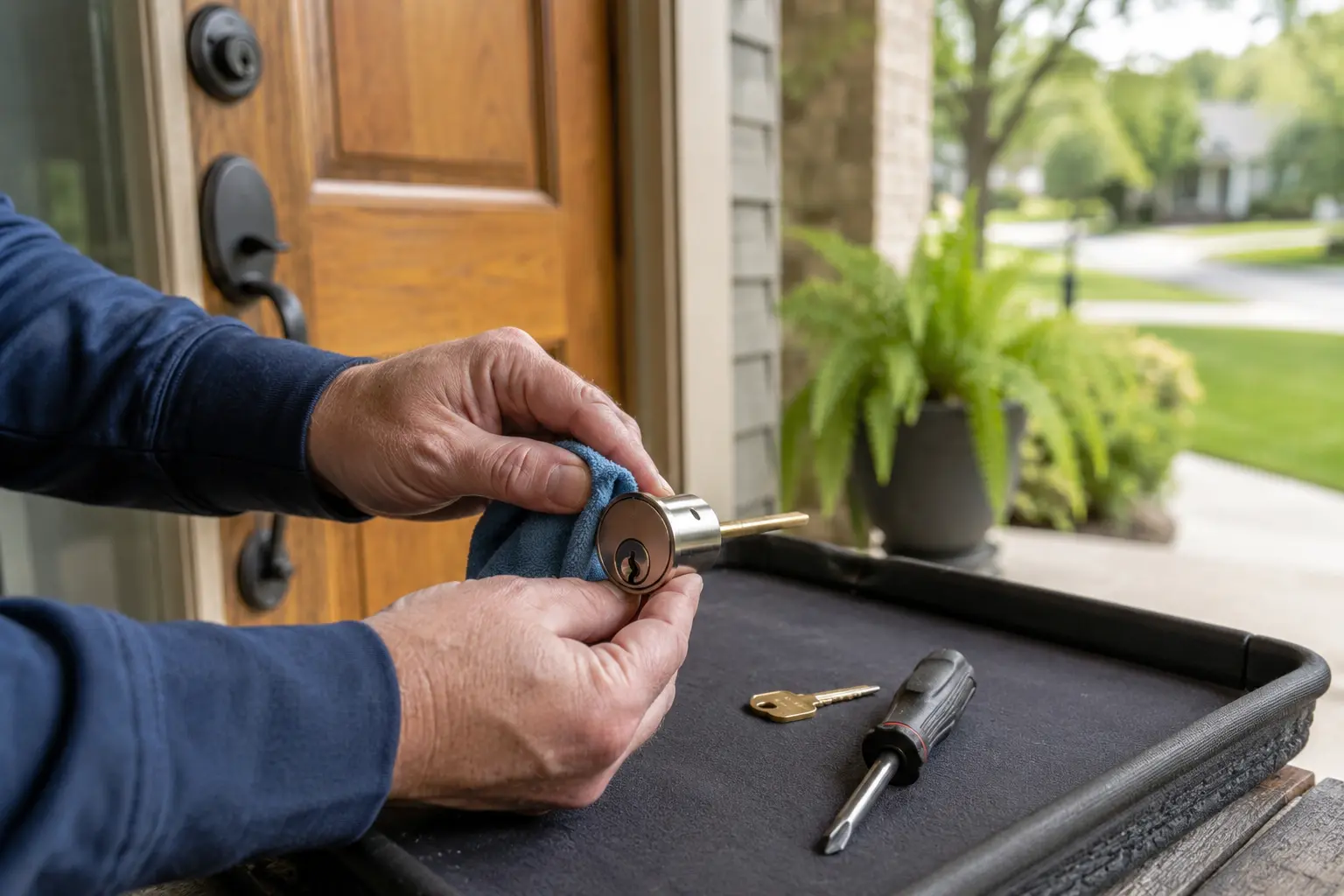
Work through the condition in a controlled order. Test manual key, thumbturn, keypad and app functions that apply. Verify the door latches before the deadbolt extends.
Create and test individual codes. Store model, battery, recovery and warranty information away from the door. These observations can be shared by phone or through the service-request form without dismantling the lock or forcing the door.
Accept the installation only after ordinary and failure-mode access are both demonstrated. The contractor should still confirm the diagnosis, explain the available scope and provide the price before authorized work begins.
Illustrative scenario: the owner tests a temporary code and then revokes it to confirm the process before relying on the lock. The example is not a report of a Heartland customer or completed job; it shows how the same initial complaint can lead to different next steps after the door, frame, lock and access history are considered together.
Keep packaging codes, recovery keys and account details private because they can be security-sensitive. If conditions appear unsafe, someone may be in danger or unauthorized entry may be occurring, move to safety and contact the appropriate public authority before treating the situation as an ordinary locksmith request.
For independent guidance, review Builders Hardware Manufacturers Association's Residential lock and deadbolt standards (opens in a new tab).
How to prepare a useful residential service request
A concise description is more useful than a long guess about the repair. Begin with the address area or ZIP code, whether the opening serves a house, apartment, attached garage, detached building or shared property, and whether you are currently locked out or can still operate another entrance. Identify the door material if known, the visible hardware, what the key or thumbturn does, when the behavior began and whether impact, weather, a move, a lost key or a security event preceded it.
Measure door thickness, backset and existing bore pattern. Confirm the manual deadbolt operates freely with the door closed. List household users and preferred access methods.
Review Wi-Fi, hub, phone and subscription requirements before purchase. Photograph the complete door from inside and outside only when it is safe and lawful to do so.
Add close views of the lock, door edge, strike area and any visible damage, but do not publish or send access codes, key-cut details, identification documents or other sensitive information through an unsecured channel. A contractor may request proof of ownership or authorized occupancy directly before entry work.
A request through Heartland is a request for referral and coordination, not a guaranteed appointment or final estimate. An independent contractor must accept the request, confirm timing and inspect or otherwise evaluate the actual condition.
Ask for the contractor’s legal business name, applicable credentials, estimate, payment terms and written 90-day workmanship-warranty details before authorizing work. The contractor—not Heartland—performs the work, collects payment and administers any qualifying warranty.
| Detail | Why it matters | What not to send |
|---|---|---|
| Location and property type | Helps evaluate coverage, access and likely door construction | Do not post a full address publicly |
| Exact symptom | Separates key, cylinder, latch, bolt, alignment and frame concerns | Do not force or disassemble the hardware |
| Access authorization | Entry work requires proof that you control the property | Do not email unnecessary identity documents |
| Timing and safety | Clarifies urgency and whether public emergency help is needed first | Do not remain near a suspected intruder or hazard |
Questions to ask the responding independent contractor
The most useful conversation is specific to the actual opening. Ask what the contractor believes is causing the symptom, what observations support that conclusion and whether the proposed work addresses the full door system or only the visible lock. For a topic such as smart lock buying guide for wichita homes, ask whether adjustment, repair, rekeying, cylinder work or complete replacement are realistic alternatives and what would make one option inappropriate.
Request a written or clearly itemized estimate before authorizing work. It should identify the service-call or diagnostic amount, labor, parts, taxes and any after-hours charge that applies. Confirm who is performing the work and who will appear on the receipt.
If the scope changes after the hardware is opened or hidden damage is discovered, ask for the updated amount and reason before additional work proceeds. Do not rely on a vague low telephone price that excludes every material part of the actual request.
Ask how the completed opening will be tested and which written warranty applies. A participating contractor may provide a 90-day workmanship warranty on qualifying work, but coverage and exclusions belong to that contractor’s invoice or warranty terms.
Confirm whether parts carry separate manufacturer coverage, what records must be kept and whom to contact if the same workmanship issue returns. A clear closeout includes operating the door from both sides, verifying latch or bolt engagement and receiving keys, codes or instructions that apply.
What is the diagnosis?
Ask which component or alignment condition explains the observed symptom.
What is the full price?
Confirm service call, labor, parts, taxes and after-hours charges before approval.
What is warranted?
Keep the contractor’s invoice and written 90-day workmanship-warranty terms.
Wichita-area conditions and practical planning
Wichita heat, cold, wind-driven moisture and sun exposure make the exterior rating, battery specification and weather protection of a smart lock more relevant than showroom appearance alone. Local relevance should come from the actual property and operating conditions, not from repeating a city name.
Sun exposure, wind, temperature swings, soil movement, door material, building age, traffic and previous adjustments can all influence how an opening fits and operates. Record when the symptom changes—morning versus afternoon, dry versus wet weather, or open versus closed—because a pattern can help separate cylinder trouble from door movement or strike alignment.
Coverage includes Wichita and surrounding communities, but contractor availability varies by location, day, service type and current volume. Emergency requests may often target a response or estimated arrival within about one hour, yet that is not guaranteed.
Weather, traffic, distance, earlier jobs, parts, communications and unexpected operational issues can extend the time. Keep another safe entry available when possible and tell the coordinator if the property cannot be secured while you wait.
For rental homes, apartments, managed properties and shared buildings, contact the owner or manager when required by the lease or building policy. They may control master keys, approved hardware, common doors or payment authorization.
For a recently purchased home, gather closing or occupancy documents and identify every exterior opening before requesting key-control changes. These steps are administrative rather than mechanical, but they often determine what work can be authorized and who should receive the final keys or codes.
Frequently asked questions
Questions readers ask
Can a smart lock work on any door?
No. Door thickness, bore preparation, backset, clearance, hardware type and alignment must match the device. Multipoint and specialty locks may require different products.
Do smart locks work without Wi-Fi?
Many retain local keypad, key or Bluetooth functions, but remote features may stop. Behavior varies by model and should be confirmed before purchase.
What happens when the battery dies?
Depending on the model, entry may use a mechanical key, external emergency power or another documented method. Test the backup before relying on the lock.
Is a smart lock more secure than a deadbolt?
Security depends on the complete product, installation, door, frame, key/code management and update practices. Electronic features do not automatically strengthen the physical opening.
Should everyone use the same code?
Individual codes are generally easier to revoke and audit. Shared codes can be appropriate in limited settings but reduce accountability.
Can an independent contractor install a smart lock I purchased?
Possibly, if it is compatible and the contractor accepts customer-supplied hardware. Ask how fit, defects, labor warranty and manufacturer support will be handled.
The right solution depends on the specific lock, door, vehicle or garage door system. Check the Wichita-area service pages, then call or send the details for an evaluation.