Residential locksmith
Rekeying vs. Changing Locks After a Move
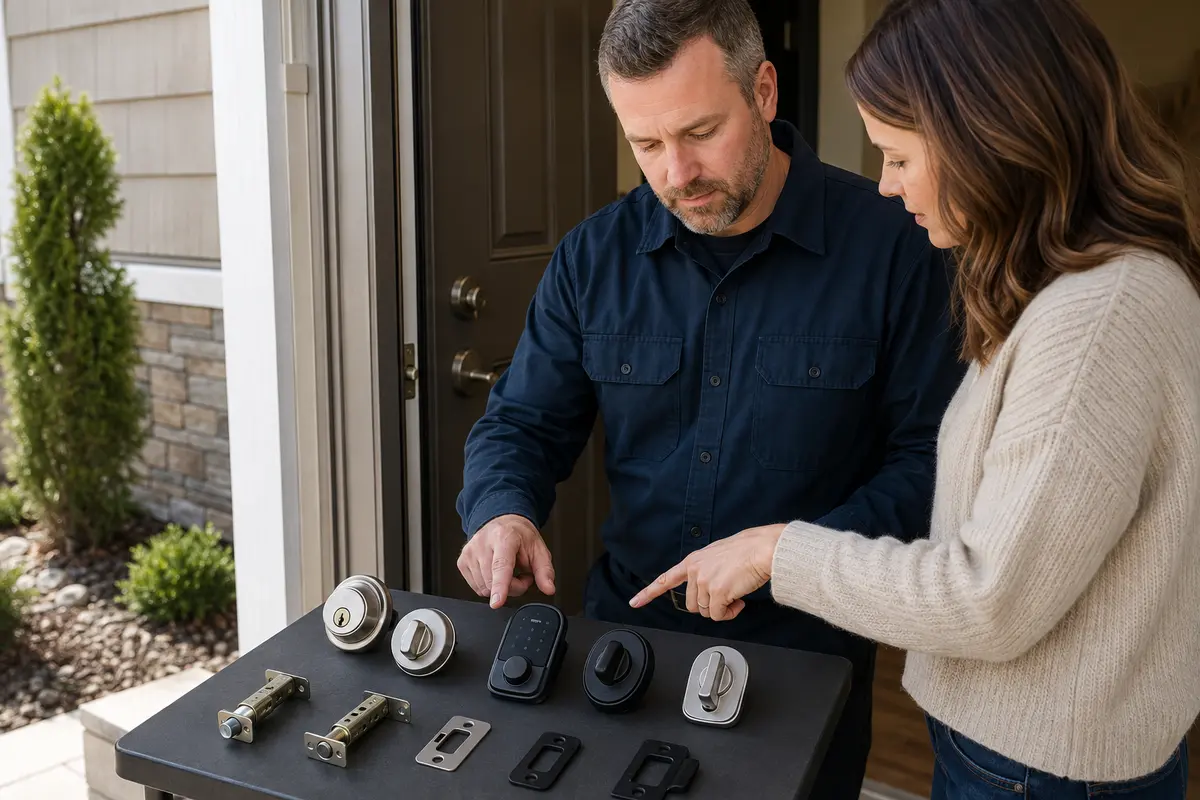
After a move, the question is usually framed as whether to change the locks. The more useful question is what each opening actually needs: new key authorization, repair, complete hardware replacement, door correction, or a combination. This guide compares rekeying with changing a lock as move-specific decisions, so Wichita homeowners can restore control without preserving unreliable hardware or replacing good components unnecessarily.
Rekey serviceable, compatible mechanical cylinders when the main problem is unknown key history and the existing locks already provide the function the household needs. Change the complete lock or selected hardware when it is damaged, badly worn, unreliable, incompatible with the intended key plan, missing a needed function, or unsuitable for the door. Test every opening with the door open and closed before choosing, because hinge, strike, frame, and weather-seal problems can make either old or new hardware bind. Reset smart-lock users, codes, accounts, and garage credentials separately, then verify each door and count every issued key or digital credential at closeout.
After a move, the question is usually framed as whether to change the locks. The more useful question is what each opening actually needs: new key authorization, repair, complete hardware replacement, door correction, or a combination. This guide compares rekeying with changing a lock as move-specific decisions, so Wichita homeowners can restore control without preserving unreliable hardware or replacing good components unnecessarily. Continue with the complete library of residential locksmith guides when you want to compare related decisions.
Key takeaways
- Rekeying changes which key is authorized; it does not replace worn hardware or strengthen a damaged frame.
- Complete replacement changes hardware or function, but new parts still depend on correct door fit and preparation.
- A mixed scope is often best: rekey sound cylinders, replace failed locks, and correct alignment where needed.
- Compatibility and access groups should be planned before ordering locks or cutting duplicates.
- The final decision should compare complete installed scopes, tested operation, credentials, records, and warranty terms.
Define the two choices before comparing them
Rekeying changes the internal key combination of a compatible mechanical cylinder so the previous operating key no longer works and a new key does. Much of the visible lock may remain in place, including the exterior trim, latch or deadbolt body, and strike. That narrow scope is valuable when the hardware is serviceable and the reason for service is uncertainty about old copies rather than a mechanical or functional defect. If this condition matches your situation, review the service scope for residential locksmith.
Changing a lock means replacing selected hardware or the complete assembly. Depending on the opening, that may include the cylinder, exterior and interior trim, latch or deadbolt, strike, fasteners, electronic components, or a different function altogether. Replacement can solve wear, damage, poor compatibility, missing features, or a planned upgrade, but it does not automatically correct a sagging door, weak jamb, or bolt that misses the strike.
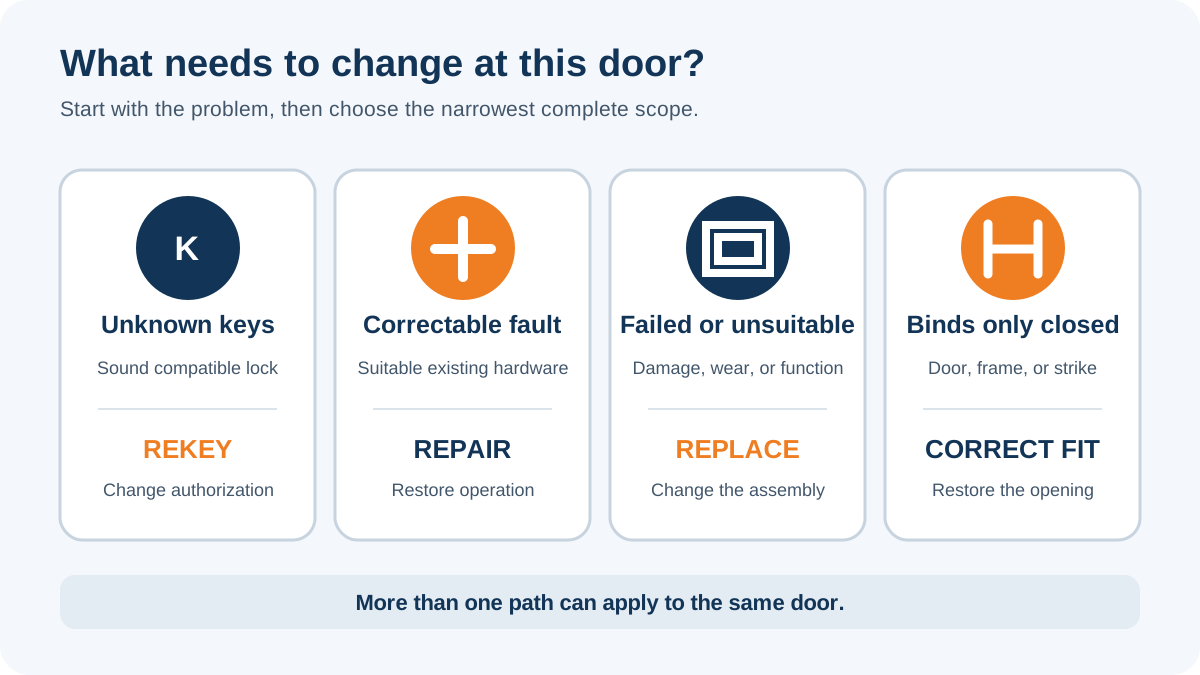
The comparison is therefore not old parts versus new parts. It is a decision about which layers need to change: authorization, mechanism, fit, function, appearance, or administration. Write those needs beside each door before requesting prices, because a house can reasonably receive rekeying at three sound deadbolts, replacement at one corroded lever, and alignment work at a fifth opening during the same visit.
Change authorization
Preserve suitable hardware while making prior mechanical keys inoperative at the included cylinders.
Change hardware or function
Substitute worn, damaged, incompatible, or unsuitable components with a defined installed assembly.
Restore the opening
Address hinge, strike, frame, or door conditions that prevent either lock from working properly.
Start with the reason the move created uncertainty
A closing handoff gives the buyer known keys, not a verified history of every duplicate. Previous occupants may have shared ordinary keys with family, neighbors, cleaners, pet sitters, agents, property managers, or tradespeople, and some copies may never have been recorded. The purpose of a move-in lock decision is not to accuse anyone; it is to establish a new access baseline the household can explain and maintain. If this condition matches your situation, review the service scope for home lock change.
Map every received key to the doors it operates before altering hardware. Similar-looking keys may belong to different cylinders, while one key may open the front door, rear door, and garage passage door as a group. Number temporary tags without using the property address, record missing or unexplained keys, and include physical backup keys for smart locks instead of assuming a keypad has eliminated the mechanical layer.
When the only identified problem is unknown mechanical key history, rekeying often addresses the exact authorization concern with less material. When the move also reveals unreliable operation, damaged parts, mismatched functions, incompatible keyways, or an unwanted electronic system, the decision becomes broader. Keep those findings separate so urgency about copies does not hide a hardware defect or turn a focused key-control job into an automatic whole-house replacement package.
Use hardware condition to set the boundary
A cylinder can accept a new key combination while the surrounding lock remains worn. Loose trim, a sagging lever, a latch that retracts only partway, cracked components, severe corrosion, a damaged tailpiece, excessive play, or recurring internal failure will still exist after a rekey. Preserving that assembly may reduce today's material cost while leaving the homeowner with the same unreliable entrance next week. If this condition matches your situation, review the service scope for lock repair.
Inspect and test the complete lock gently. Note whether the key must be wiggled, partly withdrawn, or forced; whether the thumbturn feels rough; whether the latch springs back; whether the deadbolt extends fully; and whether the trim moves against the door. Compare a known sound key when available, because a badly worn or bent key can create symptoms that do not belong entirely to the cylinder.
Replacement becomes more sensible when the failed or unsuitable part is integral to the assembly, matching repair parts are unavailable, the lock has been modified poorly, or the household needs a function the existing product cannot provide. Repair may still be the narrowest complete answer for a correctable fault. Ask the technician to identify the failed layer and show why rekeying, repair, partial component replacement, or a new assembly is the appropriate boundary.
| Observed condition | Likely decision path | Important limitation |
|---|---|---|
| Sound compatible lock; old keys uncertain | Rekey may fit | Still test door, latch, bolt, and frame |
| Loose trim or correctable latch fault | Repair plus rekey may fit | Confirm parts and final operation |
| Cracked, corroded, or repeatedly failing hardware | Replacement may fit | New parts must match the door |
| Different keyways across desired one-key group | Selective replacement may fit | Do not discard useful separation automatically |
| Lock works open but binds closed | Door or strike correction first | Neither rekeying nor a new cylinder fixes fit |
Test door fit before blaming the lock
Operate the latch and deadbolt with the door open, then repeat with the door closed if the slab, glass, hinges, and frame appear stable. A lock that works freely open but binds closed points toward alignment, weather-seal pressure, hinge movement, strike position, or frame condition rather than the key combination alone. A rough key in both positions can instead involve the key, cylinder, mounting, contamination, or internal wear.
Look for rub marks, torn seals, a latch edge that drops, loose hinge movement, daylight, a strike plate polished by repeated contact, spinning fasteners, cracks, and evidence that the opening has been filed or adjusted before. Wichita heat, cold snaps, wind, moisture, and seasonal movement can change how an exterior door rests in its frame. Record whether pressure on the door changes operation, but do not normalize a door that must be lifted, shoved, or pulled every time it locks.
A replacement deadbolt installed in the same preparation may bind exactly like the old one if the opening remains misaligned. Randomly enlarging the strike can reduce engagement without correcting the cause, while driving long screws blindly can encounter concealed wiring, plumbing, glass, or unsuitable material. The final scope should restore natural closing, positive latching, smooth locking, full bolt engagement, and simple interior release as one tested operating sequence.
- Compare lock operation with the door open and closed.
- Observe hinge movement, rub marks, strike contact, frame cracks, and seal pressure.
- Do not force the key or assume a new cylinder will correct door fit.
- Assign door, frame, or carpentry work when hardware adjustment is not enough.
- Verify the complete closing and locking sequence after any change.
Plan compatibility and key groups before buying hardware
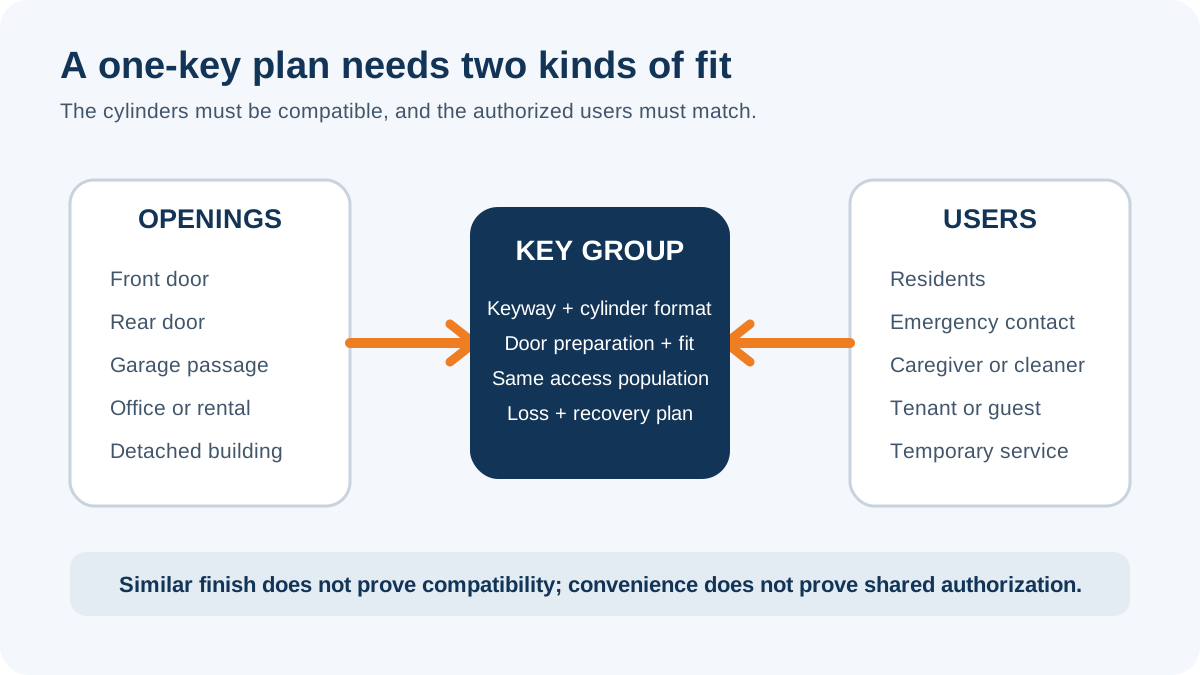
A one-key request depends on compatible cylinders and appropriate access relationships. Locks with the same finish may use different keyways, cylinder formats, dimensions, or proprietary systems and may not be rekeyed into one group. Photograph brands and hardware types, gather representative working keys, and let the technician identify which cylinders can be retained, reconfigured, or changed without improvisation.
Compatibility is only half of the decision. The front, back, and attached-garage passage doors may belong in one household group, while a rental suite, home office, workshop, detached building, or private storage area may need separate authorization. One shared key reduces clutter but expands the consequence of a lost copy, so combine openings only when the same people should enter all of them and the household is prepared to change the full group if that key is compromised.
Avoid ordering boxed sets solely because their labels claim keyed-alike convenience. Confirm door thickness, backset, bore preparation, latch style, handing where relevant, trim clearance, strike needs, and compatibility with any retained hardware. A mixed plan can be more practical than forcing every opening into one product family: rekey the compatible main doors, preserve a suitable specialty lock, and replace only the cylinders or assemblies that prevent the intended key structure.
Identify cylinders and openings
Map brands, keyways, formats, door preparation, and the current key relationships before selecting parts.
Match access populations
Combine only the doors that the same authorized people should be able to enter.
Verify physical compatibility
Confirm dimensions, latch, trim, strike, and door condition before ordering replacement hardware.
Compare performance, function, and finish without shortcuts
When replacement is justified, compare the function the household needs before comparing appearance. A passage latch, keyed entry lock, single-cylinder deadbolt, interconnected assembly, smart deadbolt, and multipoint system operate differently and may have different preparation or exit implications. The right product should fit the opening, provide straightforward authorized entry and interior release, and be supportable when keys, batteries, users, or parts change later.
BHMA's residential lockset standard overview (opens in a new tab) explains that certified residential locksets are evaluated for durability, security, and finish under defined tests. A grade or certification is useful product information, but it is not a complete verdict on the installed opening. Door construction, frame support, strike attachment, preparation, alignment, maintenance, and actual use all influence real performance after the box is opened.
Finish matters because exterior hardware faces handling, sun, moisture, dust, and temperature changes, but matching color should not outrank function or compatibility. Ask which parts are certified as an assembly, what the manufacturer covers, and whether mixing a cylinder, trim, latch, strike, or electronic module changes that coverage. Keep model numbers and product literature so a future owner or technician can identify the installed system without reverse engineering it from appearance.
| Factor | Question to ask | Why it matters |
|---|---|---|
| Function | How does it lock, unlock, latch, and release? | The household must be able to use it safely |
| Fit | Does it match the exact preparation and clearance? | Improvised fit can undermine operation |
| Performance | What tested standard or grade applies? | Claims should have a defined basis |
| Support | Are parts, instructions, and warranty service available? | Future maintenance depends on identification |
| Finish | How will the exterior surface age at this exposure? | Appearance and corrosion resistance vary |
Handle smart locks as both hardware and accounts
A smart lock can need two different changes after a move. The mechanical cylinder may require rekeying or replacement because its backup key history is unknown, while the electronic system needs new ownership, administrators, users, codes, integrations, and recovery settings. Completing only one layer can leave a former credential active or leave the new owner unable to manage the device.
Identify the exact model and current manufacturer procedure before resetting or transferring it. Confirm that the door and bolt operate freely by hand, then verify the backup key, battery condition, owner account, firmware, keypad, phone access, offline behavior, emergency-power method, and any hub or voice-assistant connection. Remove obsolete users and issue individual codes when supported instead of keeping one inherited household code whose history is unknown.
Replacement may be appropriate when the device remains tied to an unavailable account, no longer receives necessary support, lacks a workable backup, does not fit the household's users, or repeatedly strains against a door that has already been corrected. Retention may be reasonable when ownership can be transferred cleanly, the hardware fits, the product is supported, and every promised access and recovery mode can be tested. Do not let app features distract from the physical lock, door, frame, and clear interior exit path.
Compare complete installed costs rather than unit prices
A useful rekey estimate identifies the service call, each included cylinder, the intended key groups, new keys, repair or alignment work, electronic changes, taxes, and testing. A useful replacement estimate adds the exact manufacturer and model, included latch or bolt, strike, trim, necessary door preparation, old-hardware removal, disposal, keying, finish expectations, and product coverage. Compare the two scopes at the same openings instead of comparing a per-cylinder number with a retail lock price.
A mixed scope can produce better value than choosing one method for the entire house. Rekeying several sound matching cylinders may preserve good hardware and reduce waste, while replacing one failed lever and correcting one misaligned strike addresses the exceptions. The lowest initial total is not complete value if it leaves recurring bind, separate unwanted keys, obsolete electronics, missing backups, or unclear warranty responsibility.
Ask what conditions could change the estimate after inspection and require approval before added work. Kansas Attorney General home-improvement guidance emphasizes written estimates and contracts that identify the work, materials, warranties, total price, and payment schedule; the same discipline makes a locksmith proposal easier to compare. Confirm the responding provider's identity, who performs the work, payment terms, and which written product and labor protections will govern the finished job.
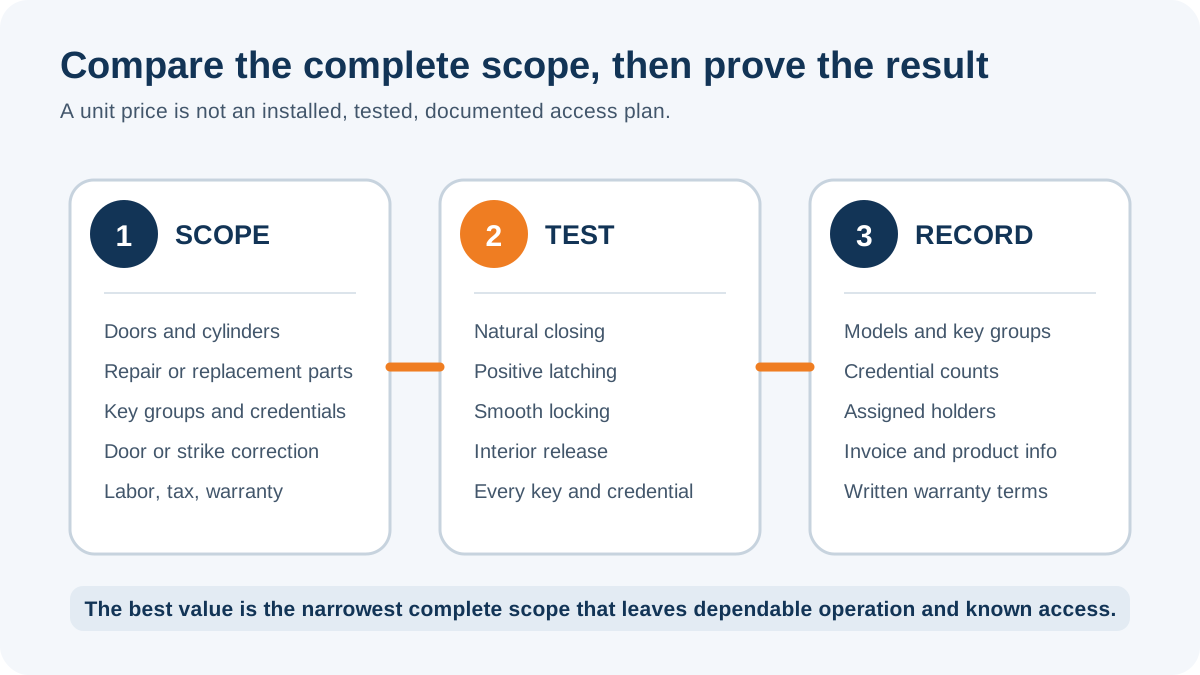
- Compare the same doors and desired key groups in each proposal.
- Separate rekeying, repair, replacement, alignment, keys, and electronic setup.
- Identify exact replacement products and included components.
- Require approval before the scope or price changes.
- Keep the invoice, product information, and written warranty terms.
Choose a move-in scope door by door
Begin with exterior doors that enter the living space, then include the attached-garage passage door and any overhead-door remotes, keypad, app users, or learned vehicle controls. Secondary sheds, gates, and detached buildings follow according to what they protect and whether they create a route toward the house. Do not let cosmetic finish mismatches postpone a front door that cannot secure or push an empty shed ahead of an unknown key to the living area.
For each opening, record four decisions: whether old authorization must be removed, whether the current hardware is dependable, whether the door and frame operate correctly, and whether the existing function suits the household. Sound compatible locks with uncertain keys point toward rekeying; failed or unsuitable assemblies point toward replacement; open-versus-closed bind points toward door or strike work. More than one answer can apply to the same opening.
Prepare safe wide photographs of the complete door plus closer views of hardware, the edge, and strike, but do not post keys, codes, alarm details, or the address publicly. If there is active unauthorized entry, danger, broken glass, severe frame damage, or an unstable door, move to safety and contact the appropriate public authority before treating the condition as a routine comparison appointment. Ordinary move-in planning should be deliberate, but a real emergency still comes first.
| Question | Yes means | Next step |
|---|---|---|
| Is old mechanical access uncertain? | Authorization needs a new baseline | Rekey or replace included cylinders |
| Is hardware damaged or unreliable? | Key control alone is incomplete | Repair or replace after diagnosis |
| Does operation change when closed? | The opening likely contributes | Correct alignment, strike, hinge, or frame |
| Is the function unsuitable? | Existing hardware cannot meet the need | Specify compatible replacement function |
| Are digital users or remotes unknown? | Electronic access remains uncontrolled | Reset, transfer, remove, and retest |
Verify the decision with a complete handoff
After the work, test every serviced door through the full cycle. Let it close naturally, confirm positive latching, operate each authorized key or credential, verify the bolt extends without pushing or lifting, and confirm simple interior release. Test keyed-alike groups at every included cylinder and verify intentionally separate groups remain separate rather than assuming one successful front-door test proves the plan.
Count keys, remotes, cards, fobs, codes, app users, and physical backups during the handoff. Confirm prior keys no longer operate rekeyed cylinders and obsolete digital credentials are removed where the approved scope required it, using controlled tests that do not create a lockout. Record models, key groups, assigned holders, service date, invoice, product literature, and written warranty terms securely away from the credentials themselves.
Heartland's residential locksmith service can help route a Wichita-area request based on the openings, hardware condition, key history, and current availability. The home lock change page is the direct service path when move-in key control or unsuitable hardware drives the request, while the lock repair page covers diagnosed mechanical or alignment-related faults that do not automatically require full replacement. The best result is not rekeying or replacement everywhere; it is a documented combination that leaves every important door reliable and every active credential known.
Prove every serviced opening
Close, latch, lock, unlock, and release each door without force, lifting, or special handling.
Count every credential
Verify physical keys, backups, remotes, codes, users, and deliberately separate access groups.
Preserve the decision
Store models, key assignments, invoices, and warranty terms for the next change or lost key.
Frequently asked questions
Questions readers ask
Is rekeying as secure as replacing a lock after a move?
Rekeying can restore mechanical key control when the existing compatible lock is serviceable and suitable. It does not improve worn hardware, door construction, frame support, or function, so those conditions must be evaluated separately.
When should I replace instead of rekeying?
Replacement is more appropriate when hardware is damaged, severely worn, unreliable, incompatible with the intended key plan, unsupported, poorly fitted, or missing a function the household needs. Door and frame problems may still require separate correction.
Can some locks be rekeyed while others are replaced?
Yes. A mixed scope is often practical: retain and rekey sound compatible cylinders, repair correctable faults, replace failed or unsuitable assemblies, and correct door fit where necessary.
Will replacing a deadbolt fix one that binds when the door is closed?
Not necessarily. If the bolt and strike are misaligned because of hinges, seals, door movement, or frame condition, new hardware may bind in the same way. Compare open-door and closed-door operation first.
Do I need to reset smart locks even if the mechanical key is changed?
Yes. Mechanical keys and digital credentials are separate. Transfer ownership, remove former users and codes, review integrations, update the device, and test backup and recovery access according to the exact product instructions.
What should be included in a rekey-versus-replacement estimate?
The estimate should identify the doors, cylinders or replacement models, key groups, supplied credentials, labor, repairs or alignment, electronic setup, taxes, testing, exclusions, payment terms, and written product and labor coverage.
The right solution depends on the specific lock, door, vehicle or garage door system. Check the Wichita-area service pages, then call or send the details for an evaluation.